
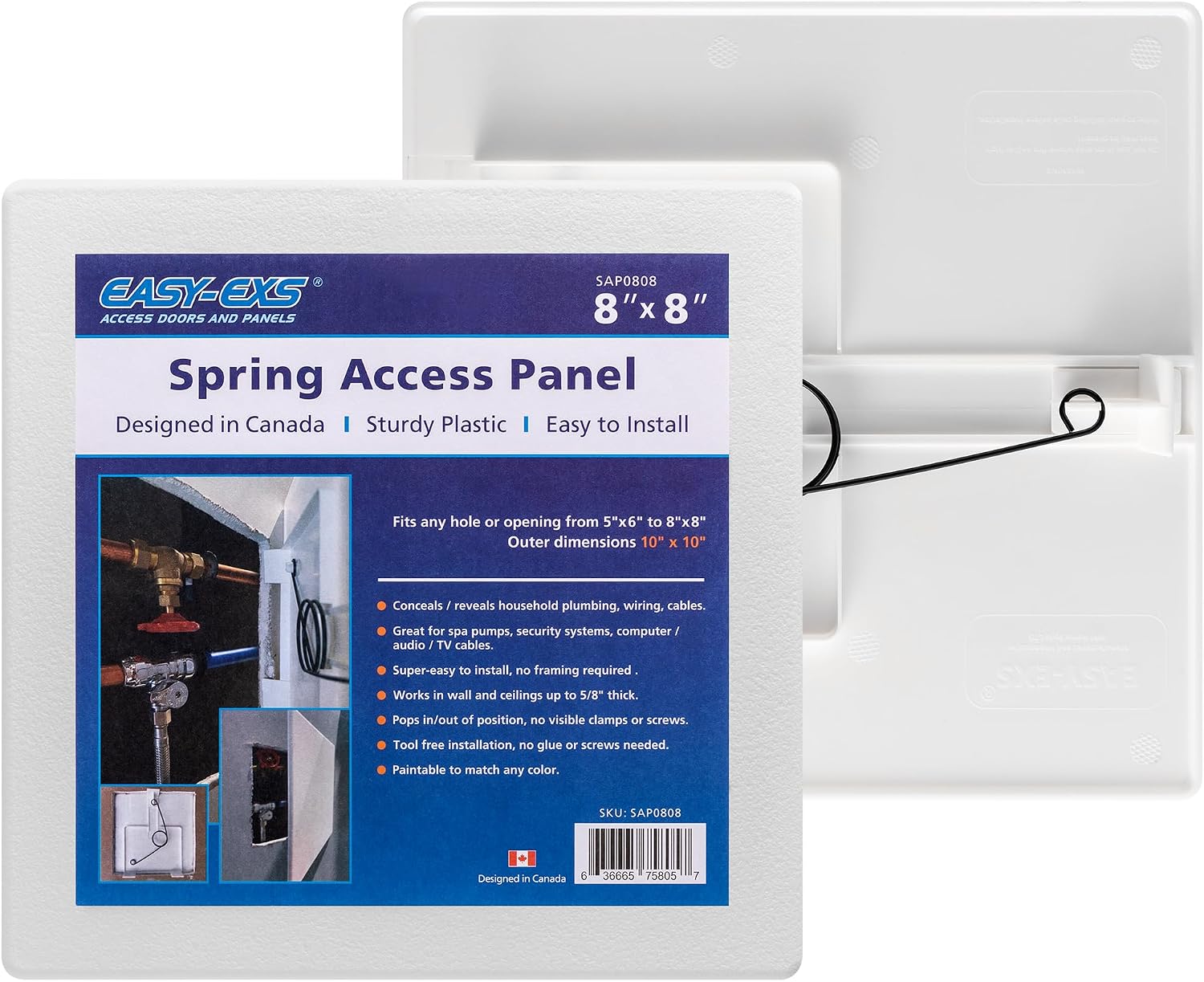
Easy-Exs · SAP0808
8x8 in Spring-Loaded Plastic Drywall Access Panel
Rated 4.6 out of 5, 718 ratings online
Fits 6 × 6 to 8 × 8 in openings · Overall 10 × 10 in
USD $9.49 each
- 10+ panels: $8.49 each
- 80+ panels: $7.49 each
Access panels and doors for your next project
Networking and cable fishing
Fishing data, coax or other low-voltage cable through a finished wall or ceiling often means cutting a hole to get past blocking or to make a turn. An access panel turns that hole into a pull point you can open for the next run. These are panels and doors for reaching into the wall or ceiling, not wall plates for bringing cable out of it.
9 products
Easy-Exs · SAP0808
Rated 4.6 out of 5, 718 ratings online
Fits 6 × 6 to 8 × 8 in openings · Overall 10 × 10 in
USD $9.49 each
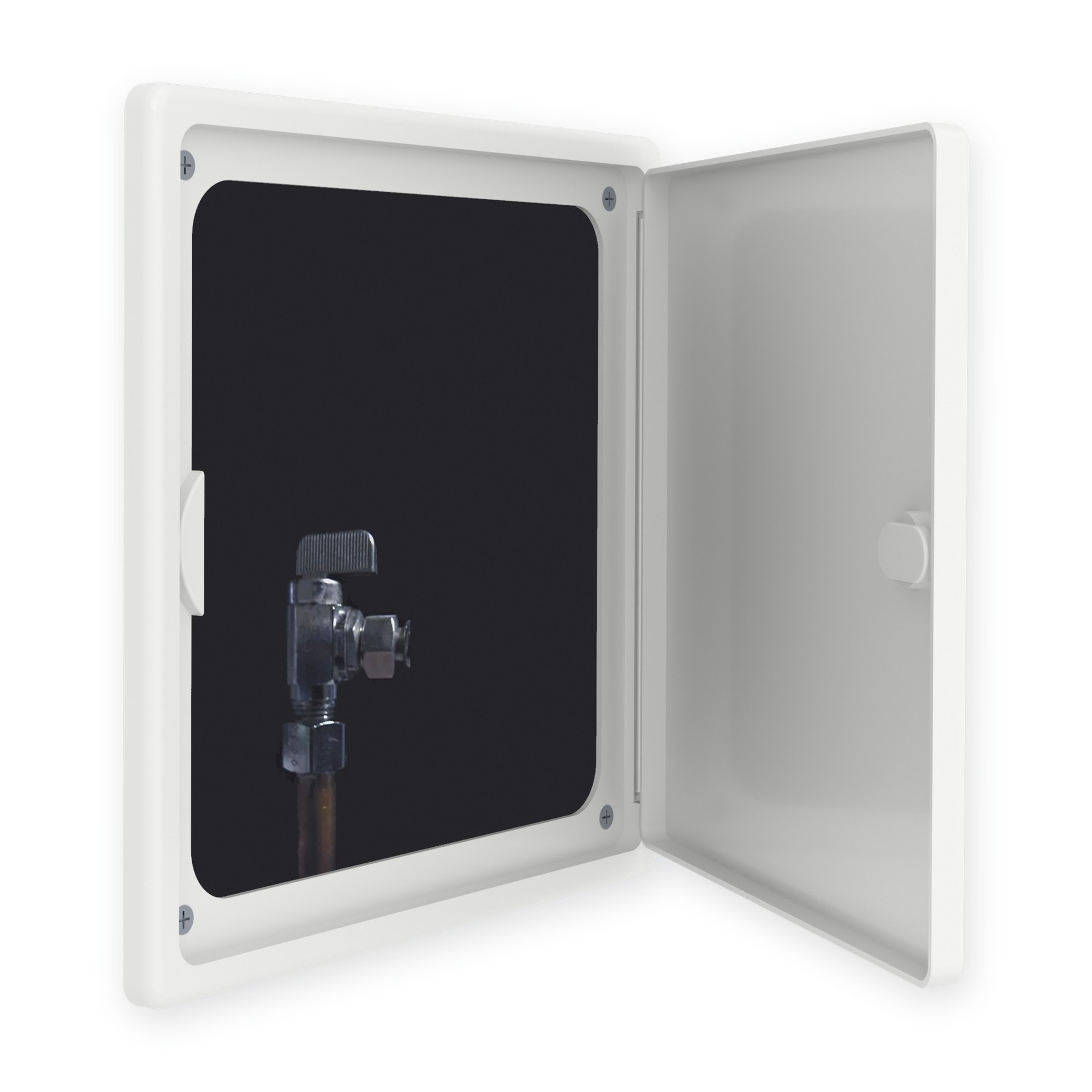
Easy-Exs · PAD0808
Rated 4.4 out of 5, 2,789 ratings online
Maximum service opening 6.35 × 6.35 in · Overall 8 × 8 in
USD $9.49 each
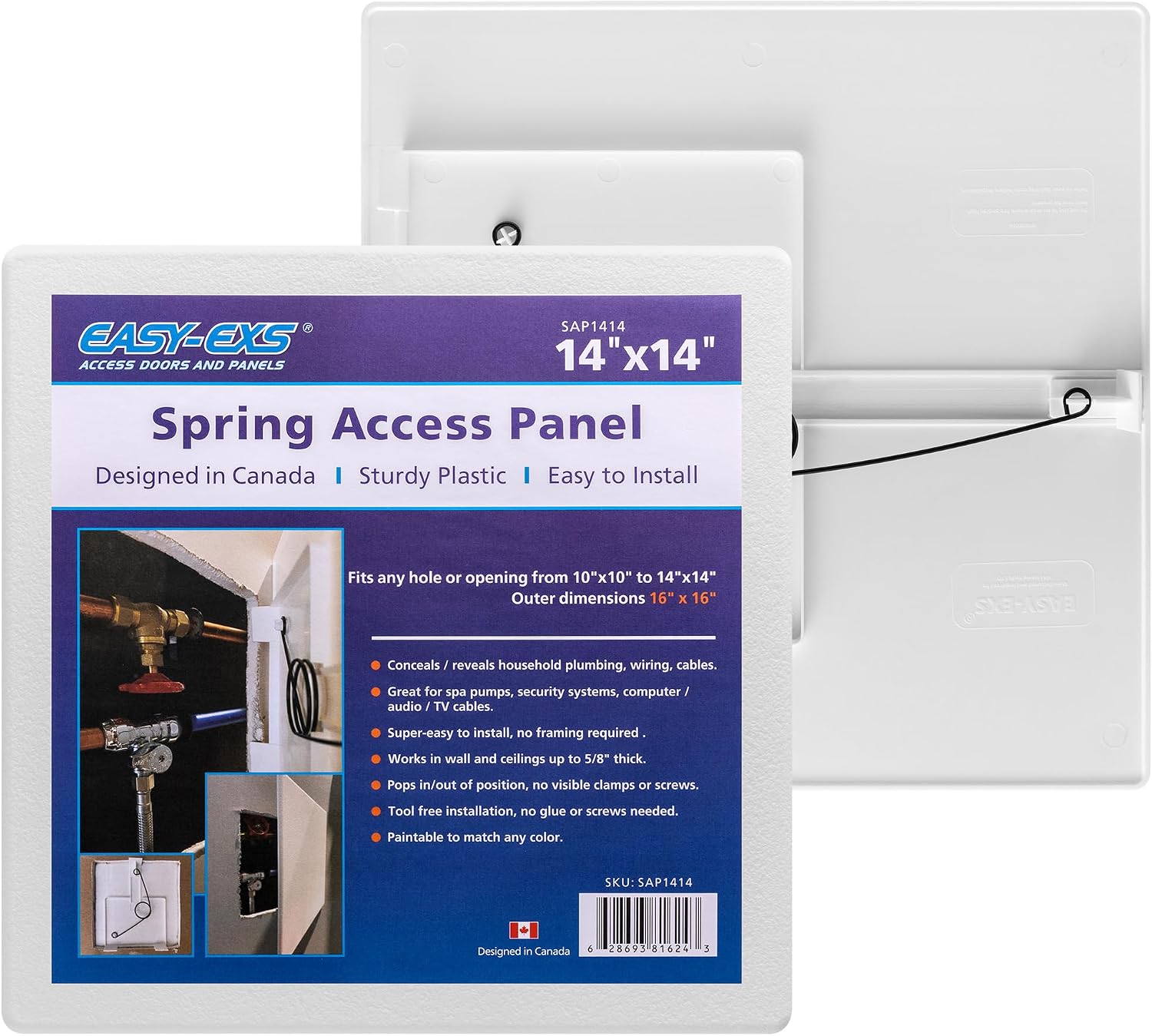
Easy-Exs · SAP1414
Rated 4.6 out of 5, 718 ratings online
Fits 10 × 10 to 14 × 14 in openings · Overall 16 × 16 in
USD $18.49 each
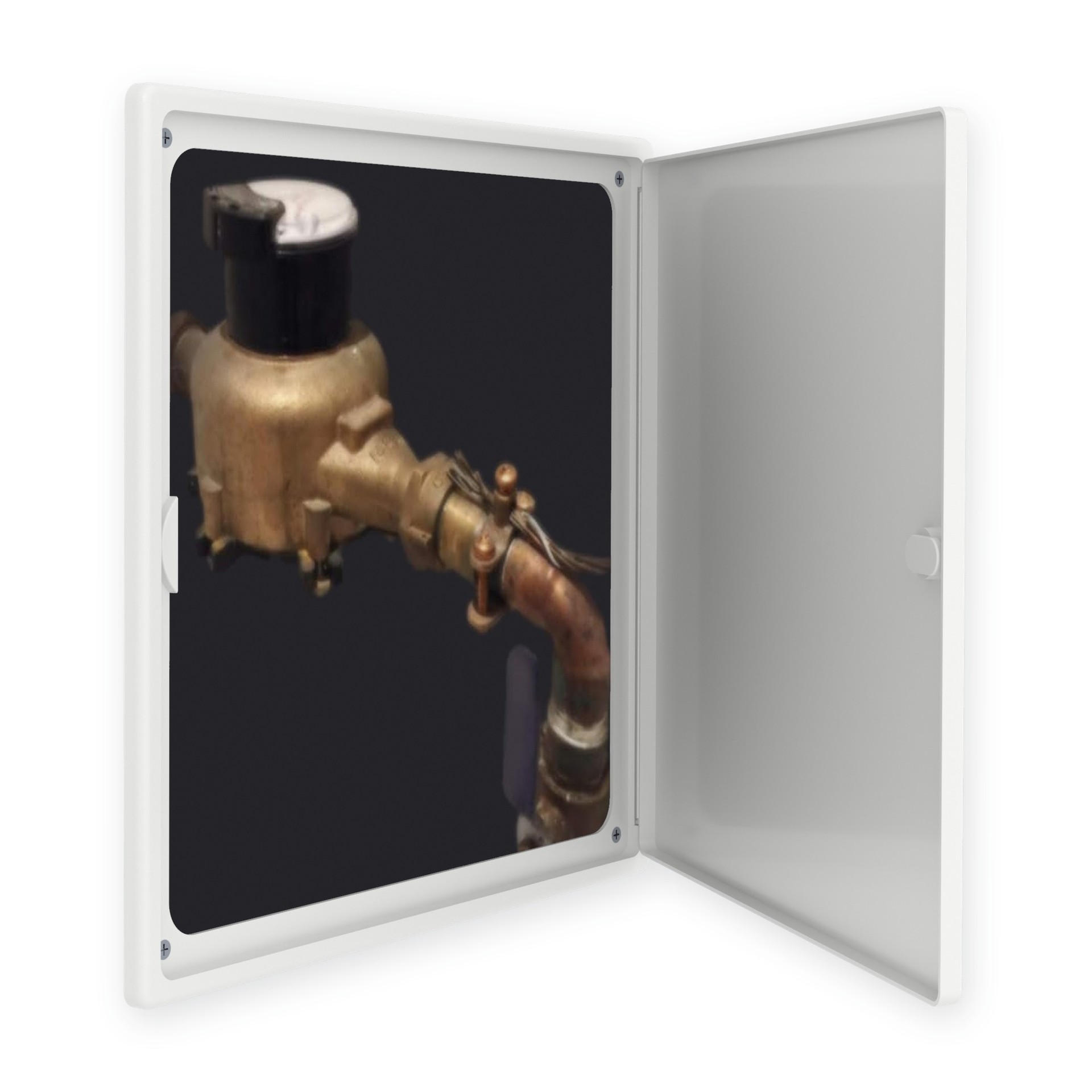
Easy-Exs · PAD1212
Rated 4.4 out of 5, 2,789 ratings online
Maximum service opening 10.35 × 10.35 in (estimated) · Overall 12 × 12 in
USD $13.99 each
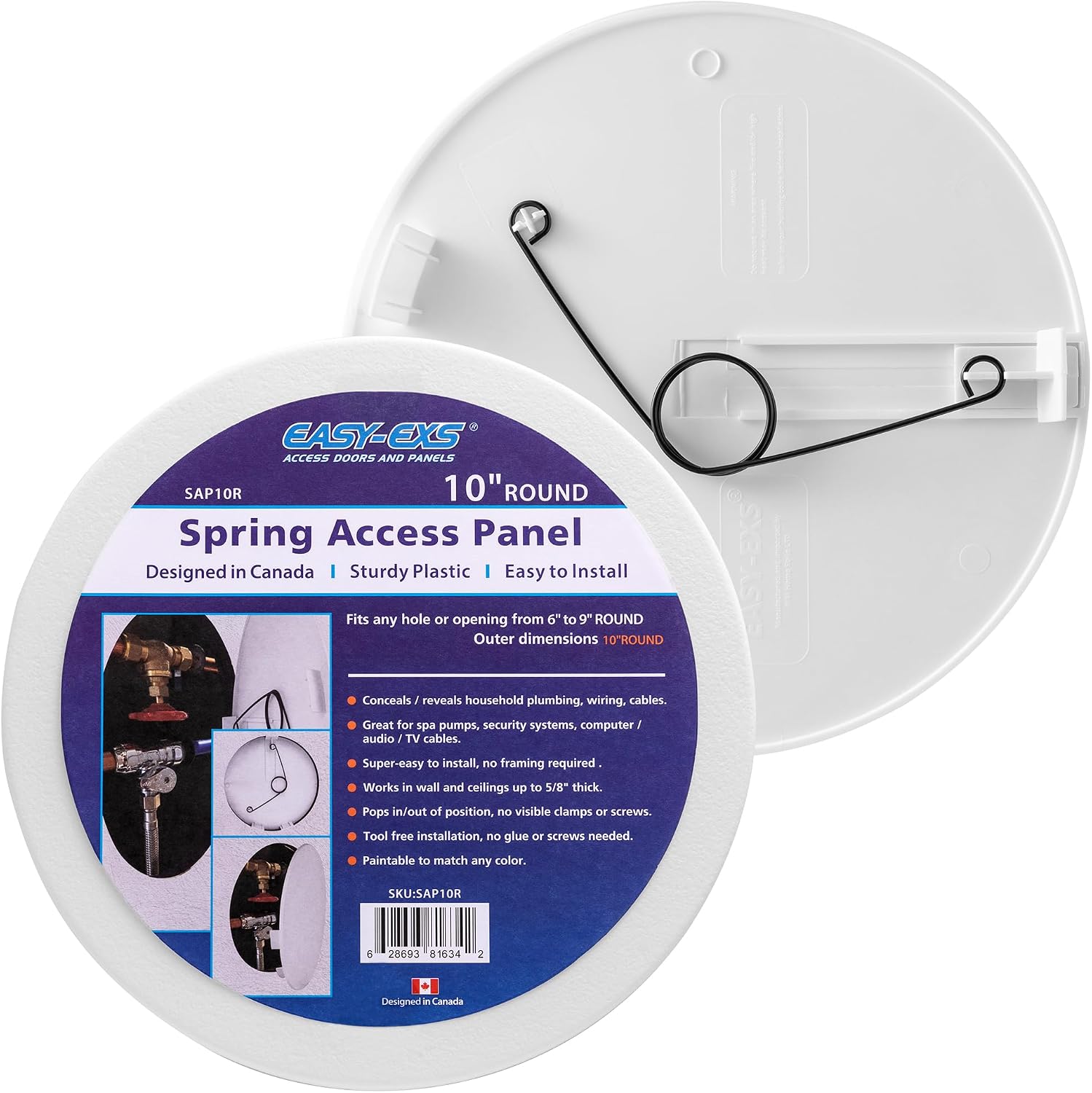
Easy-Exs · SAP10R
Rated 4.5 out of 5, 243 ratings online
Fits 6–9 in round openings · Overall 10 in diameter
USD $10.99 each
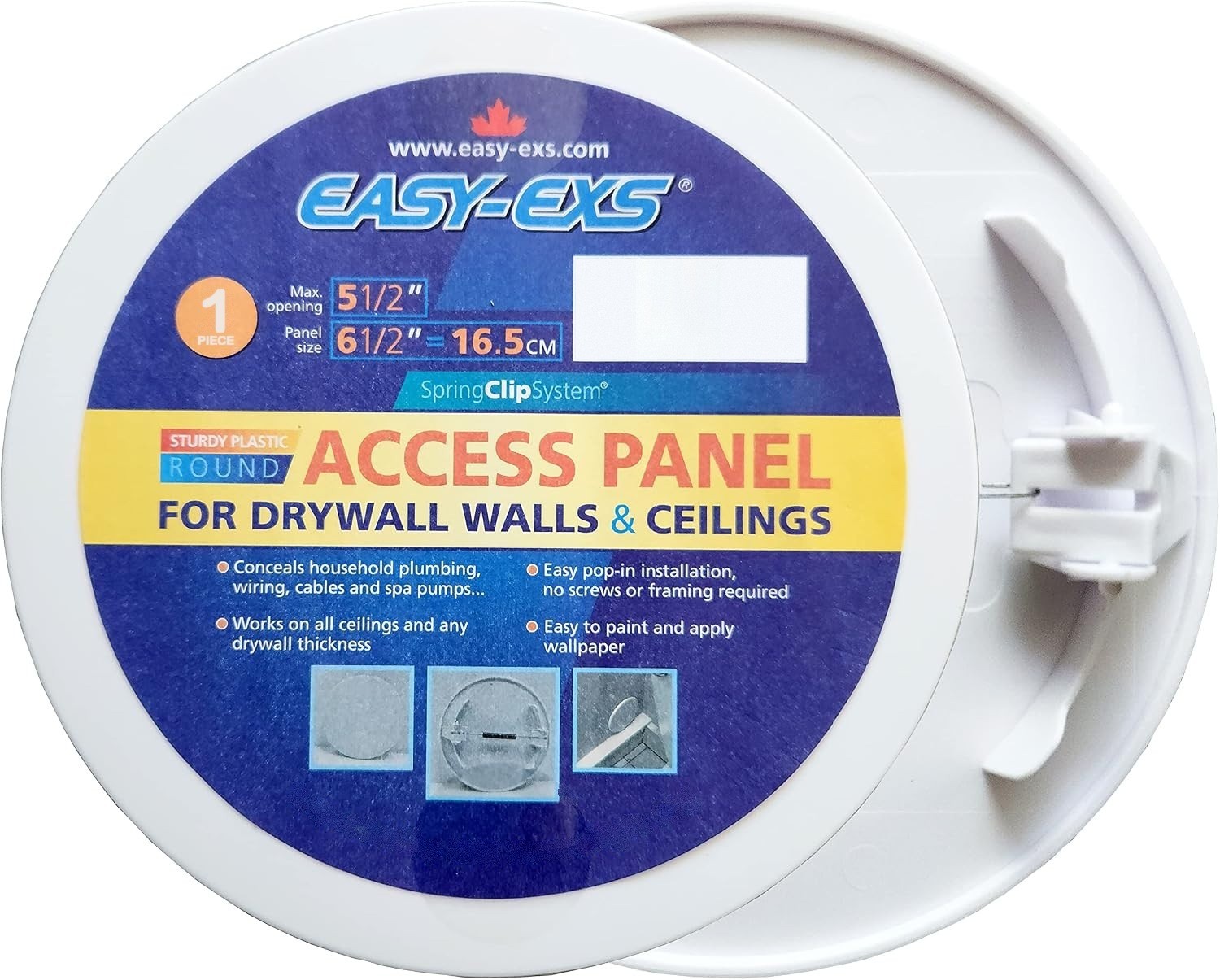
Easy-Exs · PAP65
Fits 5.25–5.5 in round openings (smallest estimated) · Overall 6.5 in diameter
USD $6.49 each
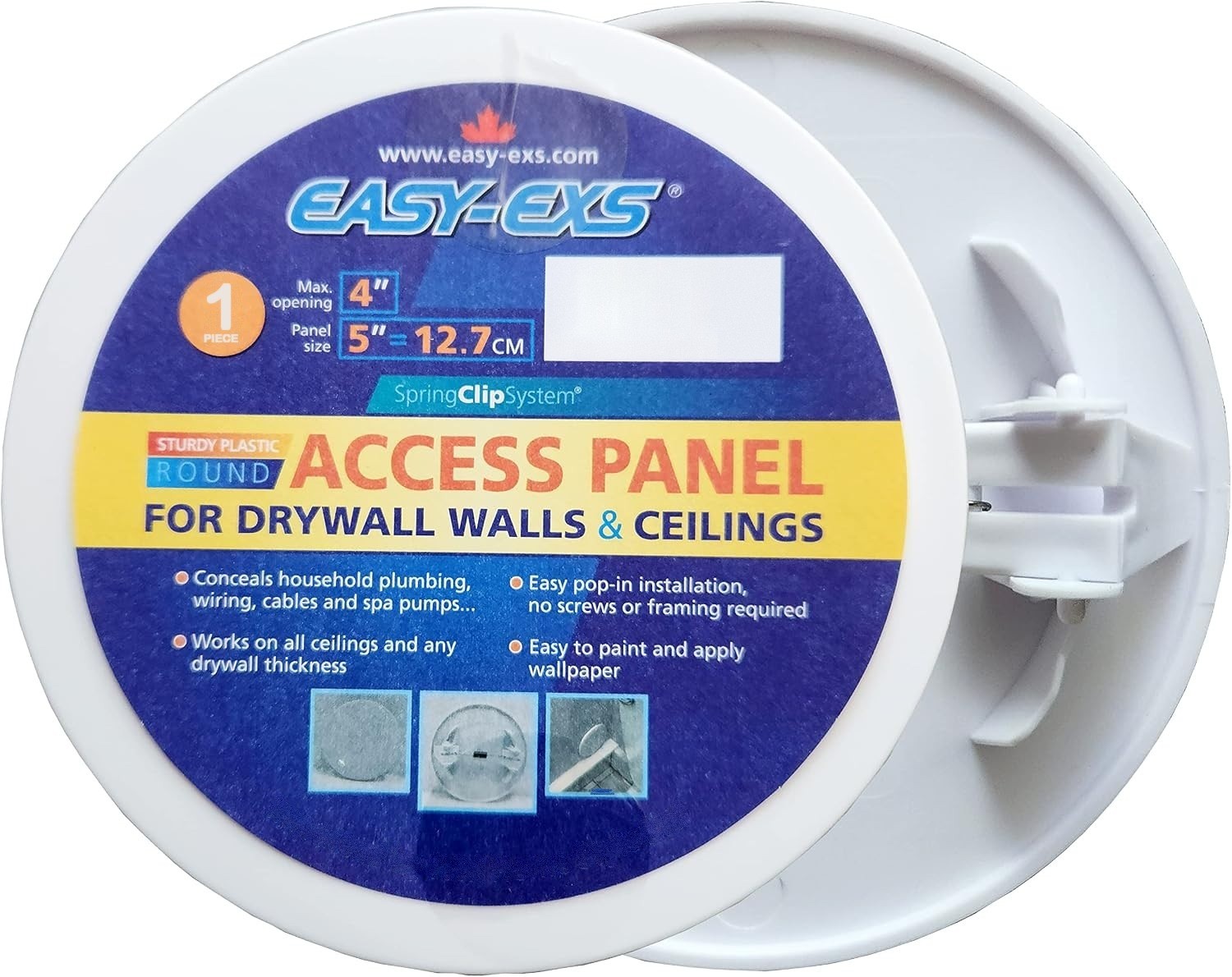
Easy-Exs · SAP50
Fits 3.75–4 in round openings (smallest estimated) · Overall 5 in diameter
USD $5.49 each
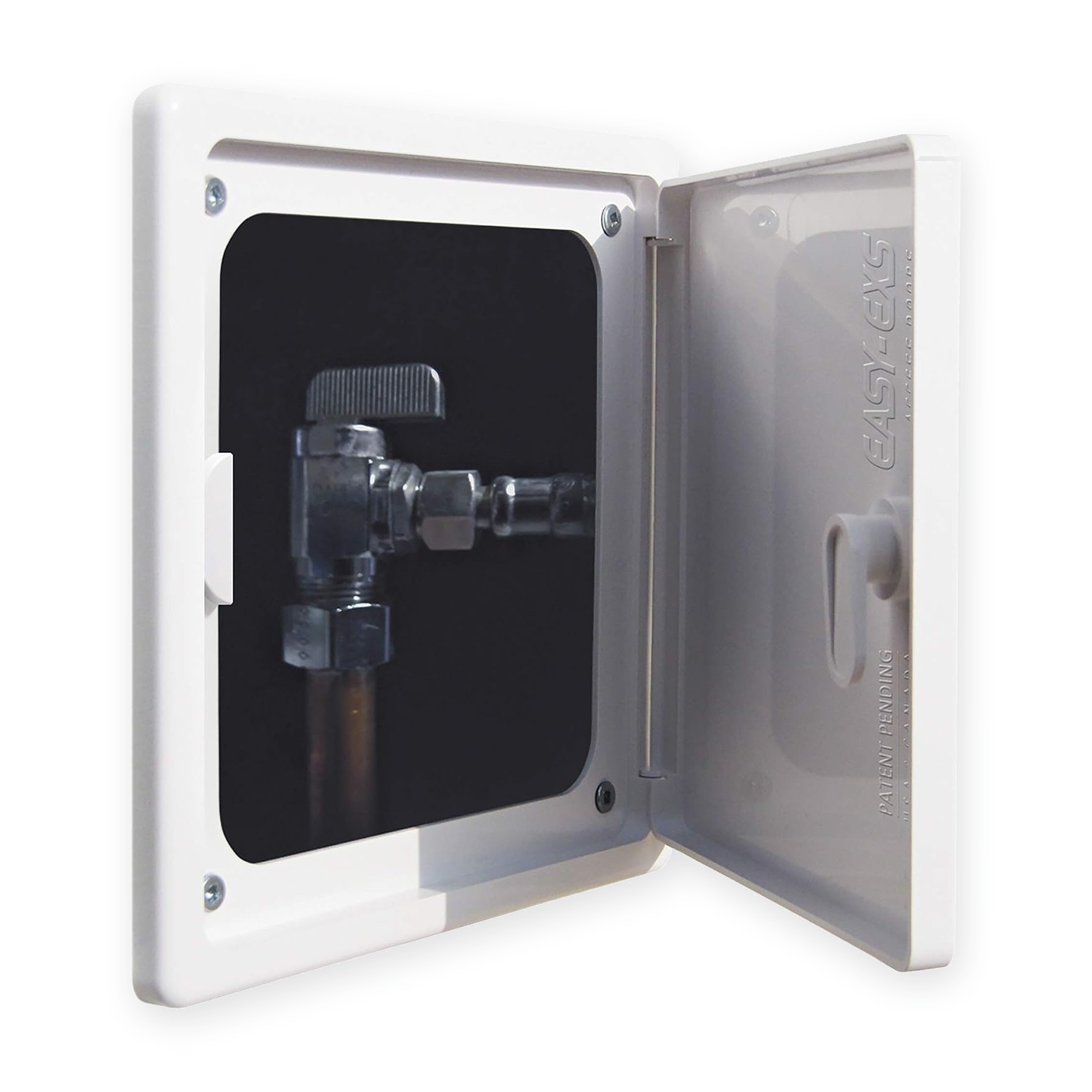
Easy-Exs · PAD0606
Rated 4.4 out of 5, 2,789 ratings online
Maximum service opening 4.35 × 4.35 in · Overall 6 × 6 in
USD $8.49 each
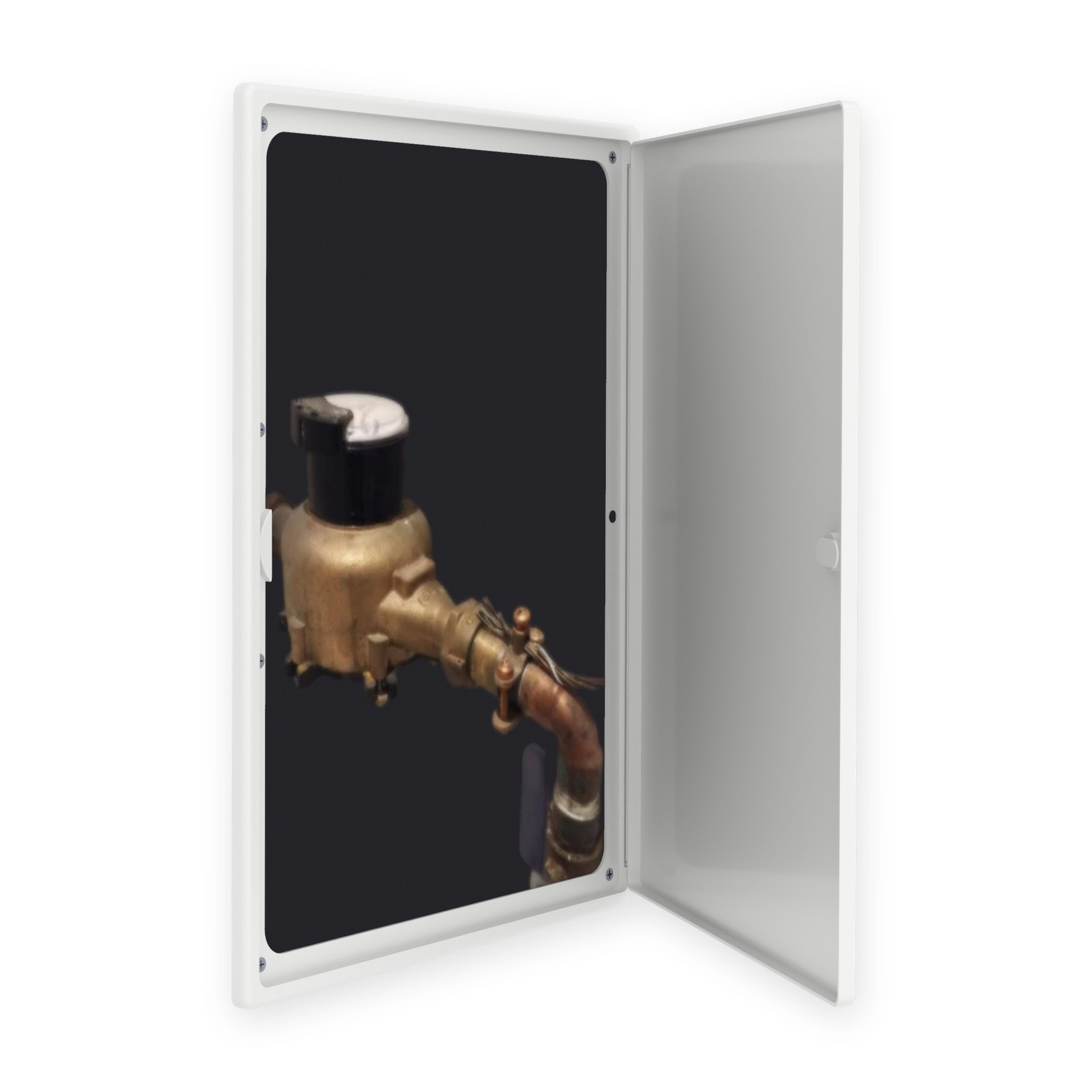
Easy-Exs · PAD1216
Rated 4.4 out of 5, 2,789 ratings online
Maximum service opening 10.35 × 14.35 in (estimated) · Overall 12 × 16 in
USD $16.49 each
They solve different problems, and searches for one often turn up the other:
We sell the second kind only. If the job needs a cable exit, use a wall plate made for that.
Fishing cable through a finished wall or ceiling often means cutting an opening to get past horizontal blocking, a fire block or a turn between a wall and a ceiling. Patching that opening means cutting it again for the next run. Covering it with an access panel keeps it ready.
Turn off any circuit near the cut, and check the bay for pipes and power cables before you cut. Our guide to installing an access panel in drywall covers the cut itself.
Choose by the size and shape of the hole, then by how often you'll open it:
The sizes chart compares every opening and cover side by side.
A cable run that crosses a fire block, or passes through a fire-rated wall or ceiling, has to be sealed the way your building code requires. An access panel is not part of that seal, and none of our panels or doors is fire-rated.
Ask your building department what the adopted code requires. If you aren't sure whether a wall or ceiling is rated, ask the building owner or your building department before you cut.
A pull point only works if it still opens. Leave slack and space behind the panel, route cable beside the opening rather than across it, and don't bundle cable across the back of a door. Your electrical inspector can tell you which rules apply to the run.
For a junction box on a line-voltage circuit in the same wall, see the electrical access panels page.
No. A low-voltage wall plate, or brush plate, is where cable comes out of the wall to a TV, router or other device. The products here cover a hole you need to reach into later, such as a pull point on a cable run. We don't sell wall plates.
One that covers the hole you cut, with room for your hand and a fish tape. Spring-loaded panels fit square openings from 6 × 6 to 8 × 8 in (SAP0808) or from 10 × 10 to 14 × 14 in (SAP1414). For a round hole cut with a hole saw, the round covers fit openings of about 3.75 to 4 in, about 5.25 to 5.5 in (the smallest estimated), or from 6 to 9 in.
Not one of these. None of our panels or doors is fire-rated. Ask your building department what the adopted code requires for an opening in a rated wall or ceiling.
Yes. Both the spring-loaded panels and the hinged doors fit drywall ceilings as well as walls. Overhead, a hinged door stays hanging from its frame when opened, while a removable panel comes down into your hand.
Keep them clear so the panel still opens: leave slack, and route cable beside the opening rather than across the back of it. Your electrical inspector can tell you which rules apply to the run.