
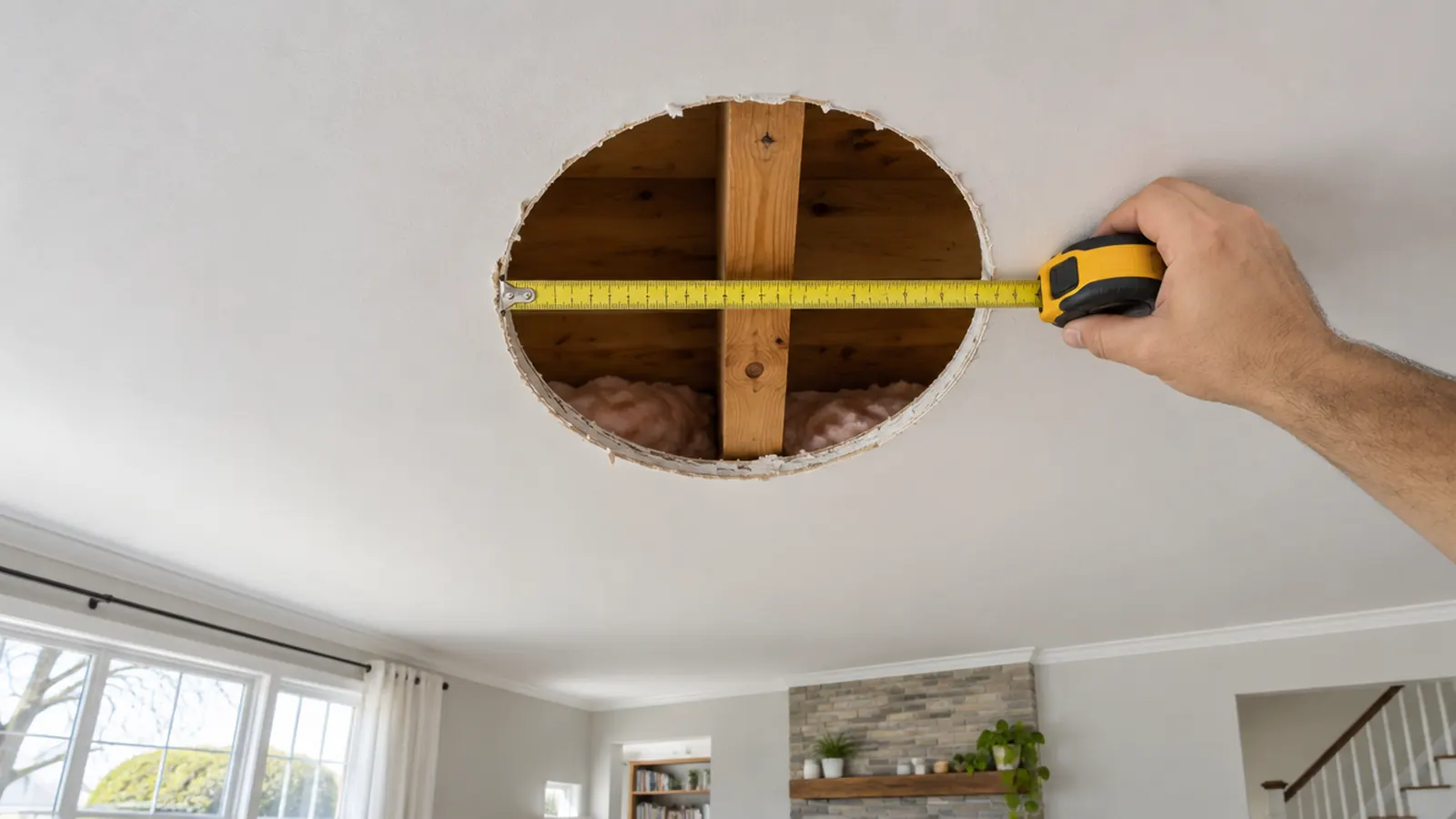
A round access cover needs more information than the diameter of the old cover. Start with the opening itself, then compare the outside diameter and rear mechanism of the panel you intend to use.
The Easy-Exs round range includes a 10 in adjustable model and two smaller Click-Fit covers. They do not all use the same opening size or rear hardware, so a similar front appearance is not enough to identify a replacement.
First, identify what you are measuring
The opening diameter is the size of the circular hole. The outside diameter is the size of the front cover. The outside cover is larger so that it can conceal the opening as designed, but that difference alone does not establish a compatible installation.
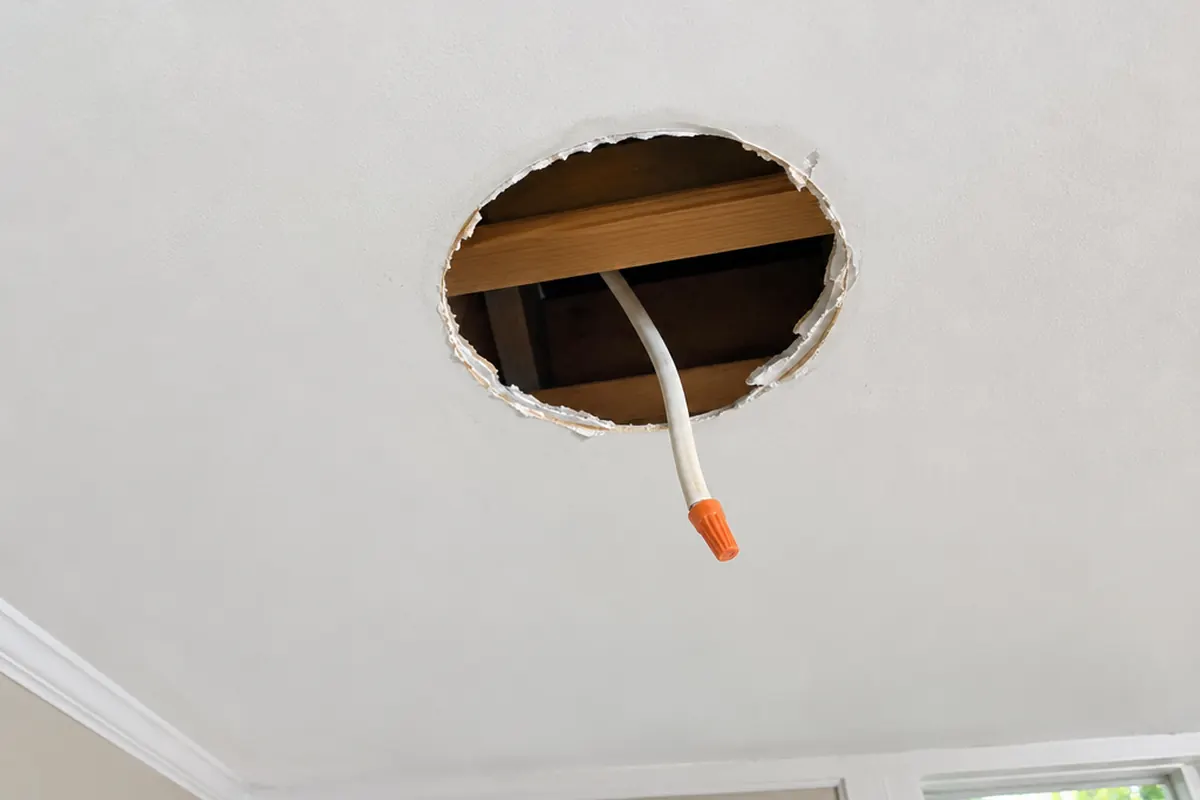
If a cover is currently fitted, identify its model before removing it and follow the applicable removal instructions. Do not force a cover, pull on concealed services or reach into an unknown opening. If you are unsure what is behind the surface, have the area assessed before proceeding.
Measure through the center
With the opening safely accessible, measure from one inside edge to the opposite inside edge through the center. Record that measurement, then take another diameter at a right angle. For a hole that is not perfectly round, note the widest and narrowest measurements rather than recording only a convenient one.
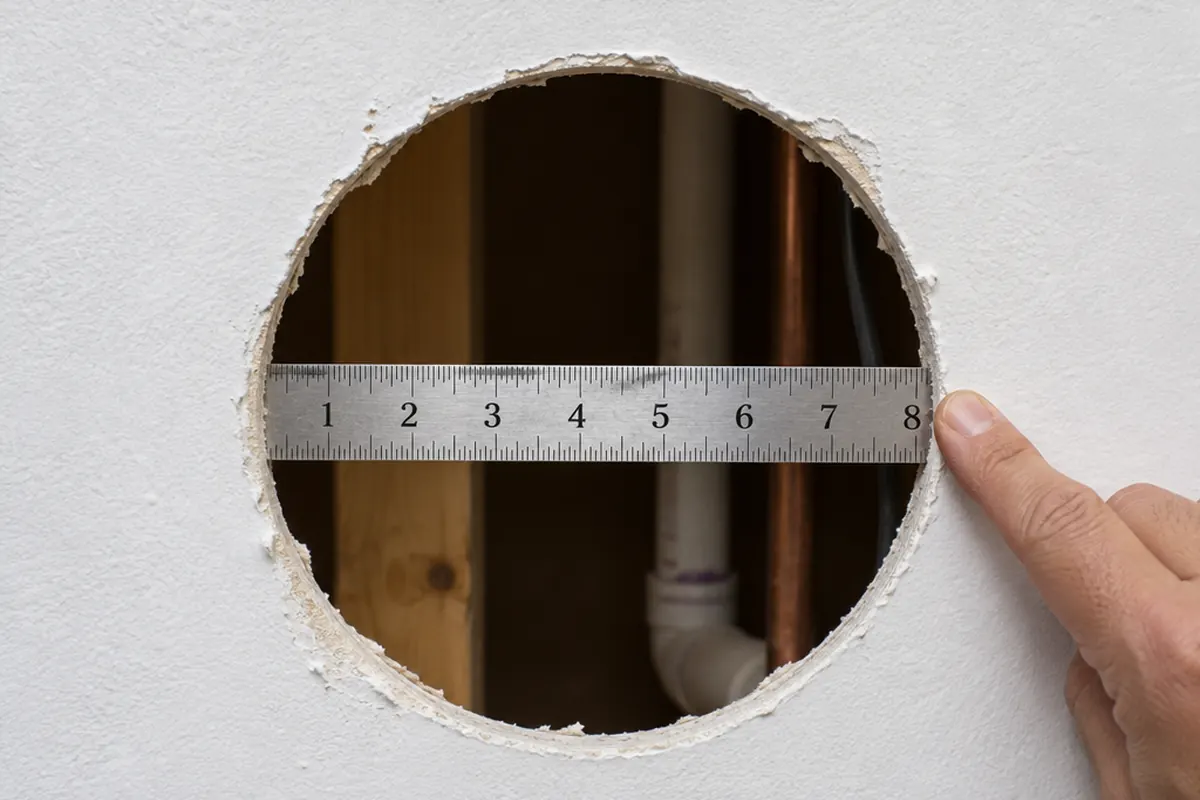
Keep the tape straight across the opening. Measuring a shorter chord away from the center can understate the diameter. Include a photograph showing the overall opening when asking for help, but do not treat a photograph as a substitute for the physical measurement.
If the center is hard to judge by eye, let the tape find it. Hook the end on one edge and hold it there, then sweep the tape slowly across the far side. The reading climbs as the tape nears the center and drops again past it, so the highest number you see is the diameter. Repeat from a point a quarter of the way round the hole.
Check the surrounding surface and space behind
Look at the condition of the edge and the flat surface around it. A damaged, crumbling or uneven edge may need repair before a cover can sit as intended. Check whether the selected cover would overlap a nearby fitting or curved surface.
The rear spring or clips also need the space and support specified for that model. A pipe, wire, insulation layer or other obstruction can affect the fit. Do not bend or modify the mechanism to make an unsuitable cover fit an opening.
Compare the actual Easy-Exs models
| Model | Listed opening | Overall outside diameter | Offer |
|---|---|---|---|
| SAP10R adjustable | 6–9 in diameter | 10 in | Single panel |
| SAP50 Click-Fit | 3.75–4 in diameter (smallest estimated) | 5 in | Single panel |
| PAP65 Click-Fit | 5.25–5.5 in diameter (smallest estimated) | 6.5 in | Single panel |
SAP10R is the larger round adjustable panel with a distinctive black loop spring on its rear. SAP50 and PAP65 use the smaller spring-clip construction shown in their model photographs. Do not use a rear view of SAP10R to explain the mechanism of the two smaller products.
These measurements identify products to compare; the current model documentation still governs installation. The round access panel category links to the exact product pages and their available resources.
Which model fits the hole you measured?
Compare your largest reading with the listed opening, not with the cover. Some typical holes, and what each one needs:
- A 7.5 in hole left by a recessed light: SAP10R round cover: fits 6–9 in round openings, overall 10 in diameter
- A 4 in hole: SAP50 round cover: fits 3.75–4 in round openings (smallest estimated), overall 5 in diameter
- A 5.5 in hole: PAP65 round cover: fits 5.25–5.5 in round openings (smallest estimated), overall 6.5 in diameter
- A 5.75 in hole falls in the gap between the PAP65's 5.5 in and the 6 in where the SAP10R's range starts. Open it up to at least 6 in rather than fitting a cover listed for a smaller hole.
- A hole wider than 9 in is past the round range. Cutting it out to a square at least as wide as the hole, from 10 × 10 to 14 × 14 in, brings it into the range of the SAP1414 spring-loaded panel: fits 10 × 10 to 14 × 14 in openings, overall 16 × 16 in
Measure before you order: our guide on how to measure for an access panel shows how, and the access panel size chart compares every opening and cover. How to install an access panel in a ceiling covers fitting it.
What mistakes do people make with round holes?
- Measuring the light's trim. A recessed light's trim ring is wider than the hole behind it. Once the fixture is out, measure the cut in the ceiling itself.
- Measuring to torn paper. A hole left by a removed fixture often has ragged facing paper or crumbled gypsum at the edge. Measure to sound material, because that is what the cover will rest on.
- Rounding a metric reading. Converted figures land between whole inches. Keep the decimals until you have compared them with the listed range.
- Trusting one reading. An old hole may be slightly oval. Two readings at right angles show it, and both have to fall inside the listed range.
A simple inquiry checklist
Include the opening's widest and narrowest diameter, the product model if known, the type of surface and any nearby obstruction. Explain whether you are replacing an existing cover or planning a new access point. For several openings, record each different size separately and state the number of panels required.
Keep units visible. If you measure in millimeters, include the original millimeter measurement rather than rounding it to a convenient whole inch. A rounded figure can matter when comparing a listed fit range.
What do codes say about round openings over wiring?
Round openings often sit where a light, speaker or camera used to be, with wiring behind them.
Ask your electrical inspector whether a round cover keeps a box behind it reachable, and, if the ceiling sits under an unheated attic, ask your building department whether the cover's edge has to be sealed.
A cover can keep a box reachable, but it is not a way to hide wiring that should be finished properly. Have a licensed electrician deal with any loose or live wiring before you cover the opening.
Before cutting a new opening
Choose the model and review its current instructions before marking the surface. Verify concealed services and any project requirements with the relevant qualified person. A product's cover diameter does not define the cut line, and a plastic cover should not be assumed to provide a fire rating or approval for an assembly.
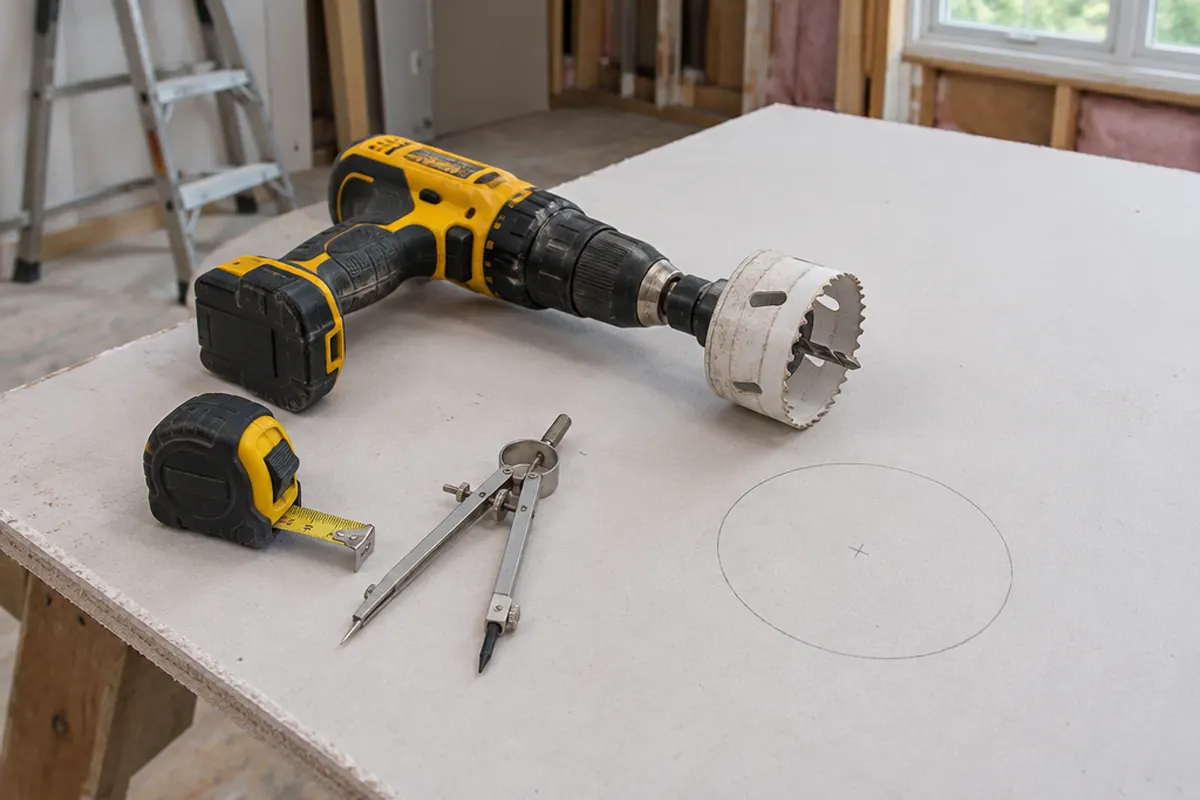
Use the model-specific measuring guides on the SAP10R, SAP50 and PAP65 data sheets to organize the measurements. If something is unclear, send your question through Contact before ordering or cutting.