
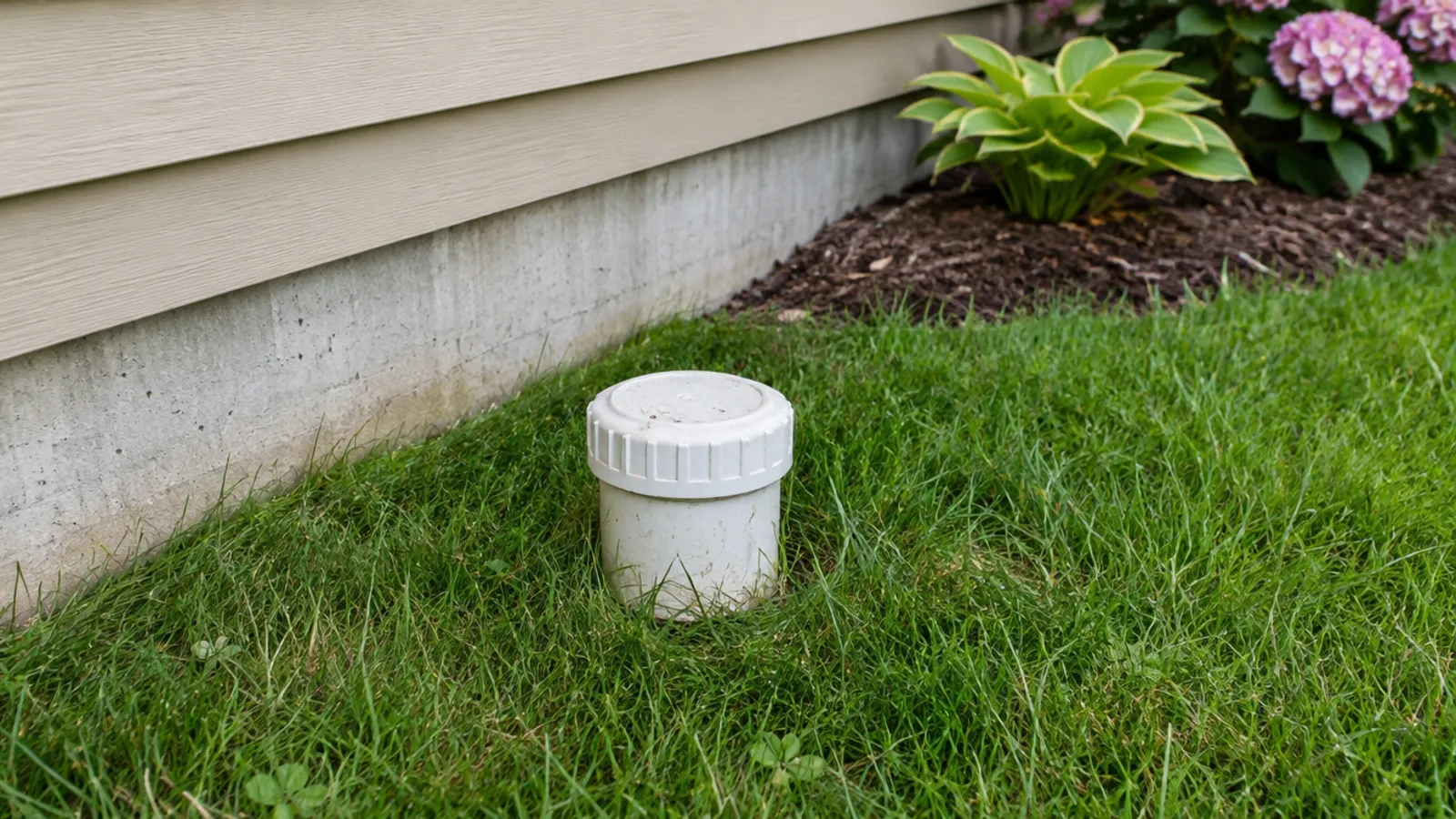
A sewer cleanout is a capped pipe that opens into your home's main sewer line, giving a plumber a direct access point to clear a clog or run a camera. To find yours, look outside near the foundation, or in the basement, crawl space or garage, for a short pipe with a threaded cap or square-nut plug.
Most homes have a main sewer cleanout located where the sewer line leaves the house, usually on the side facing the street. This guide explains what it does, how it differs from a drain cleanout, what each looks like, how to locate yours, and how to keep it accessible.
What is a sewer cleanout?
Every drain in a home, from the toilets and showers to the kitchen sink and the washing machine, empties into one pipe: the main sewer line. It carries wastewater out to the municipal sewer system, or to a septic tank where the property has a septic system. A sewer cleanout is a fitting on that line with a removable threaded cap or plug. Take the cap off and you have direct access to the inside of the pipe.
That access point matters because the main sewer line is where all the home's clogs end up. Grease, wipes, toilet paper, tree roots and other debris build up in it over the years. When it clogs, wastewater and human waste have nowhere to go, and they back up through the lowest drain in the house. Through the cleanout, a plumber can feed a drain cable or a water jetter straight into the pipe, or push a camera down it, without removing a toilet or working from a vent on the roof.
Think of it as the plumbing system's service door: a small piece of plumbing infrastructure that only helps if you can find it in a hurry, like a water shut-off valve. Knowing its exact location before an emergency will save time, and it keeps a plumber from digging up the yard to locate it.
How is a sewer cleanout different from a drain cleanout?
Both are capped openings into the drainage system, placed to provide access for cleaning. The difference is which pipe they open.
- The main sewer cleanout, also called the sewer line cleanout or main line cleanout, opens the home's main sewer line. Clearing a blockage here clears it for every drain in the home. Some are two-way cleanouts, with openings that let a plumber work toward the house or toward the street.
- A drain cleanout opens a branch of the plumbing system inside the home: the bottom of a vertical stack, a drain under the basement floor, or a fitting in a wall behind a kitchen sink or a laundry standpipe. Clearing a clog there clears that branch, not the main sewer line.
- A property line cleanout, which some cities use, sits where the private sewer line meets the city's part of the sewer system, often inside a ground box with a metal cover. Not every city has them.
If only one drain is slow, the blockage is usually in its own trap or branch, and a drain cleanout or the trap itself is the way in. If several drains back up at once, the clog is in the main sewer line, and the sewer cleanout is the place to start.
How many cleanouts does a house have?
There is no single number. Most homes have one main cleanout, plus an indoor cleanout at the bottom of each vertical stack and on some longer drain runs. A large house with bathrooms at both ends has more of them than a small one. How many cleanouts your home has depends on its size, its age and the plumbing code it was built to.
Older homes and older properties often have fewer, because their plumbing was built to older codes. A home built before modern codes may have only an indoor cleanout on a cast iron stack, and no outdoor one at all. In rare cases a previous owner buried the outdoor cap under new landscaping or poured a patio over it. Newer homes often have an outdoor cleanout near the foundation as well as the indoor ones. On older properties, a plumber can add one where the sewer line leaves the house.
What does a sewer cleanout look like?
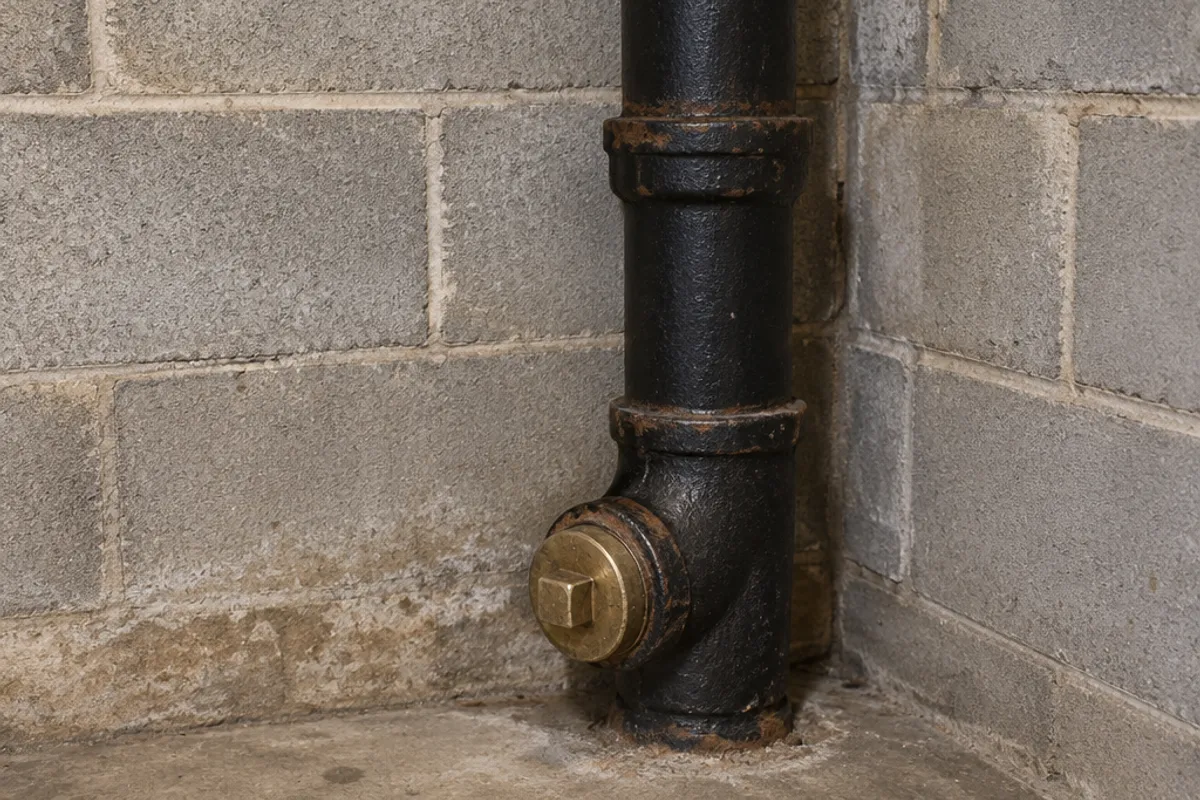
It depends on where it is and how old the home is:
| Where it is | What to look for |
|---|---|
| Outdoors, in the yard | A short, round capped pipe sticking a few inches out of the ground, usually white or black plastic on newer homes. The cleanout cap screws on and often has a square nub or a square recess for a wrench. |
| Outdoors, in a driveway or near a sidewalk | A round metal cover flush with the ground, or a ground box with a lid. |
| Basement, older homes | A cast iron fitting near the bottom of a stack, closed with a brass or iron plug that has a square nut on its face. |
| Basement, crawl space or garage, newer homes | A white or black plastic cleanout fitting on a stack or a drain pipe, with a threaded plug. |
| Finished wall | A flat cover plate, often round and screwed to the plug, or a small access panel. |
Don't confuse it with the things that look similar in a yard: a water meter box, an irrigation valve box, or a pipe from a downspout. A septic tank lid is much larger than a capped pipe and sits over the tank itself, not on the line.
Where is the sewer cleanout located?
The location of the main cleanout depends on where the sewer line leaves the house and which way it runs to the street or the septic tank. Start on that side, and check each location below.
Outside the house
- Near the foundation. The most common spot for an outdoor sewer cleanout, on the side facing the street or the alley where the sewer main runs. It is often located in line with a bathroom or the kitchen.
- In the front yard, along the path the sewer pipe takes toward the street, sometimes close to the property line.
- Hidden. Check under overgrown grass, mulch and shrubs, behind bushes near the foundation and under a deck. Caps are easy to lose in landscaping.
In colder climates, such as much of Alberta, Quebec, the Maritimes and the northern US states, sewer lines run deeper, and the sewer cleanout is more often inside, in the basement, than in the yard.
Inside: basements, crawl spaces and utility areas
Indoor cleanouts sit in utility areas more often than in finished rooms:
- Basement. On the floor near the wall facing the street, where the main sewage line passes through the foundation, or at the bottom of the main stack, the largest vertical drain pipe.
- Crawl spaces. On the sewer line where it runs toward the foundation wall. Take a flashlight; crawl spaces hide a cleanout behind ducts and insulation.
- Garage. In homes on a slab, often in the garage floor or low on a garage wall.
- Utility room or laundry. Near the water heater, the washing machine standpipe or a floor drain. Check behind anything stored against the utility room walls.
- Bathrooms. Low on a wall behind a toilet: a drain cleanout behind a cover plate or panel in a finished wall.
If you still can't locate it
- Follow the vent pipe on the roof down: the main stack under it drops to the main sewer line.
- Check the house plans, the plot plan or the home inspection report, and ask the previous owner.
- Ask your local utility or building department; some keep records of sewer connections.
- Probe gently along the path of the pipe with a long screwdriver or a thin rod for a cap just under the grass. Before you dig, request a utility locate: call 811 in the US, or your province's one-call service in Canada.
- A plumber can push a camera with a locator through an indoor cleanout and mark where the pipe and a buried cap are located.
Once you locate your sewer cleanout, mark the spot or take a photo, and note its location for whoever owns the home next.
What is a sewer line cleanout used for?
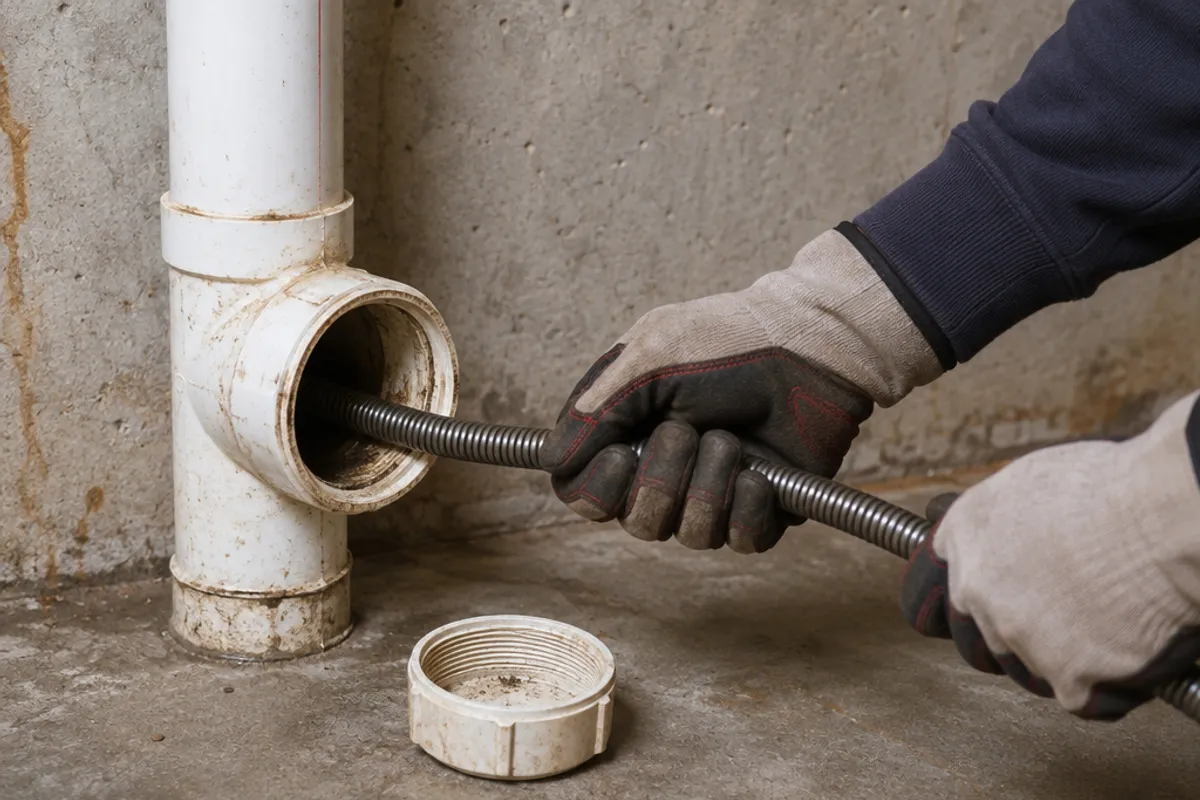
Clearing blockages
This is the main job, and the reason plumbing professionals look for the cleanout first. A plumber removes the cap and feeds a drain auger cable or a water jetter into the main sewer line, toward the blockage. Because the cleanout opens the pipe directly, the cable doesn't have to pass through a toilet or a sink trap, and nobody has to pull a toilet to get in. It is faster and cleaner, and it can save time on an emergency call.
Camera inspection, tree roots and repair options
If the same clog comes back, the next step is a camera inspection through the cleanout. A plumber can inspect the whole pipe from the inside: tree roots growing in through the joints, small cracks, a sagging section that holds water, grease buildup, or a broken pipe. Root intrusion is common where large trees or mature trees grow near the sewer line, because roots find the moisture at a leaking joint.
The camera finds the root cause, and that decides the fix. Cleaning alone may be enough. Pipes with root intrusion may need regular maintenance. A cracked or collapsed section needs a repair or a new pipe. Ask to see the video and where each sewer problem sits. If you are buying an older home, have the sewer line inspected through the cleanout before you close.
Should you open a sewer cleanout yourself?
You can open it to check it, carefully. During a sewer backup, the pipe behind the cap can be full of raw sewage under pressure.
The signs of a clogged sewer line are several drains backing up at once, a toilet that gurgles when the washer drains, water rising in a basement floor drain or a tub, and sewage odors from the drains. Any of them points to a sewer problem rather than one slow drain.
- Stop using water in the home: no flushing, no washing, no showers.
- Put on rubber gloves and eye protection. Indoors, have a bucket and old towels ready.
- Stand to one side, not over the cap. Loosen it slowly with a wrench, a little at a time, so anything behind it comes out gently.
- Inspect the opening. If water stands in the pipe or rises in it, the blockage is further down the sewer line, between the cleanout and the street. If the pipe is empty while drains inside back up, the clog is between the fixtures and the cleanout. That tells the plumber the location of the problem.
- Screw the cap back on before you leave it. A missing or cracked cap lets unpleasant odors out and lets rainwater, soil and debris in, so replace a damaged one.
Never open an indoor cleanout when the drains above it are full: everything in the pipes above comes out onto the floor. An old cast iron plug can be seized, and forcing it can crack the fitting. Clearing a main sewer line clog, and any repair to the sewer line, is work for a licensed plumber where your area requires one.
Who pays for which part of the sewer also varies. In some cities the owner is responsible for everything from the home to the sewer main; in others the city takes over at the property line or at a city cleanout. Cleanout rules vary by city too, so ask your local utility before you hire anyone.
How do you keep an indoor cleanout accessible?
Before you cover or move an indoor cleanout, ask your local building department what access it requires.
Outdoors and in floors, keep it simple. Keep the grass trimmed around the sewer cleanout cap, mark it, and never bury it under landscaping or pave over it. An access panel doesn't apply there: many cleanouts are in the yard or a basement floor, and our panels are made for walls and ceilings.
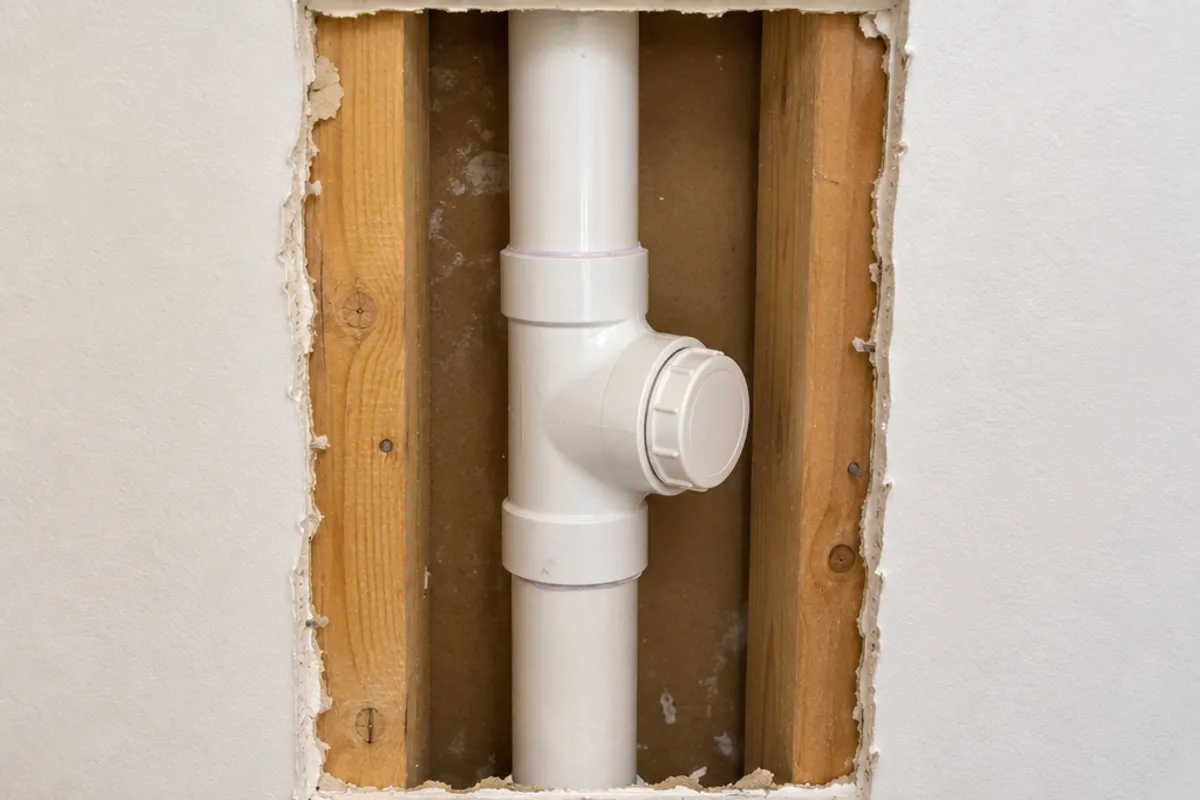
A drain cleanout in a finished wall is different. Don't drywall over it. Leave an opening between the studs and close it with a removable access panel, so the cleanout stays an access point you can open without cutting drywall. Size the opening to provide access for the work, not just the plug: room to turn it with a wrench and to feed a cable into the pipe.
- SAP0808 spring-loaded panel: fits 6 × 6 to 8 × 8 in openings, overall 10 × 10 in.
- The SAP1414 fits larger openings, from 10 × 10 to 14 × 14 in, under a 16 × 16 in cover.
No fire rating or water-resistance rating is claimed for our panels, so ask your building department before cutting into a fire-rated wall, such as one between a garage and the house. The plumbing access panels page shows the panels for this kind of job.
Measure before you order: our guide on how to measure for an access panel shows how, and the access panel size chart compares every opening and cover. How to install an access panel in drywall covers fitting it.