
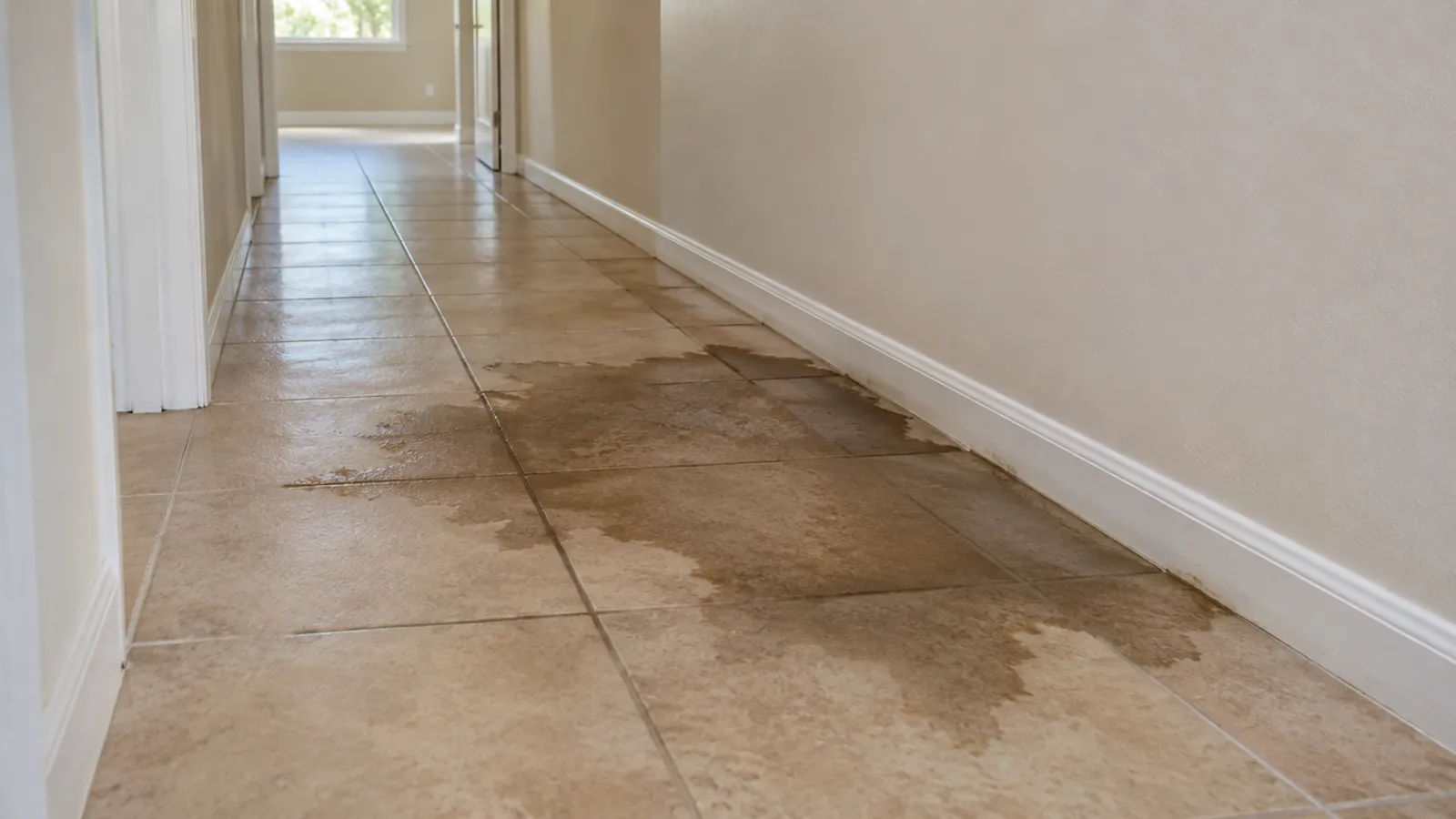
A slab leak is a leak in a water supply or drain pipe that runs under, or inside, the concrete slab a house is built on. Signs include warm or damp spots on the floor, the sound of running water and a rising water bill. A water meter test confirms a supply leak; a plumber finds where it is.
Slab foundations are common across the US Sunbelt, in Florida, Texas, Arizona and California, where many houses have no basement or crawl space. The same applies to homes and additions on slab foundations in the US or in Canada.
What is a slab leak?
A slab leak occurs when a pipe beneath a concrete slab, or inside it, starts to leak. In a slab-on-grade house, the concrete foundation is a slab poured on the ground, and some or all of the plumbing system runs under it. Two kinds of pipe can leak there:
- Supply pipes carry water under pressure from the main to every fixture, on a hot side and a cold side. A supply leak runs all the time, day and night, because the line is always under pressure. A leak on the hot side also keeps the water heater working, because it keeps refilling and reheating.
- Drain pipes carry wastewater away by gravity. A drain leak only leaks when water goes down that drain, and the sewer line that leaves the house can leak the same way.
Pipes beneath a slab can fail at a joint, where they rub against concrete or gravel, from corrosion in aging pipes, or from shifting soil and other soil movement under the home's foundation. Water that keeps running under a slab can soften or wash out the soil beneath the concrete foundation, so a small leak left alone can grow into water damage, mold growth and, in time, structural damage. Early detection keeps the repair smaller.
What are the warning signs of a slab leak?
The warning signs of a slab leak are visible signs of water where there shouldn't be any, plus clues you hear, feel or read on a bill. None proves a slab leak on its own; together, they are a reason to run the meter test below.
Warm spots or hot spots on the floor
A slab leak on a hot water line warms the floor above it. Walk the floor barefoot: warm spots or hot spots in one area, away from heating ducts and sunny windows, point to a potential slab leak on the hot side. A water heater that runs more often than it used to is another clue.
The sound of running water
With every fixture off, listen carefully near the floor, ideally at night when the house is quiet. The sound of running water or a hiss with nothing on means water escaping from a pressurized line somewhere, possibly a slab leak.
A water bill that jumped
If your water bill jumped while your water usage stayed the same, compare the water bill with the same months last year. A slab leak on a supply line runs day and night, so the bill climbs even when the leak is too small to see.
Low water pressure
A larger slab leak can cause low water pressure or weak flow at faucets and showers. Low pressure has other causes too, such as a clogged aerator or a faulty pressure regulator, so treat it as a clue, not proof. If the water pressure drops at only one faucet, look at that faucet first.
Damp floors, standing water and a musty odor
Damp carpet, a warped hardwood floor, lifting tile or swollen baseboards with no leak in sight are water damage from below: a slab leak can push water up through or along the slab. So can wet spots or standing water on a floor with no visible water source. A musty smell or mildew growth at the bottom of inside walls means moisture keeps coming back, and mold can pose health risks for some people.
Visible cracks in tile or in the slab are often listed as a sign too, but cracks have many causes; on their own they don't point to a leak.
Slow drains or a sewer smell
A wet spot that shows up only after a sink, tub or toilet drains, slow drains, or a sewer smell in one area point to a slab leak in a drain or a leak in the sewer line, not a supply leak. The meter can't see those.
A running toilet, a pipe leaking inside a wall or water getting in from outside can look the same; our guide to water leaks behind walls covers hidden leaks in walls.
How do you test for a slab leak at the meter?
With all water use stopped, the meter should stand still. The US Environmental Protection Agency's WaterSense program suggests reading the water meter, waiting two hours with no water in use, and reading it again: if the reading changes at all, you probably have a leak (EPA WaterSense, Fix a Leak Week).
- Stop all water usage: faucets, showers, the dishwasher, washing machine, ice maker, water softener, humidifier and irrigation. Don't flush toilets during the test.
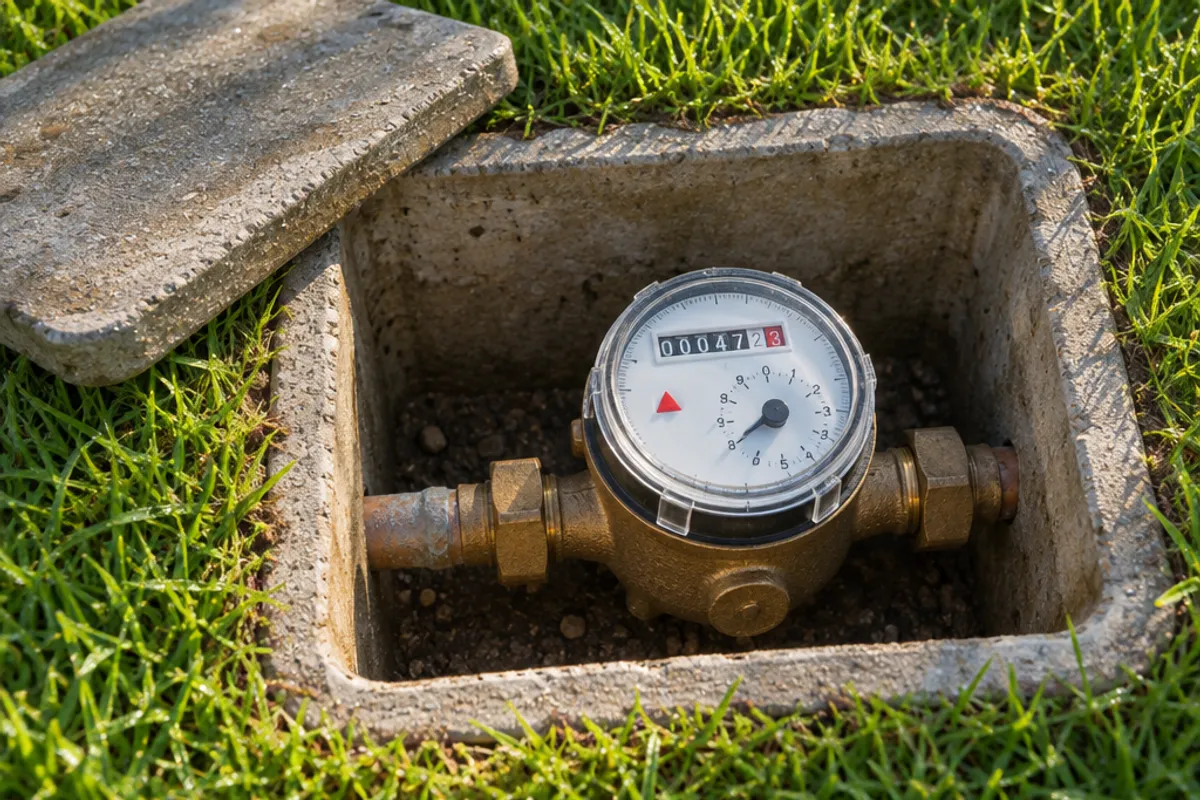
- Find the meter: outside in a box in the ground near the street, or inside where the main line enters the house.
- Watch the leak indicator, a small triangle, star or dial on many meters, for a few minutes. Constant movement of the indicator means water is flowing somewhere.
- Note the reading, wait two hours with no water used, and read it again.
- If it moved, close the main shut-off valve at the house (where to find it) and watch the meter again. If it still moves, the leak is in the service line between the meter and the house, not a slab leak. If your only shut-off is at the meter, skip this step.
- If the meter stops with the main closed, open the main again and close the cold water inlet valve on the water heater. If the meter now stands still, the leak is on the hot side; if it still moves, look at the cold side.
Rule out toilets first, because a worn flapper moves the meter too. The same EPA page suggests a few drops of food coloring in the tank: if color shows in the bowl without a flush, the toilet is leaking. Fix it, then repeat the meter test.
What can the meter test detect, and what can't it?
The meter test answers one question: is water leaving the supply side of your plumbing system when nothing is on? It can't answer the next one, which is where.
| The meter test can show | The meter test can't show |
|---|---|
| That water is leaking somewhere on the supply side after the meter, hot or cold | Whether it is a slab leak at all: a leak under the slab, inside a wall, in a toilet or in an irrigation line, all move the meter the same way |
| With the main closed, whether the leak is in the service line outside | Drain or sewer leaks: drains aren't under pressure, so a leak in one doesn't move the meter |
| With the water heater inlet closed, whether the leak is on the hot side | A leak before the meter, on the utility's side |
| A slow leak, if you compare readings two hours apart | Anything at all on a private well, which has no meter: ask a plumber |
So a moving meter is a reason to look for a slab leak, not proof of one, and a still meter doesn't clear the drains: if the signs point to a drain, a plumber checks it with a camera.
How does professional slab leak detection work?
Once the meter points to a supply leak, a plumber or leak detection company uses specialized equipment to find the slab leak:
- Pressure tests. Isolating the hot and cold lines and watching the water pressure on a gauge for each shows which line is losing water.
- Acoustic listening devices. Ground microphones pick up the sound of water escaping from a pressurized pipe, through the floor.
- Thermal imaging. Thermal imaging cameras can show the warm trail a hot water slab leak leaves on the floor surface. They don't see through concrete; they read surface temperature.
- Line locating. Locating equipment maps where the pipes beneath the slab run.
- Camera inspection. For drains and the sewer line, a camera in the line shows cracks, separated joints, root intrusion and breaks.
Ask how they will confirm the spot before anyone breaks concrete: accurate detection means a smaller opening in your floor.
What are the slab leak repair options?
There are three general ways to repair slab leaks on a supply line. Your plumber will recommend one based on the pipe's age and material, whether there have been multiple leaks, where this slab leak is, and the flooring above. If water has run under the slab for a long time, ask whether the home's foundation should be checked for structural damage too.
| Option | What is done | Worth asking |
|---|---|---|
| Spot repair through the slab | The flooring and concrete slab over the slab leak are opened, the damaged pipe is repaired, and the concrete is filled and the floor replaced | Is the rest of the line sound? What flooring has to come up? |
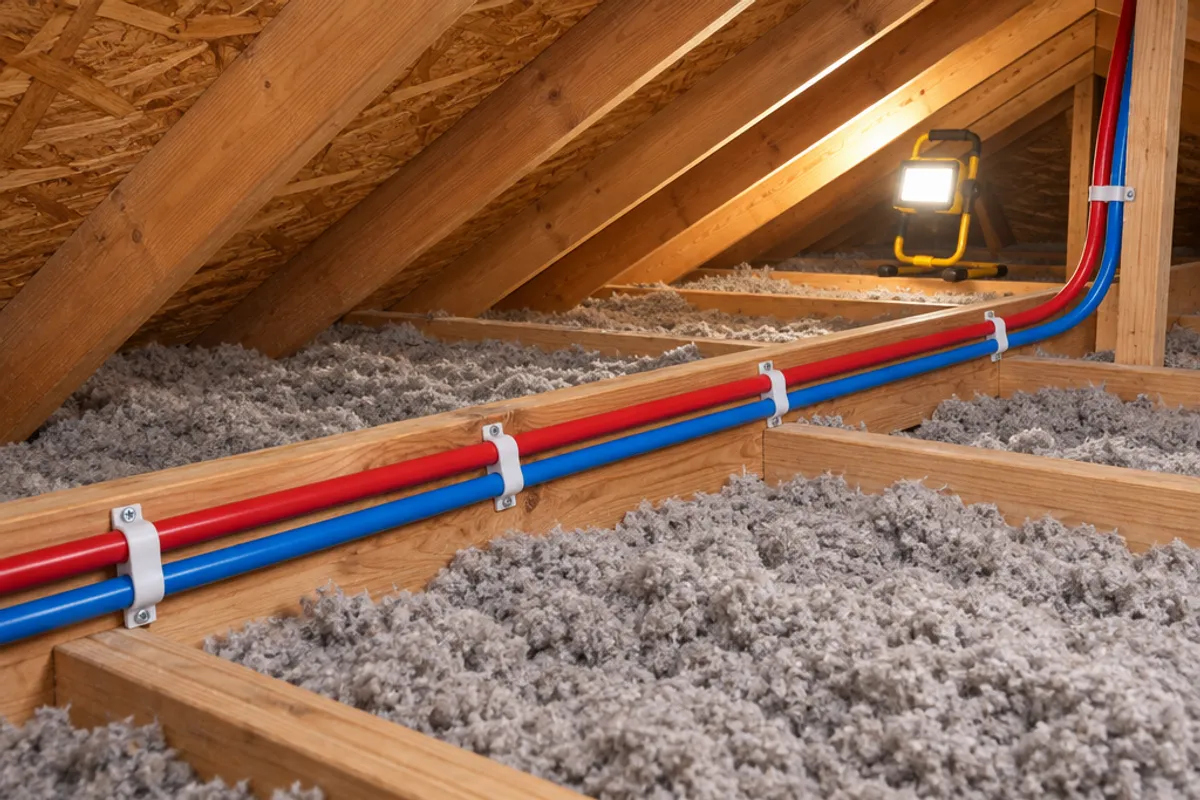
| Reroute (pipe re-routing) | The leaking line is cut off and left under the slab, and new pipe runs through walls, ceilings or the attic | Where will the new pipe run, and where will its shut-off valves go? |
| Repipe | All the water pipes in the house are replaced, usually overhead | Where will each line drop to its fixture, and where will the shut-offs and any manifold go? |
Pipe re-routing and repiping leave the old pipes beneath the floor, so the slab leak repair happens in walls and ceilings instead of through your floors.
A slab leak on a drain is a separate job; your plumber explains the options after the camera inspection.
Never cut or drill into a slab yourself. Some slabs are post-tensioned, with steel cables under high tension inside the concrete, and cutting one is dangerous. Breaking concrete, soldering and connecting new supply lines is plumbing repair work that may need a licensed plumber and a permit where you live. If there is an active leak, keep the water off at the main until the repair.
Photograph the water damage from the slab leak and the meter reading, and check your homeowners insurance policy before the work starts.
Where should valves go after a slab leak repair?
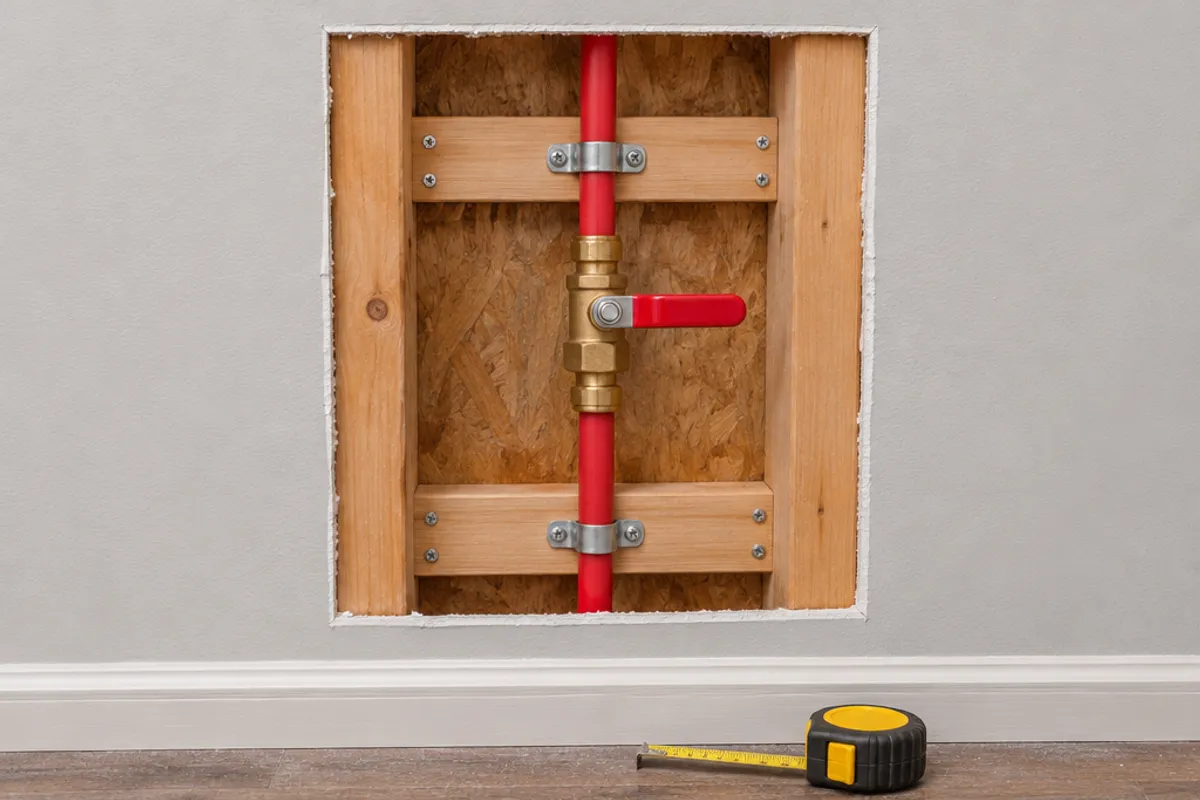
A reroute or repipe after a slab leak moves water lines into walls, ceilings and the attic. The new lines often get their own shut-off valves, and some plumbers run them from a manifold, a block of valves that gives each fixture its own line. Decide now how you will reach them later:
- In the attic, a valve is reached through the attic hatch, so it needs no panel. Ask for it close to the hatch, with room to work.
- In a wall, or in a ceiling below a floor, a valve or manifold behind drywall can only be reached by cutting. Ask the plumber where each one will land, and plan an access door there.
- Where a line drops to a fixture, the plumber usually opens the wall to make the connection. If a shut-off sits in that opening, close it with an access door instead of a patch, and patch the rest (patching a hole in drywall).
Where new pipe runs in exterior walls in a cold climate, ask how it will be protected from freezing.
From our catalog:
| Model | Type | Opening | Size on the wall |
|---|---|---|---|
| PAD0808 | Hinged door | Cut-out and service opening 6.35 × 6.35 in, rounded corners | 8 × 8 in overall |
| PAD1212 | Hinged door | Cut-out and service opening 10.35 × 10.35 in (estimated), rounded corners | 12 × 12 in overall |
| SAP1414 | Removable spring-loaded panel | Fits openings from 10 × 10 to 14 × 14 in | 16 × 16 in cover |
A single shut-off valve can sit behind the PAD0808, if its handle and your hand fit the opening; a pair of valves or a small manifold suits the PAD1212 or the SAP1414. Each door's frame screws on over a cut-out traced from the 1:1 template on its product page, and the screws come with the door.
Our plastic access panels and doors are not fire-rated, and we publish no water-resistance rating for them, so don't fit one in a fire separation, such as the wall between a house and an attached garage.
Compare them on the plumbing access panels page and the access doors page.
Before the plumber starts, ask your local building department whether the reroute needs a permit.
What should you read next?
Your plumber weighs the pipe's material when choosing a slab leak repair; if you aren't sure what yours is, see what Poly-B looks like.
Measure before you order: our guide on how to measure for an access panel shows how, and the access panel size chart compares every opening and cover.