
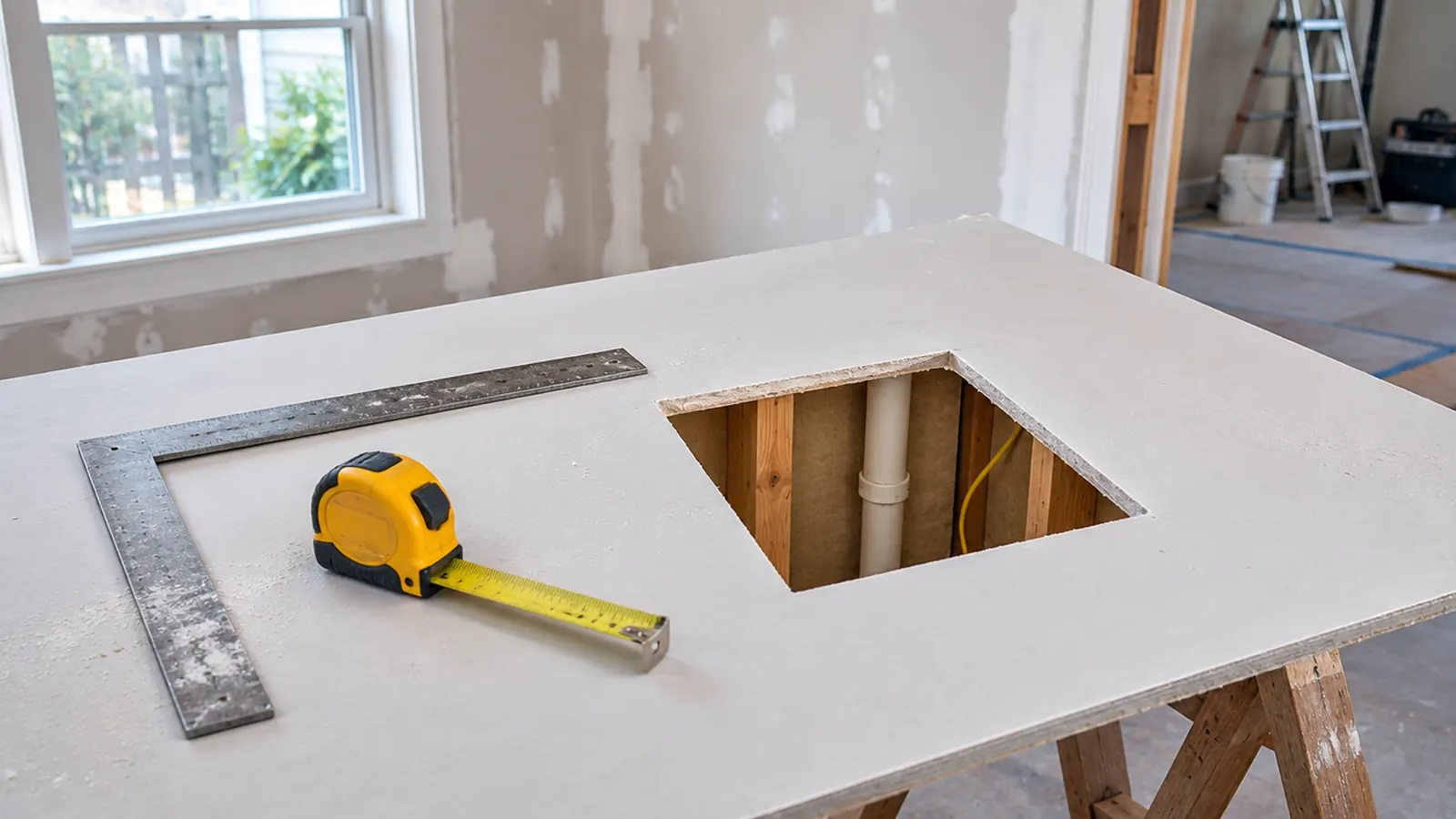
A product called a 6 × 6 access door does not necessarily provide a 6 × 6 opening. The number in a name may describe the outside cover, a nominal model size or another product dimension. Before ordering, identify which measurement you are comparing.
For Easy-Exs panels and doors, the distinction is visible across the range. A square Spring-Loaded panel described as 8 × 8 has a 10 × 10 in overall cover. A hinged door described as 6 × 6 has a maximum service opening of 4.35 × 4.35 in. Neither product should be selected by its name alone.
Four measurements that can describe an access product
Overall outside dimensions describe the front cover or frame's outside boundary. They help you check how much of the finished surface the product will cover and whether it will fit between nearby fixtures.
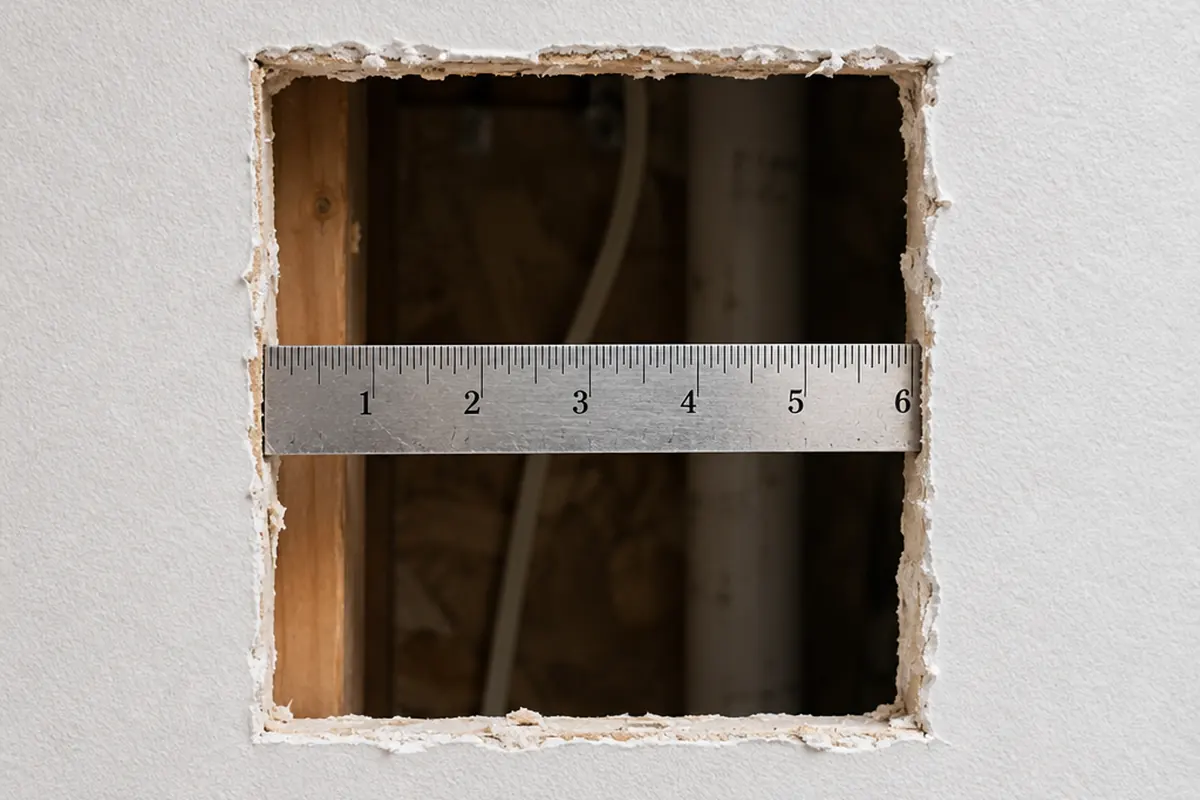
Nominal size is a model or range designation. It is useful for identifying a product, but it needs the accompanying specifications to explain exactly how it relates to installation.
Opening fit describes the opening size or range that a cover is listed to fit. On a circular cover, this is a diameter, not a square width-and-height pair.
Service opening describes the access available through a framed door. It is smaller than the overall frame. On our hinged doors it is also the cut-out, with rounded corners, traced from the 1:1 template on each product page; for another maker's door, check its installation drawing.
What does the number in a product name refer to?
Our three product families each put a different measurement in the name, and that is where most mix-ups start:
- Square spring-loaded panels are named for the largest opening they fit. The 8 × 8 in panel takes a hole up to 8 × 8 in and wears a bigger cover.
- Round covers are named for the cover itself. The 10 in round cover is 10 in across and sits over a smaller hole.
- Hinged doors are named for the outside of the frame. The hole through an 8 × 8 in door is smaller than 8 × 8 in.
So the same figure can mean the hole, the cover or the frame, depending on which family it belongs to.
Square spring-loaded examples
| Easy-Exs model | Nominal model size | Overall outside cover |
|---|---|---|
| SAP0808 | 8 × 8 in | 10 × 10 in |
| SAP1414 | 14 × 14 in | 16 × 16 in |
For either square spring-loaded panel, compare your clear opening with the verified fit information for the exact model. Do not substitute the outside cover size for its opening range. A larger cover does not establish that every smaller hole will work with the rear mechanism.
Round cover examples
The Easy-Exs SAP10R has a 10 in overall diameter and is listed for 6–9 in round openings. The SAP50 has a 5 in outside diameter for its listed 4 in opening size; PAP65 has a 6.5 in outside diameter for its listed 5.5 in opening size. Both are sold as single panels.
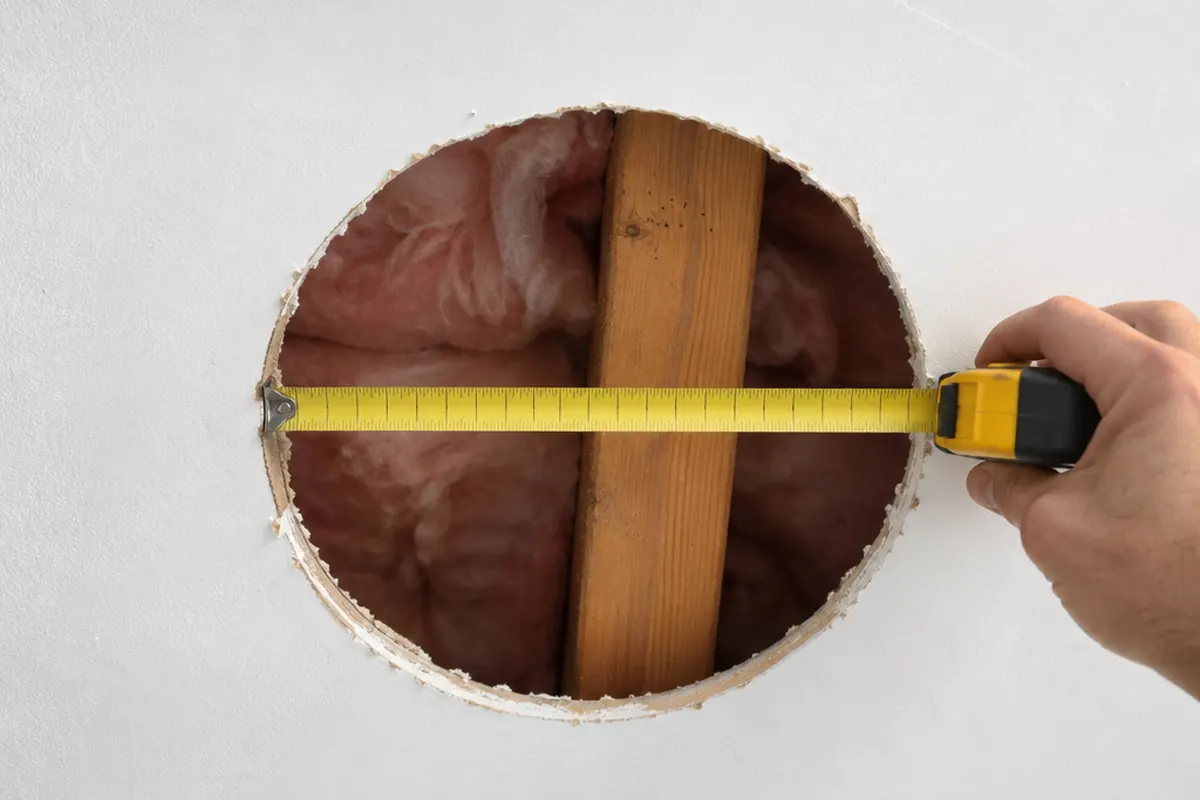
Measure an actual circle across its center. A number taken along an edge or across an uneven damaged area can give a misleading impression of diameter. See the round-opening measuring guide for the checks to make.
Hinged-door examples
| Outside door size | Maximum service opening |
|---|---|
| 6 × 6 in | 4.35 × 4.35 in |
| 8 × 8 in | 6.35 × 6.35 in |
| 12 × 12 in | 10.35 × 10.35 in (estimated) |
| 12 × 16 in | 10.35 × 14.35 in (estimated) |
For a hinged access door, consider what you need to reach through the opening and the space needed to open the door. A nearby fixture can affect usability even if the overall frame fits on the wall.
How do you get from a measured hole to a model?
Measure the hole across and up, then find the range that holds both figures. Only after that, look at the cover to see how much wall it needs around the hole. Four worked examples from our catalog:
- A repair hole of 7 × 7.5 in sits inside the 8 × 8 in range: SAP0808 spring-loaded panel: fits 6 × 6 to 8 × 8 in openings, overall 10 × 10 in
- A 12 × 13 in hole at the drain end of a tub sits inside the 14 × 14 in range: SAP1414 spring-loaded panel: fits 10 × 10 to 14 × 14 in openings, overall 16 × 16 in
- A round hole of 7.5 in, left where a ceiling light came out: SAP10R round cover: fits 6–9 in round openings, overall 10 in diameter
- A 9 × 9 in hole falls between the two square ranges. Open it up to at least 10 × 10 in for the 14 × 14 in panel. A hinged door is the other route: the PAD1212's cut-out is 10.35 × 10.35 in (estimated), so the hole can be enlarged to its template.
The gap between hole and cover is the part that rests on the wall. Take the 7 × 7.5 in hole above: a 10 × 10 in cover is 3 in wider than the hole one way and 2.5 in the other. On a full 8 × 8 in hole, that shrinks to 2 in each way, so the strip of wall the cover rests on is narrow. Look hardest at the wall nearest the edge, where torn paper, crumbled gypsum or a ridge of old joint compound can stop the cover sitting flat.
Measure before you order: our guide on how to measure for an access panel shows how, and the access panel size chart compares every opening and cover.
What mistakes do people make with these numbers?
- Ordering by the name. A door sold as 6 × 6 in gives a 4.35 × 4.35 in opening, not a 6 × 6 in one.
- Measuring the old cover. It only tells you the hole is smaller than the cover. Take it off and measure the hole.
- Rounding to the nearest inch. A hole of 8.25 in written down as 8 in looks as if it fits an 8 × 8 in range when it does not. Record eighths of an inch, or millimetres.
- One measurement on an uneven hole. Hand-cut holes are often out of square. Take each dimension three times, near both edges and through the middle, and check both the biggest and the smallest figure against the range.
- Expecting a hinged door to cover an existing hole. Its frame sits over a cut-out of one set size, so a hole bigger than that cut-out leaves the frame nothing to sit on. If the hole is already larger, choose a spring-loaded panel whose range covers it. See access panels compared by job.
What to record before ordering
Write down the clear opening dimensions, the surrounding flat surface, the model you are considering and the measurement type printed beside each product figure. Check for obstructions behind the opening and for anything in front that could interfere with a hinged door.
If your building inspector names a minimum, hold the clear opening to it, never the cover. A whirlpool tub pump is its own case: see the jetted tub guide.
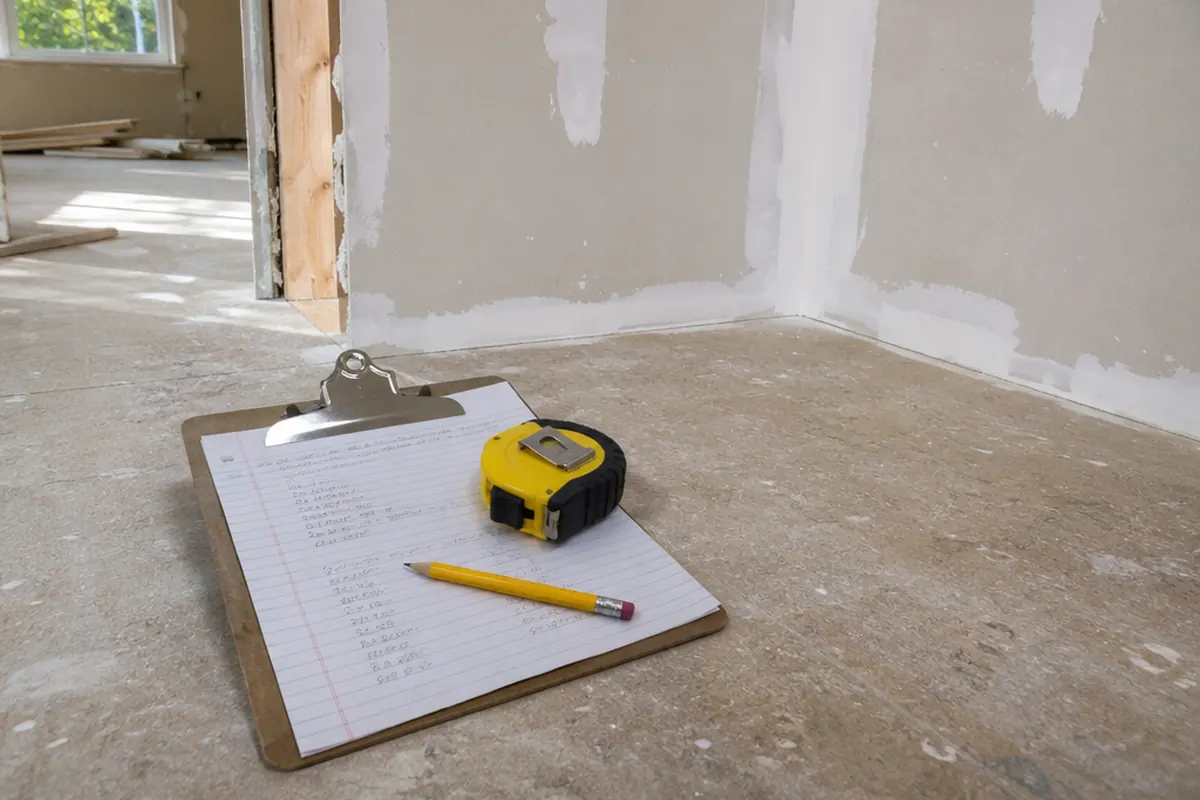
If you are covering an existing hole, measure that hole rather than only the old cover. If you are creating a new opening, obtain the exact model's current installation requirements before cutting. Do not cut into a wall or ceiling until the location has been checked for concealed services and relevant project requirements.
Send the measurements and model through our Contact page if you need a product question clarified. For several openings, a project schedule keeps those details organized.