
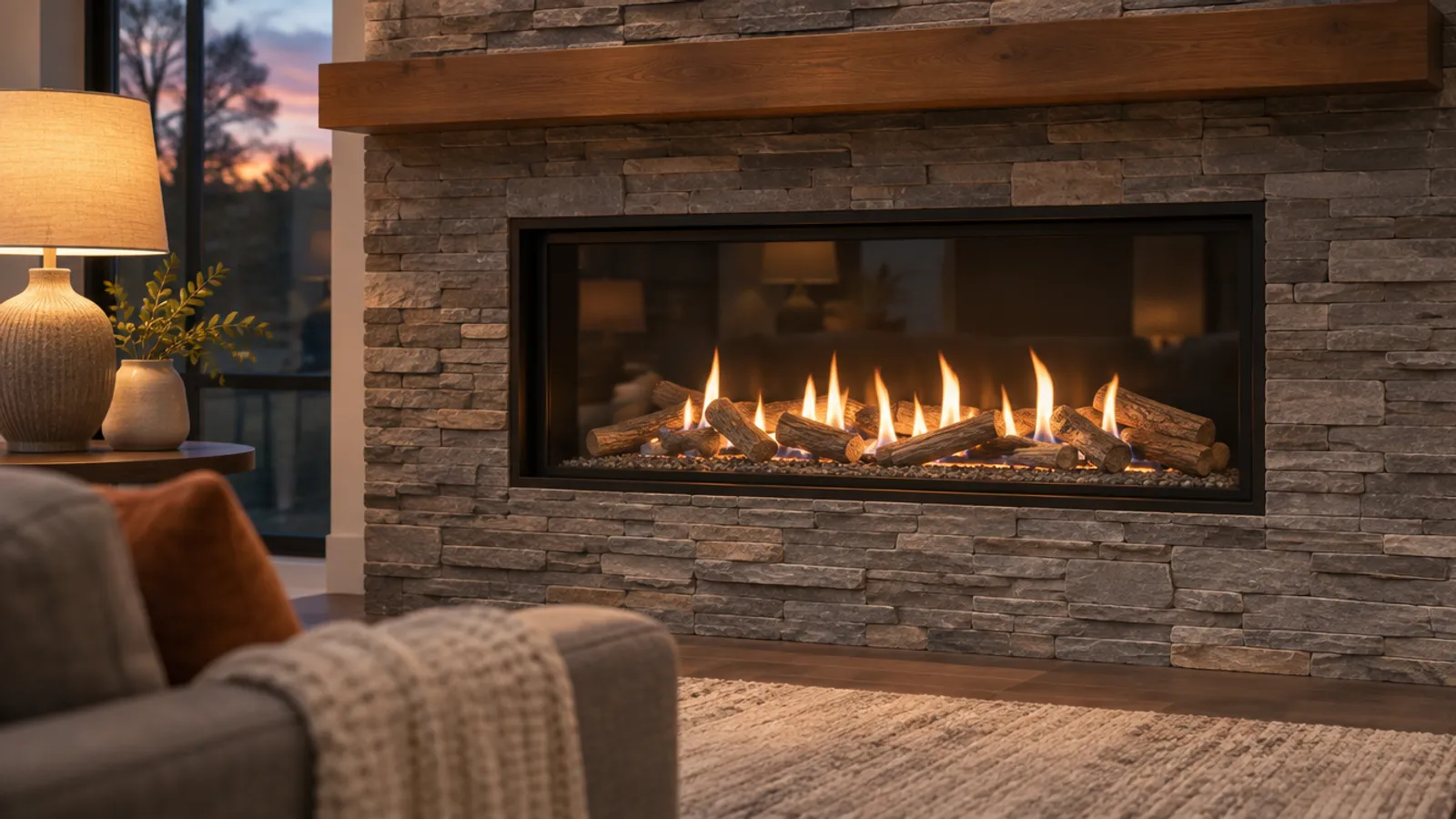
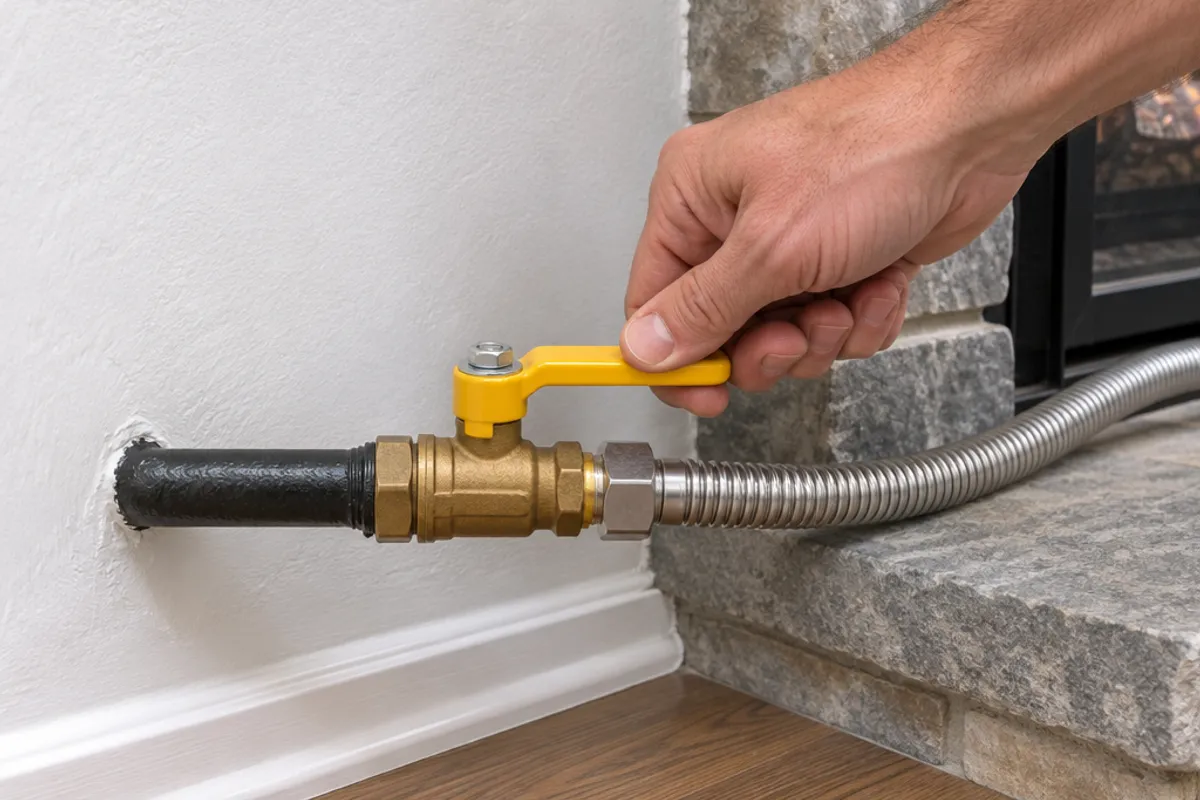
The gas fireplace shutoff valve is usually located behind the lower louver or grille, near the gas valve knob. If it isn't there, check the side of the fireplace, a key valve in the floor or wall beside the hearth, or a nearby cabinet. To turn it off, give its lever a quarter turn across the pipe.
That small valve, the appliance shutoff valve, stops the gas supply to this one fixture without shutting off the whole house. Find it now so you are prepared, and make everyone at home aware of it. In an emergency, such as a smell of gas, you leave instead of searching.
What is the usual gas fireplace shut off valve location?
Whether it burns natural gas or propane, a gas fireplace usually has two valves in a row on the gas line: a manual shutoff valve, then the control valve with its gas valve knob. Installers typically put the shutoff in the same room, where you can reach it. Check these places in order:
| Where to look | What you'll see | How to reach it |
|---|---|---|
| Behind the lower louver or grille (most direct-vent fireplaces and inserts) | Shutoff valve with a lever, where the flexible connector to the control valve starts | Let the fireplace cool, then lift the louver or trim off |
| On the side of the fireplace | Lever or small handle through an opening in the side trim | Check both sides, down low |
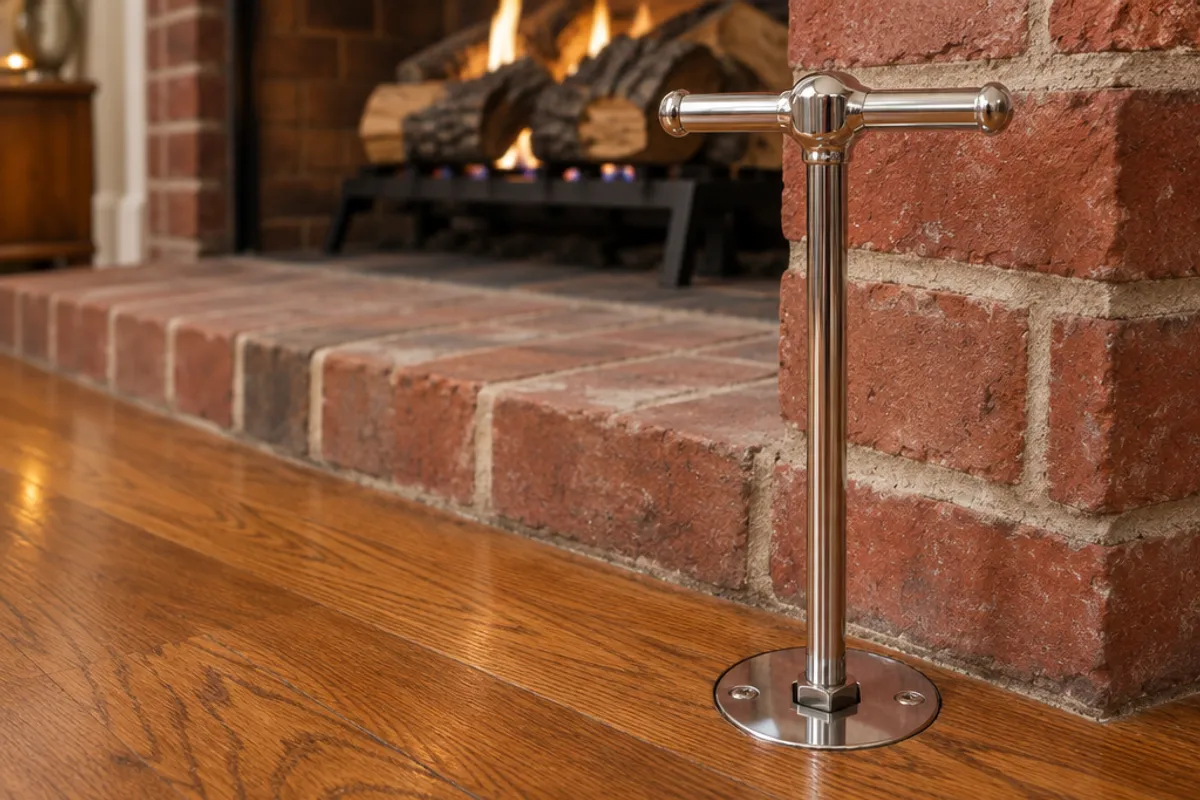
| In the floor or wall beside the hearth (gas logs in a masonry fireplace) | Key valve: a round flange with a square-shaped stem in its center | Turn it with the long fireplace key |
| In a nearby wall or cabinet (media walls and living room built-ins) | Shutoff valve with a lever, on a pipe coming out of the wall | Open the built-in or the small door in front of it |
| In the basement or crawl space (possible in older houses) | Lever valve on the branch under the hearth | Follow the gas pipe from below the fireplace |
Behind the louver, the controls are located in a compartment under the firebox, and a flashlight helps light it up. Be careful not to kink the flexible connector. A key valve is typically located a short way from the hearth. In an older house, the valve is possibly on a branch under the hearth.
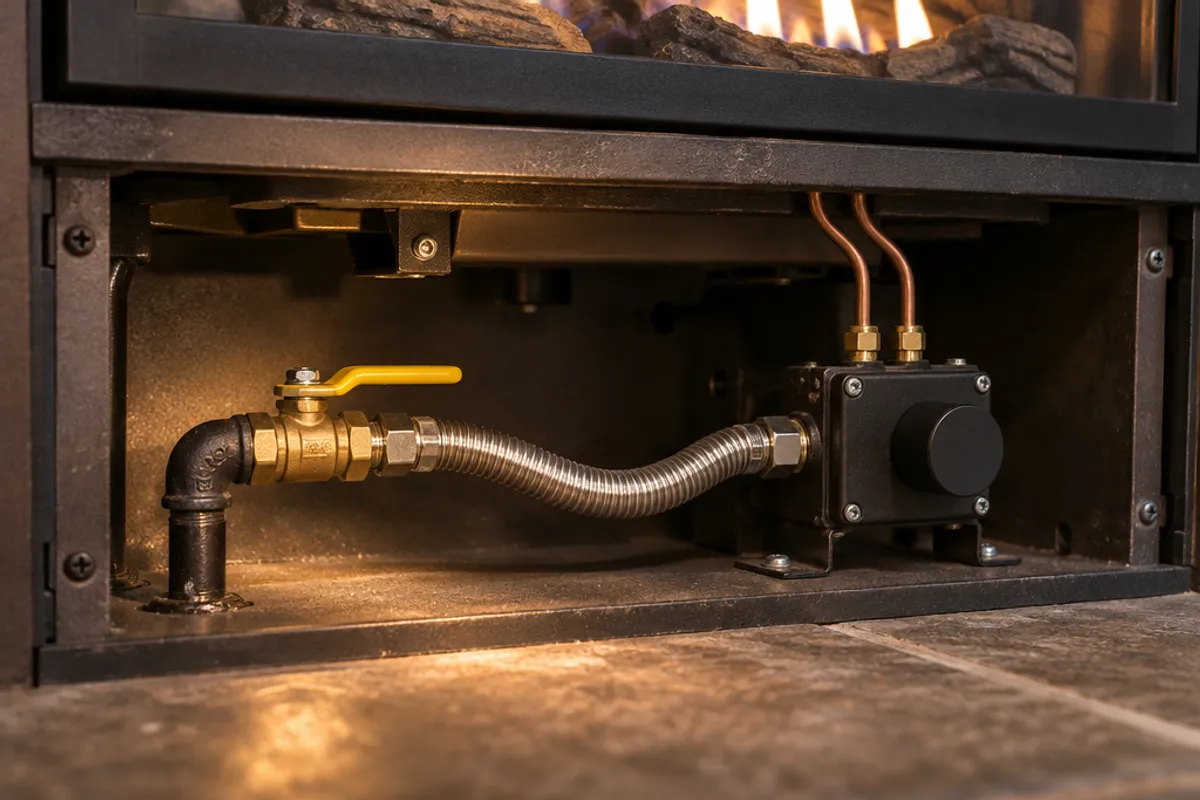
What does a fireplace gas valve look like?
Three kinds of fireplace gas valve are easy to mix up:
| Valve | What it looks like | What it does |
|---|---|---|
| Shutoff valve | Small ball valve with a lever handle | Stops all gas flow to the fireplace, pilot light included |
| Control valve | Gas valve knob marked On, Off and Pilot | Lights the pilot, which ignites the burner |
| Key valve | Flange beside the hearth with a square stem | Turns the gas to a log set on and off |
On a shutoff valve, the handle shows its state: parallel with the pipe, the valve is open and gas flows; across the pipe, the flow stops. The gas valve knob is not a shutoff: even at Off, gas still flows up to the control valve. A push-button igniter next to the knob often lights the pilot, and safety pilot valves have a safety feature, a device that stops the gas if the pilot light goes out. Electronic ignition models may also have a power cord or a junction box located in the compartment; leave the wiring alone.
How do you turn off a gas fireplace and its pilot light?
There are two levels of off.
Everyday off: wall switch, remote or gas valve knob
A wall switch, remote or other control device turns the flame off, but gas still reaches the control valve, and on models with a standing pilot light, the pilot stays lit, ready to ignite the burner. Turning the gas valve knob to Off puts the pilot light out too; follow the manual for how your control knob turns.
In a power cut, it depends on the system. A millivolt system runs on current made by the pilot light's heat and needs no house power. An electronic ignition system ignites the pilot only when the fireplace is turned on and needs batteries or power, so the wall switch may do nothing.
Full off: close the shutoff valve on the gas line
Shut the valve before a long trip, when a technician asks you to, or for the off-season.
- Turn the gas fireplace off at its wall switch or remote, then turn the gas valve knob to Off. Wait until the flames are out and the glass is cool.
- With a flashlight and the manual prepared, remove the lower louver or grille as the manual shows.
- Find the shutoff valve on the gas line, just before the control valve.
- Hold the lever and twist it a quarter turn so it sits across the pipe. If it won't move, don't force it: fixing a stuck valve is a job for a professional.
- Replace the louver.
- To turn the gas back on, turn the lever back parallel with the pipe so the valve is open and gas can flow, then light the pilot light with the lighting instructions on the label located near the controls. Many have you hold the knob in while you light the pilot, then hold it a little longer before you let go.
If the pilot light won't stay lit, or the burner won't ignite, stop and call a professional.
How do you use a gas fireplace wall key or key valve?
A key valve has no handle of its own. To operate it, fit the long fireplace key over the square stem and turn it the way the manual shows until the valve stops and the flame goes out. If the flame doesn't change, the valve is possibly worn or blocked: call a professional. Many people take the key out after use and keep the key secure, away from children.
To light gas logs, follow your manual's steps for igniting the burner before the key valve is fully open. Some fireplaces have the key permanently installed in the wall. Lost the key? Don't turn the stem with pliers. Replacement keys are sold at home centers; check the manual or contact the manufacturer for the kind your valve takes, and match the stem's shape and size.
What should you do if you smell natural gas near the fireplace?
Natural gas has no odor of its own; gas companies add a smell, often described as rotten eggs, so you notice a possible gas leak. If you smell gas, treat it as an emergency and don't go looking for the gas fireplace valve. Follow the Kansas Corporation Commission's gas safety steps:
- Stop what you are doing, leave the house and get everyone out.
- Don't use light switches, phones, the garage door opener or any other device that could create a spark and ignite the gas, and don't light a flame.
- Don't try to find the leak or shut off appliance valves yourself.
- Once you are safe outside, contact your gas company's emergency number or call 911. Don't go back in until the gas company says it is safe.
If a valve was shut because of a leak, let the gas company or a professional turn it back on.
Moving, adding or replacing a gas shutoff valve, or repairing a fireplace's gas pipe or controls, is work for a licensed gas fitter or plumber where your area requires one. The fireplace's wiring needs a licensed electrician where required. Ask your local building department whether the work needs a permit.
What if you can't find the shutoff for the gas supply?
Start with the owner's manual: its installation section shows where the shutoff should be, and the manufacturer can send a copy. Then follow the gas pipe from the fireplace. If there is no appliance shutoff, have a licensed gas fitter add one.
At a minimum, know where the house main shutoff is: it is located where the gas pipe enters the house or farther along, always before the first appliance, and it stops the gas to every appliance and fixture. On natural gas, gas companies prefer that only their crews, contractors and firefighters operate the valve at the meter; with propane, the tank has its own shutoff valve.
Can the shutoff valve sit behind an access door?
Yes, where the fireplace maker and your local code allow it. A shutoff in a nearby wall must stay easy to reach and operate, never sealed in behind drywall. A small hinged door keeps it reachable, with two limits:
- Keep it away from heat. Never put an access door in the fireplace surround, on the mantel, or anywhere the manual asks for clearance to combustibles. Our doors are plastic and are not fire-rated.
- Leave room for a hand to grip the lever and twist it a full quarter turn, and keep the space free of clutter. See how to measure for an access panel.
For one valve in a wall beside the fireplace, PAD0808 hinged door: maximum service opening 6.35 × 6.35 in, overall 8 × 8 in; its product page has a full-size cut-out template. Compare others on the access doors page.
Who may move or add a gas valve, and where it may sit, is set by your state or province, so ask your gas utility or your provincial gas safety authority before anyone works on the line.
Next, find the rest of the house's shutoffs, starting with where the water shut-off valve is. If a valve needs a door, compare every opening and cover on the access panel size chart.