
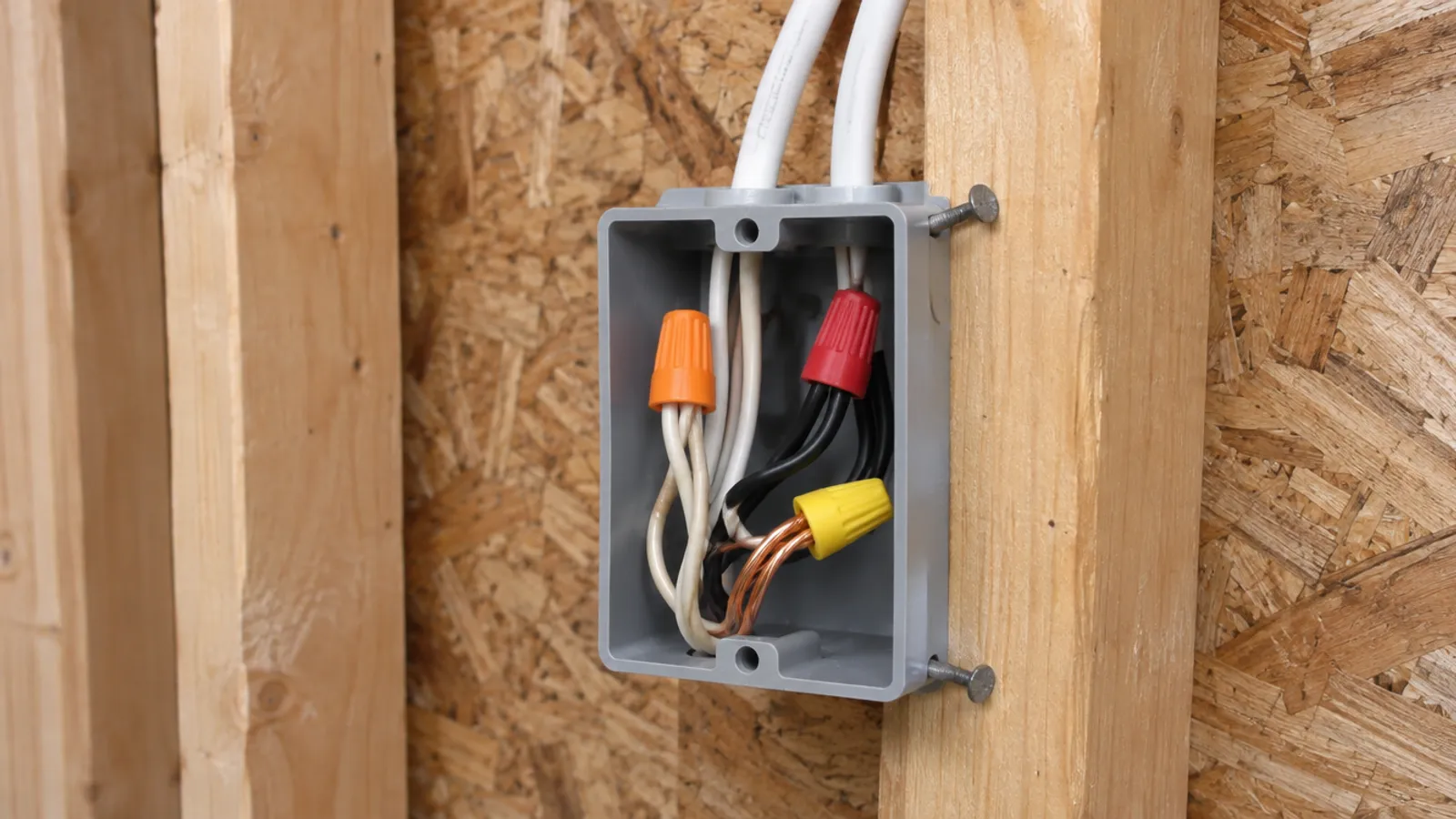
A junction box is an enclosure, usually plastic or metal, that holds the places where electrical wires are joined, the wire splices, and protects those electrical connections and the building around them. It has no switch or receptacle, only wire connections under a blank lid. Because those connections can work loose, the box has to stay accessible: you need to be able to reach it and open it without cutting into a wall or ceiling.
This guide covers what a junction box looks like, its types and materials, where boxes sit in a home's electrical system, how one is installed, and basic safety around one.
What is a junction box?
An electrical junction box is a box that contains wire connections, called splices, and nothing else. Wherever a circuit branches or gets extended, the wires are connected inside a junction box rather than left loose in a cavity. It is also called a J-box.
Wires end up joined in a junction box for ordinary reasons:
- the wiring splits to feed another light, receptacle or appliance
- a wire run was too short to reach the next device and had to be extended
- a light or outlet was removed, and the wires that ran through it still feed something else
- an appliance or built-in light is connected to the house wiring beside or behind it
Whatever the reason, the junction box does three jobs:
- It protects the connections. Nails, screws, cables pulled through the framing and dust can't reach the joints inside a closed box.
- It protects the building. Loose electrical connections can overheat, and overheating connections can start fires. As a protective enclosure, the box keeps that heat and any sparks inside, away from wood framing, insulation and dust.
- It gives you somewhere to look. When lights or outlets stop working for no obvious reason, a loose wire splice is one of the first things electricians check.
In short, a junction box is there to protect electrical connections, and to protect the house from them. That makes it part of electrical system safety, not just a place to tuck wires away.
What does a junction box look like?
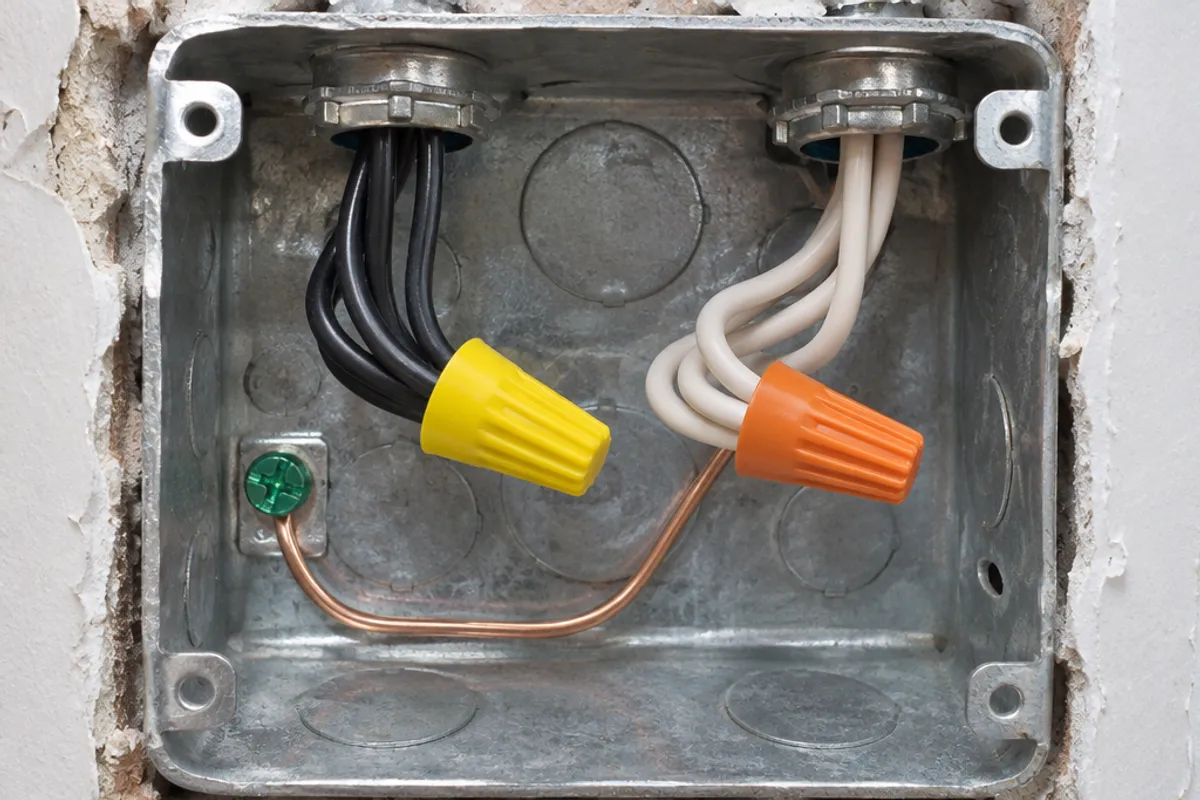
Most junction boxes in a house share a handful of features. Look for these:
- Material. Plastic boxes are common in houses and are often blue or gray. Metal boxes are usually bare galvanized steel.
- Shape. Rectangular, square, octagonal or round. Octagonal and round boxes are typical in ceilings, where a light fixture mounts on them; rectangular and square ones are typical on walls.
- Size marking. Many boxes are stamped or molded with their volume in cubic inches. Electricians use it at installation to pick a box big enough for what it will hold.
- Cables. They enter through knockouts, which are punch-out openings in the sides or back, and are held by clamps or connectors. Several cables arriving from different directions are a clue that wires are being joined there.
- Connectors. Inside, the wire ends are joined with twist-on connectors (often called wire nuts), or with push-in or lever connectors.
- Ground wires. Bare copper or green-insulated wires are the grounding conductors. In a metal box, one is often fastened to a green grounding screw.
- Lid. A finished junction box has a flat, blank cover screwed to it, or a light fixture mounted over it. Unlike boxes for switches and receptacles, it has no functionality of its own on its face: nothing to switch and nothing to plug in.
If you find electrical wires joined with no box around them, or a box left open with its lid missing, leave the wires alone and have a licensed pro look.
How is it different from other electrical boxes?
The box itself can be identical. What is in it, and what is on its face, tells them apart:
| Box | What it holds | What you see |
|---|---|---|
| Outlet box | A receptacle, often with joined wires too | A receptacle and its wall plate |
| Switch box | A switch, often with joined wires too | A switch and its wall plate |
| Ceiling fixture box | The connections for a light fixture | The fixture's canopy |
| Junction box | Wire connections only | A blank cover, or nothing if it is in an attic, basement or crawl space |
The access rule below covers all of these enclosures, but outlets and switches stay reachable because you use them every day. A junction box has nothing to use, so it is the one that gets forgotten behind a ceiling, a cabinet or a new wall finish.
What types of junction boxes are there?
Junction boxes are enclosures, and they differ by material, by where they are used and by the job they do in the electrical system:
- Metal junction boxes. Most are steel; weatherproof boxes are often cast aluminum. Metal enclosures are tough and fire resistant, and they conduct electricity, so a metal box is bonded to the grounding system. Proper grounding gives a fault a path back to the electrical panel, so the breaker trips instead of the metal staying live.
- Plastic junction boxes. These are PVC or a similar non-conductive material.
- Indoor and outdoor boxes. Outdoors, or anywhere moisture is a concern, enclosures made for damp or wet locations keep water away from the connections, usually with a gasket under the lid. An indoor box is not a substitute.
- Pull boxes. On long conduit runs, common in commercial applications, a pull box gives the installer a place to pull wire through. It may hold no splices, but it still has to stay reachable.
- New-work and old-work boxes. New-work boxes are fastened to the framing during installation, before the walls are closed in; old-work boxes clamp into an existing finished surface.
Residential wiring commonly uses plastic boxes and plastic-sheathed cable. Commercial buildings more often use metal junction boxes, with metal conduit as the wiring method; in those installations the boxes are often left exposed in service areas or fixed above suspended ceilings. The two electrical wiring systems look different, but a residential or commercial junction box does the same job, and the same access rule applies.
How is the right junction box chosen?
Choosing the right junction box, including its material, its size and how many wires it may hold, is part of a proper installation under your local codes. It takes electrical knowledge and the code itself, so leave it to whoever does the wiring.
Where are junction boxes usually found?
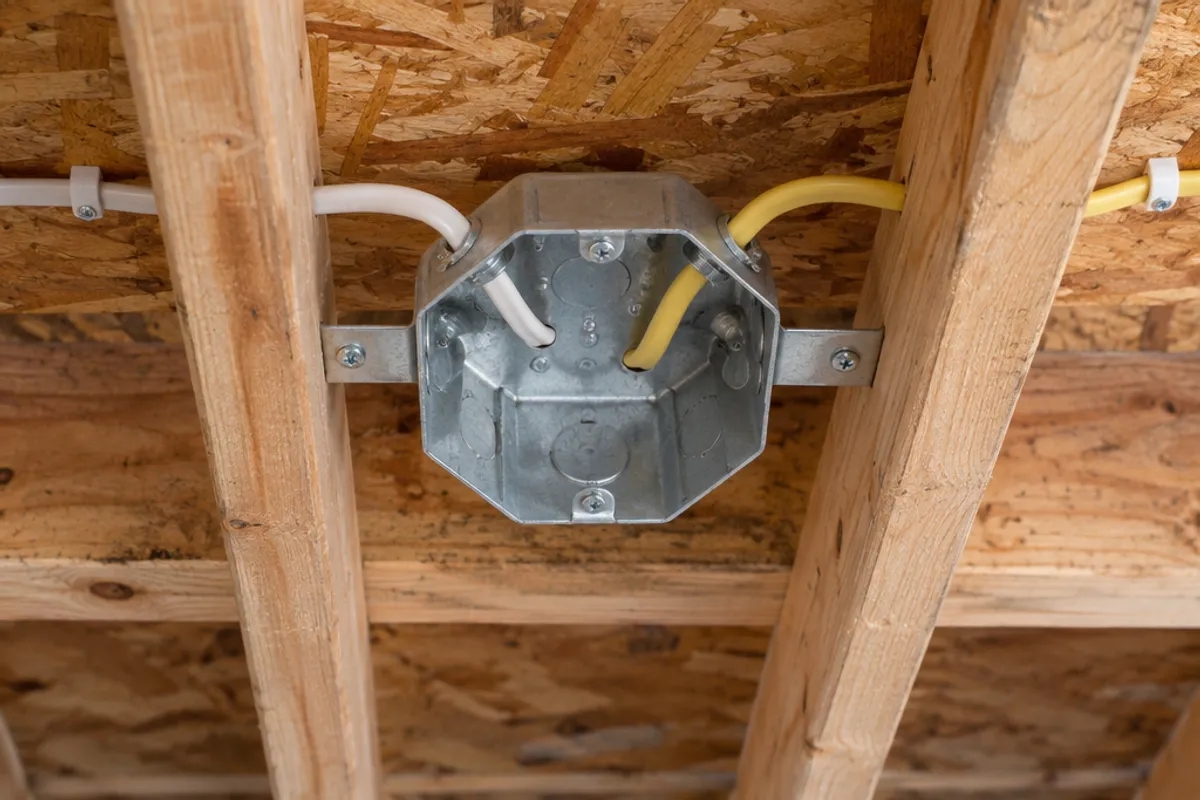
Anywhere the wiring system branches or was extended. The usual places:
- Ceilings. The box a light fixture hangs from often holds connections for other lights or switches as well. Take the fixture down and the box is behind it.
- Attics. Cables to ceiling lights and to the floor below often branch in junction boxes fastened to joists or rafters.
- Basements, garages and crawl spaces. Boxes mounted on joists or walls, often with blank covers, where the wiring branches to feed different parts of the house.
- Walls. A blank plate usually marks a junction box. They also turn up where a partition was moved or a receptacle was taken out.
- Outside. Weatherproof boxes installed on exterior walls feed outdoor lights and receptacles.
- Behind appliances and built-in fixtures. Some are connected in a box beside or behind the appliance, or inside a cabinet.
Renovations can leave boxes in unexpected places. If you suspect one has been closed in, our guide on whether you can drywall over a junction box explains how to track it down.
How is an electrical junction box installed?
Junction box installation is work on the electrical system, done by a licensed electrician where your area requires one, under your local codes and often with a permit. In outline, so you know what you are looking at:
- The box is mounted. It is fastened to a stud, a joist or a mounting bracket, or clamped into a finished surface, so it cannot shift.
- The cables are brought in and clamped. Each one enters through a knockout or connector and is secured, so it can't be pulled loose or rub against a sharp edge.
- The wires are spliced. Connectors made for the job splice wires of the same circuit together, and one connector can join multiple wires.
- The grounding is completed. Ground wires are connected together and, in a metal box, fastened to it.
- The lid goes on. The box is closed with its lid, or a fixture mounted over it, before the power is turned back on.
Each of these steps is there for safety. Tight splices and clamped cables prevent overheating and keep electrical connections from working loose. Boxes for switches go in the same way, with a device instead of a blank lid. For an outdoor installation, the box, its lid and the cable entries also have to suit a damp or wet location.
Once installation is done, a junction box seldom needs maintenance, but it has to stay reachable for the day something goes wrong.
Why does a junction box have to stay accessible?
Because the connections inside it can fail, and someone will need to reach them for maintenance or repair. Electrical connections can loosen over time, and when they do, lights can flicker, outlets can stop working, or a splice can overheat. If the box is sealed in, finding the fault means cutting into finished surfaces.
The electrical code deals with it directly. In the US, NFPA 70, the National Electrical Code (2023 edition, as revised by its Tentative Interim Amendment 23-10), section 314.29, wants every junction box installed so the wiring in it can still be reached, and it accepts a removable lid as that access. In Canada, each province has its own electrical code, so ask your electrical inspector before you close up a wall or ceiling with a box in it.
In everyday terms, you should be able to reach the box and take its cover off without cutting anything open: a blank plate at the surface, a fixture you can take down, or an access door in front of it. Drywall sealed over the box fails that test, and your inspector has the final say.
What if a junction box is hidden behind a finished wall?
A hidden box needs a lid you can reach. There are three usual ways to get there:
- Bring it to the surface. If the box faces the room, cut the wallboard around it so its front sits at the surface, and fit a blank plate.
- Put an access door or panel in front of it. The box stays where it is and keeps its own cover, and a door in the surface gives you access for maintenance.
- Move or remove the splice. An electrician can move the connection to a junction box somewhere accessible, or rework the wiring so the splice is no longer needed.
Our plastic doors and panels are for the second case. These are the sizes that suit a single box:
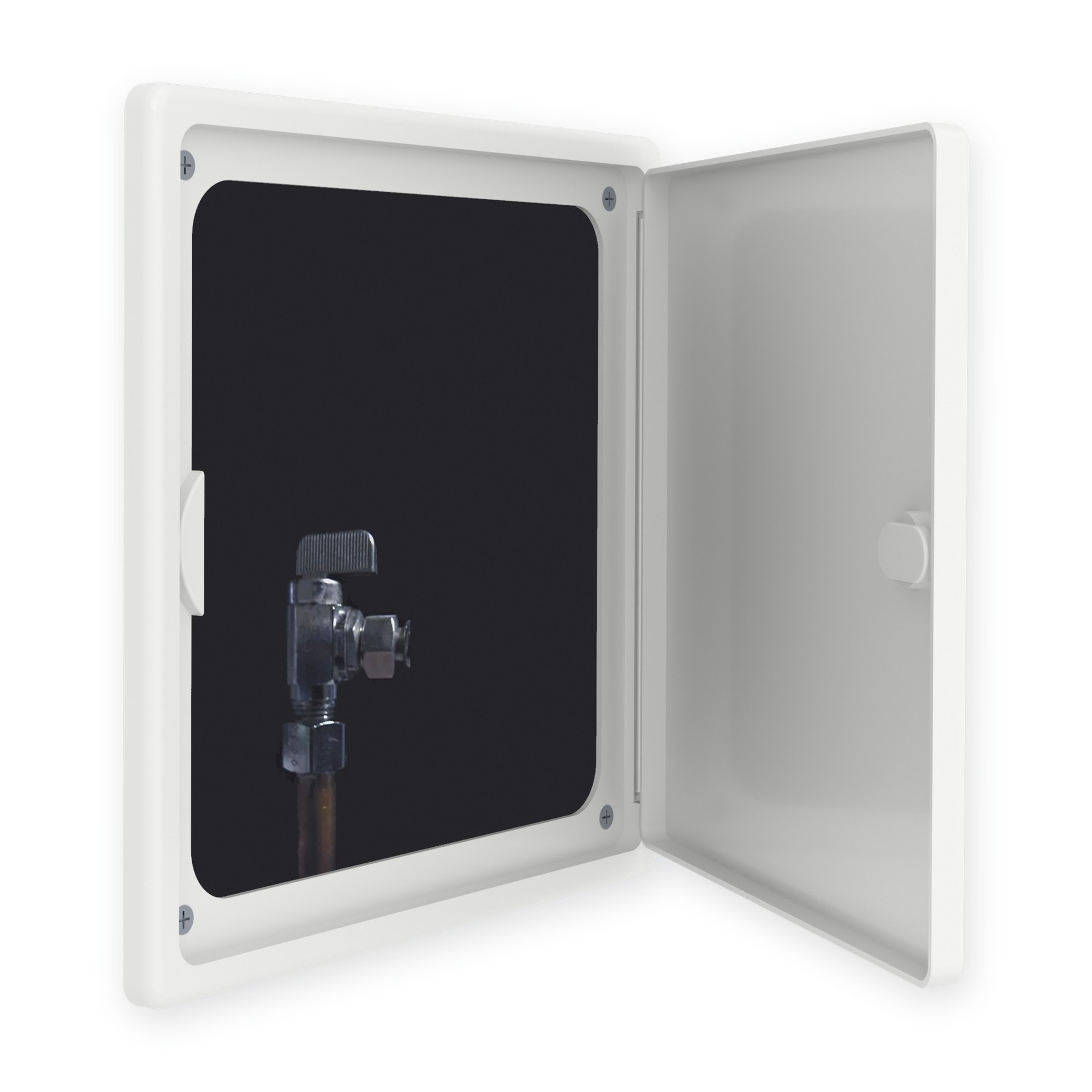
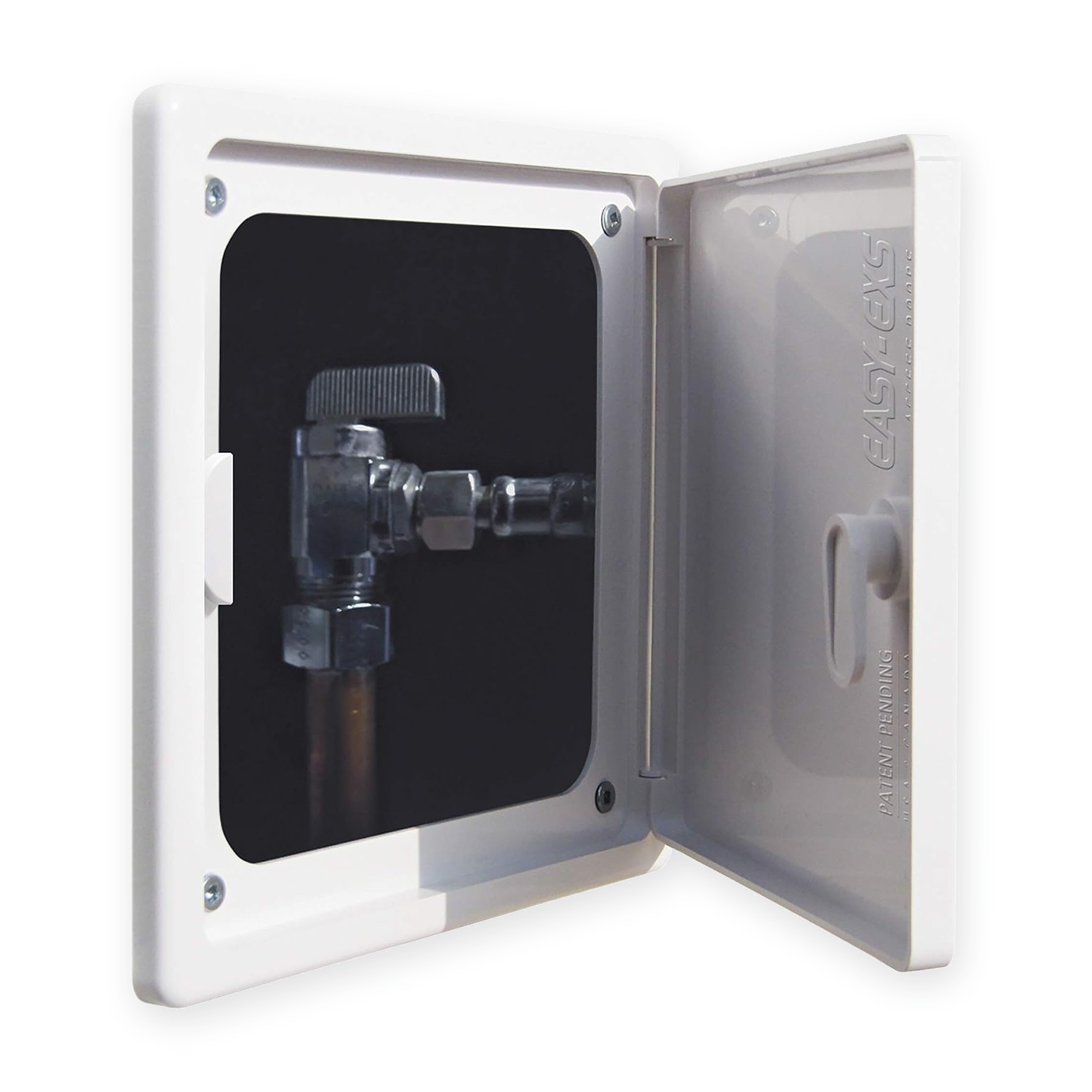
Easy-Exs · PAD0808
8x8 in Plastic Drywall Access Panel with Hinged Door
Rated 4.4 out of 5, 2,789 ratings online
Maximum service opening 6.35 × 6.35 in · Overall 8 × 8 in
USD $9.49 each
- 10+ panels: $8.49 each
- 80+ panels: $7.49 each
Easy-Exs · PAD0606
6x6 in Plastic Drywall Access Panel with Hinged Door
Rated 4.4 out of 5, 2,789 ratings online
Maximum service opening 4.35 × 4.35 in · Overall 6 × 6 in
USD $8.49 each
- 10+ panels: $7.49 each
- 80+ panels: $6.49 each
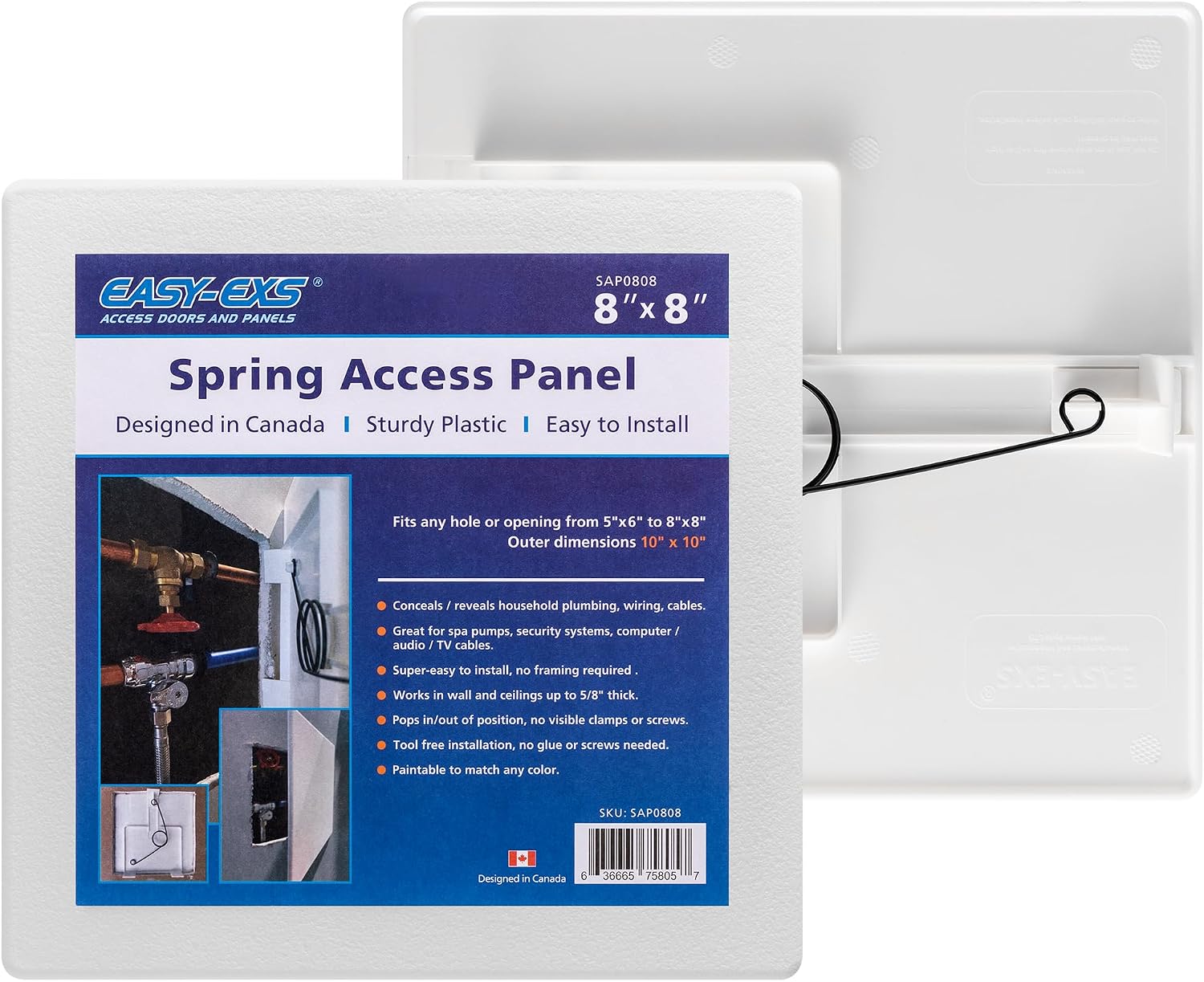
Easy-Exs · SAP0808
8x8 in Spring-Loaded Plastic Drywall Access Panel
Rated 4.6 out of 5, 718 ratings online
Fits 6 × 6 to 8 × 8 in openings · Overall 10 × 10 in
USD $9.49 each
- 10+ panels: $8.49 each
- 80+ panels: $7.49 each
The PAD0808 hinged door has a 6.35 × 6.35 in service opening, which is also the size of the cut-out. The PAD0606 has a 4.35 × 4.35 in service opening, so check that the box and its lid fit through it. SAP0808 spring-loaded panel: fits 6 × 6 to 8 × 8 in openings, overall 10 × 10 in.
A hinged door stays on its frame when open, while a spring-loaded panel comes out completely; our comparison of spring-loaded panels and hinged access doors covers the trade-offs. The electrical access panels page lists every model with its opening, and the access doors page compares the doors.
Keep the box's own lid on behind the door. Our panels and doors are not electrical enclosures, so they never replace the lid on the box, and they are not fire-rated.
Junction box safety: is it safe to open one?
Only with the power off, and only if you know what you are looking at. Usually you don't need to open one at all: the blank plate is enough to identify it.
Electricity passing through a loose connection makes heat that can melt insulation and scorch wood, which is one way electrical fires start. A closed box keeps that risk contained; an open one puts your hands next to the live parts.
Turn off the circuit at the breaker or fuse in the electrical panel before you take a lid off. A box can contain electrical wires from more than one circuit, so test every wire with a voltage tester before you touch anything, and test again whenever you turn off another breaker. Changing, adding or repairing connections is work for a licensed electrician where your area requires one, and it may need a permit.
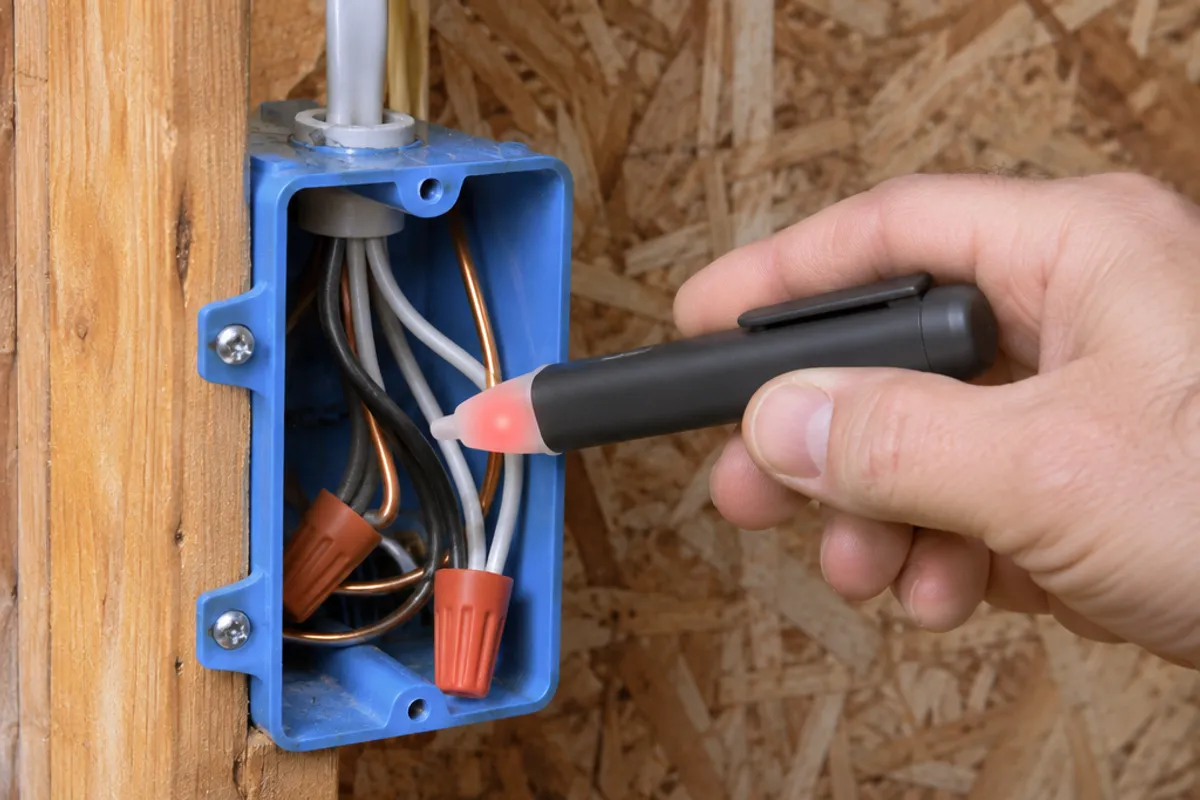
Check the tester on a circuit you know is live first, so you know it works. Some signs mean a junction box needs professional attention now, whatever you were planning: a burning smell, scorch marks or melted plastic around the lid, a buzzing sound, or lights fed through the box that flicker. Turn the circuit off and call an electrician.
Watch for moisture too. Water inside a box can corrode the electrical connections, and water or rust usually means the box or its lid does not suit a damp location, or a seal has failed. Signs of moisture in a box are a safety problem to hand to a professional, not a quick fix.
If the box you are dealing with is already closed in, or about to be, read can you drywall over a junction box? next. To fit a door or panel in front of a box, follow how to install an access panel in drywall, and compare every opening and cover on the access panel size chart.