
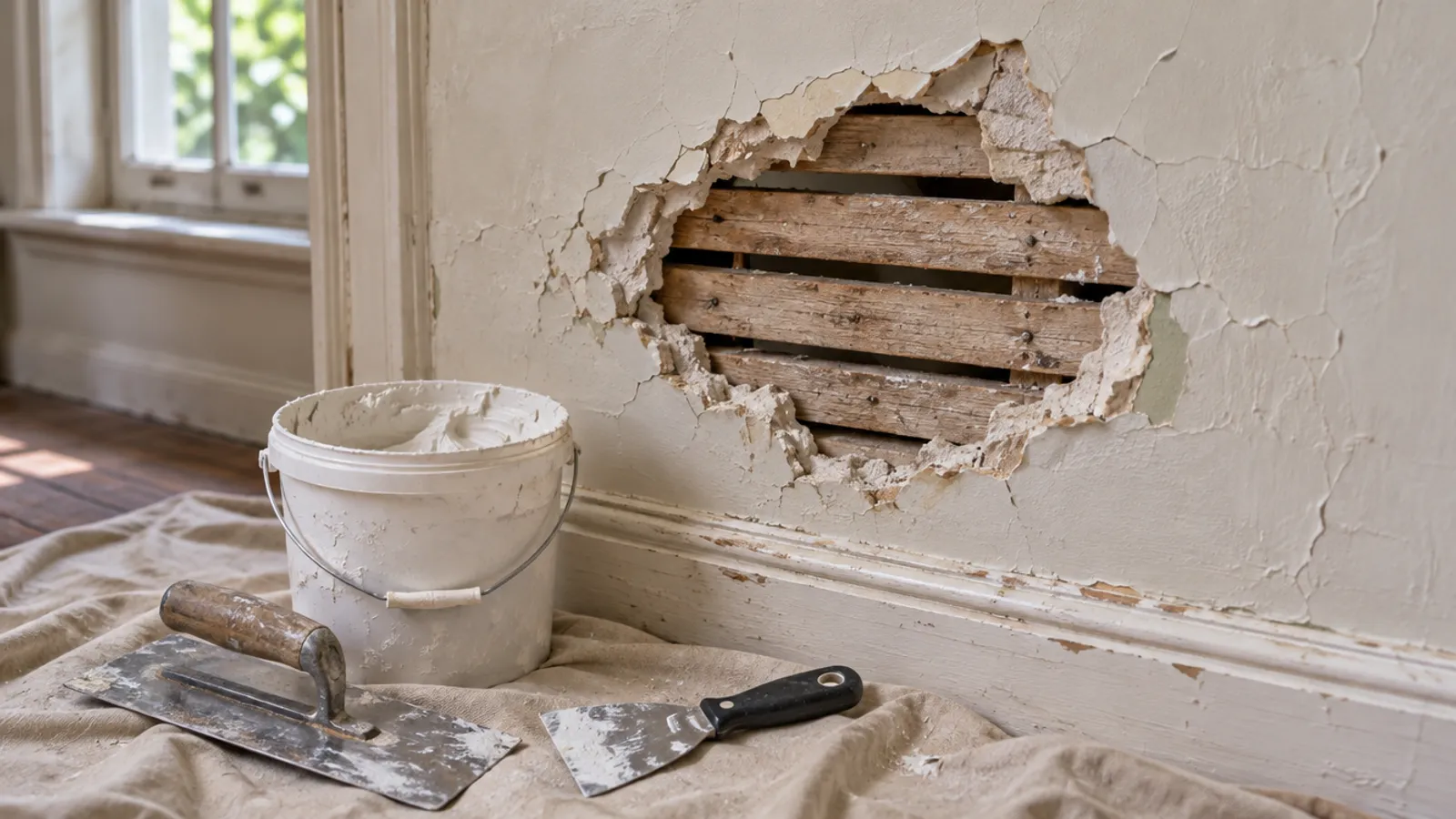
To fix a hole in a plaster wall, cut away loose plaster back to a solid edge, then match the repair to the hole. Fill small holes and cracks with patching plaster or setting-type joint compound. For a large hole, secure the lath, brush on a bonding agent and build up plaster in coats, or fit a drywall insert.
This plaster repair guide shows how to fix a hole in plaster wall surfaces of every size, from pinholes to openings with exposed lath, plus the lead check old houses need and when an access door beats a patch.
Is your wall plaster or drywall?
Check first, because plaster repair is a different process. Many old houses still have their original plaster: several coats troweled over lath (sometimes spelled lathe), thin wood strips fastened across the studs with gaps between them. The wet plaster pushed through the gaps and hardened into keys that hold the wall on. Newer houses usually have drywall instead.
- Look at an edge. Drywall shows a paper face and a soft core. Plaster is hard and brittle, with a rough base coat under a thin, smooth plaster finish.
- Look behind it. Lath behind the hole means a plaster and lath wall.
- Knock on it. Plaster sounds solid. Hollow spots discovered this way have pulled away from the lath.
If it turns out to be drywall, follow how to patch a hole in drywall. For overhead damage, see our guide to repairing a hole in the ceiling.
Which plaster repair method fits the damage?
| Damage | Usual repair | Main materials |
|---|---|---|
| Nail holes and small dents | Fill, then sand | Spackle or joint compound |
| Hairline and small cracks | Open, tape and skim | Setting-type compound, mesh tape |
| Shallow damage over solid lath | Fill in layers | Bonding agent, patching plaster |
| Bulging plaster | Re-attach it first | Plaster adhesive, plaster washers |
| Missing plaster or broken lath | Back it, then plaster it, or fit drywall | Lath patch or drywall, patching plaster |
| An opening over a valve or junction box | Frame it and fit an access door | Blocking, an access panel or door |
Every material here is sold at a hardware or big box store. Add a utility knife, a putty knife, a wide trowel, a mud pan, a drill, a spray bottle, a sanding sponge, a shop vac, primer, eye protection and a mask.
How do you repair small holes and cracks in plaster?
- Clean it out. Damage is often discovered when old wallpaper comes off. Scrape away crumbling plaster and old filler until the edges are firm.
- Dampen the edges. Old plaster soaks the water out of new filler and weakens the bond. Spray the edges lightly, or brush on a bonding agent as its label directs.
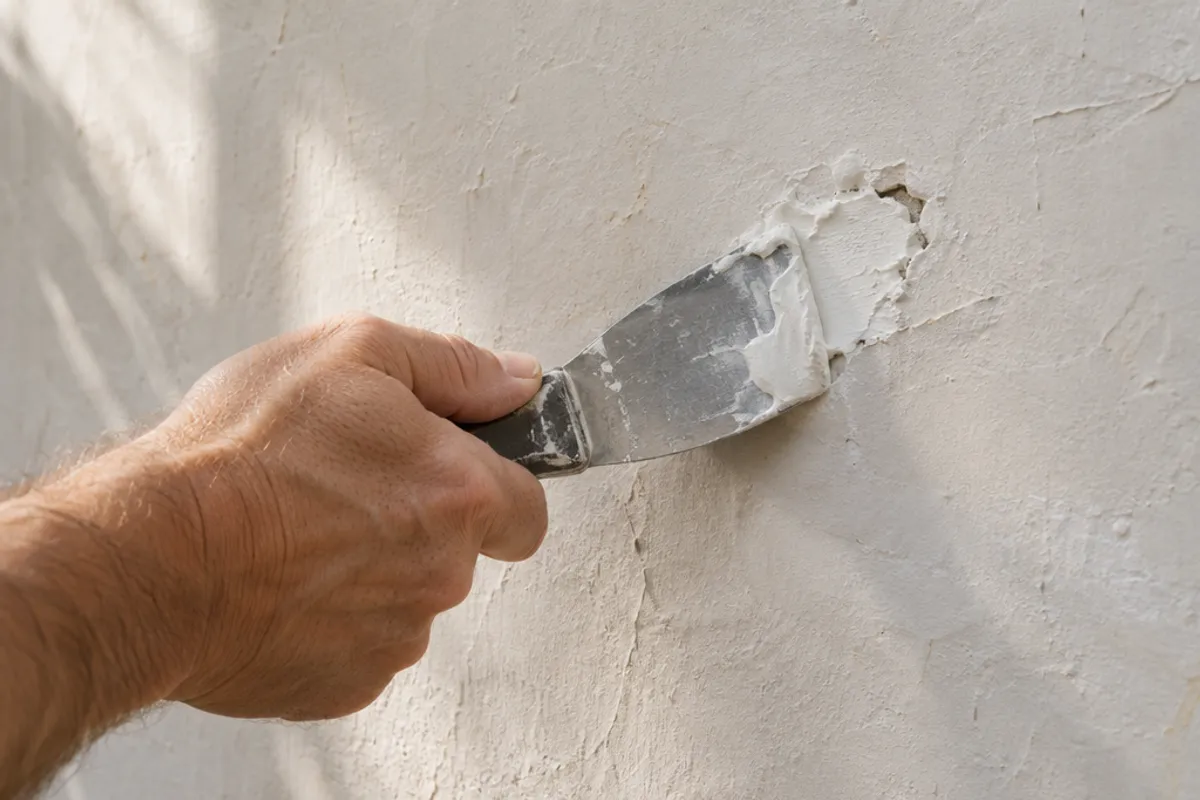
- Pack it. Mix a small batch of joint compound or patching plaster, press it in with a putty knife and scrape it smooth. Deep holes take two coats or more; wait for each to harden.
- Sand and prime. Sand lightly to a smooth finish, prime the repair and repaint.
To repair cracks, open each one into a shallow V with a utility knife, pack it with setting-type compound, and bed mesh tape over long cracks under thin, feathered layers. Cracks you noticed spreading from the damage usually mean the plaster has separated from the lath, so treat that area as a large repair.
Tip: mix only what you can use before it sets, because a stiff batch leaves a rough repair.
How do you repair a large hole with exposed lath?
Here the keys behind the plaster have broken. The repair process has two stages: secure the base, then rebuild the surface in coats.
- Cut back to sound plaster. Plaster that moves or sounds hollow has lost its grip. Score a line around the damaged area and knock out the crumbling plaster inside it, gently. Vacuum the debris.
- Re-attach bulging plaster. Drill holes through the plaster (not the lath), inject a plaster adhesive, and draw it tight to the lath with screws and plaster washers, following the adhesive maker's instructions.
- Mend the lath. Drive screws through shaky lath into the studs with a drill. Where it is broken or missing, cover the gap with metal lath.
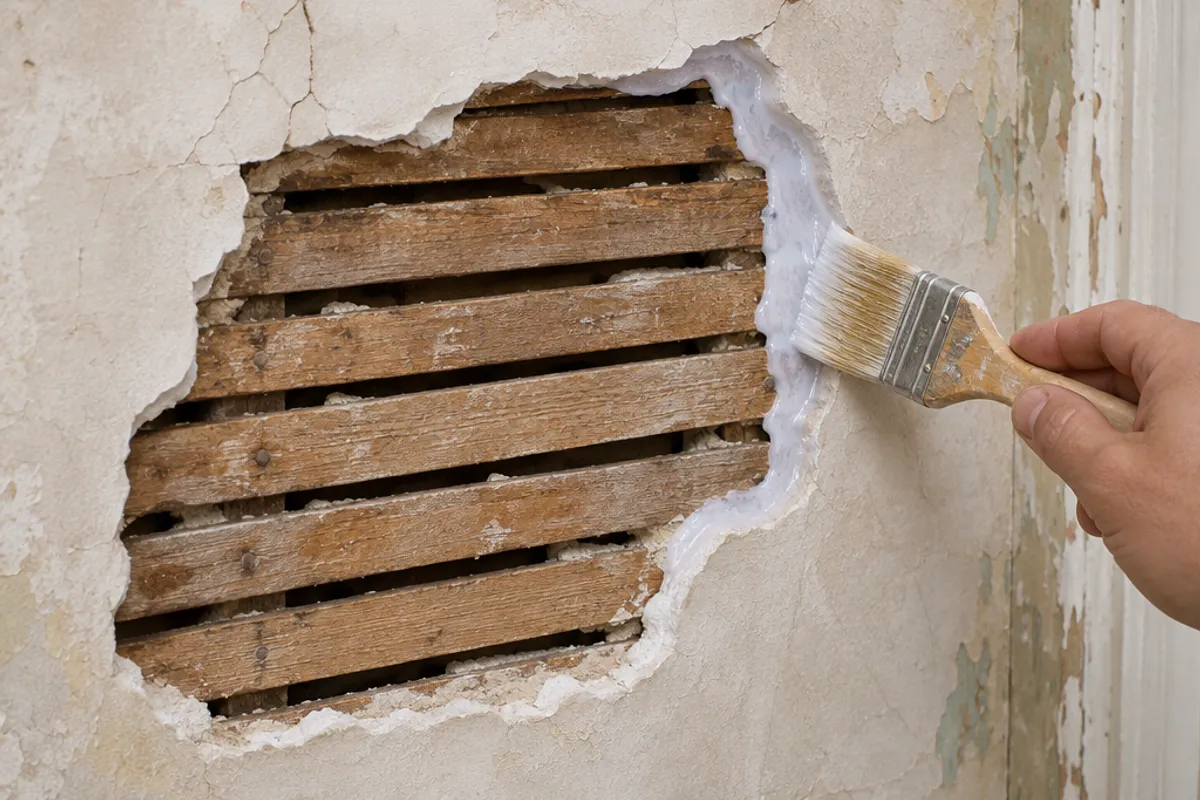
- Seal it. Brush a bonding agent on the old plaster edges and the lath, so the new plaster will adhere.
How do you apply the scratch coat, second coat and finish coat?
- Scratch coat. Mix patching plaster, usually a gypsum plaster that sets hard, and press the first coat into the lath. Scratch grooves into it while it is soft.
- Second coat. Once that sets, trowel on a second coat to just below the surface, working from the edges toward the center.
- Finish coat. Skim on a thin final coat, flush with the original plaster, and smooth it with a damp trowel. Wait until the finish coat dries, then sand and prime.
Tip: match the texture around the patch with your last pass. A sponge float copies a sand texture; a damp trowel gives a smooth finish. A plaster ceiling takes the same process, worked slowly overhead.
Can you patch plaster with drywall?
Yes, and for big holes the process is often faster than repairing plaster in coats. Cut the hole to a neat rectangle, centered over sound lath or between studs. Cut drywall to fit, run a bead of construction adhesive on the lath, and drive drywall screws with a drill. Plaster in an old house is often thicker than one sheet, so shim the drywall until its face sits just below the old plaster. Tape the joints, mix a little mud (joint compound) and skim the patch until it is flush and smooth.
Tip: call a plaster repair contractor for a sagging ceiling, wide sagging areas or decorative moldings. Restoring those is specialist work, and plaster that keeps cracking can point to moisture a patch won't cure.
Should you test for lead paint in old houses before sanding?
Yes. The US Environmental Protection Agency says a house built before 1978 is more likely to have lead-based paint, and that repair work disturbing painted surfaces can create large amounts of lead dust.
Before any plaster repair in an old house, hire a certified lead inspector or risk assessor to check, or assume the paint is lead-based and follow lead-safe work practices. Keep children and pets out of the room and clean up with damp cloths. In Canada, ask your provincial or local health authority.
If the hole exposes wiring or a junction box, switch off the breaker, test the wires, and use a licensed electrician where your area requires one. If it exposes a valve or pipes, shut off the water and call a licensed plumber where required.
When should you fit an access door in a plaster wall?
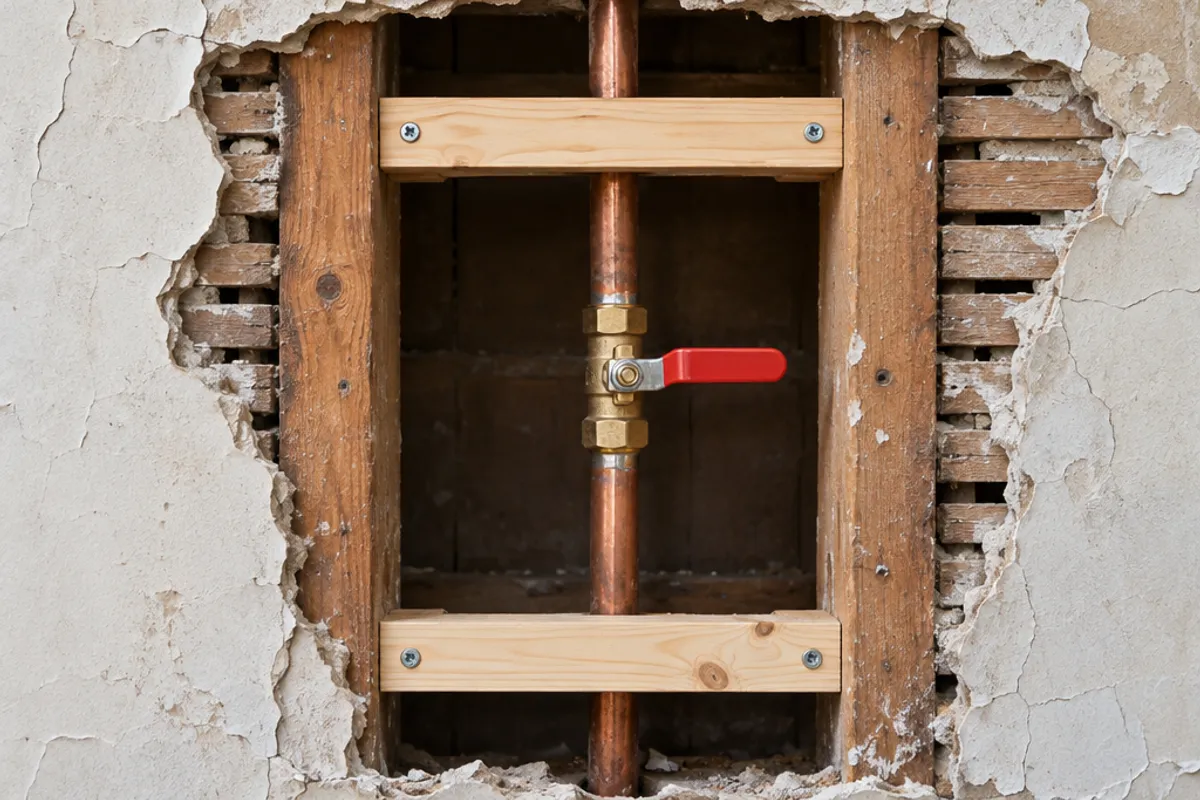
Sometimes the hole is in the right place. You opened the wall to reach a shut-off valve, a cleanout or a junction box, and someone will need it again. So frame the opening instead of plastering over it: trim it square, screw wood blocking between the studs around it, and plaster up to the blocking.
Measure the finished opening and pick a model whose listed fit includes it. From our catalog:
| Model | Type | Opening | Overall size |
|---|---|---|---|
| SAP1414 | spring-loaded panel | Fits 10 × 10 to 14 × 14 in openings | 16 × 16 in |
| PAD1212 | hinged door | Maximum service opening 10.35 × 10.35 in (estimated) | 12 × 12 in |
Plaster walls vary in thickness, so check the product page for wall thickness before you order. The SAP1414's cover rests on the plaster around the opening, so that plaster must be flat and sound. The PAD1212's frame is screwed over a cut-out the size of its service opening, with the screws supplied and a full-size template on its product page.
Before you close a wall over a valve, cleanout or junction box, ask your local building or electrical inspector what your area requires.
Browse access doors, read how to measure for an access panel, and compare every model on the access panel size chart.