
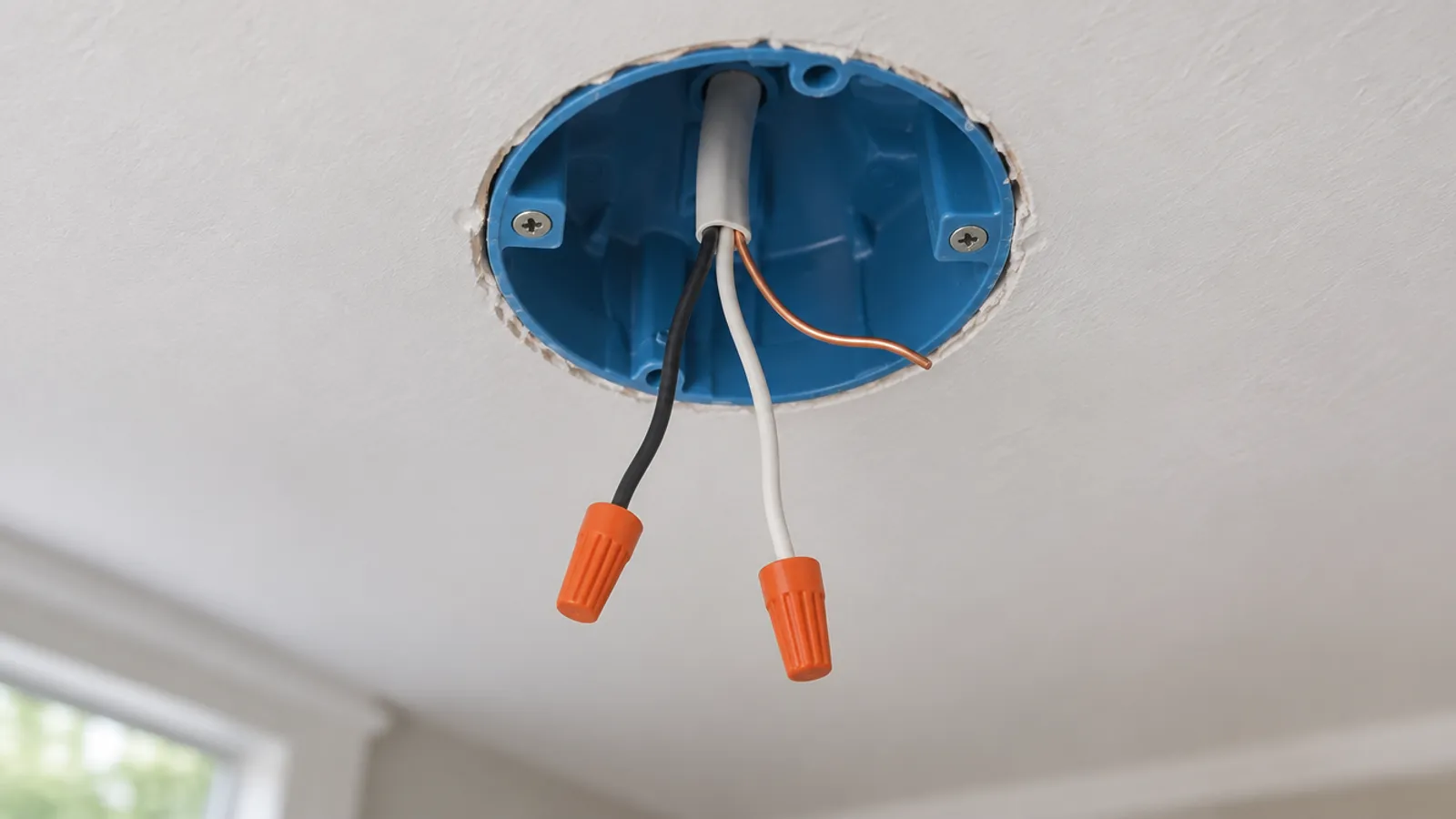
To cap off electrical wires safely, turn off the breaker and test that every wire is dead, put a wire connector made to take a single wire on each black and white wire, fold the capped wires into the electrical box and screw on a blank cover plate. The box has to stay reachable: never bury it behind drywall.
This guide shows how to cap off electrical wires in the simple case: one cable ending in a box after a light fixture, outlet or switch comes out. More cables in the box, aluminum wire or old cloth-covered wiring make it a job for an electrician.
Which wire caps work on a single wire?
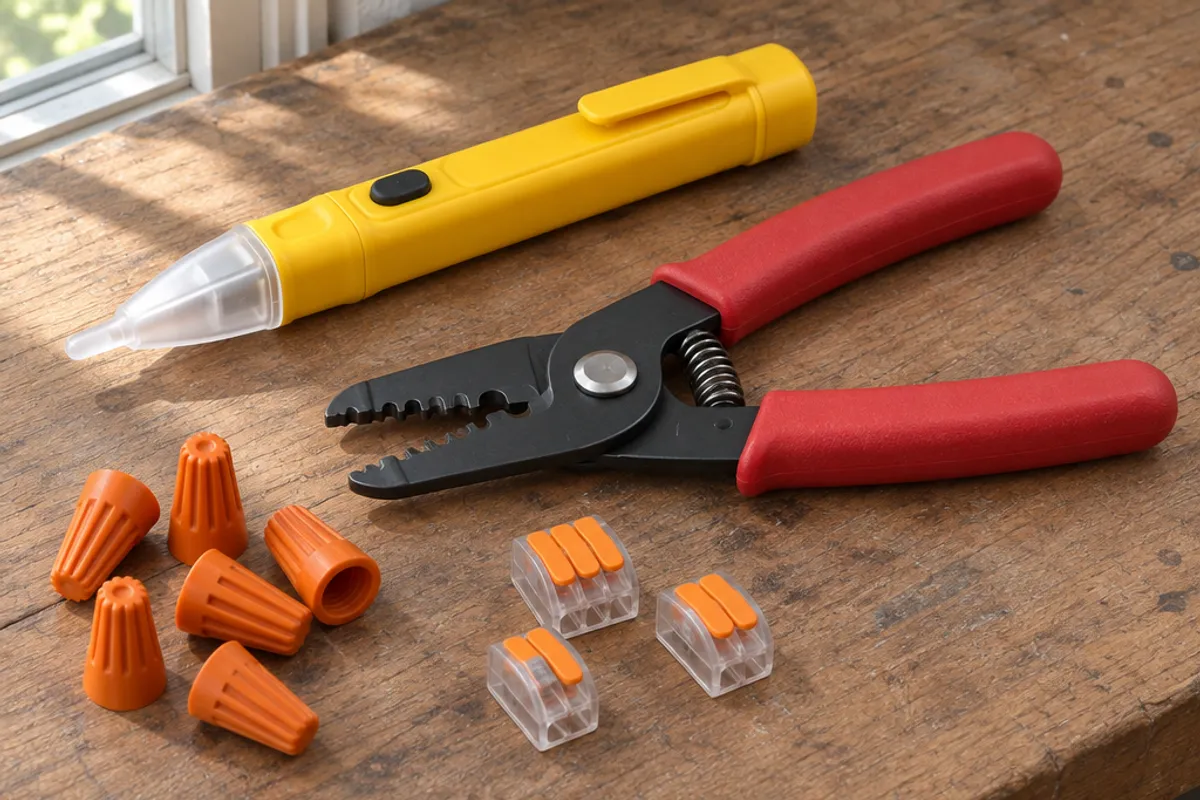
A wire cap is a wire connector used to terminate one conductor instead of joining several. Not every connector is made for that. Twist-on wire nuts are made to join multiple wires and are sold by wire combinations, and in one maker's wire connector brochure most models start at two or three wires; one is described as able to dead-end a single 14-gauge wire. So read the combination chart on the package and buy a wire nut that lists one wire of your size. A wire nut whose chart starts at two wires isn't made for one.
Lever connectors are the other route. They take one wire per port, and one connector maker's article on lever connectors says unused ports can be left empty. Check that the gauge range on the package covers your wire.
| Wire cap | On a single wire | What to check |
|---|---|---|
| Twist-on wire nut | Only models whose chart lists one wire | The wire combinations on the package |
| Lever connector | One wire per port; spare ports stay empty | The gauge range, and the lever fully closed |
| Electrical tape alone | Not a connector | Use a connector instead |
Check the metal too. The instruction sheet for one maker's standard twist-on connectors says copper to copper only. If the wire is silver-colored, read how to identify aluminum wiring and call an electrician before you cap anything. The other tools are simple: a voltage tester, a wire stripper, a screwdriver and a blank cover that fits the box.
How do you safely cap off electrical wires, step by step?
- Shut off the power at the breaker for the circuit, and tell everyone in the house not to switch it back on. Never cap live wires with the circuit on.
- Test before you touch. For safety, check your voltage tester on a circuit you know is live, test all the electrical wires in the box, the white neutral included, then check the tester again. If it shows voltage, you're still on live wires: shut off the right breaker before going on. One tester maker's instructions say to verify it before and after each use, that a no-voltage reading doesn't rule out voltage, and never to assume a neutral is dead.
- Take out the fixture or device and separate the wires so no exposed ends can touch and cause short circuits later. Test the bare ends again once they're clear.
- Trim and strip. Cut nicked or bent ends square, then strip the insulation to the length printed on the wire nut or connector package. Don't strip more than that: no bare copper should be exposed below the cap.
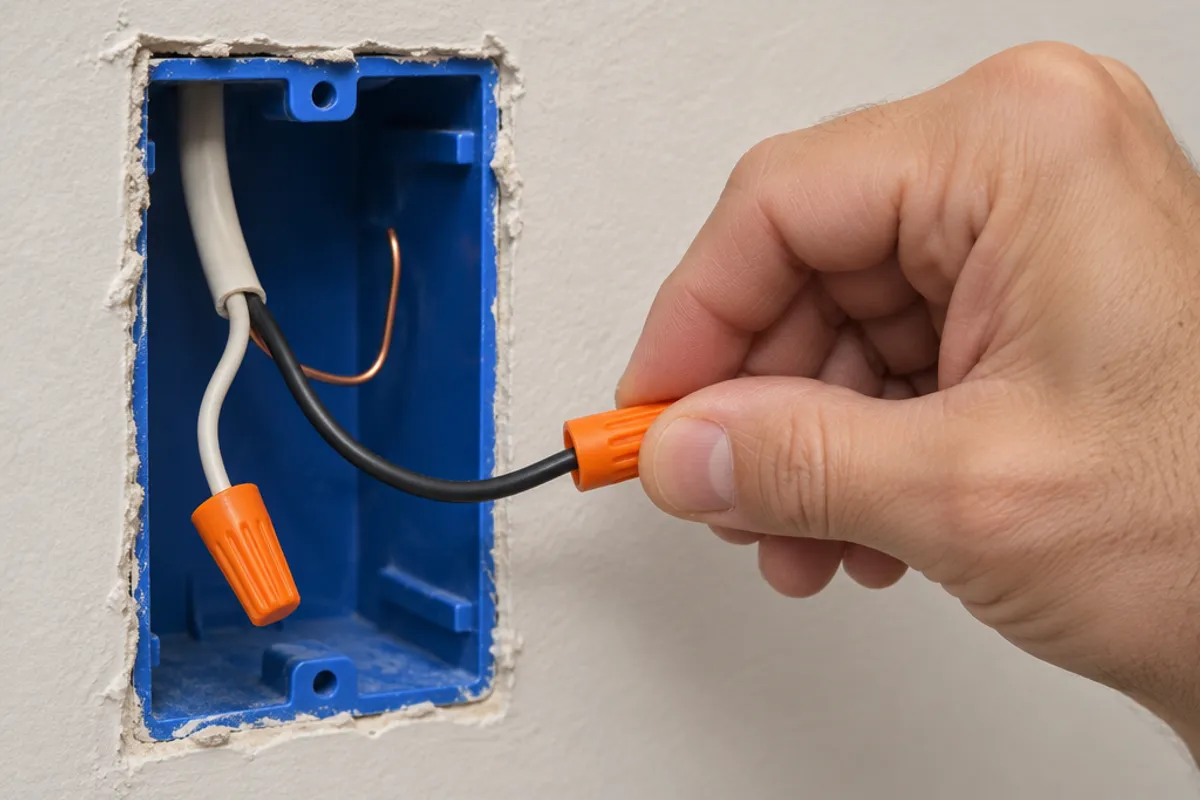
- Cap each hot and neutral on its own. Twist the wire nut clockwise until tight, as the maker's sheet says, or push the wire fully into one port of a lever connector and close the lever. Pull on each wire to check it is secure.
- Don't cap the bare ground. If it was on the removed device, attach it to a metal box's ground screw, or fold it into the back of a plastic box; if it was joined to other grounds, leave it joined.
- Fold the wires into the box so nothing gets pinched when the cover goes on.
- Install a blank cover plate: a blank wall plate on a wall box, a round blank cover on a ceiling box. Turn the power back on at the breaker and check that nothing else on the circuit stopped working. From that moment the capped ends are live wires again.
What if the box has more than one cable?
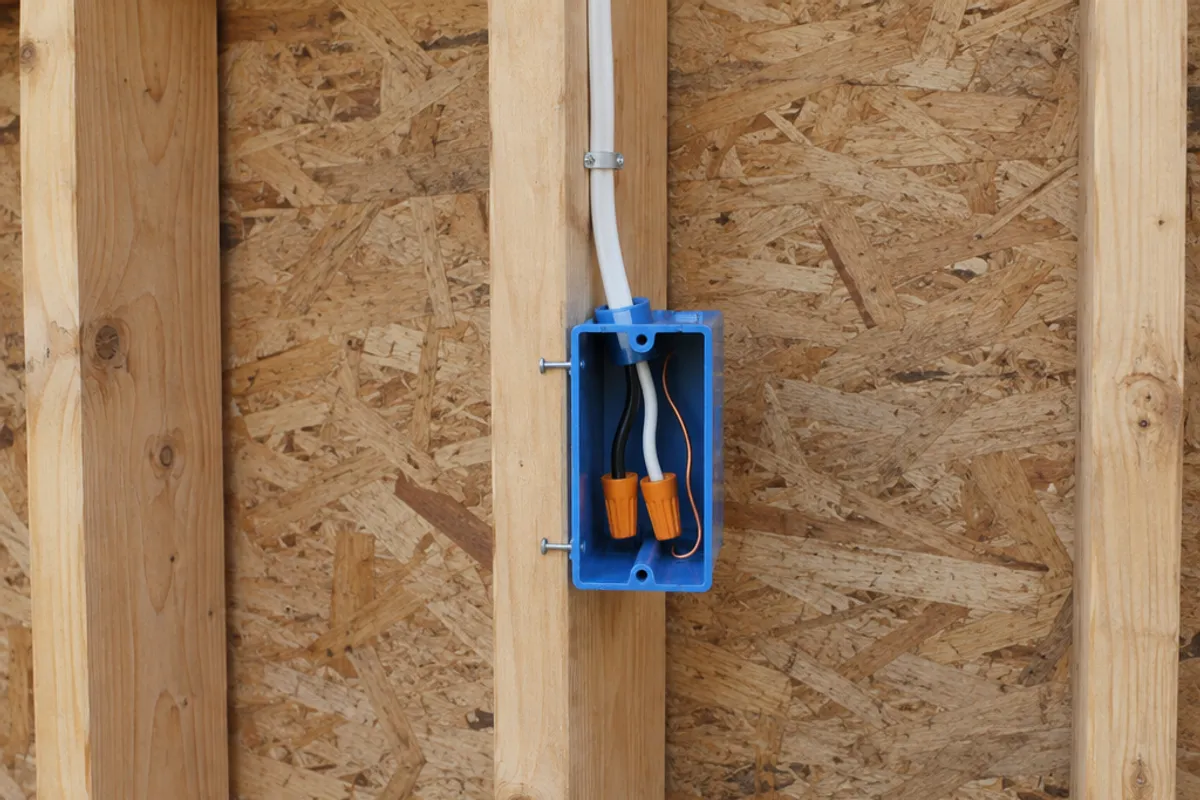
Then the box may pass power on to other outlets or lights, or carry a light's switch wiring, and capping all the electrical wires separately could cut them off. Which of the multiple wires get joined depends on how the box was wired, so this is a splice for an electrician, and the box becomes a junction box; how to install a junction box explains the parts.
Two or more cables, aluminum or cloth-covered wire, ends too short to cap, scorch marks, or exposed wires with no box at all are electrical repairs for a licensed electrician where your area requires one. Old cloth-covered wiring may be knob and tube. Never work on live wires: touching one risks an electric shock.
Is electrical tape enough to cap a wire?
No. People ask how to cap off electrical wires with electrical tape because tape is what's in the drawer, but electrical tape is not a wire connector. The connector maker's instruction sheet above calls for the connector, twisted on until tight, with no tape step. Tape doesn't terminate a wire; a connector made for one wire does, and it is the preferred method. Some people wrap electrical tape around a wire nut as an extra; that's optional, but a bare end with only tape on it is still an exposed wire and an electric shock risk.
Can you cap live electrical wires and leave them in the wall?
Yes, live electrical wires can stay capped in the box, never loose in the wall. Capped electrical wires are live again once the power is back on, so they need the same protection as any other live wires: a connector on each end, inside an electrical box, with a cover on. Live wires stuffed into a stud cavity with no box are exposed wires waiting for a nail or a screw, which can mean an electrical shock, short circuits or a fire nobody can see.
The box also has to stay where someone can open it. In the US, NEC 314.29 (NFPA 70, 2023 edition, as revised by Tentative Interim Amendment 23-10) wants a box set into or behind a finished wall or ceiling to keep its contents reachable through an opening in that surface, and it allows a removable cover over the opening. In Canada, ask your provincial electrical inspector.
When is removing unused wires a better way?
When nothing will use that circuit in the future. That is the other answer to what to do with unused live electrical wires: instead of keeping live wires capped in a box, an electrician can disconnect the cable at its source, the breaker in the panel or the box upstream, so no power reaches any of the run. What happens to the dead cable and its box is then the electrician's call. Finding the source box is part of the job, and that box has to stay reachable too.
What if the junction box ends up behind new drywall?
Sometimes the box with the capped live electrical wires can't come forward to the new surface: a wall gets furred out in a renovation project, a new ceiling goes up below the old one, or the box sits on the side of a joist. Then the junction box keeps its own blank cover, and you install an access panel in the new surface in front of it. Can you drywall over a junction box? weighs the options; what is a junction box covers what's inside one.
Measure the box with its blank cover on, across the widest point, then install a panel whose opening clears it, centered on the box:
- With a hinge and latch: PAD0808 hinged door: maximum service opening 6.35 × 6.35 in, overall 8 × 8 in
- With a spring-loaded cover: SAP0808 spring-loaded panel: fits 6 × 6 to 8 × 8 in openings, overall 10 × 10 in
The spring-loaded panel's wire spring reaches back into the cavity, so it needs clear space between the back of the finish and the box. The hinged door's frame screws to the face of the finish, and its opening is also its cut-out. Plan the panel early in the project, before the surface goes up, and leave the electrical work itself to an electrician.
Our plastic access panels and doors are not fire-rated, and we publish no water-resistance rating for them, so don't fit one in a fire separation, such as the wall between a house and an attached garage.
Measure before you order: our guide on how to measure for an access panel shows how, and the access panel size chart compares every opening and cover.
For more panels sized to boxes, see the electrical access panels.