
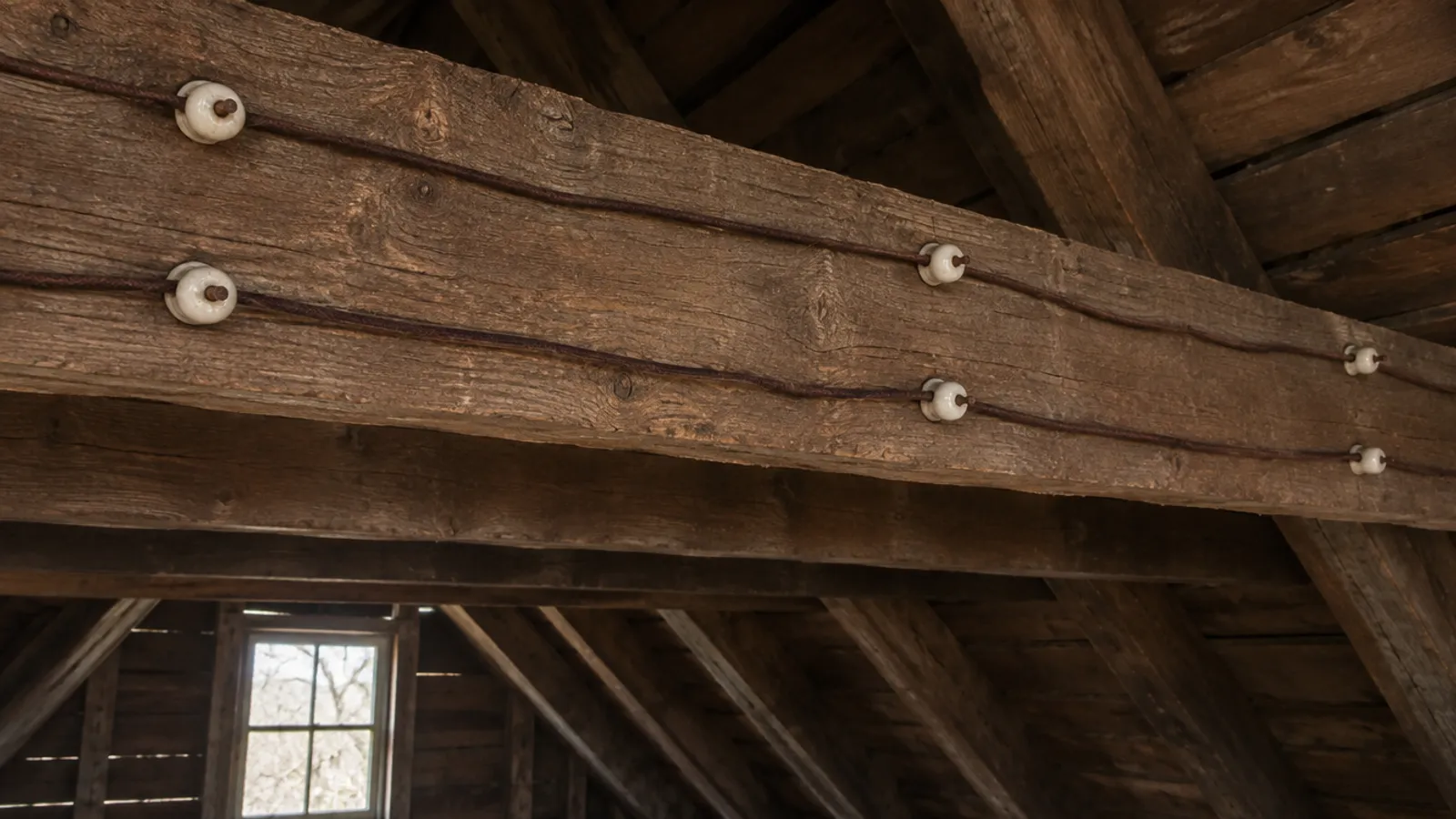
To identify knob and tube wiring, look along the joists in an unfinished basement or attic for single wires, not cables, held on white ceramic knobs and passing through ceramic tubes in the wood. Each circuit has two separate wires, a hot wire and a neutral, with cloth-covered rubber insulation and no ground wire.
If you find it, leave it alone and have a licensed electrician confirm whether it is still live. This guide shows what knob and tube wiring looks like, where to look, the safety risks and what a homeowner should do next.
Old electrical wiring can carry power even where it looks abandoned, and its insulation can crumble when handled. Don't pull, cut or move the wires, open electrical boxes or dig through attic insulation around them. Repairs and new installation are electrical work: hire a licensed electrician where your area requires one, and expect a permit and an inspection.
What is knob and tube wiring?
Knob and tube wiring is an early electrical wiring system. Ontario's Electrical Safety Authority (ESA) describes it as a wiring method used in homes from the early 1900s to the 1940s that is no longer used. It was installed to the rules of its day, not to modern electrical codes. Homes wired from the mid-1960s to the mid-1970s may have aluminum wiring instead.
How is it different from modern wiring?
Modern wiring methods bundle the conductors and a ground wire inside one cable. Knob and tube wiring runs each conductor on its own instead: one hot wire and one neutral that carry electricity on separate paths, spaced apart. As the City of Menlo Park building division explains, the wires pass through joists and studs in porcelain tubes and are supported on porcelain knobs nailed to the framing. The knobs hold the wires away from the wood, and the surrounding air helps the wires dissipate heat. Where a wire entered a fixture or the panel, it was often slipped into a flexible cloth sleeve called loom.
There is no ground wire anywhere in a knob and tube system. ESA notes that these older electrical systems don't have the safety benefits of modern ones, such as the ground fault circuit interrupters that make bathrooms and outdoor locations safer.
What does knob and tube wiring look like?
The ceramic knobs and tubes are the giveaway. Once you have seen one run, the other components of the system are easy to recognize.
Which parts of old electrical wiring give it away?
| Part | What you see | Where you see it |
|---|---|---|
| Knobs | White porcelain knobs nailed to the wood, with a single wire held on each | Along the sides or bottoms of joists and rafters |
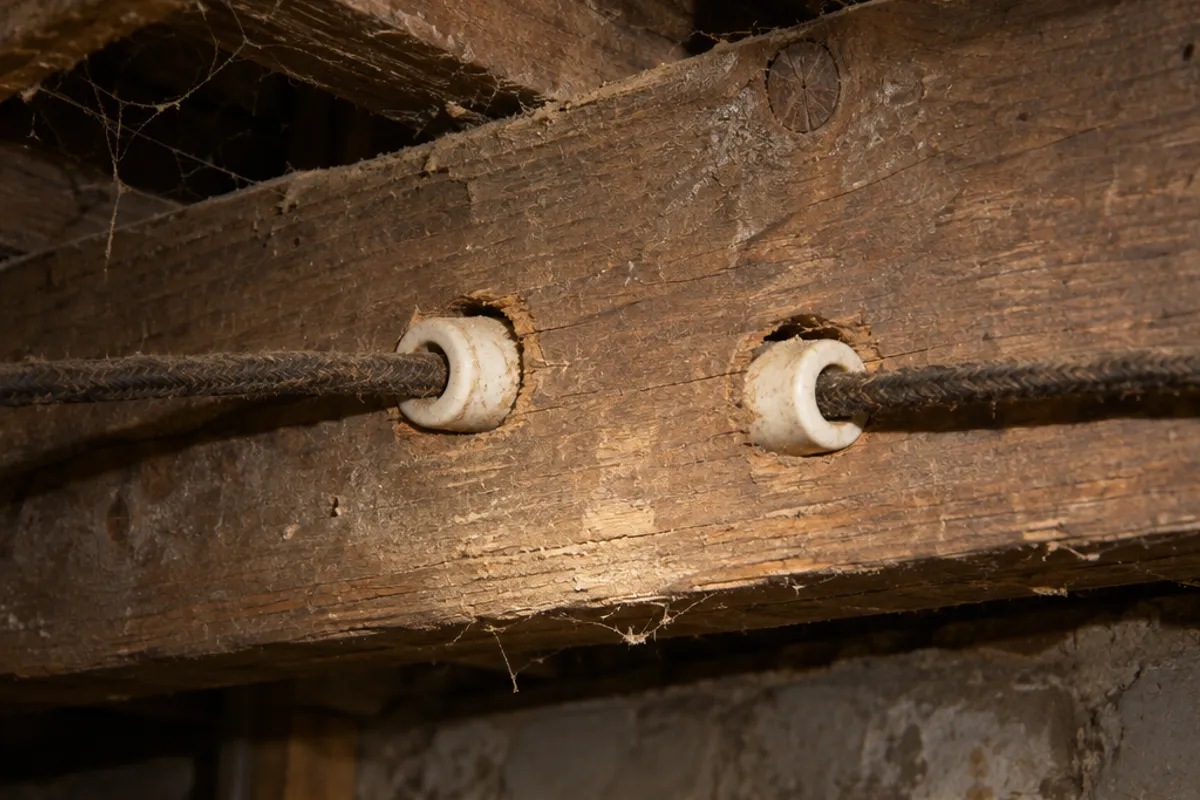
| Tubes | Short white porcelain tubes set through holes in the wood | Where a wire passes through a joist or stud |
| Wires | Single conductors in cloth over rubber insulation, in pairs but spaced apart | Attics, basements, crawl spaces and ceiling cavities |
| Splices | Joints wrapped in old tape, sometimes out in the open | Where one run branches off another |
| Loom | Flexible woven cloth tubing over the wires | Where wires enter a fixture or the electrical panel |
| Outlets | Two-slot receptacles with no ground hole | Rooms still on the old circuits |
The cloth sheathing is usually dark and dusty. Underneath, the rubber insulation can be brittle, and where it has fallen away you may see bare wires.
How to identify knob and tube wiring: where should you look?
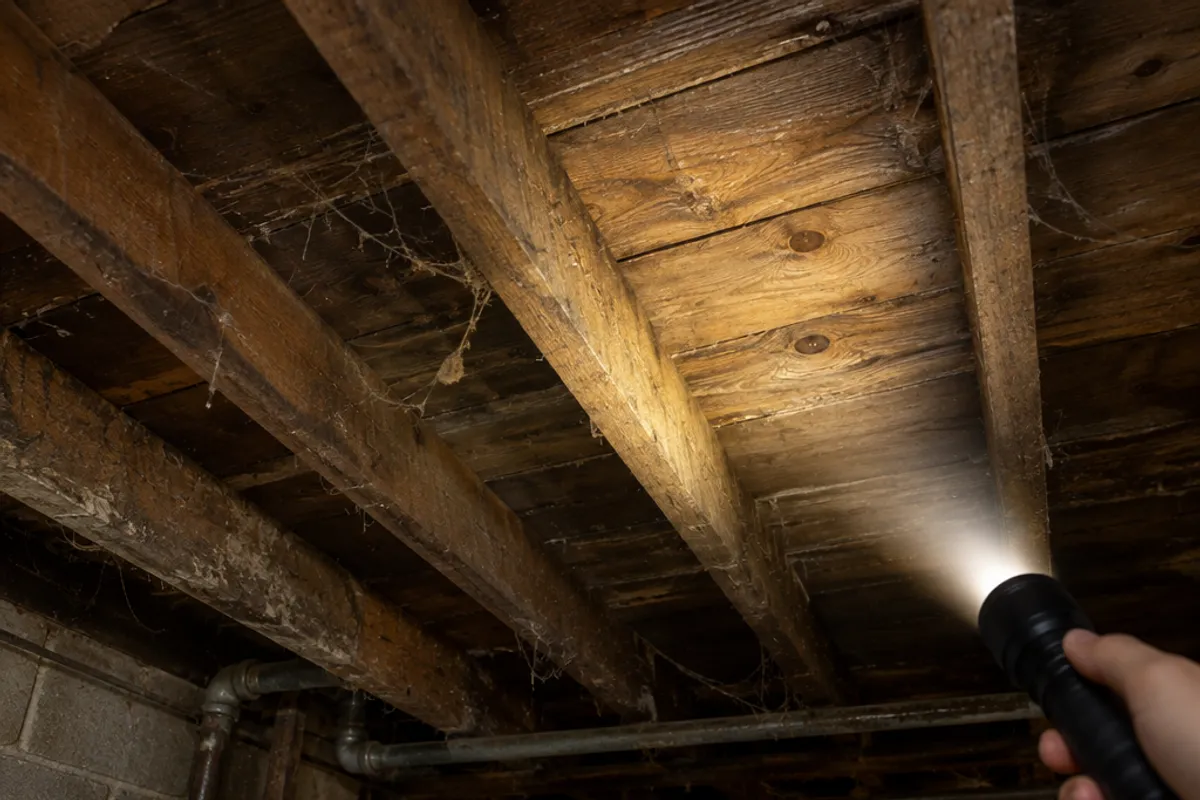
Knob and tube wiring is easiest to spot where the framing is exposed. A homeowner can do this part safely, as long as nothing is touched. Take a flashlight and work through the house in this order.
- Start in the basement. Look up at the floor joists of an unfinished basement. Wires running on knobs, or through tubes in the joists, are the clearest sign. If the ceiling is finished, check the furnace room or any utility space where joists show.
- Check the attic. Look from the hatch or a walkway along the joists. The wiring often lies under loose insulation; don't dig through it.
- Look at the electrical panel from outside. An old fuse panel, or wires in cloth loom entering it, points to an older system. An upgraded panel doesn't prove the circuits were upgraded too. Leave the cover on; opening it is the electrician's job.
- Check outlets and switches. Two-slot outlets in several rooms suggest old circuits. Don't take the covers off.
- Look into any opening. Crawl spaces, closets and any opening made for a repair can show knob and tube wiring inside the walls.
Modern cable in the basement doesn't rule out knob and tube wiring. Knob and tube circuits often survive an upgrade done in stages: the panel and some circuits replaced, with the old wiring still feeding a bedroom or an upstairs light. Follow each new cable as far as you can see it.
Home inspectors may flag knob and tube wiring during a home inspection. ESA points out that an assessment by a licensed electrical contractor is different, because it focuses only on the electrical system.
How can you tell if knob and tube wiring is still live?
You can't tell by looking. When a house is upgraded, some old runs are disconnected and left in place, while others still carry electricity, sometimes through a splice to newer cable. Treat every old wire as live until an electrician tells you otherwise.
An electrician can test the conductors, trace each circuit back to the panel and show you which runs have power and which are abandoned. That map is the first step for any repair, insulation or renovation plan.
Is knob and tube wiring safe?
It can be, while it is in good condition and left alone. ESA states that knob and tube wiring is safe provided it is properly maintained by a licensed electrical contractor, and it recommends an assessment for any home that has it. The safety risks come from age, from later changes and from what surrounds the wires:
- Aging insulation. After decades, the insulation and its cloth covering can turn brittle, crack and fall away. Handling the wires makes it worse.
- No ground. A three-prong outlet on a knob and tube circuit has no ground unless an electrician has added one or other protection.
- Later changes. Splices made outside an enclosure, and new cable tapped into old runs by previous owners, are a fire hazard an electrician should find and fix.
- Insulation around the wires. The system relies on open air to dissipate heat, so building insulation packed around the conductors holds heat in and adds fire risk. Menlo Park's building division explains that California's electrical code does not allow concealed knob and tube in wall, ceiling and attic spaces where loose, rolled or foamed-in-place insulation surrounds the wires, unless a licensed electrical contractor first surveys the wiring and other conditions are met.
- Overloaded circuits. These circuits were built for far fewer electric appliances than a modern home uses, and a kitchen, a home office or an electric space heater can overload them. A fuse swapped for a larger one removes the protection the circuit was designed with, an increased risk of overheating and fire.
Insurance requirements differ between insurers, so check with your insurer before you buy, renovate or renew a policy.
What should you do if you find knob and tube wiring?
Leave it in place and plan the next steps for the whole system with an electrician.
- Leave it alone. Don't add outlets or lights to the old circuits, and don't insulate or air-seal around them.
- Book an assessment. Ask an electrician to check the condition of the existing installations, find which runs have power, look for unsafe splices and put the advice in writing.
- Check with your insurer. Ask how your policy treats knob and tube wiring before you sign anything.
- Decide what gets replaced. The electrician may recommend replacing the wiring. Options range from repairing damaged sections, through partial upgrades, to a full knob and tube wiring replacement.
- Time it with your renovation. Replacing old wiring is easiest while walls are open. In plaster, electricians often fish new cable through the cavities from small openings; see how to fish wire through a wall.
Where do the junction boxes go when knob and tube wiring is replaced?
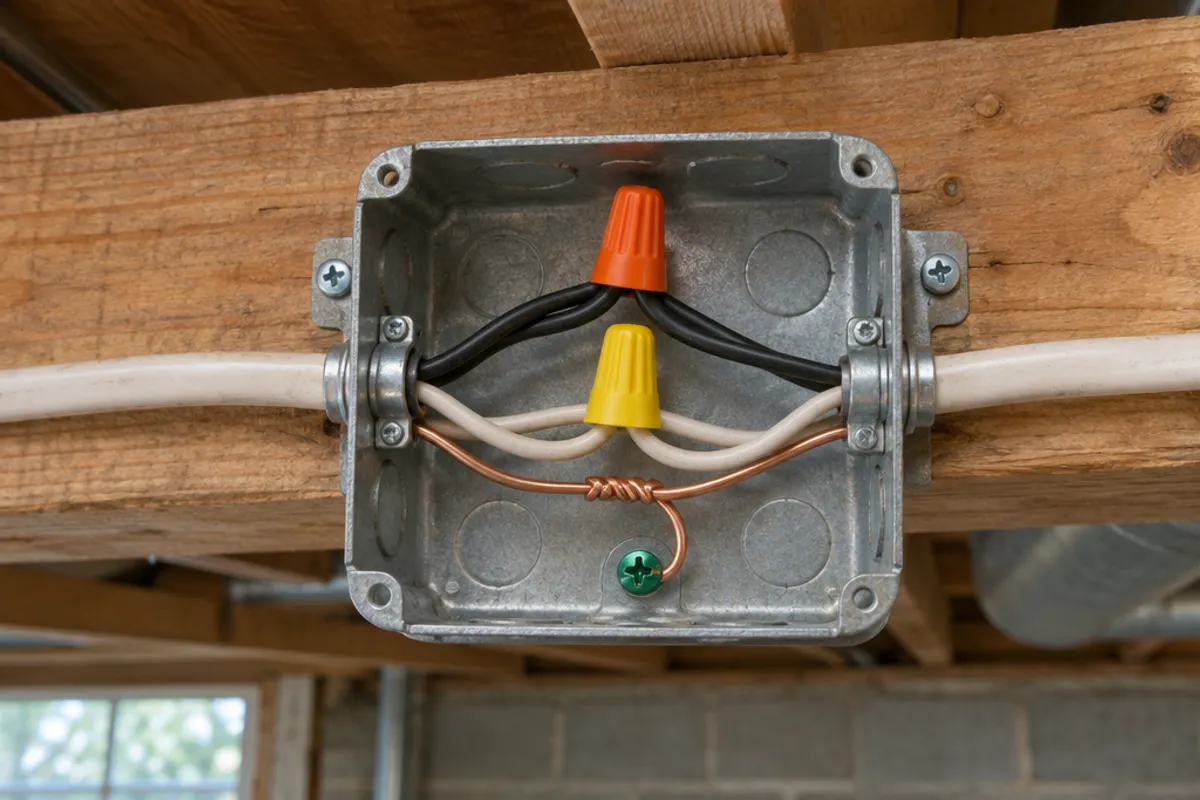
When part of a knob and tube system is replaced, the new cable usually meets the remaining wiring inside junction boxes. Those can end up in an attic, a basement ceiling or a wall cavity, and each one should stay reachable for the next inspection or repair. New to these? Read what is a junction box? Ask your local building department or electrical inspector how hidden boxes must be reached where you live.
Where a box will sit behind a finished surface, fit an access door or panel in front of it, with room to take its cover off:
- PAD0808: a hinged door with a 6.35 × 6.35 in service opening, which is also the cut-out (rounded corners, with a 1:1 template on the product page). The screws come with the door.
- PAD0606: a smaller hinged door with a 4.35 × 4.35 in service opening, where space is tight.
- SAP0808: a spring-loaded panel for openings from 6 × 6 in to 8 × 8 in, under a 10 × 10 in cover that lifts off completely.
Plaster and lath in older homes is often thicker than drywall, so check the product page for wall thickness before you cut. Our panels and doors are plastic and are not fire-rated. To compare models for a wiring job, see the electrical access panels page; if an old splice is already sealed behind drywall, read can you drywall over a junction box?
Measure before you order: our guide on how to measure for an access panel shows how, and the access panel size chart compares every opening and cover.