
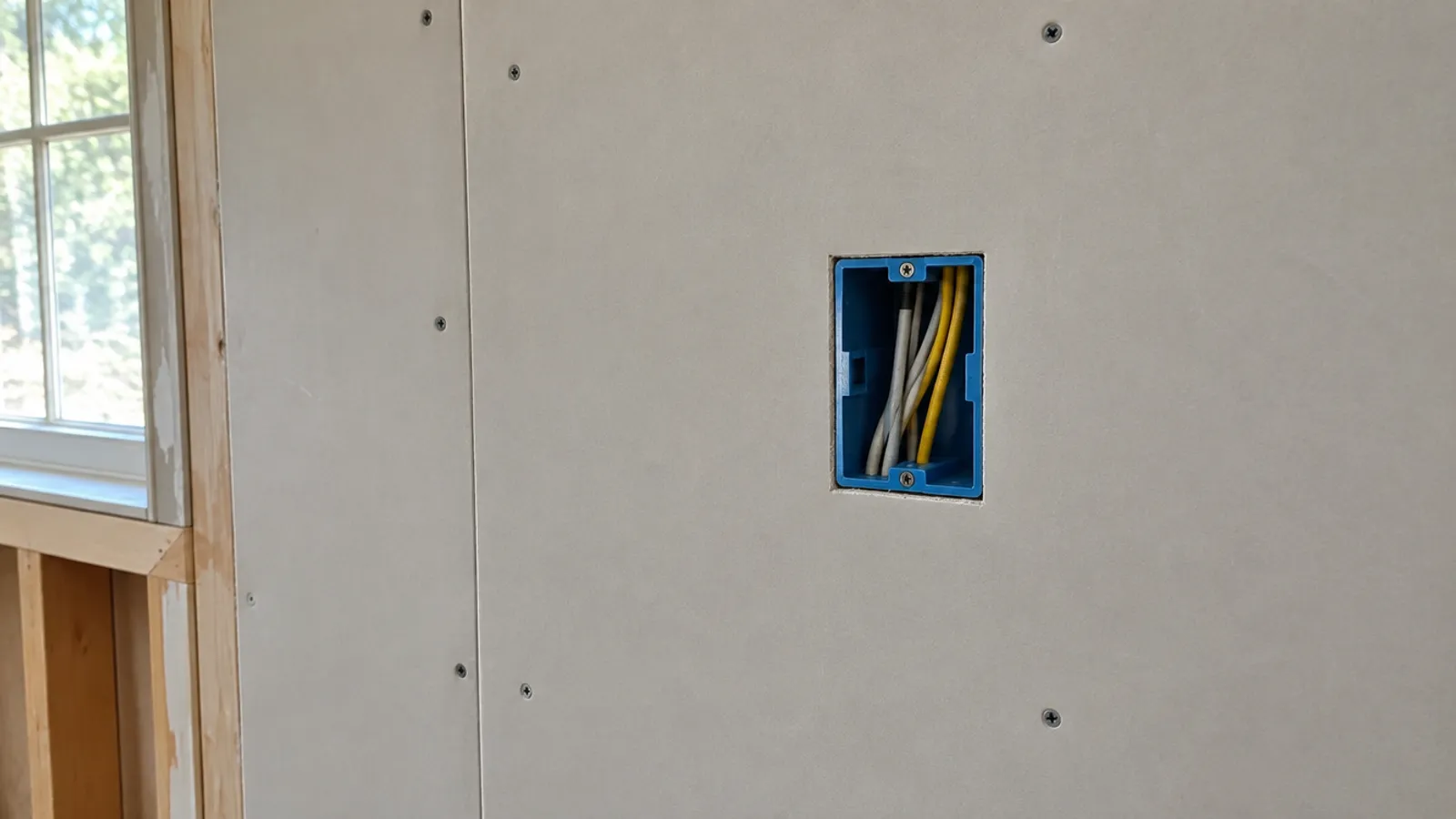
No, you can't drywall over a junction box. Section 314.29 of the National Electrical Code requires boxes to stay accessible, and drywall sealed over a box takes that access away. In Canada, ask your electrical inspector how your provincial code treats it. Instead, leave the box's front at the wall surface under a blank cover, put an access panel in front of it, or have an electrician move the splice.
This guide covers what the codes say, what counts as accessible, what to do instead of burying one, how big an access panel it needs, and how to find one someone has already covered. If you are not sure what you are looking at, start with what is a junction box?, which explains what boxes look like and where they usually sit.
What does the code say about a junction box behind drywall?
In the US, section 314.29 of the National Electrical Code (NFPA 70, 2023 edition, with Tentative Interim Amendment 23-10) says a box has to be installed so the wiring inside it stays reachable. A cover you can take off keeps that access; a sheet of drywall fastened over the box takes it away.
In Canada, your provincial electrical code decides, so ask your electrical inspector before you close the wall or ceiling. Some jobs need an inspection first.
Is it enough to mark where the junction box is?
No. A pencil mark on the framing, a photo or a note on the breaker panel tells you the location, but you would still have to cut the wall open to reach it, so it is no longer accessible. That is a code violation, not a shortcut.
That matters long after the drywall goes up:
- Repairs. Connections can work loose. When you notice a light, a receptacle or another device has stopped working, the junction box is one of the places to check, and a buried junction box turns a quick repair into cutting into the drywall, and makes every future repair harder.
- Finding faults. A hidden junction box is invisible. An electrician tracing a dead circuit may not know it exists or at what point along the cable its connections are, and may open the wrong walls looking for it.
- The next owner. Notes and photos get lost when a house is sold or repainted. A visible cover at the surface or an access panel tells everyone the junction box is there.
Why do hidden junction boxes happen?
In most houses, hidden junction boxes are left by renovations rather than by new construction, where the rough-in wiring is normally inspected before the walls are closed. The common ways one gets buried:
- Hanging new drywall over an old wall. A second layer of drywall, or new paneling, goes up over an old surface, and an old junction box disappears behind it.
- A receptacle or switch taken out. Previous owners remove an outlet or a light, leave the splices in the old metal or PVC electrical box or switch box, and cover it over.
- Replacing a ceiling. Boxes that sat in an open basement ceiling end up concealed above new drywall.
- Splices made with no box at all. Electrical wire joined with wire nuts and tape and left loose in the wall. Splices belong inside an enclosure with its cover on, which keeps heat or sparks away from anything that could catch fire.
Concealed boxes and concealed splices are a problem twice over: a box buried behind drywall breaks the access rule in NEC 314.29, and if one of the electrical connections inside loosens and starts heating up, nobody can see it, so a fire can start inside the wall. If you suspect hidden junction boxes in your own house, an electrician can trace them and make the correct repair.
What counts as accessible?
In everyday terms, you can get to it and open it without cutting into anything. These usually do that:
- a blank plate screwed on, with the front at the wall or ceiling surface
- a light fixture mounted on it, which you can take down
- an access panel in the wall or ceiling, in front of it
- an unfinished attic, basement or crawl space, if you can actually get to it
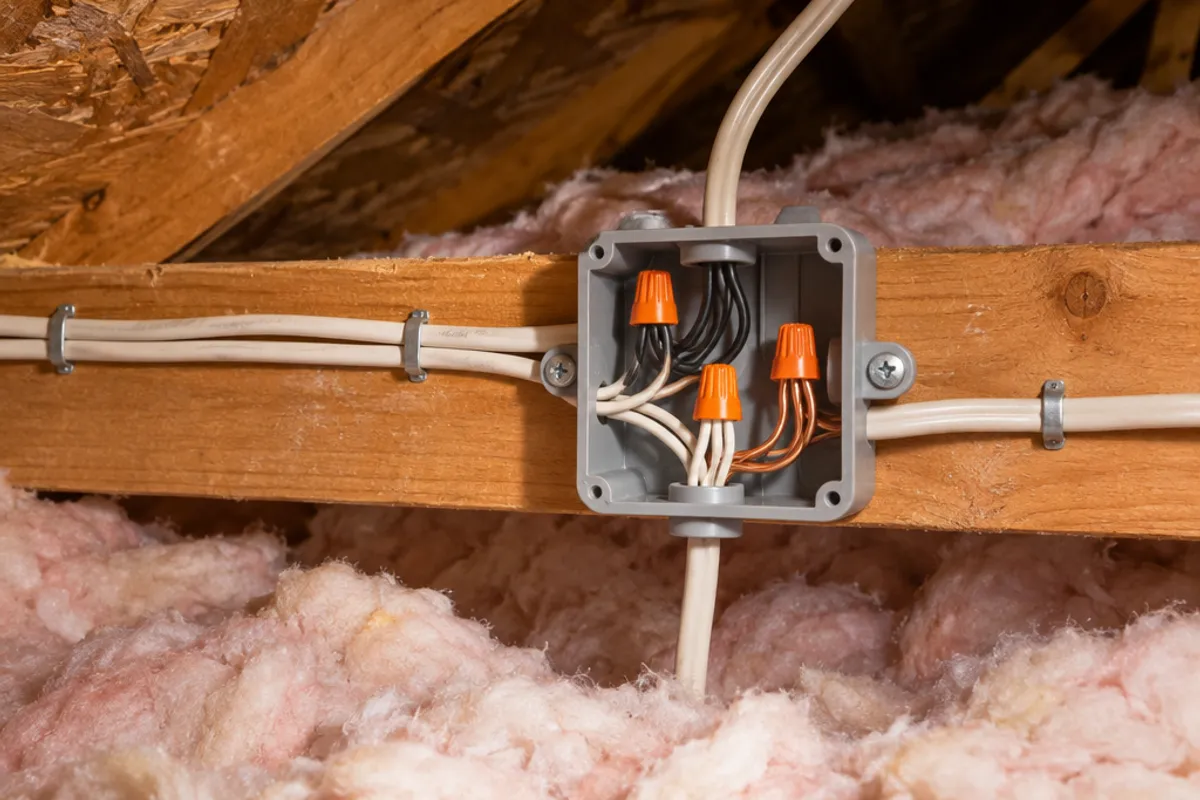
Attics are where people get caught out: a junction box there counts as accessible only if you can reach it. If it sits beyond where anyone can safely crawl, or is buried under insulation where nobody would think to look, ask your electrical inspector whether it qualifies. From an inspector's point of view, the test is simple: can someone open it without a saw?
What can you do instead of drywalling over the box?
If you are hanging new drywall or replacing a ceiling during construction or a remodel, it makes sense to plan for every box before the first sheet goes up, for example by cutting around each one as the sheet goes on, so it can still be inspected and reached later. For a box that is already in the way, there are three ways to keep it accessible, as the code requires, from simplest to most involved:
- Cut around it and fit a blank cover. If it faces the room, cut the new drywall around it so its front sits flush with the drywall face, as in the picture at the top of this page, and finish it with a cover plate. If it ends up set back behind the new surface, ask an electrician for the correct way to bring it forward.
- Fit an access panel in front of it. Where a blank plate won't work, because the box is turned sideways on a stud or joist or sits deep in the cavity, leave it where it is and put an access panel in the wall in front of it. It keeps its own cover behind the panel.
- Have an electrician move or remove the splice. If it is in the wrong place altogether, an electrician can move the connection somewhere accessible, or rework the wiring so the splice is no longer needed.
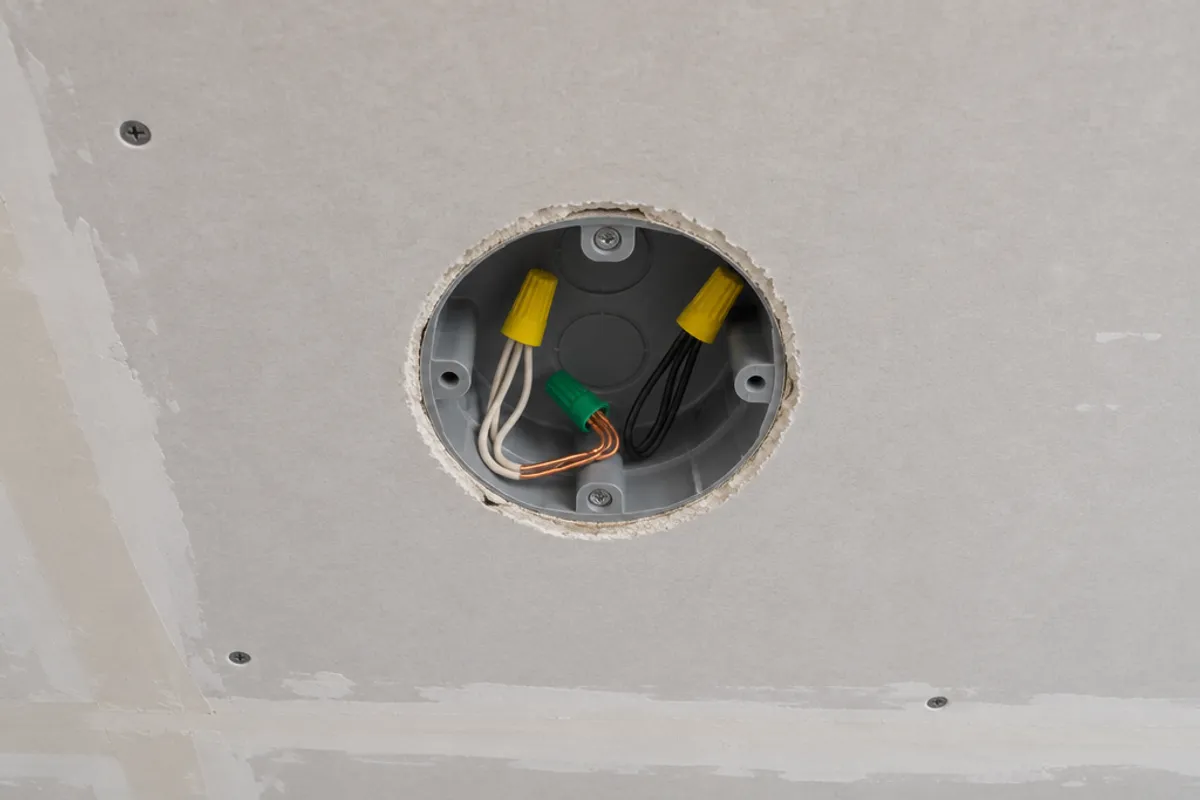
Turn off the electricity to the circuit at the breaker before you cut drywall near a box or open one, and test the wires and connections with a voltage tester before you touch them. One enclosure can hold wires from more than one circuit. Moving a box, extending wires or removing a splice is work for a licensed electrician where your area requires one, and it may need a permit.
If the opening you cut ends up larger or rougher than a cover plate can hide, our guide to patching a hole in drywall covers both filling it and fitting a removable cover.
What size access door does a junction box need?
Bigger than the face of the electrical box, with room to open it and work on the connections with both hands. Measure it and its cover plate, then add hand room on every side. Then compare that with what each model gives you:
- The PAD0808 hinged door has a 6.35 × 6.35 in service opening, and that is also the cut-out: a hole with rounded corners, traced from the 1:1 template on the product page. The frame sits on the wall surface over the cut-out and is screwed on, and the screws come with the door.
- The PAD0606 has a 4.35 × 4.35 in service opening. It suits only a small metal or PVC box, so check that it and its cover fit through the opening before you choose it.
- SAP0808 spring-loaded panel: fits 6 × 6 to 8 × 8 in openings, overall 10 × 10 in. The whole cover comes out, so you can size the opening anywhere inside that range.
If you expect to open it more than once, a hinged door is handier, because it stays attached to its frame. For a larger box, or several in one place, the electrical access panels page lists bigger models with their openings. Our panels and doors are plastic and are not fire-rated, so if the wall is part of a fire-rated assembly, ask your building department before you cut it.
To cut and fit one, follow how to install an access panel in drywall, and see the drywall access panels page for the full range.
How do you find a junction box hidden behind drywall?
Work from what you know toward the wall, and don't cut until you have a good idea where it is.
- Map the circuit. Note which outlets, switches and lights on the circuit still work and which don't. A hidden junction box often sits at some point along the cable between the last device that works and the first one that doesn't, though not always.
- Look at the wall. A filled square, a slight bulge, a change in texture or sheen, or a blank spot where a receptacle or light used to be can all mark a covered box. A flashlight held flat against the wall shows them clearly.
- Check the spaces around the room and the rest of the house. Closets, the attic above, the basement ceiling below or the floor above can show where cables run. A cable fastened along a joist or stud that disappears into a finished wall is a clue.
- Find the framing. A stud finder locates studs and joists, and a box is usually fastened to one. Some stud finders also detect live wiring; treat that as a hint, not proof.
- Look before you open it up. With the circuit switched off, cut a small inspection hole through the drywall only, at the location where you expect it, and check with a flashlight before you make it bigger.
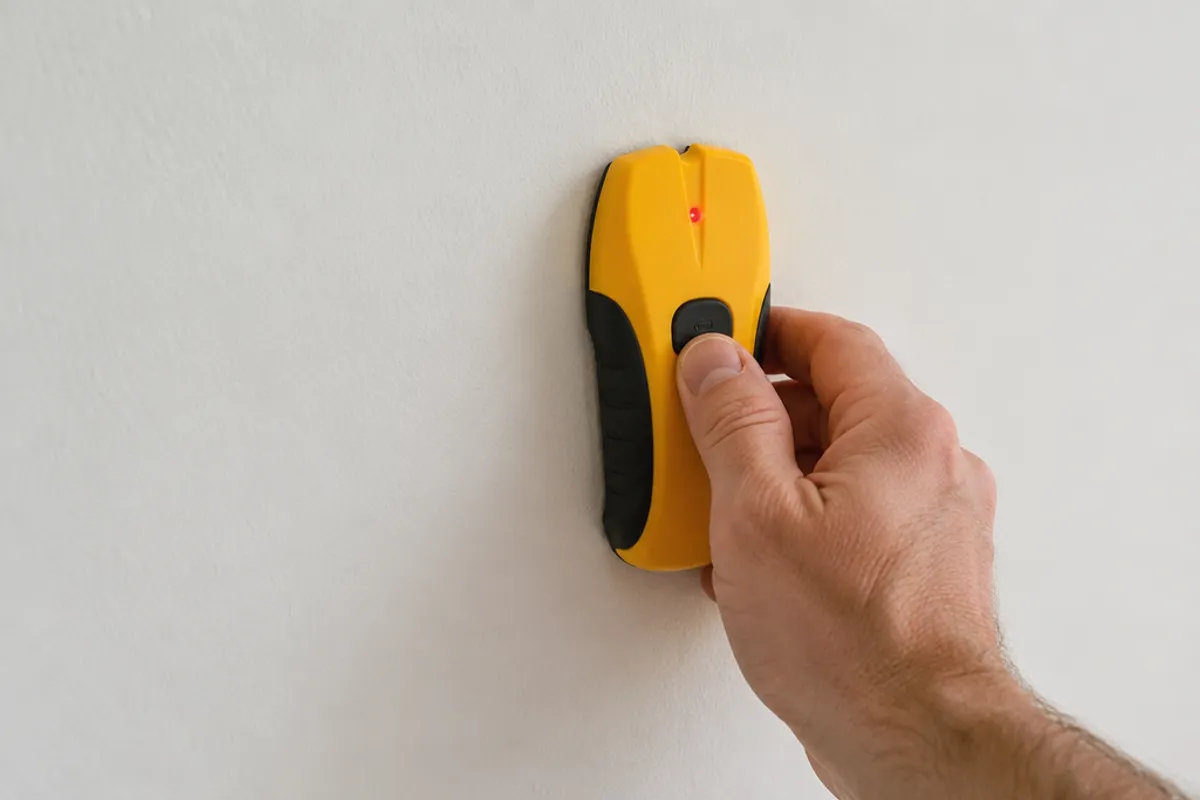
Once you have discovered it, choose one of the options above. If the search turns up wires joined with no box around them, or a box left open, stop and call an electrician.
Measure before you order: our guide on how to measure for an access panel shows how, and the access panel size chart compares every opening and cover.