
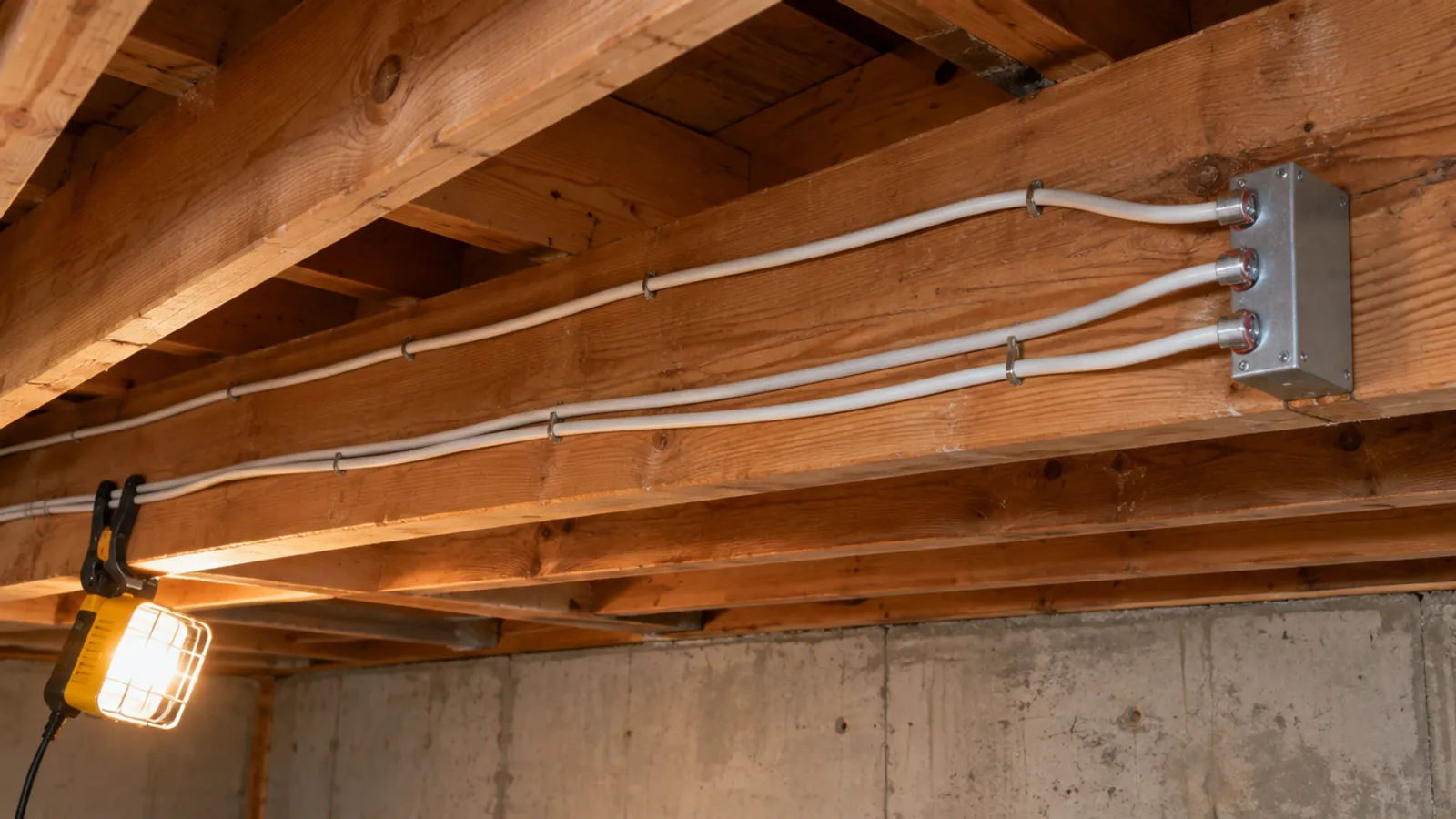
To identify aluminum wiring, read the printing on the cable's plastic jacket where it shows in an unfinished basement, attic or garage. "Al" or "Aluminum" means aluminum conductors; "CU-clad" beside it means copper-coated aluminum. A dull silver wire is another clue, but tin-clad copper looks similar. If you still can't tell, call an electrician.
This guide covers the checks, why aluminum connections overheat, and the repairs the U.S. Consumer Product Safety Commission (CPSC) recommends in Repairing Aluminum Wiring (Publication 516, June 2011). That repair has to reach every connection, including junction boxes hidden behind drywall.
Don't take off cover plates, pull out receptacles or open the electrical panel to look. You could get a shock or disturb a connection that is already failing. Repairs to aluminum connections are electrical work: use a licensed electrician where your area requires one.
How do you identify aluminum wiring in your house?
Start where the cables show without opening anything. According to CPSC, virtually all aluminum branch wiring went in as plastic-sheathed cable (type NM, often called "Romex"), and from the outside it looks just like cable with copper inside. The marking on the outer sheath is what tells them apart.
- Note the age of the home, and of any addition, basement finish or new circuit. The years that matter are in the section on older homes below.
- Find exposed cable in an unfinished basement, the attic or the garage, where cables run along joists and studs. Check each area you can reach, because an addition can differ from the rest of the home.
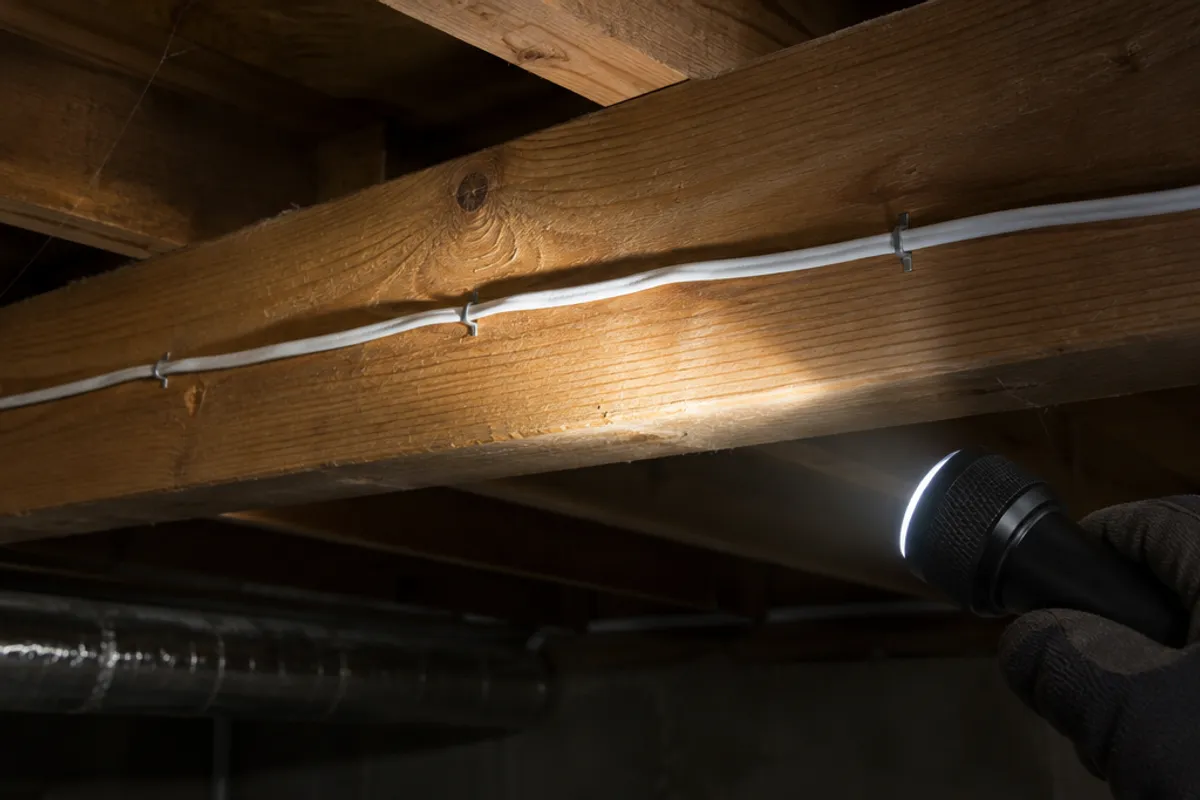
- Read the outer sheath. Cable with aluminum conductors has "Al" or "Aluminum" printed or embossed on one side of the jacket, repeated every few feet. Hold a flashlight close to the surface at a low angle so embossed letters cast a shadow.
- Read the whole marking. "CU-clad" or "Copper-clad" next to "Al" means copper-coated aluminum wire. CPSC's repair advice does not cover it, so tell your electrician which kind you found.
- Note the wire size printed on the sheathing. Aluminum circuits use a heavier wire than copper for the same current, as the comparison below shows.
- Get a professional opinion if you still can't tell. If the marking is worn off or hidden, CPSC says to have a qualified electrician make the determination.
Large cables are a separate case. Aluminum was used for a few large circuits, such as an electric range or clothes dryer, and CPSC's repair advice doesn't cover those larger wires or the service entrance cable. Utilities use aluminum for electrical transmission lines too, so one big aluminum cable at the electrical panel doesn't mean the home has aluminum branch wiring.
What does aluminum wiring look like?
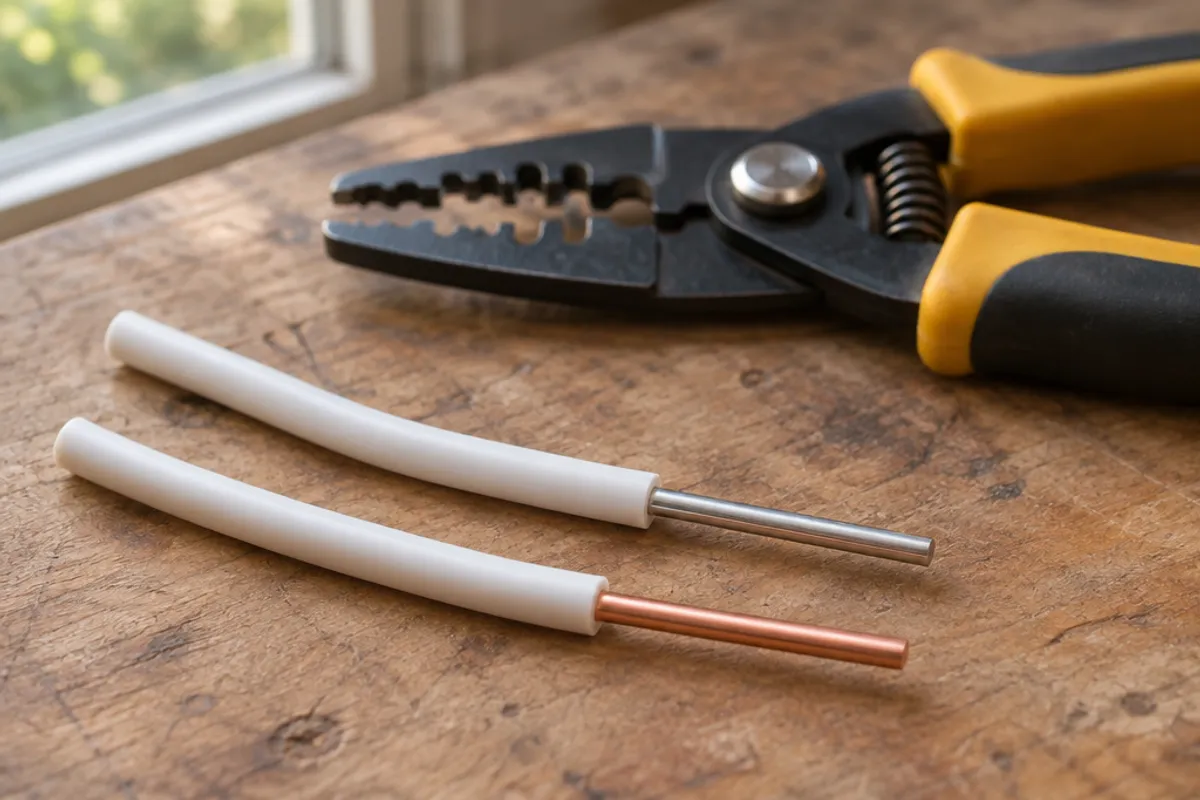
Aluminum wiring is dull silver or gray where the conductor shows, and it stays silver all the way through a cut end. A copper conductor is reddish brown. The cable around it gives little away, because both kinds came in similar plastic sheathing. Two look-alikes cause most of the mix-ups:
| Conductor | What it looks like | Jacket or insulation | What it means |
|---|---|---|---|
| Aluminum | Dull silver on the surface and at a cut end | "Al" or "Aluminum" printed or embossed | Aluminum branch wiring: CPSC's repair advice applies |
| Copper-clad aluminum | Copper-colored surface over an aluminum core | "CU-clad" or "Copper-clad" with "Al" | Outside CPSC's repair advice: ask a pro |
| Tin-clad copper | Dull silver surface, copper-colored core | Older cable, often with rubber insulation | Copper wire with a tin coating, not aluminum |
| Copper | Reddish brown throughout | No "Al" in the marking | Copper wiring |
How do aluminum and copper wire sizes differ?
Aluminum carries less current than a copper conductor of the same size, so an aluminum circuit needs a heavier wire. CPSC gives the aluminum and copper pairs for household circuits:
- 15-amp circuits: No. 12 AWG aluminum or copper-clad aluminum, where copper would be No. 14 AWG.
- 20-amp circuits: No. 10 AWG aluminum or copper-clad aluminum, where copper would be No. 12 AWG.
A wire one size heavier than you'd expect for its breaker is a reason to look closer. Only the marking, or a professional, confirms it.
Is it aluminum wiring or tin-clad copper?
Tin-clad copper, also called tinned copper, is copper wire with a thin coat of tin. Copper that went under rubber insulation was tinned because sulfur in the rubber attacked bare copper, as InspectAPedia's guide to tinned copper wire explains. The coating gives tin-clad copper a dirty silver look that is easy to mistake for aluminum.
The difference shows at a cut end: aluminum is silver all the way through, while tin-clad copper has a copper-colored core. That check is for a professional, with the power off. Tin-clad copper is copper, so the aluminum repairs below don't apply.
Which older homes have aluminum electrical wiring?
According to CPSC, a copper shortage in the mid-1960s led builders to extend aluminum wire from a few large-power circuits to general-purpose 15- and 20-amp circuits. Its guidance:
- homes built before 1965 are unlikely to have aluminum branch circuit wiring;
- cables installed between 1965 and the mid-1970s may contain aluminum, whether in new homes, additions, or circuits that were rewired or added.
So a home built earlier can still have aluminum electrical wiring in a later addition. A home wired before the 1940s may also have knob and tube wiring. If it does, see what knob and tube wiring replacement involves. Wikipedia's article on aluminum building wiring adds that most problems trace to the older alloy used for solid wire in that era, and that newer alloys are used for aluminum building wire today. A newer alloy doesn't change what to do about old wire already in your walls.
Those years come from US research. In Canada, the jacket marking works the same way, and a licensed electrical contractor can confirm what you have. In British Columbia, a March 2024 Technical Safety BC incident report describes a hot tub in Delta, installed in 2021, wired with aluminum armoured cable instead of the copper conductors its manufacturer required; the high-resistance connections ignited its control box. That was new work, not old branch wiring, but the lesson carries over: aluminum belongs only on equipment and connectors made for it.
Why do aluminum wiring connections overheat?
Problem aluminum wiring rarely fails along its length; the trouble starts at the connections. CPSC found the hazard at connections with aluminum wire: receptacles, switches, junction boxes and appliances such as dishwashers and furnaces. Several processes there increase resistance to the flow of electricity, the damage builds up over time, and the increased resistance makes the connection heat up whenever electricity flows through it.
In a national survey done for CPSC, homes built before 1972 and wired with aluminum were 55 times more likely than copper-wired homes to have at least one outlet connection reach "fire hazard conditions." The survey covered outlet connections only.
The Wikipedia article summarizes the causes:
- Expansion. Aluminum expands and contracts with heat more than copper and other metals at the terminals, so each heat cycle can work a connection a little looser.
- Steel screws. The high copper prices that pushed builders to aluminum also led to brass-coated steel terminal screws on outlets and switches instead of solid brass, and steel expands and contracts at a very different rate from aluminum.
- Creep. The older alloy of solid aluminum wire slowly deforms under a screw's pressure, loosening the connection further and raising its resistance.
- Improper installation. Screws left too loose, or tightened hard enough to damage the soft wire, are the other main cause. Many connections installed correctly in that era still work, but loose terminations can develop later.
Oxidation is the cause most often blamed, and it plays a smaller part. Aluminum's oxide layer doesn't conduct electricity, but a connection terminated properly breaks through that thin layer, and more oxidation can only form once a connection has loosened. The research found oxidation was not a main cause of failures.
Loose connections get worse as they heat up, so the problem builds without anyone noticing.
What are the warning signs?
CPSC warns that failing connections on aluminum wire seldom give easily detected warning signs, and some overheat with none. Heat at a failing connection is what you are watching for. The signs CPSC lists:
- receptacle or switch cover plates that are hot to the touch (warm outlets deserve a call too);
- flickering lights;
- circuits that stop working, such as outlets or lights that go dead;
- a smell of burning plastic at outlets or switches.
If you notice any of them, turn off the electricity to that circuit at the breaker and have a qualified electrician find the cause.
What happens where copper and aluminum meet?
Besides oxidation on the aluminum surface, which can cause a poor connection, aluminum joined to copper or other metals is a dissimilar-metal joint. Where moisture gets in, corrosion between them can make it unstable over time, the Wikipedia article notes. So connecting aluminum to copper takes a connector made and tested for both. CPSC found that ordinary twist-on connectors performed poorly with aluminum in its laboratory tests, and recommends against common hand-crimped connectors, since none had been evaluated for joining copper and aluminum conductors.
What is aluminum wiring pigtailing, and which repairs are permanent?
Pigtailing means joining a short length of copper wire, the pigtail, to the end of each aluminum wire, then connecting the copper pigtail to the device: the switch, receptacle or fixture. How long the repair lasts depends on the connector that joins copper to aluminum, and CPSC is specific about which ones count:
| Repair | What it involves | CPSC's view |
|---|---|---|
| Rewiring with copper | New copper branch circuits; the old aluminum wire can be abandoned in the walls | Permanent: it removes the aluminum itself |
| Pigtailing with a special crimp connector | A short copper lead crimped to each aluminum wire with a dedicated power tool, by electricians trained by the connector's maker | Permanent, with the longest field record |
| Pigtailing with a setscrew connector | A copper lead joined with the setscrew-type connector CPSC names, by a qualified electrician | The alternative where the crimp repair isn't available |
| Pigtailing with twist-on connectors | Copper pigtails joined with wire nuts, including AL/CU-marked ones | Emergency, temporary repair only |
| CO/ALR switches and receptacles | Devices with brass screw terminals made for direct connection to aluminum wire | An incomplete repair at best |
Even the correct wire nuts for aluminum are only a stopgap: CPSC allows AL/CU twist-on pigtails or CO/ALR devices as an emergency fix for a failed connection, followed by a complete repair as soon as possible.
A permanent repair covers every connection: outlets, dimmers, switches, fixtures, junction boxes and panel boxes, plus appliances wired straight to the aluminum branch circuits, such as dishwashers, heaters and air conditioners. CPSC also says changes to installed wiring should be done and inspected under local regulations.
Do you have to rewire the whole house?
No. CPSC lists replacement with copper as one permanent repair and pigtailing every connection, with one of the two connectors it names, as the other. Rewiring can be relatively easy in a home with an open basement and attic, but CPSC notes it is impractical for many homes. An electrician can quote both once they know how many connections there are and how easy each is to reach, and every hidden box adds work to either job.
Why does the repair need every junction box to be reachable?
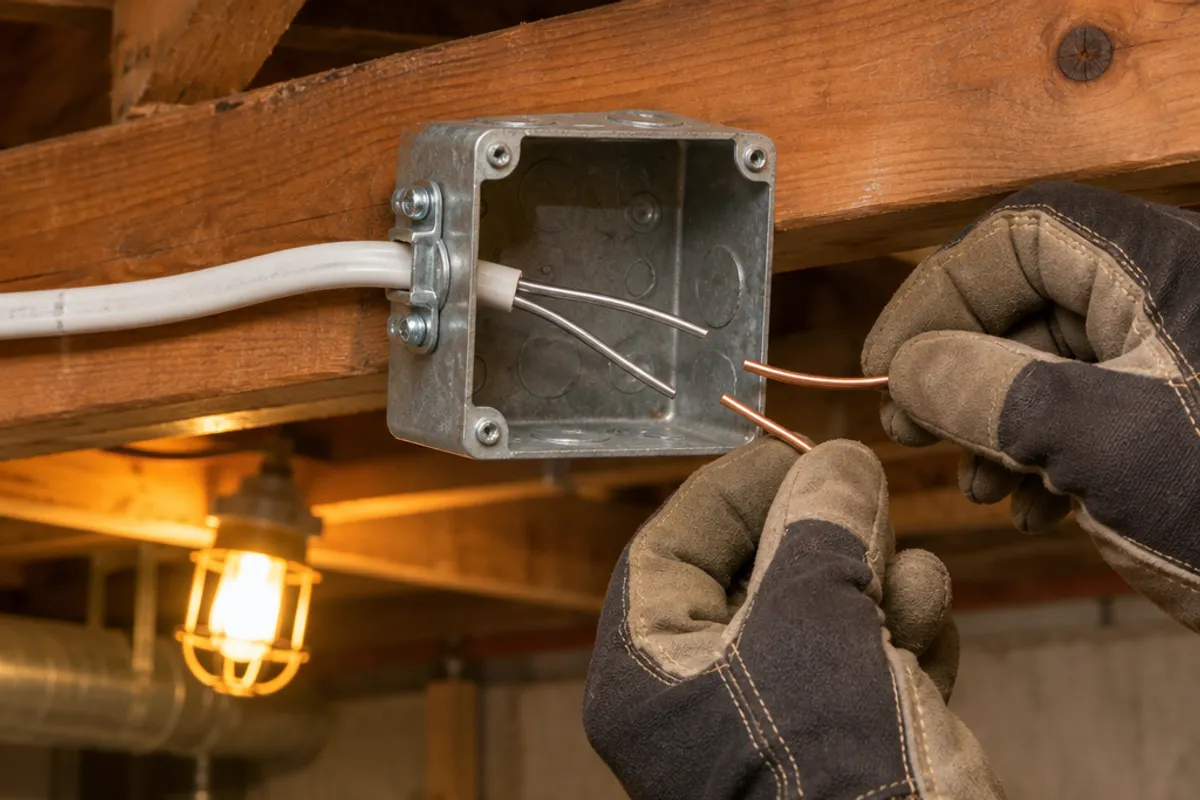
A pig-tailing job is only complete when it reaches every aluminum splice, and splices sit in boxes. A junction box buried behind drywall during an old renovation can't be repaired until someone finds it and opens the wall, and it is easy to miss altogether, leaving a problem aluminum splice and its loose connections in place. Ask your local electrical inspector what your code requires for boxes behind finished walls.
When a box behind a ceiling or wall you want to close again is opened for the repair, fit an access door over it, so the next repair starts with a latch instead of a saw:
- The PAD0808 hinged door has a 6.35 × 6.35 in service opening. That is also its cut-out, with rounded corners, and the product page has a 1:1 cut-out template.
- The PAD0606 has a 4.35 × 4.35 in service opening, enough for a small box close to the surface.
- The SAP0808 spring-loaded model takes openings from 6 × 6 in to 8 × 8 in, under a 10 × 10 in cover that lifts out completely.
These doors are plastic and not fire-rated, so ask your building department before cutting into a fire-rated ceiling or wall. The electrical access panels page lists each model with its opening. For a box that is already buried, read can you drywall over a junction box?, and for what the box does, what is a junction box?
What should you do if you find aluminum wiring?
- Don't change devices yourself. Swapping in a standard receptacle or switch, or adding wire nuts, can leave loose connections worse than before.
- Write down what you found: where you saw the "Al" marking, the wire size and any warning signs, such as flickering lights or a warm plate.
- Have a licensed electrician inspect every connection, including the electrical panel and appliances, recommend one of the CPSC methods, and list every connection the work will cover.
- Plan access for every box behind a finished wall or ceiling.
- Ask your insurer what it needs, and check your policy.
What can an electrician check at the electrical panel?
The electrical panel is where the branch circuits begin, so an electrician can see there which circuits are aluminum and how heavy each wire is. The Wikipedia article notes that CU/AL is the marking manufacturers put on circuit breakers and larger equipment suited to aluminum, while CO/ALR applies only to standard switches and receptacles.
Does aluminum wiring affect insurance, a home inspection or a sale?
Insurers set their own rules: check your policy and ask your insurance company. In home sales, a home inspection report may mention aluminum wiring; ask the inspector what they saw and have a licensed contractor confirm it. Keep the written description of any repair.
Measure before you order: our guide on how to measure for an access panel shows how, and the access panel size chart compares every opening and cover.