
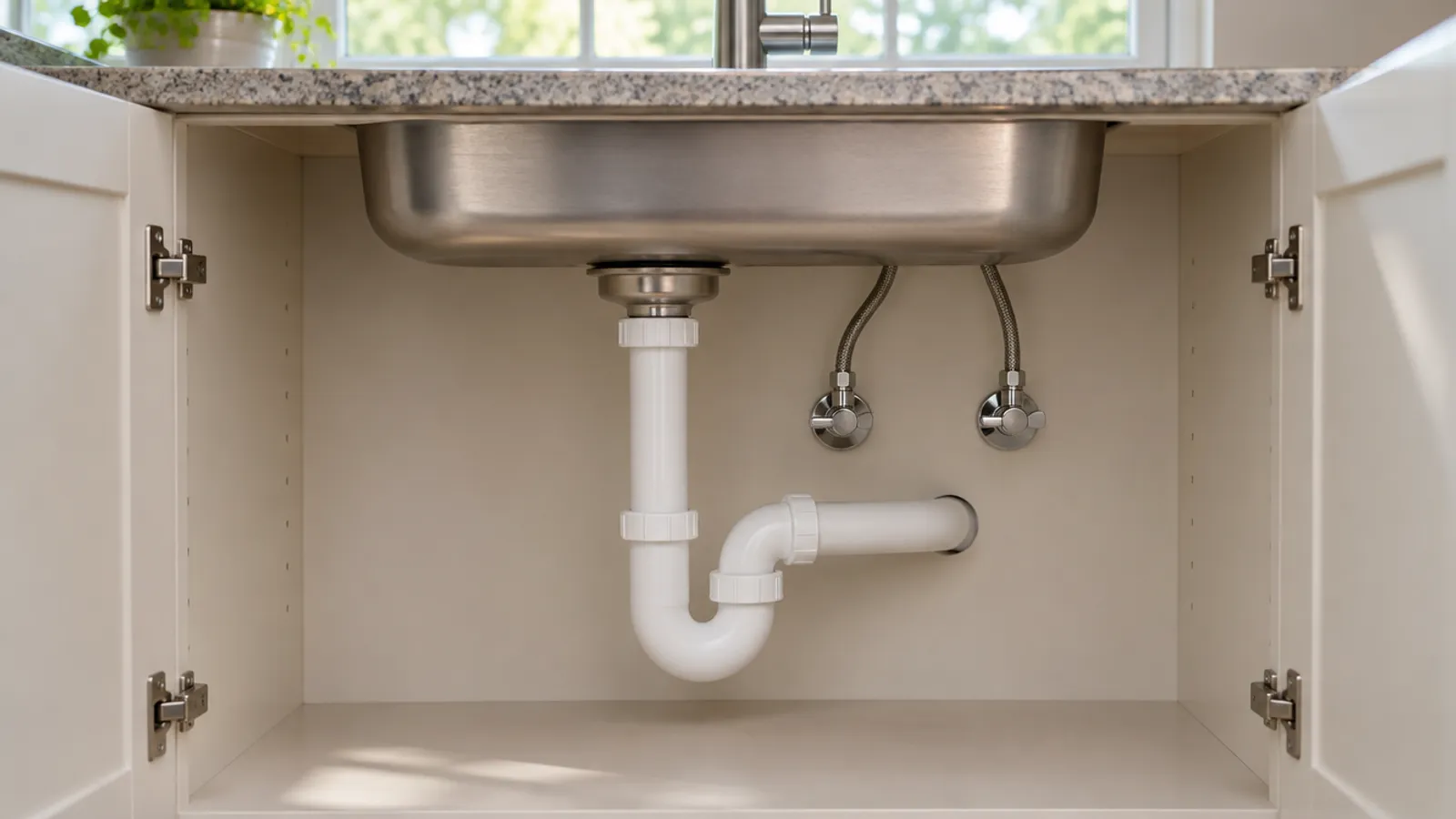
Most kitchen sink cleanouts sit in one of three places: a capped wye on the drain under the sink; a plug or cover on the drain inside the wall behind the sink cabinet; or a fitting on the kitchen branch line or the stack below, in a basement or crawl space. Many kitchens have none.
Find yours before the next grease clog. A cleanout is the access point that lets you work a drain snake past the trap and unclog the pipe beyond it, but only if you can reach it.
Where is the kitchen sink cleanout located?
Trace the drain. Water leaves the sink through the tailpiece, drops through the U-shaped trap and the trap arm into the wall, then runs down to a branch pipe under the floor. One plumbing franchise's cleanout guide gives the same method: follow the drain pipes from the sink and other fixtures to where they meet. Check each spot in turn:
| Where to look | What you see | What it opens |
|---|---|---|
| Under the sink | A wye or tee with a threaded plug, just in front of the cabinet back | The drain past the sink |
| Behind the sink cabinet | A plug or a cover plate on the vertical drain, in the cabinet back or on the far side of the partition | The kitchen branch below |
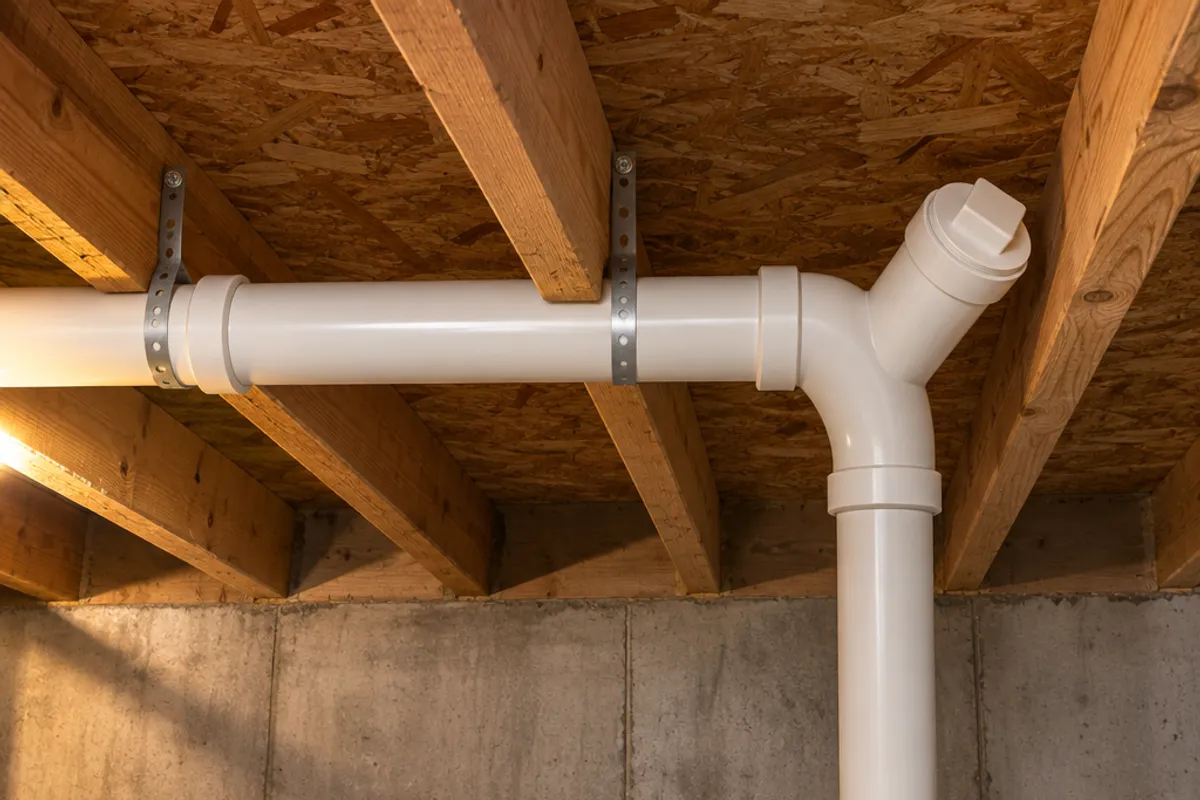
| Below the floor | A capped fitting on the kitchen branch in a basement ceiling or crawl space | The branch pipe |
Under the sink: a cleanout on the kitchen drain
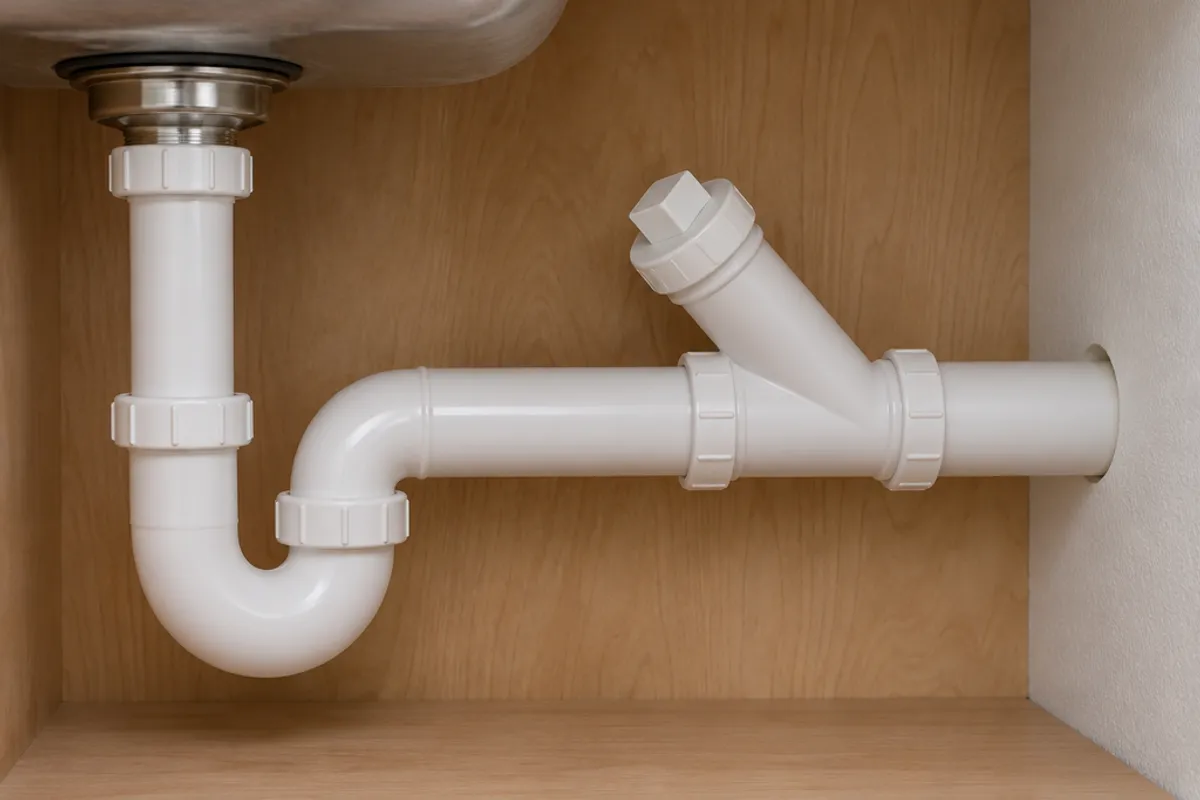
This is the easiest one to use. A plumber writing in a building trade magazine says he always adds a cleanout when he replaces a trap and the drain has none: a wye set just in front of the wall, its branch tilted up and closed by a threaded plug. Through it, the snake goes straight into the pipe, with nothing to take apart.
Behind the cabinet: a plug on the drain pipe
If the trap arm runs into the drywall with no fitting in front, look for a plug or a round cover plate in the cabinet back. Then check the other side of the partition: a closet, a hallway or a laundry room often backs onto the sink.
Below the floor: the kitchen branch
In a basement or crawl space, follow the kitchen pipe along the joists. A cleanout may sit where the branch turns or at the bottom of the stack it drains into; what is a plumbing stack shows how they connect. The franchise guide notes that some cleanouts can only be reached from a crawl space.
Does every kitchen sink have a cleanout?
No. Many older kitchens have none, and the trap is the only way in: you take it apart, push the snake into the pipe behind it and refit it at every clog. If the pipe clogs more than once, ask a professional to add a wye there, as the trade magazine plumber does. Whether your area requires one is a question for your local plumbing inspector.
Is the clog in the trap, the garbage disposal or the main line?
Rule out the easy causes before you try to unclog anything. Notice which drains are slow; that sign tells you where the blockage is:
| What you notice | Where the blockage usually is | Way in |
|---|---|---|
| The garbage disposal hums or won't run | A jam in the disposal unit | Its reset button and the maker's manual |
| One basin drains, the other holds water | That basin's tailpiece | A plunger in that basin |
| Standing water in both basins | The trap or the kitchen branch | A plunger, the trap, then the cleanout |
| Kitchen and bathroom drains back up together | The main line | The main sewer cleanout |
Check the garbage disposal first
A jammed disposal holds food debris in its chamber and looks like a clogged drain. One plumbing company's guide says pressing the reset button, a quick fix, can restore a disposal after a minor overload; the maker's manual shows where the button is and how to free a jam. The dishwasher's drain hose usually empties through the disposal, so a jam can back up the dishwasher too.
Switch the disposal off and unplug it, or turn off its circuit, before a hand or a tool goes into the chamber. Work on its wiring or outlet is for a licensed electrician where your area requires one.
When both sink drains back up
On a double sink the two basins usually share one trap, so standing water in both points to a blockage in that trap or a clog in the pipe past it. If a bathroom slows down at the same time, the blockage is a deeper issue in the main line, cleared from the main sewer cleanout rather than the kitchen one; why does my drain gurgle lists the signs.
How do you clear a clogged kitchen sink past the trap?
Start with dish soap, hot water and a plunger
Try the quick fixes first. Minor buildup of grease and soap residue sometimes moves with a squirt of dish soap and a few minutes of hot tap water to flush it. Then try a plunger, with a wet cloth over the other drain opening so the push goes down the pipe, not up the second basin; plunging works better with a little water left in the sink, so the cup can create a seal. If plunging doesn't move the clog, clean out the trap; if it's clear, the clog is past it, and the cleanout is the way in.
Unclog the pipe through the cleanout
- Empty the sink. Bail the standing water out, and stop washing dishes and running the dishwasher.
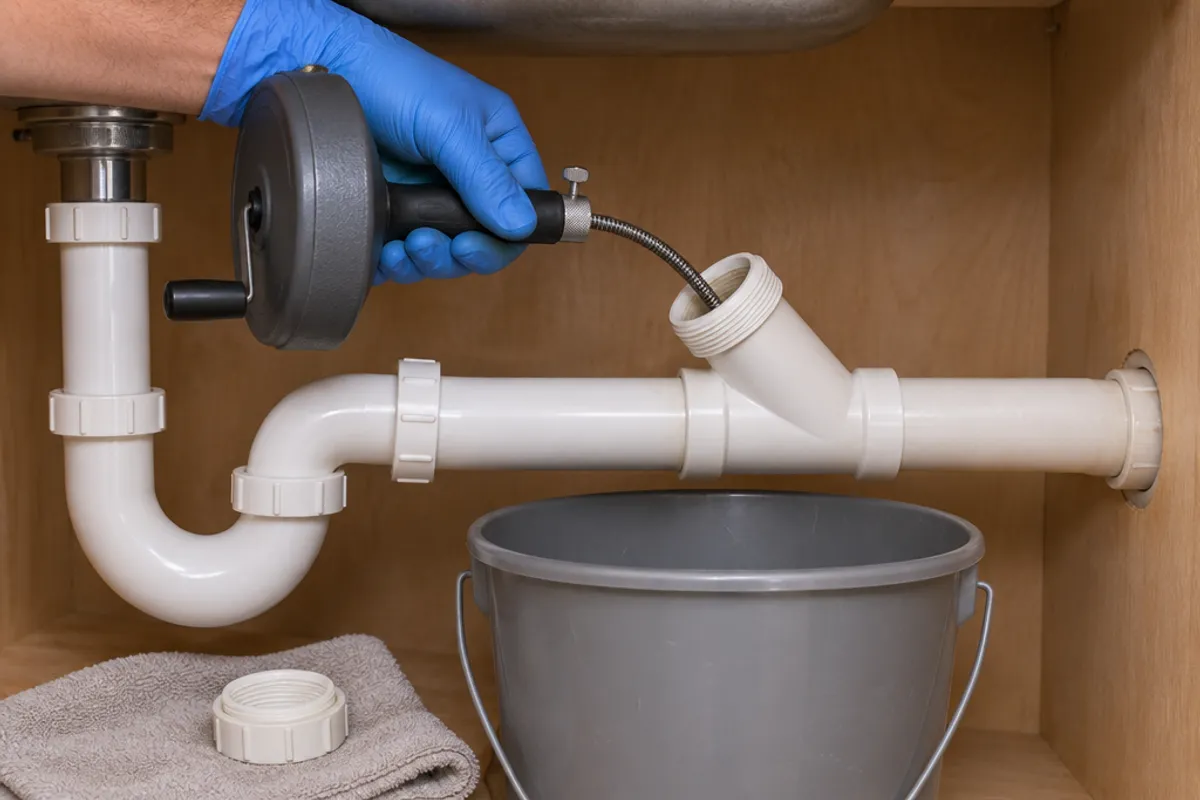
- Set up below the plug. A bucket and old towels catch the mess, and gloves and eye protection keep it off you.
- Loosen the plug slowly. A plumber's cleanout guide describes turning the cap a little at a time with a wrench so the water drains into the bucket in a controlled way, and opening a window, since sewer gas can escape from the open fitting.
- Insert the snake. Turn the cable as you push it in until it hits the blockage, work it through, then pull it back with the grease residue and debris on its tip. Use a cable the auger maker lists for your pipe size; check the maker's instructions.
- Seal the plug. Wipe the threads clean, wrap them with thread-seal tape, as the same guide advises against sewer gas, and tighten the plug snug.
- Flush the pipe. Run hot water for a few minutes with the towels still in place to catch any drips, and watch the drain opening and the plug.
Never open a cleanout after pouring a chemical drain cleaner into the sink: the water held behind the plug can burn skin and eyes. Tell the plumber what you used. Repairs to the plumbing system itself are work for a licensed plumber where your area requires one.
When does a clogged drain need a plumber?
Homeowners can tackle a clogged kitchen sink at the trap. Call a professional when neither plunging nor the snake clears the blockage, when the same clog comes back within weeks, or when more than one fixture is slow. A clog that keeps returning is usually grease and sludge coating the inside of the pipe, and a snake only punches a hole through it. The lasting fix is to clean the whole inside of the pipe; what is hydro jetting explains how a professional service scours the pipe clean and flushes the debris away. In an older home, ask the service for a camera inspection too, to see whether the pipe is sound before anyone puts more force through it.
How do you keep a cleanout behind drywall reachable?
A cleanout helps only if you can reach it. One plumbing company's guide warns that cleanouts get covered up in renovations and lost behind drywall, which makes the plumbing system hard to reach in an emergency; without one, its service crews have to go in through a roof vent or pull a toilet. A kitchen remodel is when that happens: new cabinets, a new partition or a finished basement ceiling closes over the fitting.
The wye under the sink needs no panel; keep the cabinet floor clean and clear enough for a bucket. For a cleanout behind drywall, leave an opening in front of the plug and close it with a door or panel you can open:
- A plug behind the cabinet, reached from the room on the other side: PAD0808 hinged door: maximum service opening 6.35 × 6.35 in, overall 8 × 8 in.
- A cleanout above a drywall basement ceiling: SAP0808 spring-loaded panel: fits 6 × 6 to 8 × 8 in openings, overall 10 × 10 in, or the hinged door, which stays attached when open.
- A large plug that needs a full wrench swing, or room for both hands on the snake: PAD1212 hinged door: maximum service opening 10.35 × 10.35 in (estimated), overall 12 × 12 in.
Measure the plug and the swing of your wrench before you choose a size. The plumbing access panels page shows the range for drains and valves.
Our plastic access panels and doors are not fire-rated, and we publish no water-resistance rating for them, so don't fit one in a fire separation, such as the wall between a house and an attached garage.
Measure before you order: our guide on how to measure for an access panel shows how, and the access panel size chart compares every opening and cover. How to install an access panel in drywall covers fitting it.