
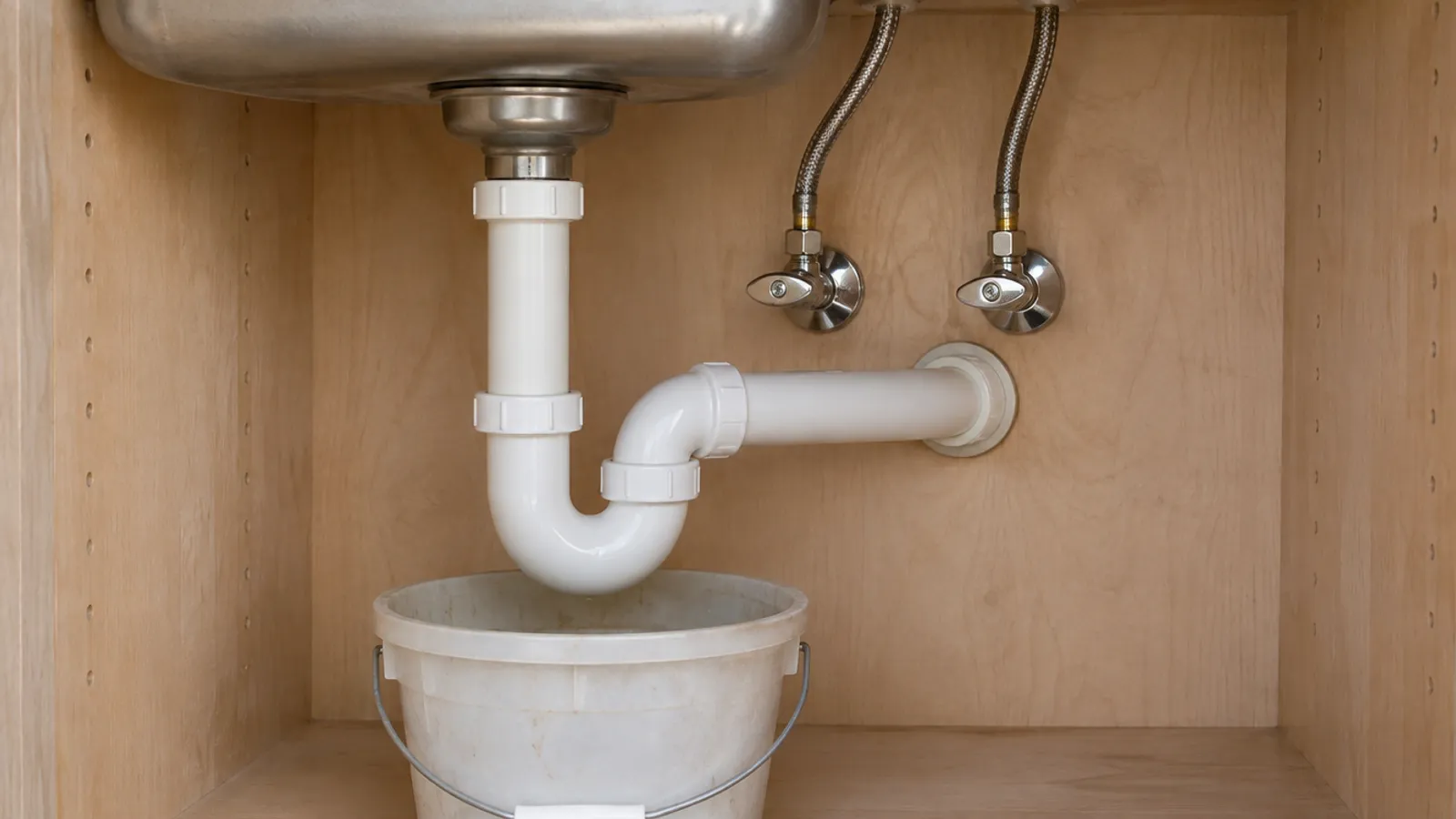
A drain gurgles when air is forced through the water in its trap. Something is stopping air from flowing freely in the pipes: usually a partial clog, a blocked vent pipe, a failing air admittance valve (AAV) or a problem in the main sewer line. Which drains gurgle, and when, tells you which cause to check first.
One gurgling sink is often a minor annoyance you can clear yourself. Gurgling in multiple drains at once is an early warning sign of a vent or sewer line problem, and a job for a licensed plumber.
What are the common causes of a gurgling drain?
Every drain in a plumbing system has a trap: the U-shaped pipe under a sink (the P-trap) or the curve built into a toilet. Its water seal keeps sewer gas out. Water running down the drain lines pushes air ahead of it and pulls air in behind it, so the drainage system needs air. Vent pipes supply it. They connect to the drain lines and run up through the roof, keeping the air pressure in the pipes even.
When air can't move freely, it goes through the water in a trap instead. Those air bubbles make the gurgling sound. If the pull is strong, negative air pressure can siphon the trap dry, and you smell sewer gas.
Match the gurgling noise to its cause
Where you hear it narrows the cause down:
| What you notice | Likely cause | Check first |
|---|---|---|
| One sink gurgles and drains slowly | Buildup in the trap or drain pipe | The trap, then a hand auger |
| Toilet gurgles when the shower runs | A partial blockage in the shared drain line, or venting problems | Plunge it and watch the bowl |
| Drains run fine but gurgle, with a sewer smell | A blocked vent pipe or a failed AAV | The AAV; a plumber for the vent |
| Several drains gurgle, the lowest backs up | A clog in the main line | Stop running water; call a plumber |
| All drains gurgle on a septic system | A septic problem | A septic service provider |
Why is my sink gurgling when it drains?
Usually because of a partial clog in the sink's trap or the drain pipe just behind the wall. Draining water squeezes past the buildup in slugs, and the trapped air burps back up through the drain. A sink gurgling while it drains slowly is the classic sign of a clogged drain pipe. If other drains gurgle too, or multiple sinks back up at once, the clog is further down the line.
Gurgling kitchen sink: grease and the dishwasher
Grease coats the kitchen drain and catches coffee grounds, food particles and other debris until it slows the flow. The dishwasher usually empties into the same kitchen sink drain and pumps water out fast, so a gurgling kitchen sink often shows up while it runs. In a double kitchen sink, both basins usually share one trap on the kitchen sink drain, so the gurgling sound may come from the empty side while the full one drains.
Gurgling sink in the bathroom: hair and soap scum
Bathroom sinks and tubs clog with hair and soap scum, usually at the stopper or in the trap. For a slow tub, see how to remove a bathtub drain. If the sink is gurgling but not blocked, look at the vent instead.
Why does the toilet gurgle when the shower runs?
Because they often share a drain line. In many bathrooms, the toilet, shower and sink drain into one branch drain tied to the stack and its vent. If the vent can't supply enough air, shower water flowing past pulls air through the toilet's built-in trap, and the bowl gurgles or its water level drops. A partial blockage further down the shared line does the opposite: water backs up behind it and pushes air out through the bowl.
If dirty water appears in the tub when the toilet is flushed, the blockage is past both fixtures, often in the main sewer line. To fix a gurgling toilet, try a flange plunger, then a closet auger, the toilet version of a drain snake. If it keeps gurgling, call a plumber.
Can a blocked vent pipe make a drain gurgle?
Yes. A blocked vent pipe is the usual suspect when drains gurgle but still run at normal speed, often with a sewer smell. The plumbing vent is open on the roof, so leaves, bird nests and other debris can block it. In cold regions such as Alberta, Quebec and the Maritimes, frost can build up inside a roof vent during a hard freeze.
Venting problems also come from improper installation: a sink added with no vent, or a vent cut off during plumbing work in a remodel. Even improper installation of the drain itself, such as a pipe with a sag where debris settles, can make a drain gurgle.
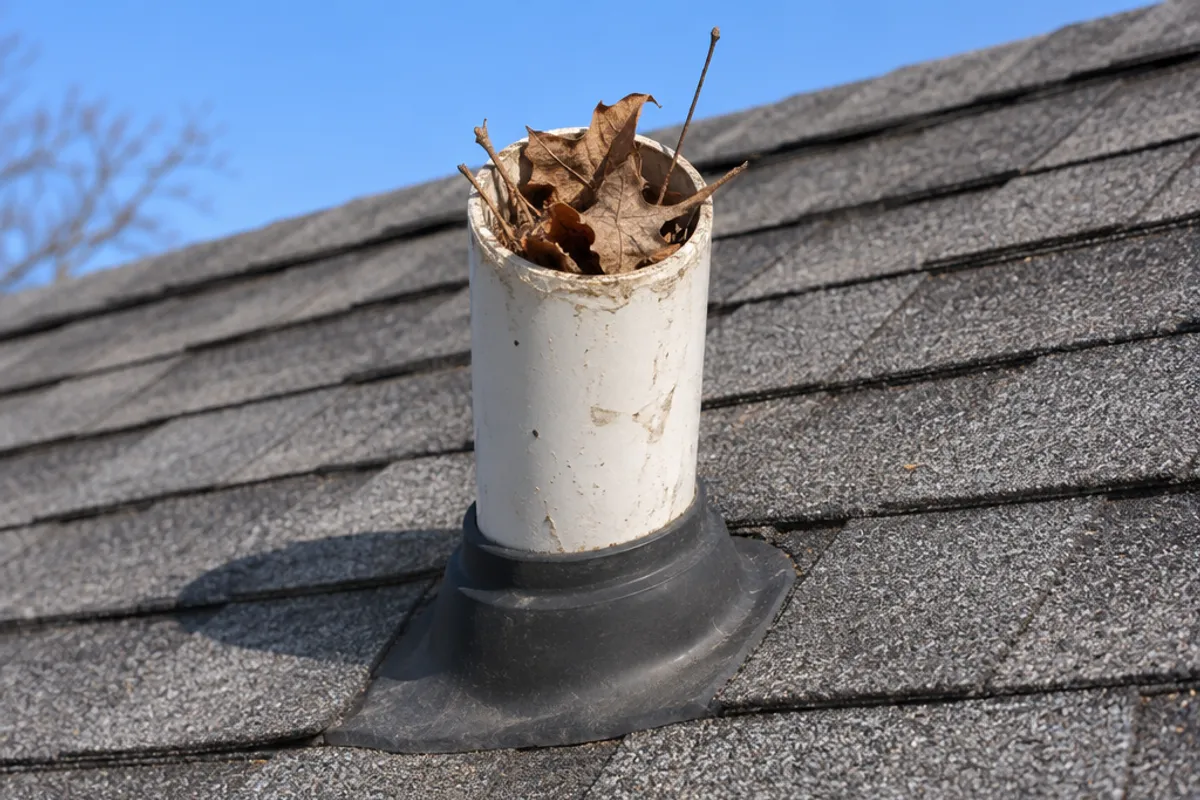
Clearing a vent means climbing up top and running a cable down the vent stack. Leave it to a professional plumber, and use a licensed plumber where your area requires one for plumbing changes to the vent pipes.
What about an air admittance valve?
An air admittance valve (AAV) is a one-way valve on a short vent pipe, often under a sink. Stuck closed, it acts like a blocked vent: the sink makes a gurgling sound and drains slowly. Stuck open, it lets sewer gas in. Many AAVs unscrew for checking, so follow the valve maker's instructions. Our guide to air admittance valves explains where they are allowed and how they fail.
Is a gurgling drain a sign of a main sewer line problem?
It can be, when multiple drains gurgle at once. Every drain in your home's plumbing system empties into the main sewer line, which runs to the city sewer system or a septic tank. When tree roots, grease or wipes clog it, water backing up rises at the lowest openings, such as a basement floor drain or a tub. A toilet that gurgles when the washer drains, or water in the tub when you flush, is another sign.
Stop running water, check the floor drain and nearby areas for water coming up, and call a plumber. They will usually start at the sewer cleanout: standing water in the cleanout pipe means the clog is further down, toward the street. Our guide to the sewer cleanout shows where to find yours. Acting early keeps a backup from turning into water damage.
On a septic system, the EPA lists gurgling sounds in the plumbing system among the common signs of a failing septic system. Call a septic service provider.
How do you fix a gurgling drain?
For minor gurgling issues at one sink, clear the trap and the drain pipe behind it.
Clear a clogged drain at one sink
- Pull the stopper or strainer and clean out the hair and buildup.
- Plunge the drain, with a wet cloth over the other basin's drain or the overflow.
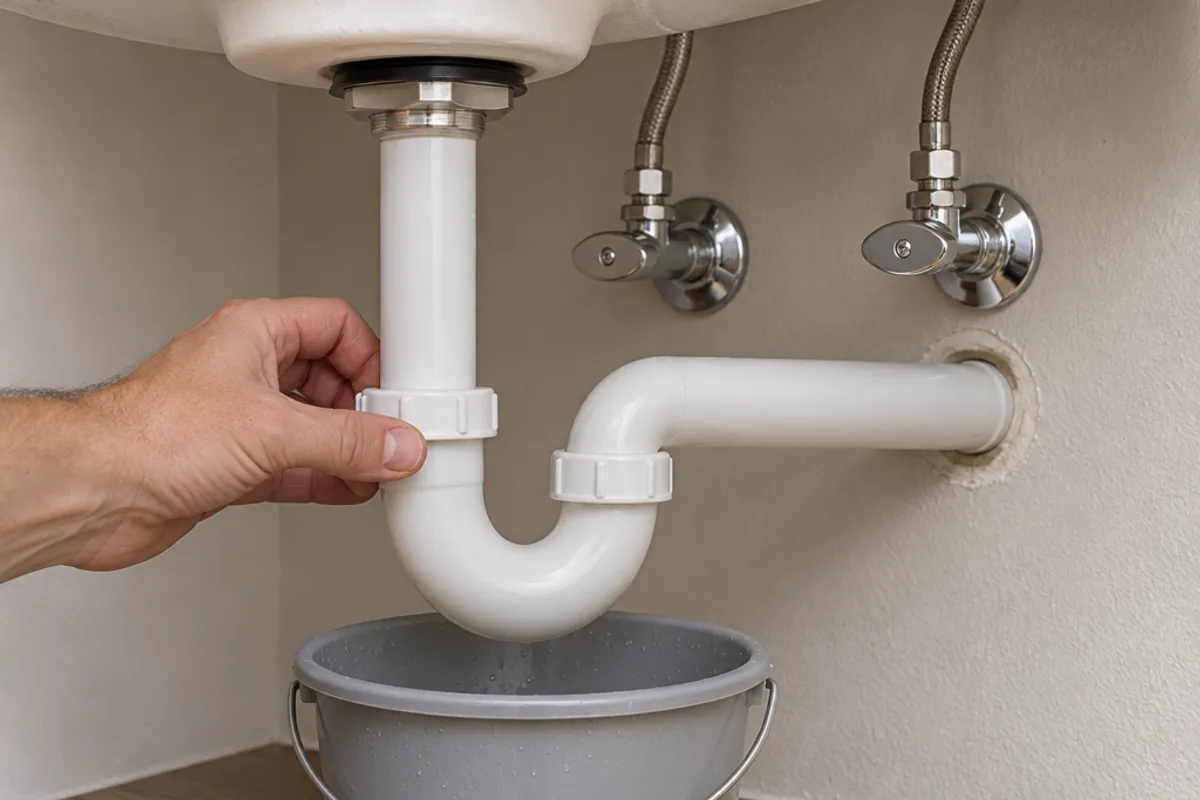
- Set a bucket under the P-trap, take the trap off, clean it and refit it as the maker's instructions say.
- Feed a drain snake through the trap arm into the drain pipe in the wall.
- Run hot water and listen: if the gurgling sound has stopped, the clog is gone.
If the sink drains well but still gurgles, the problem is the vent, not the trap. Baking soda and vinegar can't reach a blocked vent, and a sewer line clog needs a plumber's equipment. If you use a chemical drain cleaner, follow its label and never mix products.
When should you call a plumber?
Call a professional plumber for persistent gurgling after you've cleared the trap, for gurgling in more than one drain, for water backing up or a sewer smell, and for any work on the vent pipes or the main line. A camera inspection finds the gurgling issue without guessing. In an older home, it also shows the state of any cast iron drain pipe. In an older home with repeated plumbing issues, you can also schedule annual plumbing inspections.
How do you keep a cleanout or AAV reachable behind a finished wall?
A plumber clearing a main line needs the cleanout, and a failed AAV has to be unscrewed and replaced. When either one sits inside a finished wall, fit an access panel instead of cutting drywall every time.
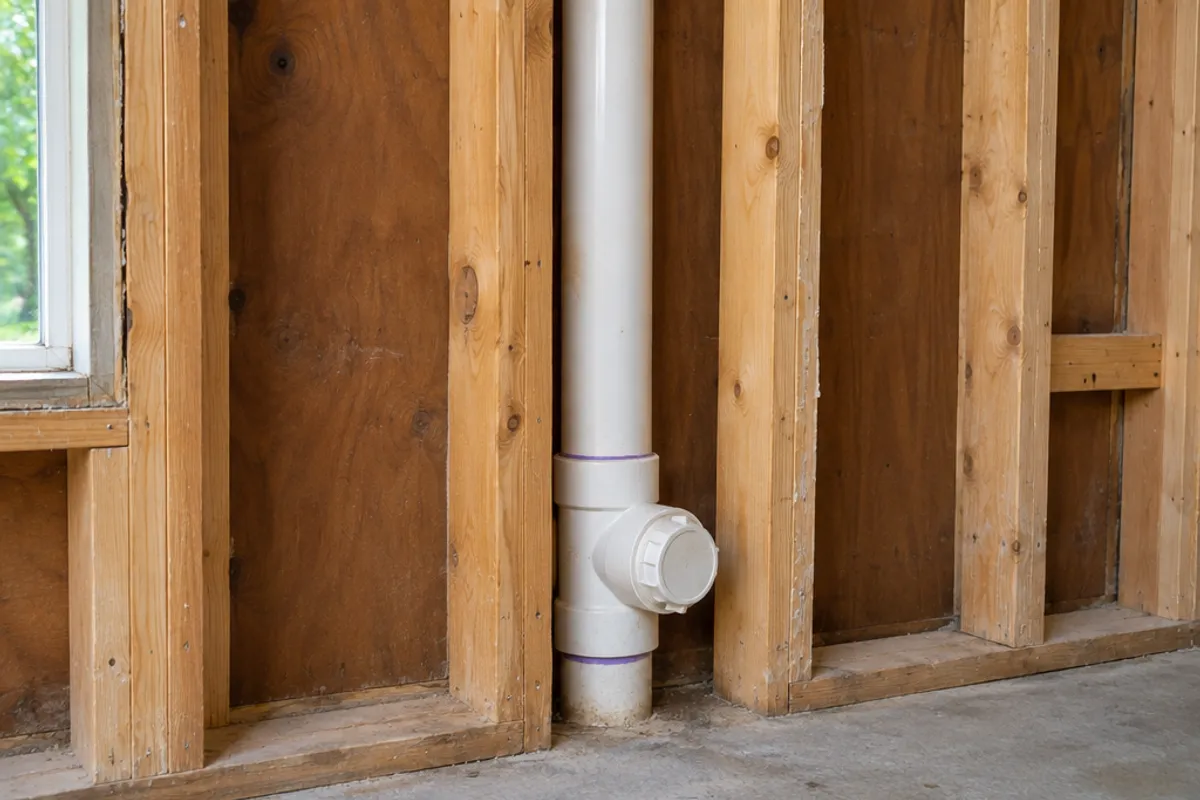
- SAP0808 spring-loaded panel: fits 6 × 6 to 8 × 8 in openings, overall 10 × 10 in, for a single cleanout plug.
- For snaking the line, go bigger: the SAP1414 takes holes from 10 × 10 to 14 × 14 in, closed by a 16 × 16 in cover, so you can feed a drain snake with both hands.
An AAV needs air as well as a way in. Every panel we sell has a solid cover, so it can close over a valve only where the valve maker and your local code accept that; if they don't, the valve gets a vented grille or the maker's recessed box with a vented faceplate. The plumbing access panels page shows the panels for cleanouts and valves.
Before you close the wall, ask your local building or plumbing inspector whether and how the cleanout or valve must stay accessible.
Measure before you order: our guide on how to measure for an access panel shows how, and the access panel size chart compares every opening and cover. How to install an access panel in drywall covers fitting it.