
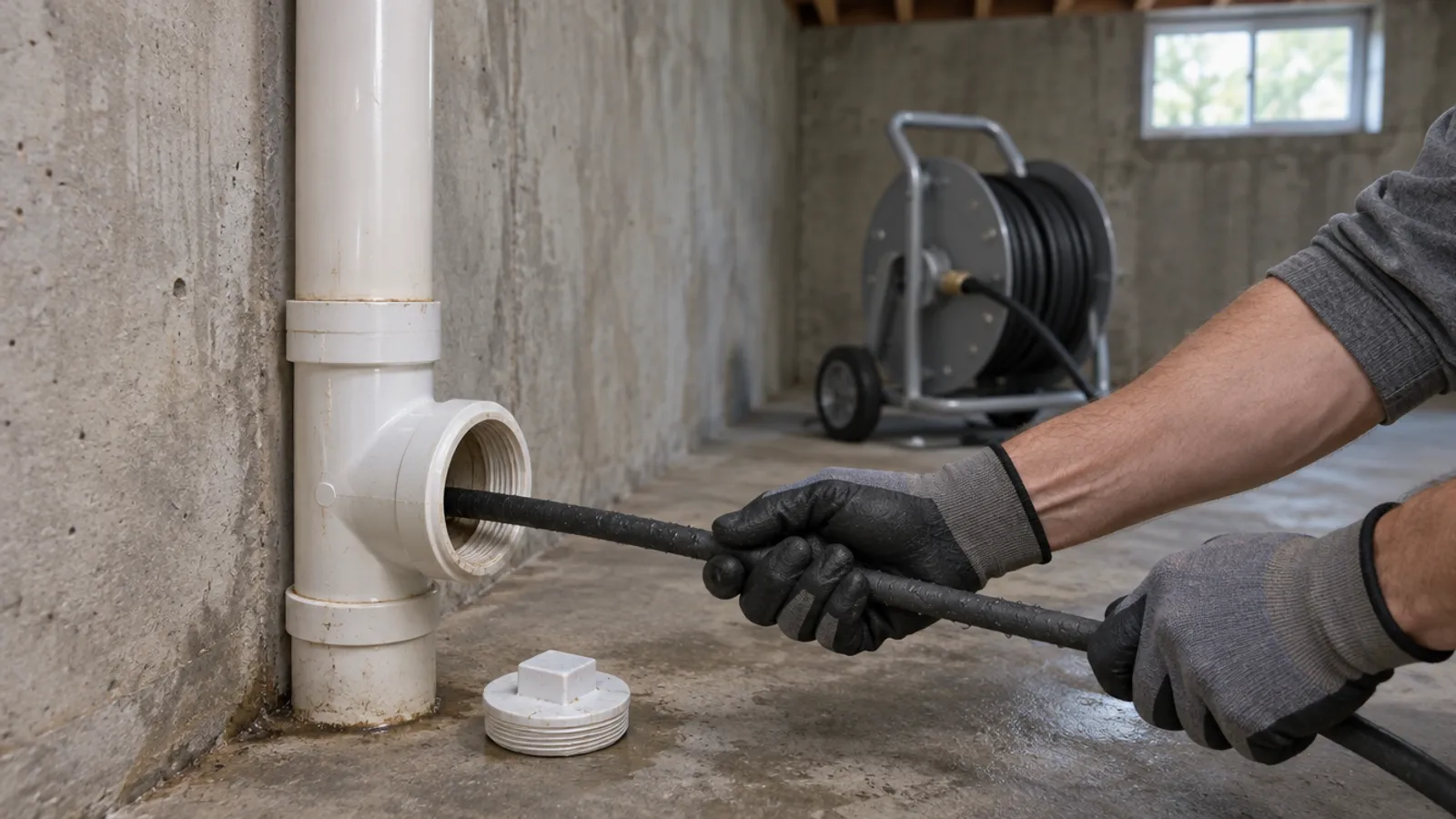
Hydro jetting is a process for cleaning drain and sewer lines: a plumber feeds a high-pressure hose with a specialized nozzle into the line, usually through a cleanout. High pressure water jets drive the nozzle along and scour sludge, scale and debris buildup off the pipe walls, leaving the pipes clean wall to wall.
What is hydro jetting in plumbing?
Hydro jetting is high pressure cleaning for drain and sewer pipes. The hydro jetting machine is a high pressure water pump, a long jetting hose on a reel and a jetting head. It cleans with only water, no harsh chemicals, and plumbers use it to remove clogs from kitchen and laundry lines, floor drains and the main sewer lines that carry waste out of a home's plumbing system to the city sewer or a septic system.
The water pressure is matched to the pipe. One maker's electric jetter, built for 2 to 4 in drain lines up to 150 ft long, uses nozzles drilled for 1,500 psi (one maker's manual); those for its gas-powered model are drilled for 3,000 psi (gas jetter manual).
Commercial kitchens are the classic job. The same maker notes that drains from restaurants and other food-service buildings tend to clog with grease, which makes hydro jetting a natural fit for commercial drain cleaning (one maker's guide). In homes, the usual call is a clogged sewer line, or stubborn clogs in a kitchen line that keeps backing up.
How does hydro jetting work?
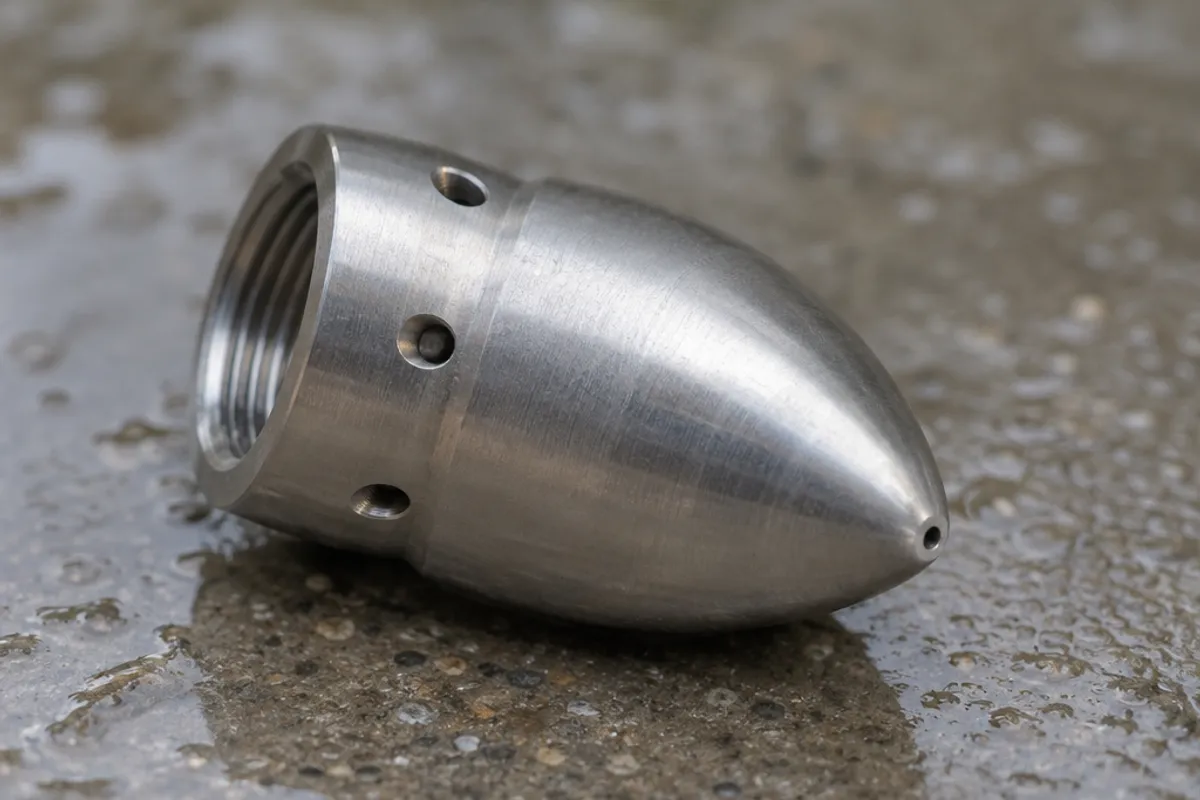
In hydro jetting, the head does the work, with multiple jets. A forward jet, where there is one, breaks up the blockage ahead. Its rear jets, high pressure water jets angled back toward the plumber, drive the head deeper into the sewer line while scrubbing the pipe walls (one plumbing company's guide). The maker's manual says a tight 15° spray has more driving power for long runs, while a wide 40° spray is better at cutting grease off the walls.
A typical hydro jet cleaning process:
- Video inspection first. The process starts with a camera run down the line to find the blockages, see what they are made of and check the condition of the plumbing system.
- In through a cleanout. The plumber inserts the jetting hose 2 to 3 ft into the line before switching the machine on, as the maker's manual directs.
- Back and forth. The plumber works the head forward and pulls it back rather than pushing it in one run. The maker says the most cleaning happens on the pull-back, and the flow carries the loosened debris away through the system.
- Several passes. At the clog, the head passes through that section several times to break up and flush out the remaining debris, then a wide-spray or rotating nozzle cleans the pipe wall to wall.
- Camera again, to check that the hydro jetting left the pipes clean and undamaged.
Which nozzles do the high pressure cleaning?
A hydro jetting crew carries several heads and changes them as the job goes (one maker's nozzle guide):
| Nozzle type | What it does |
|---|---|
| Penetrating | Cuts through grease and ice blockages, often with a forward jet |
| Flushing | A wide spray that cleans the inside of the pipe |
| Rotary | Spinning jets that scour the pipe and drive the head along |
| Spring leader | Steers around tight bends and traps |
| Chain (root cutting) | Lengths of chain that rip through roots |
What can hydro jet drain cleaning remove?
Hydro jet drain cleaning is strongest on buildup and debris that coat a pipe or settle in it. One jetter maker says jetting handles soft blockages well: grease, sand, sludge and even ice. In old cast iron, the buildup also includes rust scale from corrosion and mineral deposits narrowing the bore.
Tree roots are the mixed case. Plumbing companies use hydro jetting on scale and even tree roots, with root-cutting heads, yet the jetter maker says jetting is not the preferred solution for tree roots and suggests a cable machine first, then hydro jetting, then a camera.
Several drains slowing at once points to a clog in the sewer line rather than one trap, the kind of blockage hydro jetting is for; why a drain gurgles covers the signs.
Hydro jetting vs snaking: which does your drain need?
| Question | Drain snake (cable machine) | Hydro jetting |
|---|---|---|
| How it clears the line | A turning steel cable bores into the clog and breaks through it | High pressure water streams scour the pipe wall |
| What it leaves | A path through the clog; buildup on the walls stays | A clean bore, wall to wall, with the debris flushed away |
| Strongest on | A single blocked fixture; root masses, as a first pass | Grease, sludge, sand, scale and ice |
| Pipe it suits | Most lines, though a cutter can still damage fragile pipe | Pipe in fair to good condition, checked by camera |
Plumbing snakes and plungers are the traditional drain cleaning methods to remove clogs at one slow sink. Hydro jetting offers a deeper clean. One plumbing company's guide says snaking only punches through the clog, while hydro jetting, also called water jetting, cleans the whole pipe diameter. That is why a grease clog that keeps coming back after snaking is the classic case for hydro jetting.
Is hydro jetting safe for cast iron pipes and other old lines?
On a sound drain system, yes, with the pressure set for the pipe. The risk is a line that is already failing, which is why the camera comes first in the hydro jetting process. The plumbing company guide above warns that very old or damaged pipes may crack under too much pressure, and that older cast iron or clay may need lower settings. A New Jersey plumber's guide lists the sewer lines where cleaning is the wrong solution (one plumber's guide):
- Thin cast iron. Once corrosion has thinned the wall enough to show on camera, the pipe may lose wall material to high pressure water.
- Clay with separated joints. Jetting pressure can do further damage to those joints if it isn't adjusted to what the camera shows.
- Cracked lines. A visible crack pattern makes a pipe a repair candidate, not a cleaning one.
- Orangeburg. For this bituminous fiber pipe, replacement is usually the answer rather than cleaning. The City of Ann Arbor says it was used in homes there from about the early 1950s to the early 1970s, and that it flattens under soil pressure as it ages (City of Ann Arbor).
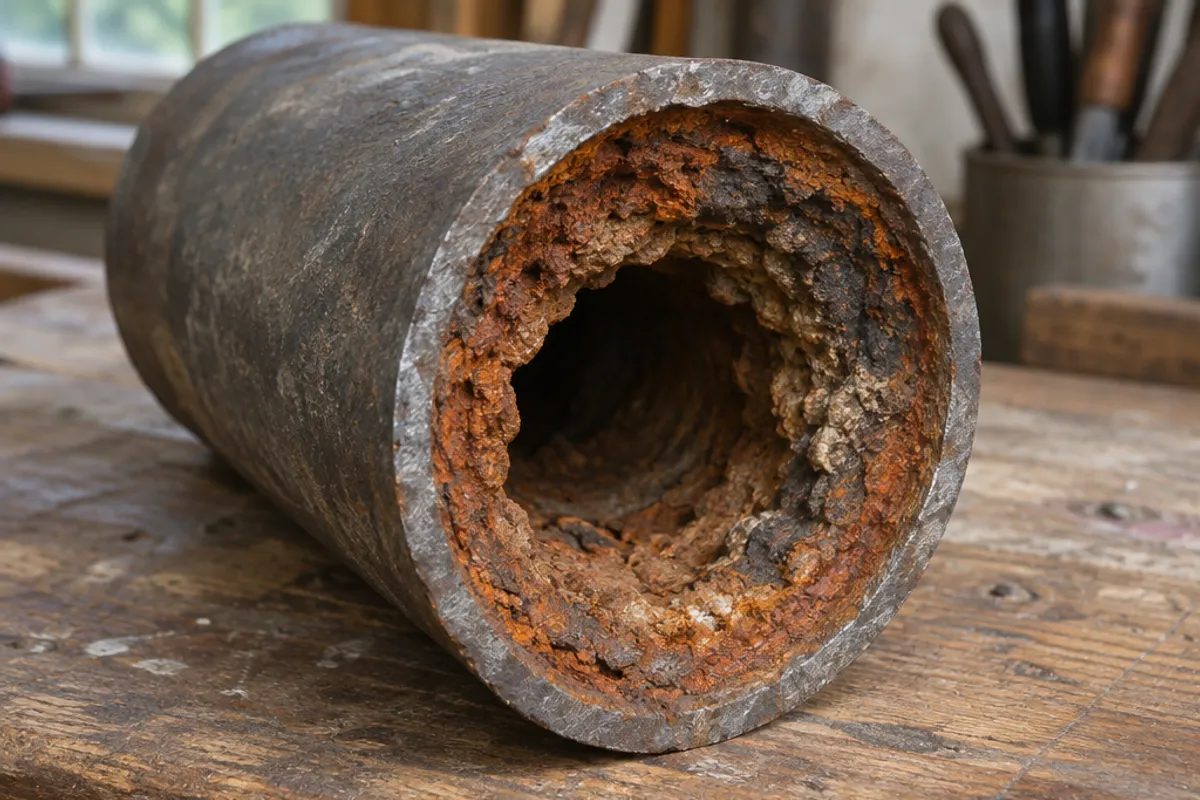
If the camera shows any of these, ask about a repair solution before any hydro jetting. Cast iron drain pipe replacement covers spot repairs and full stacks.
Why does hydro jet sewer cleaning start at a cleanout?
The hydro jet sewer cleaning process needs a direct way into the plumbing system. A cleanout is a capped fitting that opens the sewer line itself, and a professional plumber feeds the jetting head in through it, as the plumbing company guide above describes. Other routes make hydro jetting harder work: one maker's manual describes carrying the reel onto the roof to clear lines through the vents.
Which cleanout matters too. The gas jetter manual says a sewer line is ideally cleared from the downstream side, from the street back toward the house, so loosened debris and broken-up blockages flow away; working the other way, excess water may need pumping out. A cleanout near the foundation, or where the main leaves the building, sits downstream of every drain inside the house, so a hydro jet sewer cleaning crew can work back up the plumbing system from there. For a clog out toward the street, the same cleanout is the upstream side. What is a sewer cleanout shows where to look for yours, and the base of the main stack is the other common spot (what is a plumbing stack).
The stream from a hydro jetting machine can pierce skin and the tissue under it; one maker's manual warns that such an injury can lead to amputation or death, and calls for safety glasses and both hands on the hose. Pressure set wrong for the pipe can crack an old sewer line. Use a licensed plumber where your area requires one, and treat any jet injury as an emergency.
How do you keep an indoor cleanout ready for hydro jetting?
A cleanout in an unfinished basement is easy to reach. Trouble starts when a finished wall goes up around the stack or the main and the plug ends up behind drywall. The crew then has to cut in before they can clear blockages, and again at the next clogged sewer line.
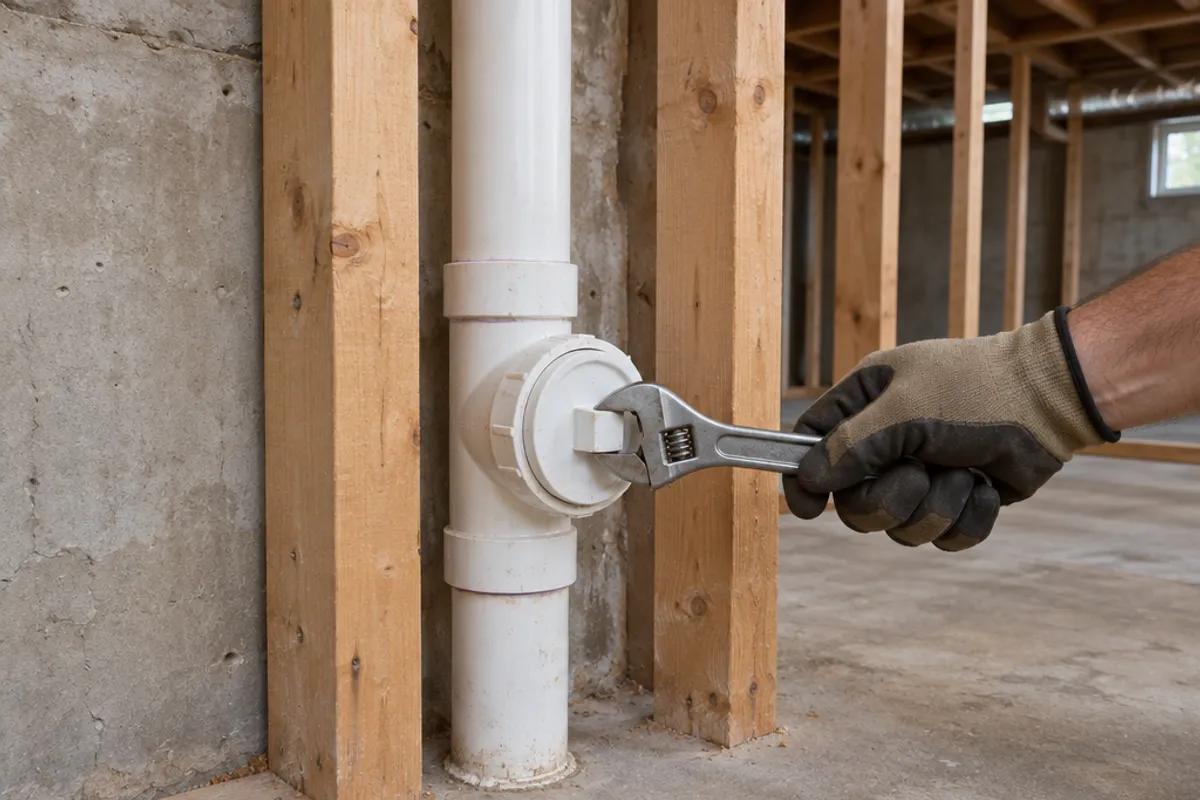
Leave a removable opening instead, sized for hydro jetting rather than for the plug: room for a wrench on the plug, two hands to guide the jetter, and a bucket for the water and debris when the plug comes out.
- A plug in the wall that gets opened now and then: PAD1212 hinged door: maximum service opening 10.35 × 10.35 in (estimated), overall 12 × 12 in. The door stays on its hinge, so nothing is set down on a wet floor.
- A plug set back, at an angle, or shared with a camera crew: SAP1414 spring-loaded panel: fits 10 × 10 to 14 × 14 in openings, overall 16 × 16 in.
A cleanout set in a basement floor or a slab needs a floor cover, which we don't sell: our panels and doors are for walls and ceilings.
Our plastic access panels and doors are not fire-rated, and we publish no water-resistance rating for them, so don't fit one in a fire separation, such as the wall between a house and an attached garage.
The plumbing access panels page shows the rest of the range for plumbing work.
Measure before you order: our guide on how to measure for an access panel shows how, and the access panel size chart compares every opening and cover. How to install an access panel in drywall covers fitting it.