
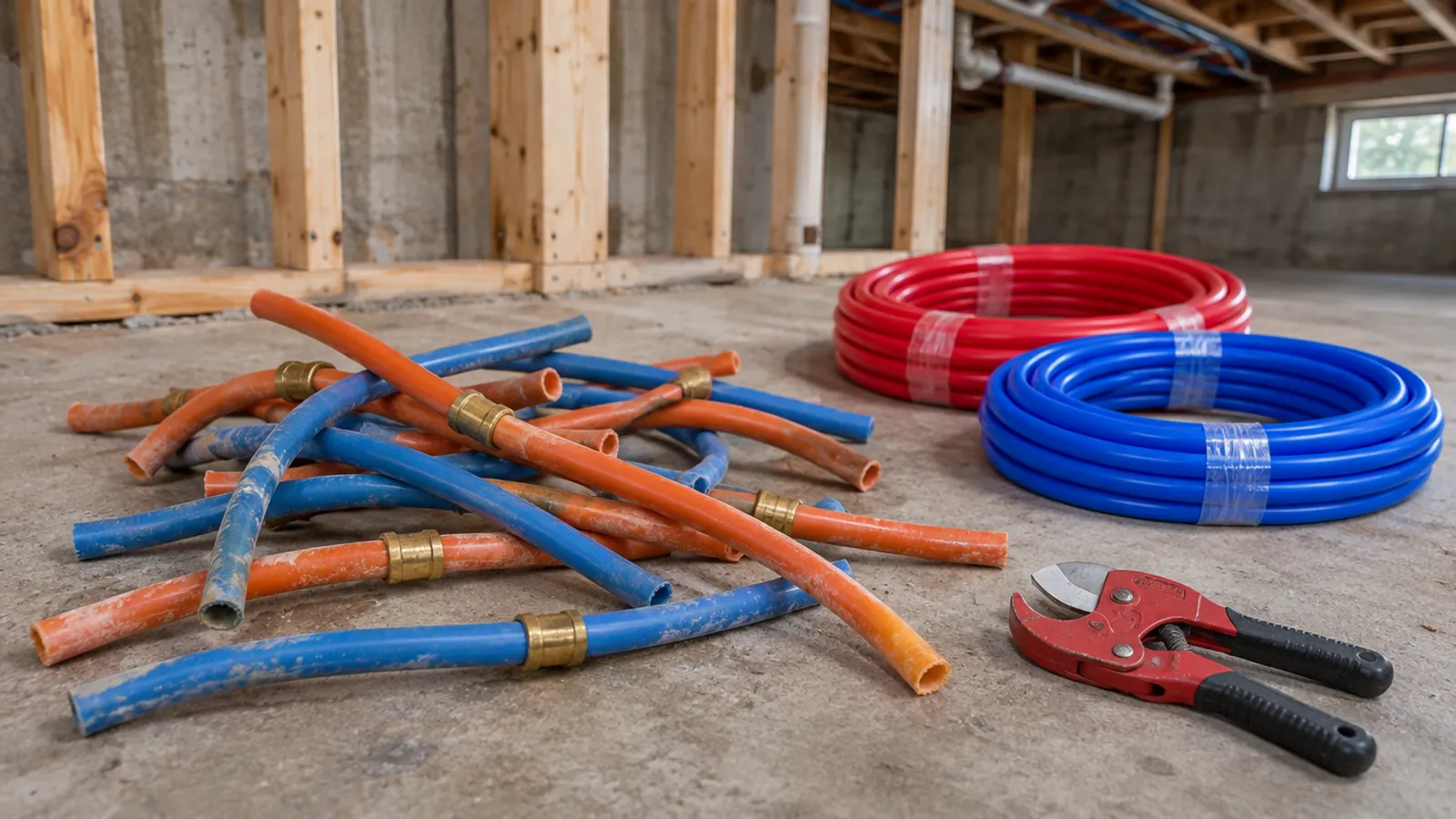
Kitec plumbing replacement means a licensed plumber takes the Kitec pipes and brass fittings out of service and runs new PEX or copper water lines in their place, sometimes from a new manifold near the water heater. The work starts with a plan and a permit, and the walls close only after the inspection.
This guide is for homeowners in British Columbia and Alberta with Kitec plumbing, and much of it applies elsewhere in Canada. Not sure what pipe you have? Start with how to identify Kitec plumbing.
Why are Kitec pipes replaced?
Because owners stop trusting their Kitec plumbing. The class actions settled in 2011 alleged that the Kitec system may be subject to premature failure; the Kitec manufacturer denied the allegations (settlement press release).
The settlement administrator's FAQ gives owners three practical points:
- After a failure: have a licensed plumber replace the defective pipes or fittings.
- If you have concerns: have a licensed plumber inspect them. Problems with Kitec pipes typically show first near the hot water tank, the first trouble spot to check.
- At a sale: some owners were required, by insurance or an inspector, to replace Kitec with another system.
A proactive replacement lets you pick the schedule rather than taking the risk of an emergency repair. If a fitting leaks or fails, or you have a pipe burst before then, treat it as an emergency: shut off the water at the main and call a plumber to limit the water damage. The Kitec settlement, which covered Canadian homes as well as US buildings, stopped taking claims on January 9, 2020, so it no longer helps with the cost.
Should you replace Kitec fittings or the whole plumbing system?
Ask which of these each quote covers:
| Scope | What changes | What stays in the walls |
|---|---|---|
| Fitting repair | A failed fitting or short section of Kitec pipe | All the other Kitec pipes and brass fittings |
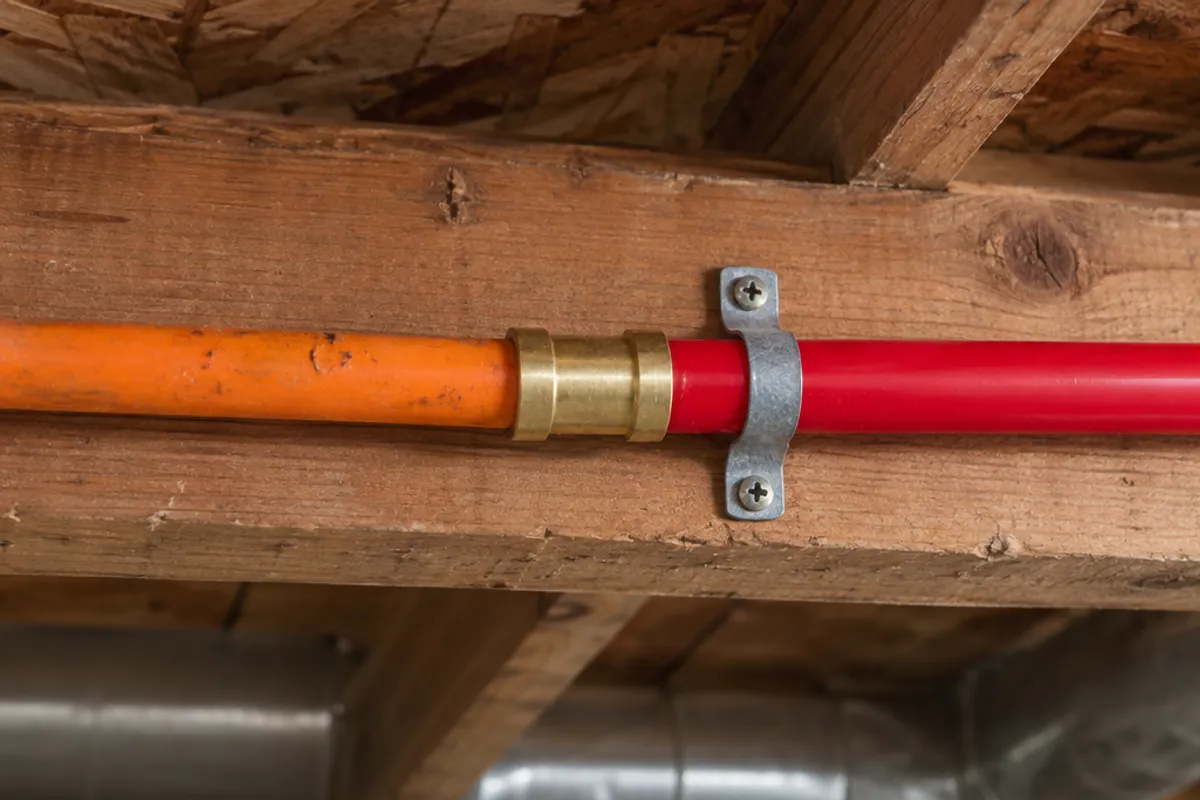
| Partial repipe | The exposed runs, often at the water heater and in the basement | Hidden Kitec, joined to new pipe by transition fittings |
| Full repipe | Every hot and cold pipe to every fixture | Only disconnected Kitec pipe |
One maker's PEX system guide (page 6) lists adapters that transition its PEX to other piping materials. Each transition left after a partial job joins new pipe to old, and the old side keeps whatever risk it had, so ask for a written list of where every one ends up. If the house has in-floor or baseboard hot water heating, ask whether its pipes are included. If a bathroom renovation is coming, plan the renovation and the repipe together so the walls are opened once.
How do you replace Kitec plumbing, step by step?
A typical replacement process:
- Map it. Before replacing Kitec pipes, trace every run and note any leaks, starting at the water heater and the mechanical room.
- Choose the materials and layout. PEX or copper, and a manifold or a main pipe with branches.
- Permit. It is issued before anyone cuts pipe.
- Shut down. Close the main shut-off, drain the pipes and protect the floors.
- Reconnect the tank. One maker's guide says its PEX should not be connected directly to a gas-fired water heater, because the high temperatures of these appliances can damage the tubing, and calls for at least 18 in of metal pipe between them (page 35 of the guide above). For a tankless heater, it says to make sure temperature and pressure never exceed the tubing's maximum ratings (page 36).
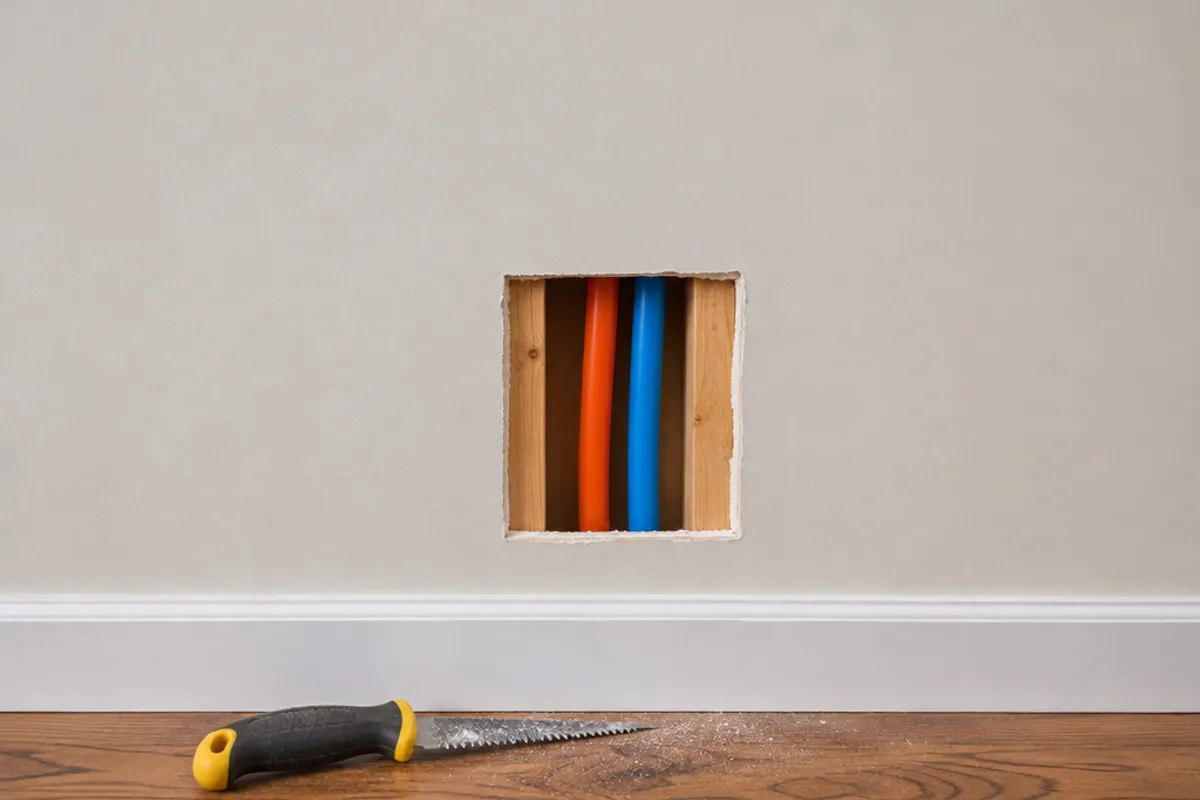
- Run the new pipes. The plumber installs new pipe to each fixture through small openings; the Kitec pipes are cut free and capped or pulled out.
- Test and inspect. The new pipes are held under pressure, then inspected while still in view.
- Water on. The pipes are flushed and the hot and cold water pressure checked at each tap.
- Close up. Patch openings that hold only pipe; fit an access door over each valve, manifold or transition.
For the time each stage takes, see how long it takes to repipe a house.
Replacing water lines, soldering and reconnecting a water heater may need a licensed plumber and a permit where you live. A gas-fired tank's gas connection is work for a licensed gas fitter. Shut the water off at the main before any pipe is opened.
Where should the new manifold and shut-off valves go?
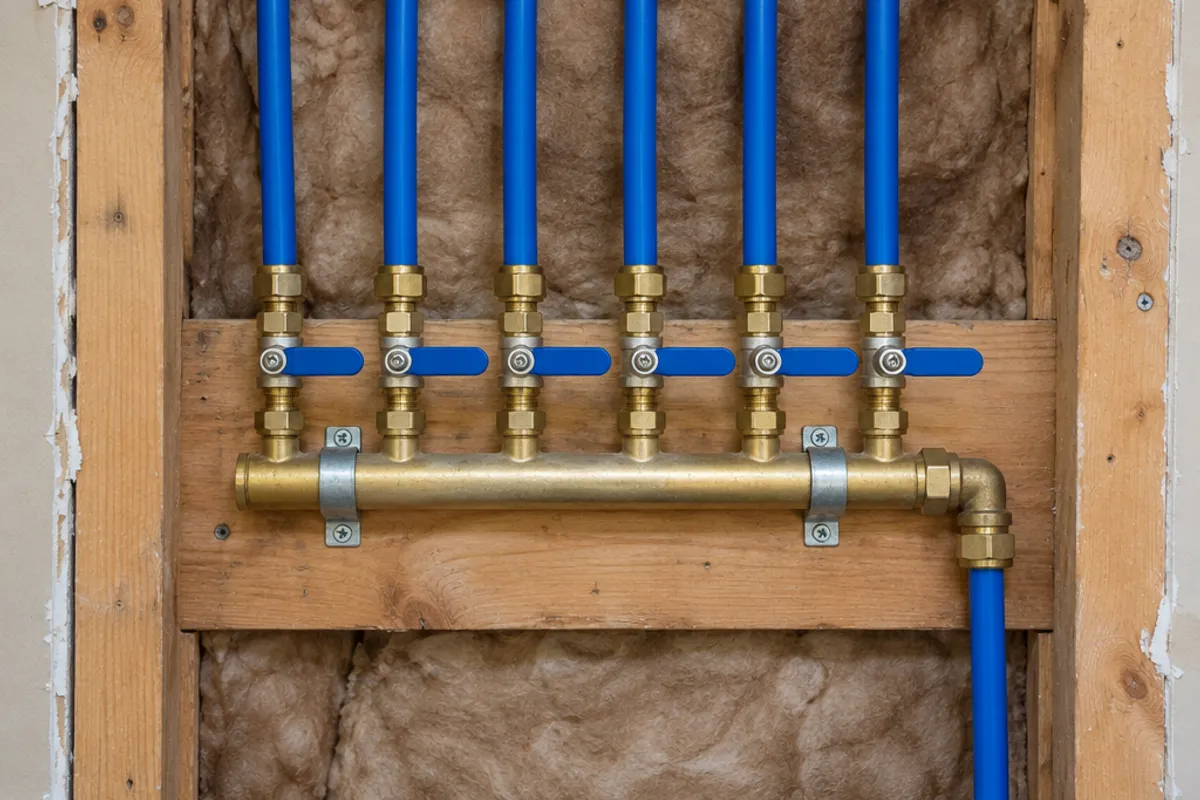
A manifold feeds a separate line to each fixture, often with a valve on each line. One maker's manifold guide (pages 22-23 of the guide above) says that lets you shut off one fixture's line for a repair without shutting down the whole house, and that this only works if the manifold stays reachable after installation. It also says:
- never put the manifold in a permanently covered area, behind drywall, plywood or paneling;
- never put it where it can freeze;
- install it close to the water heater.
Its distances belong to its own product, so follow the maker's instructions for yours. Keep the main shut-off valve easy to reach too.
Do you need a permit to replace Kitec plumbing in BC or Alberta?
Usually, but rules are set locally, so ask your municipality's building department about the permit process. Two examples:
- Lethbridge, Alberta requires a permit to install, extend, alter or replace a plumbing system, obtained by a licensed plumbing contractor or by a homeowner who lives at the property and can show competency. Inspections include a rough-in before the piping is concealed, and a final (plumbing permits).
- White Rock, British Columbia requires a permit for any alteration or repair of a plumbing system, except repairing leaks in water pipes, and the work must be done by a licensed and qualified BC tradesperson (plumbing permits).
In a condo or strata building, residents should ask the corporation before replacing Kitec pipes in a unit, because the Kitec plumbing may be part of a building-wide project. In that case, ask how long residents will be without water each day.
Which parts need an access panel after a Kitec plumbing replacement?
The manifold first. The same maker's guide says any cover panel over its manifold must allow access to the manifold, its mounting screws, the valves, and the supply and distribution connections. Size the opening to the whole unit, not one valve:
- A small manifold: PAD1216 hinged door: maximum service opening 10.35 × 14.35 in (estimated), overall 12 × 16 in
- A group of valves: SAP1414 spring-loaded panel: fits 10 × 10 to 14 × 14 in openings, overall 16 × 16 in
- One new shut-off or a transition fitting: PAD0808 hinged door: maximum service opening 6.35 × 6.35 in, overall 8 × 8 in
Fit the PAD1216 or SAP1414 only where the manifold is closed in by a finished wall, on a wall face away from the water heater's flue, vent and any hot surface. A manifold left exposed in an open utility room needs no panel at all.
A manifold with many ports can be wider than our largest opening. Measure it with every valve and connection; if it doesn't fit, plan a framed opening with a larger door. No rule we know of covers single valves and transitions, but a door saves cutting drywall at the next repair. For Kitec plumbing still in place, see our identification guide.
Our plastic access panels and doors are not fire-rated, and we publish no water-resistance rating for them, so don't fit one in a fire separation, such as the wall between a house and an attached garage.
What should you ask before a Kitec replacement?
Homeowners should get these answers in the written scope:
- Is this a full or partial plumbing replacement, and which old Kitec pipes stay?
- Where will each transition, valve and manifold go, and how will I reach them?
- Who takes out the permit, and who schedules the inspections?
- Does the cost include drywall repair and painting?
- What could change the cost once the walls are open?
Compare quotes on scope first: a partial job, a full repipe, or one that also covers heating pipes. Ask each plumber to price the same scope so the cost of each quote compares fairly, and keep the permit and inspection records with the property papers.
What should you read next?
The same kind of repipe for gray polybutylene pipe is covered in Poly-B replacement.
Measure before you order: our guide on how to measure for an access panel shows how, and the access panel size chart compares every opening and cover.