
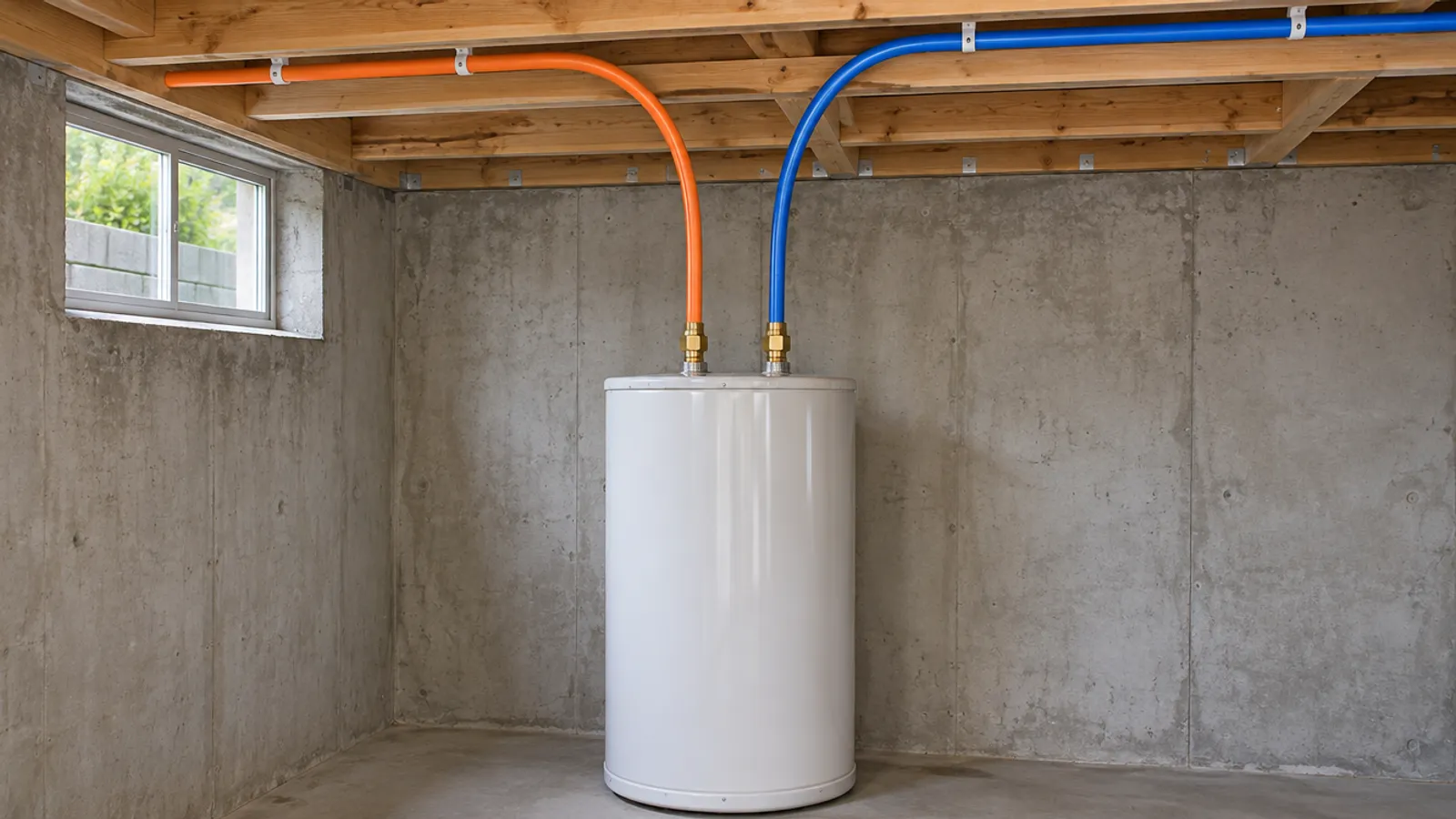
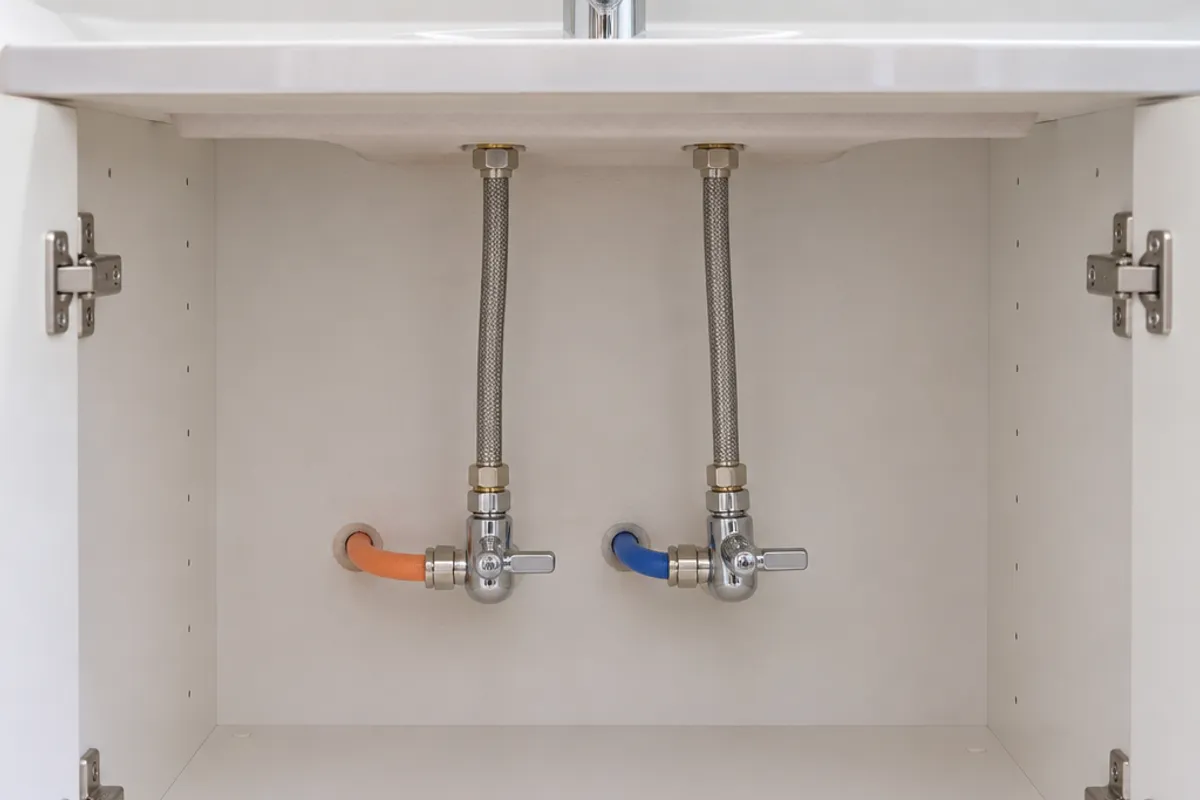
To identify Kitec plumbing, look where water pipe leaves a wall: at the hot water tank, in the mechanical room and under sinks. Kitec pipe is typically orange for hot water and blue for cold, printed with a brand name such as Kitec, XPA or PlumbBetter, and joined with brass fittings marked Kitec or KTC. Have an inspector confirm it.
This guide is for homeowners, buyers and contractors in British Columbia and Alberta. It matters because the settlement administrator lists signs of failure to watch for, and its FAQ mentions owners who sold a house and were required, by insurance or an inspector, to replace Kitec. Every fact here comes from the court-approved settlement documents or the administrator's website, with dates.
What type of plumbing is Kitec?
Kitec plumbing consists of pipe, valves, fittings and other components made by or for IPEX. The settlement defines a Kitec System as PEX-AL-PEX, PE-AL-PE, PERT-AL-PERT or PEX pipe, valves, fittings and components sold under the names Kitec, PlumbBetter, IPEX AQUA, WarmRite, Kitec XPA, AmbioComfort, XPA, KERR Controls, Plomberie Améliorée or otherwise (the settlement FAQ, read November 16, 2026). It covers buildings in Canada and the US that contain or have ever contained Kitec systems.
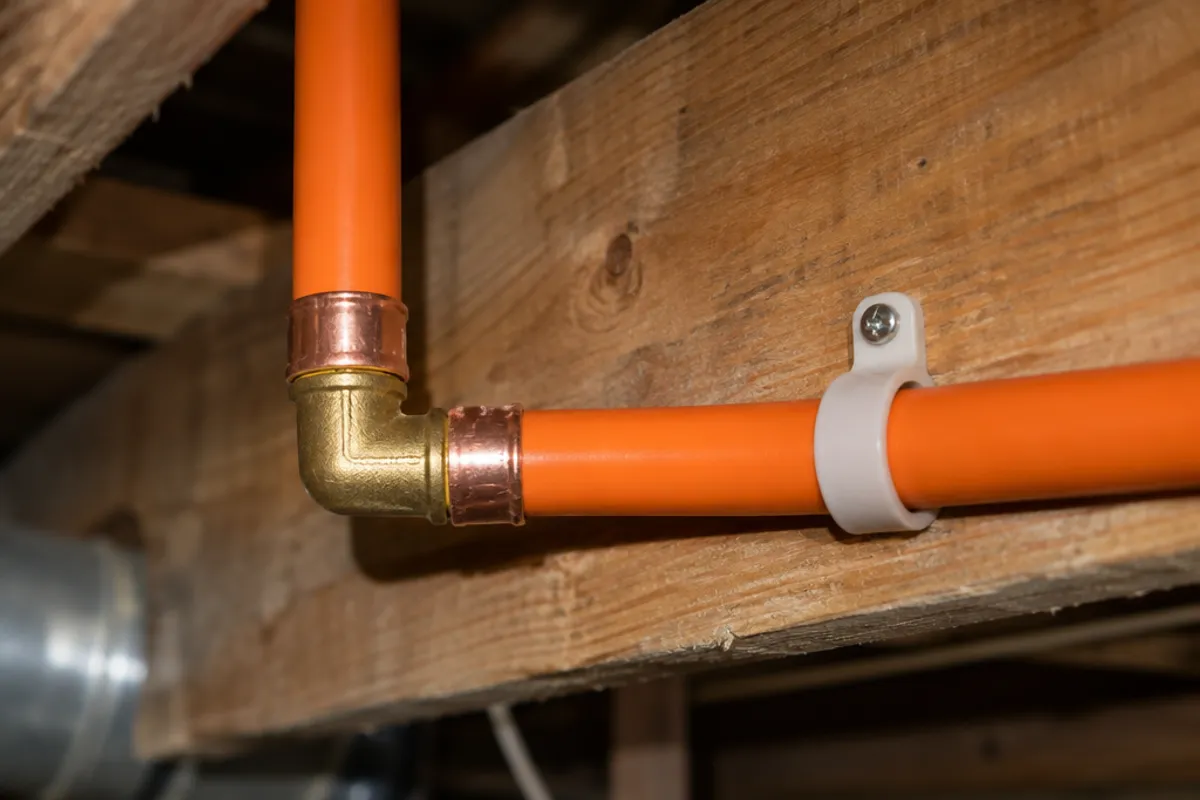
The "AL" in those names is aluminum, and PEX is cross-linked polyethylene. PEX-AL-PEX and the other "AL" types are composite pipe: polymer piping with a thin layer of aluminum between an inner and outer layer of plastic. That makes it a flexible material that bends in long curves, unlike rigid copper piping or other metal piping, which turns corners with elbows. If a plumber has cut out a piece, the cut end shows the aluminum layer in the middle.
Is Kitec the same as PEX plumbing?
Not exactly. The definition above includes plain PEX pipe sold under the Kitec brand names, but PEX from other makers is not Kitec. The print on the pipe is what tells them apart. Plain PEX has no layer of aluminum, so a cut end separates PEX from composite pipe, but not Kitec from another maker's composite.
Composite pipe is also used in heating systems, such as hot water baseboard heaters and in-floor heat. If your home has one of those heating systems, check its lines too.
What does Kitec plumbing look like?
Check four clues together, because no single one settles it. All of them come from the settlement notice and the administrator's Kitec System photos.
| Clue | What Kitec plumbing shows | Why it isn't proof on its own |
|---|---|---|
| Pipe color | Typically orange pipes for hot water and blue for cold water lines; also sold in red, blue, gray and black | Other plastic piping comes in the same colors |
| Print on the pipe | A brand name: Kitec, PlumbBetter, IPEX AQUA, WarmRite, Kitec XPA, AmbioComfort, XPA, KERR Controls or Plomberie Améliorée | Print fades, and a short visible run may show none |
| Fittings | Brass fittings, crimp or compression type, with the words Kitec or KTC | Other pipe uses brass fittings too |
| Standard numbers | CSA B137.9 or B137.10, or ASTM F1974, which the notice says could also indicate Kitec | They name a product standard, not a brand |
How to identify Kitec plumbing fittings
The administrator's photos show Kitec brass crimp fittings and brass compression fittings. On each visible fitting, look for the words Kitec or KTC. Wipe it with a damp cloth and shine a flashlight across the brass, but don't twist or tighten a fitting to read it: a joint you move can start to leak. Photograph each one, with a note of where it is.
What the print on Kitec piping says
The print repeats along the pipe. Wipe a section clean, use a small mirror for the back of the pipe, and write down exactly what you read, including any standard numbers. Orange flexible piping with no legible print is a reason to look further, not a verdict.
Where should you look for Kitec plumbing in your home?
Most Kitec plumbing in a finished home is hidden behind drywall and floors, so you only see it where it comes out. The settlement notice names the places to look first: near the hot water tank, and in the mechanical room where the pipe connects to equipment or exits the walls. It also points to the spots under kitchen sinks and bathroom vanities where the pipe and fittings come out of the wall.
Then check the rest of the plumbing system wherever pipe shows:
- Water heaters and boilers. Follow each line past the short connectors until you reach the main run.
- Unfinished basement ceilings, laundry hookups and the main shut-off. Our guide on where the water shut-off valve is shows the usual places.
- A manifold, if your home has one: a block of valves feeding separate lines to each fixture.
Look in several places, because one home can mix piping types after past repairs. The settlement documents give no installation years, so judge by the pipe and its fittings, not by the age of the house.
In a condo or townhouse, the Kitec plumbing may belong to the strata corporation in BC or the condo corporation in Alberta. The settlement FAQ notes that a condominium association responsible for the plumbing could file a claim, so ask your corporation what it knows and check your bylaws.
Can a home inspection confirm Kitec?
A home inspection can confirm the pipe and fittings that can be seen, and even a careful, reasonable inspection stops there. Nobody can see inside a wall, so an inspector may confirm Kitec piping at a few points and still not know how much is in the entire system. When an inspector raises Kitec concerns, ask which locations were checked.
How can you tell if Kitec plumbing is failing?
The settlement administrator's FAQ tells owners to keep monitoring their Kitec systems and lists the first signs of failure:
- Fittings: a buildup of white residue on the outside of the fitting.
- Pipe: blackening of the pipe, bulging of the pipe, or both.
- Where: problems typically occur first near the hot water tank.
In the 2011 court notice, the plaintiffs alleged that the Kitec plumbing system could fail prematurely over time, resulting in leaks or damage to the structure. IPEX denied the allegations and said the system is not defective and that the vast majority of systems will last through the warranty period (settlement press release, May 2011).
For a wet fitting, or frozen or burst plumbing, shut off the water flow at the main, photograph the damage and call a plumber. For a damp wall with no visible pipe, see water leaks behind walls.
If you are worried about your drinking water, the FAQ says the claims in the Kitec litigation included no allegations or evidence of health issues, and health issues are not covered by the settlement.
What happened in the Kitec class action settlement?
The class action was settled, not decided: the courts made no finding for either side. Every date below is from the court orders or the Kitec settlement website (kitecsettlement.com).
| Date | What happened |
|---|---|
| March 11, 2011 | Settlement agreement signed with IPEX, covering the US and Canada |
| November 17, 2011 | US court (Northern District of Texas) gives final approval |
| November 29, 2011 | Ontario Superior Court of Justice approves it for the Canadian National Class |
| January 9, 2012 | Settlement takes effect |
| January 9, 2020 | Claims deadline; later claims are rejected |
| October 20, 2020 | Administrator reports about 10,000 claims received in the weeks before the deadline |
| June 22, 2023 | US court hearing on the final allocation of settlement funds |
| May 2024 | Hearings in Quebec (May 14) and Ontario (May 16) on the same plan |
| September 2024 | The US, Ontario and Quebec courts have all approved the final plan of allocation |
| December 2024 | Payments from the settlement fund processed; cheques go out in late December and early January |
| July 9, 2025 | Payments issued and the stale date passed |
The settlement fund paid for the repair of buildings and other structures plumbed with the Kitec System, for Canadian and American claimants. In Canada, the national class covers owners of structures with Kitec systems outside the Quebec class, so it includes British Columbia and Alberta. The settlement agreement names two western actions, Gish v. IPEX Inc. in British Columbia and 1143764 Alberta Ltd. (The Flamingo Inn) v. IPEX Inc. in Alberta, and provides for them to be discontinued so that owners in both provinces are included in the national class.
What it means now: the settlement no longer takes claims. The administrator's latest update asks anyone who submitted a valid claim and was not paid, or whose cheque went stale, to contact it. The payments did not remove Kitec plumbing from any home.
If you are selling or buying, the FAQ says disclosure laws vary by province and to consult a real estate lawyer. Get independent legal advice on whether Kitec plumbing counts as a material latent defect in your sale.
What does Kitec plumbing replacement involve?
The FAQ's answer is short: if Kitec pipe or fittings have failed, have a licensed plumber look at them and replace the defective parts; if you only suspect a problem, have one inspect them. Whether that means a repair or a full system replacement depends on your plumbing situation, so get the views of plumbing experts who have replaced Kitec before. Replacing fittings isn't the only solution, but a repipe means you stop chasing leaks one fitting at a time.
A repipe runs new PEX or copper piping to each fixture, so walls and ceilings get openings along the way. Plastic replacement pipe is printed with its rated maximum temperature and pressure; ask your plumber to check them against your water heater and any heating loop. Ask your municipality whether the work needs a permit.
If metal piping in your home is part of the electrical ground for your electrical systems, ask an electrician to check it before that pipe is replaced with plastic piping, because plastic breaks a metal ground path.
Cutting into supply lines, soldering and reconnecting the water heater may need a licensed plumber and a permit. Grounding changes to electrical systems need a licensed electrician. Shut off the water at the main before any pipe is opened.
Where do access panels help with Kitec piping?
At two stages. While Kitec plumbing is still in place, you need to see its fittings to keep monitoring them, and the ones near the water heater or a manifold are often behind finished drywall. After replacement, the new plumbing has shut-off valves, perhaps a manifold, and transition fittings where new pipe meets old. With a manifold, each line can run in one piece to its fixture, with fewer fittings hidden in the walls, so the manifold is the part you will need to reach.
Close those openings with an access panel or door instead of a patch, and patch the rest as usual (patching a hole in drywall). From our catalog:
| Model | Use it for | Opening | Size on the wall |
|---|---|---|---|
| PAD1216 | A manifold you check often | Cut-out and service opening 10.35 × 14.35 in (estimated), rounded corners | 12 × 16 in overall |
| SAP1414 | A group of valves or fittings | Fits openings from 10 × 10 to 14 × 14 in | 16 × 16 in cover |
| SAP0808 | One new shut-off valve | Fits openings from 6 × 6 to 8 × 8 in | 10 × 10 in cover |
The PAD1216's frame screws onto the wall over a cut-out traced from the 1:1 template on its product page, with the screws that come with the door. For a manifold, measure it with its valves and the room your hands and a wrench need.
Our plastic access panels and doors are not fire-rated, and we publish no water-resistance rating for them, so don't fit one in a fire separation, such as the wall between a house and an attached garage.
Compare them on the plumbing access panels page and the access doors page.
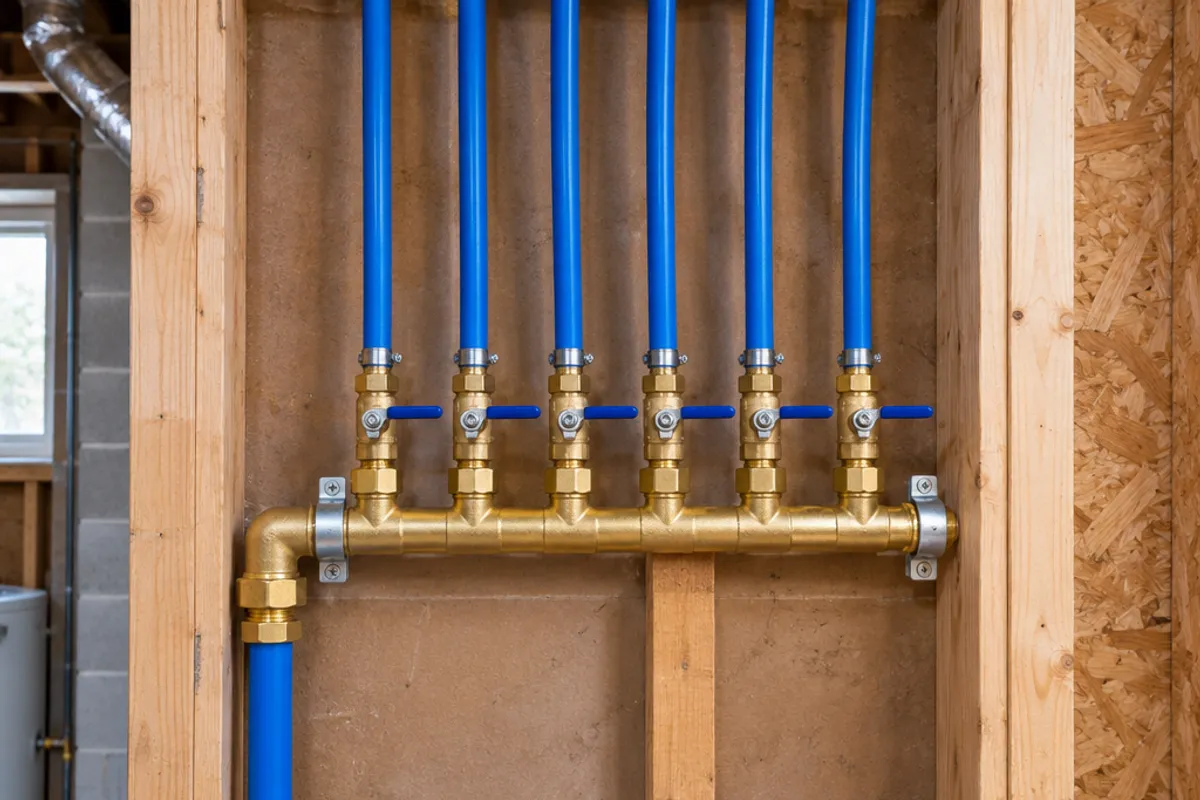
Before the walls are closed, ask your building department what access it expects for the new manifold and valves.
What should you read next?
If an inspector found Kitec plumbing and also mentioned gray plastic pipe, read what Poly-B looks like.
Measure before you order: our guide on how to measure for an access panel shows how, and the access panel size chart compares every opening and cover.