
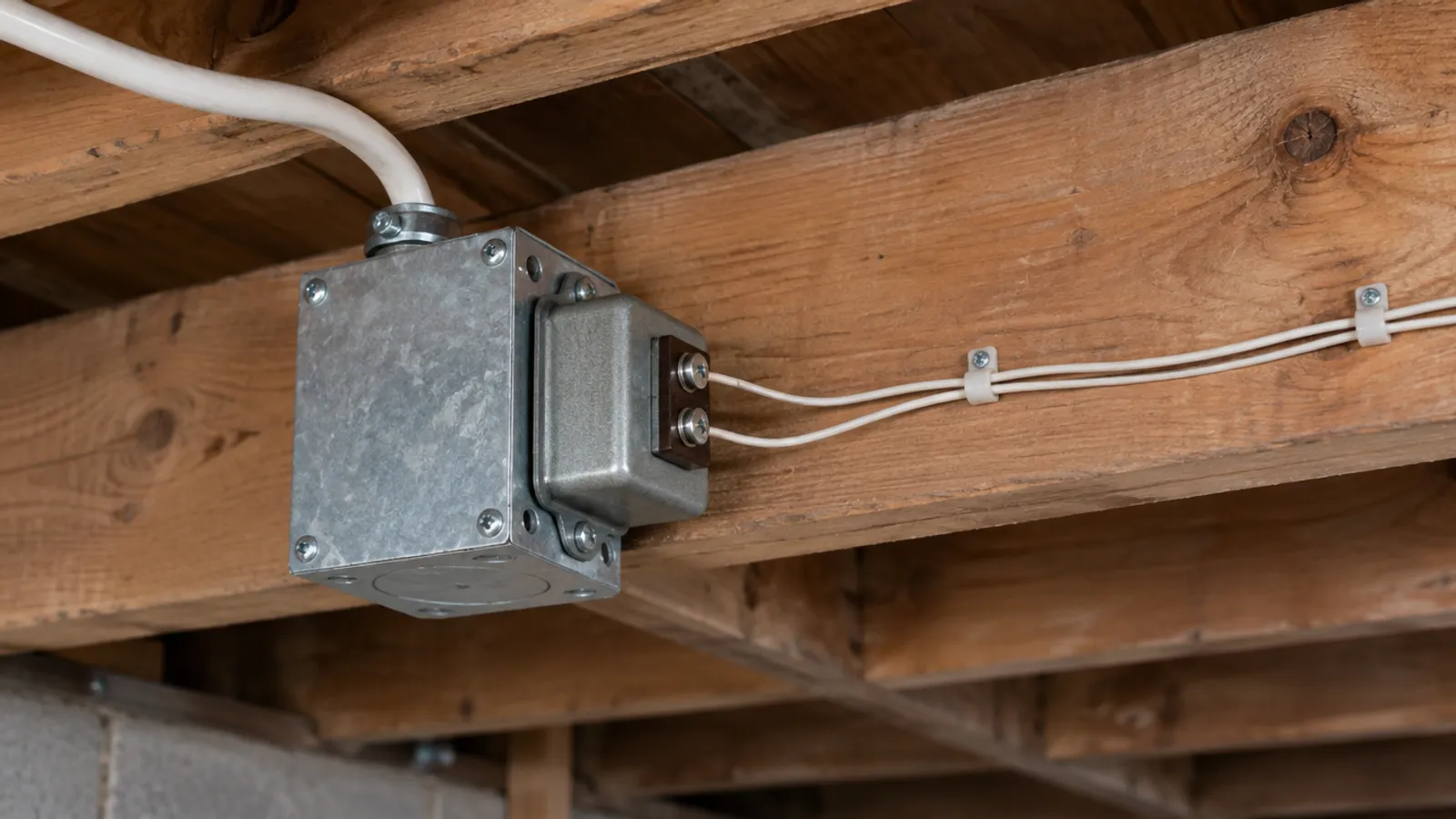
Your doorbell transformer is usually mounted on a junction box near the main electrical panel, beside the furnace or air handler, on a joist in the basement, crawl space or attic, or in a closet or garage near the front door. To find it, follow the thin doorbell wires from the chime box back to the transformer.
It is a small block that steps house power down to the low voltage your doorbell uses. This guide covers where it is usually located, how to trace the wires to it, how to test it, and what to do when it ends up behind new drywall.
Where is the doorbell transformer usually located?
Electricians attach the doorbell transformer where a 120-volt circuit is easy to tap and the wires can run to the chime. In unfinished spaces it is usually in plain view. Check these places first:
| Place | Where to look |
|---|---|
| Electrical panel | On a junction box beside the panel, or attached to the side of the panel itself |
| Furnace or air handler | On a junction box near the unit, in a utility room |
| Below the main floor | On the framing overhead in an unfinished lower level or crawl space, often below the chime or the front entry |
| Attic | Above the chime, common in houses built on a slab |
| Garage | High on a wall, sometimes beside other low-voltage wires |
| Near the chime | Behind or beside the chime box, or a plug-in transformer at a nearby outlet |
People often confuse it with the heating system's own control transformer, which feeds the thermostat wires, or with a plug-in transformer in the garage for landscape lights. The doorbell transformer is the one whose wires lead to the chime. In an older home it may be painted over, dusty, or hidden above drywall added later, which makes it hard to find.
Can a doorbell transformer be inside the chime box?
Yes, in some homes. One video doorbell maker's help page lists that spot among the places to look, along with the main electrical panel, the garage and the attic. Lifting the chime cover takes a minute, so check there before you start tracing wires.
What does a doorbell transformer look like?
Most are a small metal block, small enough to hold in one hand, attached to the outside of a junction box:
- The block. Gray or silver, with a label that gives its output voltage and its VA rating, which is the power it can supply.
- The line side. Two or three wires (black, white, sometimes a green ground) pass from the block into the junction box, where they are joined to a 120-volt circuit.
- The low-voltage side. Two screw terminals with the thin doorbell wires attached. These are the wires you follow.
What is my current transformer rated for?
Note the voltage and the VA on its label. A chime's voltage is printed on the chime or in its manual, and smart video doorbells often need more power than an old doorbell transformer supplies. Check the new doorbell's instructions before you replace the button or the chime. If the label is painted over, a multimeter test (below) gives the voltage, but not the VA.
How do I find my doorbell transformer?
Thanks to the wires that run from it to the chime, the easiest route is to start at the chime and work backward. Have a flashlight ready.
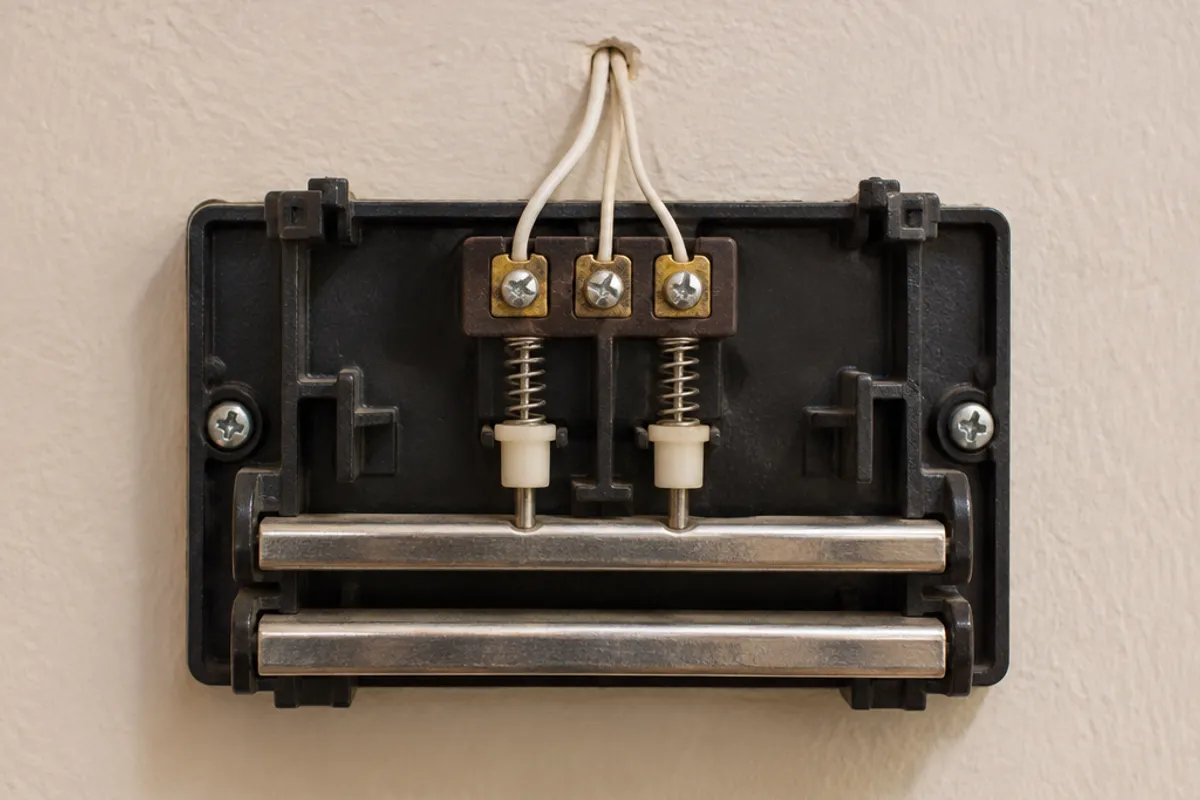
- Lift the chime cover. The terminals are usually marked front, rear and trans. The wire on the trans terminal runs to the doorbell transformer.
- See which way the wires leave the wall. Up means the attic; down means the crawl space or the floor below.
- Trace the doorbell wires. They are thin wires, often white or tan, stapled along framing. They end at the transformer's screw terminals.
- Find the breaker. Have someone press the doorbell button while you switch breakers off one at a time. When the chime goes silent, you have the circuit, which may also feed the hall or kitchen lights. The transformer is somewhere on that circuit.
- Use a tone tracer for hidden wires. If the doorbell wires vanish into a finished wall, clip a tone generator to the two wires at the chime, with that breaker still off. Its probe picks up the signal through drywall.
A non-contact voltage tester won't help on the doorbell wires, since most don't react to low voltage. Use it on the 120-volt side, to confirm the power is off before anyone opens the junction box.
Is the doorbell transformer in a junction box?
Its line side is. A doorbell transformer attaches to a junction box through a knockout, with a threaded neck or a mounting plate, so its 120-volt wires are joined to the house wiring inside it while the low-voltage terminals and their wires stay outside. Some newer transformers are made to sit inside the enclosure instead.
Can a doorbell transformer be in the electrical panel?
Some are mounted on the panel itself, with their line wires inside it. Whether that suits your panel and the device is a question for an electrician. In every case, connections at house voltage always belong in an enclosure with its cover on.
How can I tell if my doorbell transformer is bad?
If the chime does not ring, doorbell power is the first thing to test. A failed transformer is one of the usual suspects, along with the button and the wiring. Signs that point to it:
- the chime is silent at every button
- the chime sounds weak or distorted
- the transformer hums louder than it used to
- it is hot to the touch, or you smell burning: turn off its breaker and call an electrician
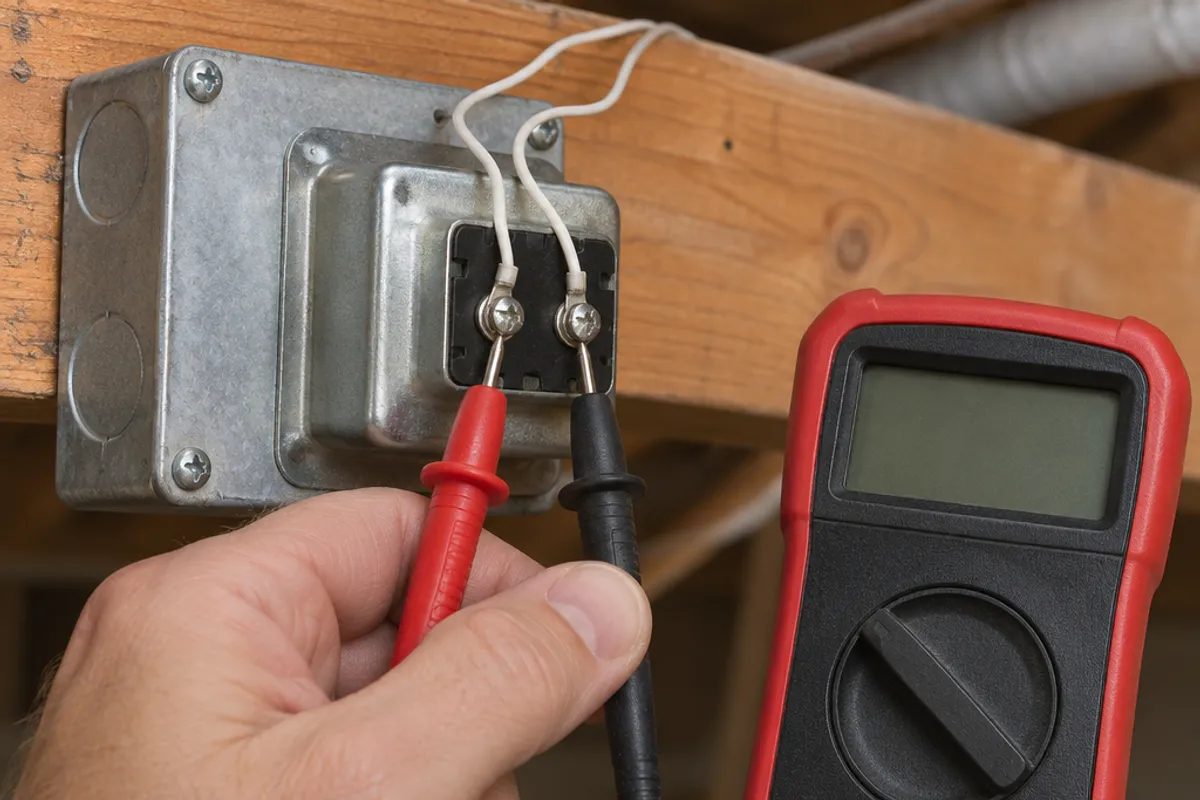
To test it, set a multimeter to AC volts and touch its probes to the two low-voltage screw terminals. If the meter shows close to the label's voltage, the doorbell transformer is fine, and the issue is in the button, the chime or the wires between them. An unloaded transformer can read a little higher than its label. Zero volts means the transformer has failed or its circuit is off, so look at the breaker first.
Will your doorbell transformer power a video doorbell?
Only if its label meets what the new doorbell asks for. Wired video doorbells take their power from the doorbell transformer, and their makers state what it must supply. Two makers' help pages show what that looks like:
| What to check | One maker's two wired models | Another maker's wired models |
|---|---|---|
| Voltage | 16 to 24 V AC | A constant 16 to 24 V AC |
| Power | 10 to 40 VA | Shows 16 V 30 VA and 24 V 40 VA transformers as compatible |
| Signs it falls short | The doorbell blinks a yellow light on its front | A transformer labeled 10 V won't run it |
| Source | Upgrade your transformer | Which transformer to use |
So read the voltage and the VA on the transformer that is installed now, or test the voltage as described above, and compare both with the new doorbell's own instructions. The chime runs on the same transformer, so check its voltage before you change anything.
If your label falls short, the fix is a new transformer that matches, connected at the junction box with the breaker off. The first maker above recommends a licensed electrician for that job.
Can I replace a doorbell transformer myself?
The low-voltage side is simple, but the other side is house wiring. To replace a doorbell transformer, the power is turned off at the breaker, the junction box cover comes off, the old line wires are disconnected, and the new transformer is attached and connected in their place. Then the doorbell wires go back on its terminals and the power goes back on. Match the replacement's voltage and VA to what the doorbell and chime need.
Turn off the breaker and test the wires in the junction box with a voltage tester before you touch them. Replacing a doorbell transformer is electrical work on the 120-volt side: use a licensed electrician where your area requires one, and check whether it needs a permit.
Why does the transformer's junction box have to stay accessible?
Because its 120-volt connections are inside it, and someone will need to open it. Transformers wear out, and a smart doorbell upgrade often means you replace the transformer with a bigger one.
In the US, the box holding the transformer's line connections falls under section 314.29 of the National Electrical Code (NFPA 70, 2023, as revised by TIA 23-10): it has to stay reachable, behind a cover that comes off. In Canada, ask your provincial electrical inspector before you close one in.
What if the transformer is above a finished ceiling?
This happens most often when a lower floor gets finished and the doorbell transformer on the framing ends up above new drywall. If you are planning that project, it's a good idea to photograph and mark where it is first. Our guide to permits for finishing the space covers the permit side.
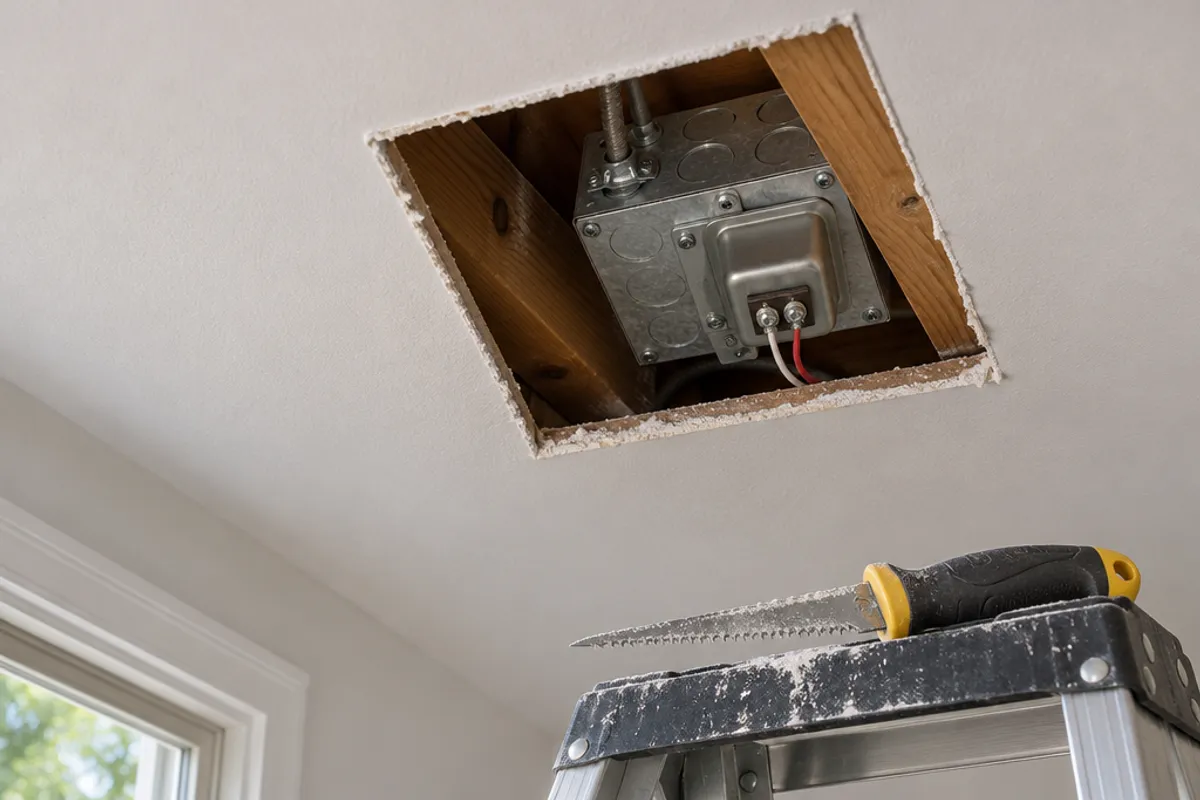
There are two fixes: an electrician moves the transformer to a junction box you can reach, or you fit an access door in the drywall below it. These sizes suit it:
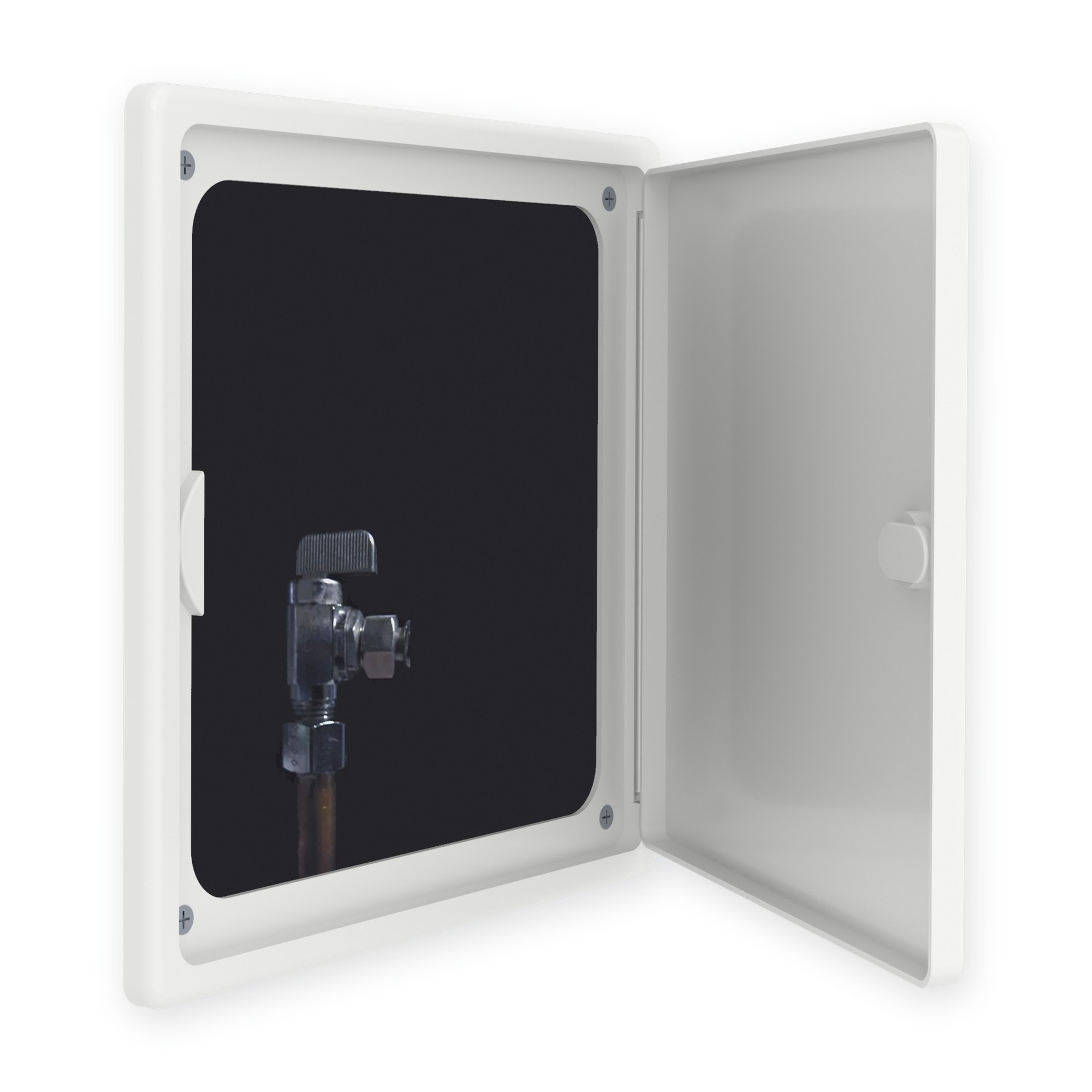
Easy-Exs · PAD0808
8x8 in Plastic Drywall Access Panel with Hinged Door
Rated 4.4 out of 5, 2,789 ratings online
Maximum service opening 6.35 × 6.35 in · Overall 8 × 8 in
USD $9.49 each
- 10+ panels: $8.49 each
- 80+ panels: $7.49 each
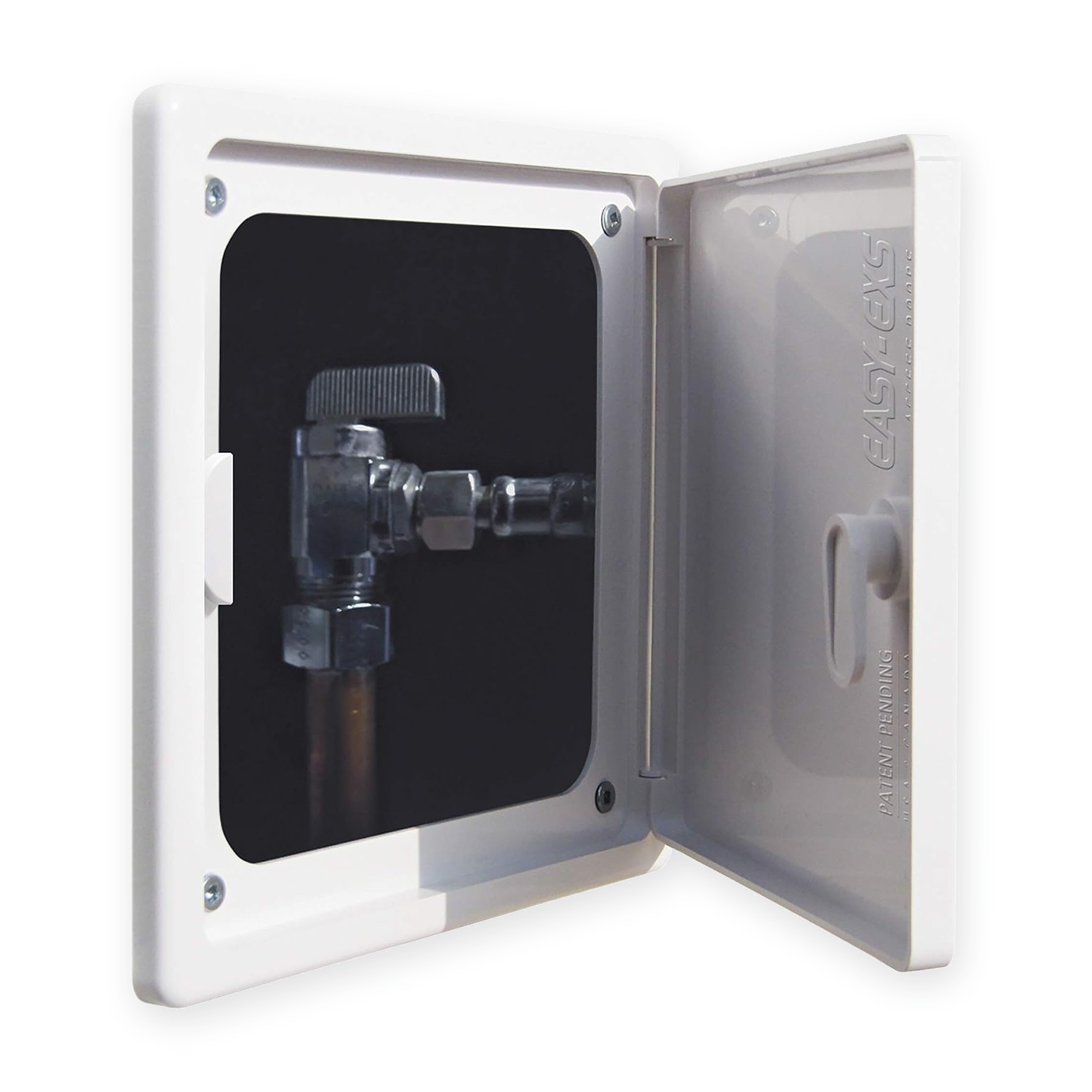
Easy-Exs · PAD0606
6x6 in Plastic Drywall Access Panel with Hinged Door
Rated 4.4 out of 5, 2,789 ratings online
Maximum service opening 4.35 × 4.35 in · Overall 6 × 6 in
USD $8.49 each
- 10+ panels: $7.49 each
- 80+ panels: $6.49 each
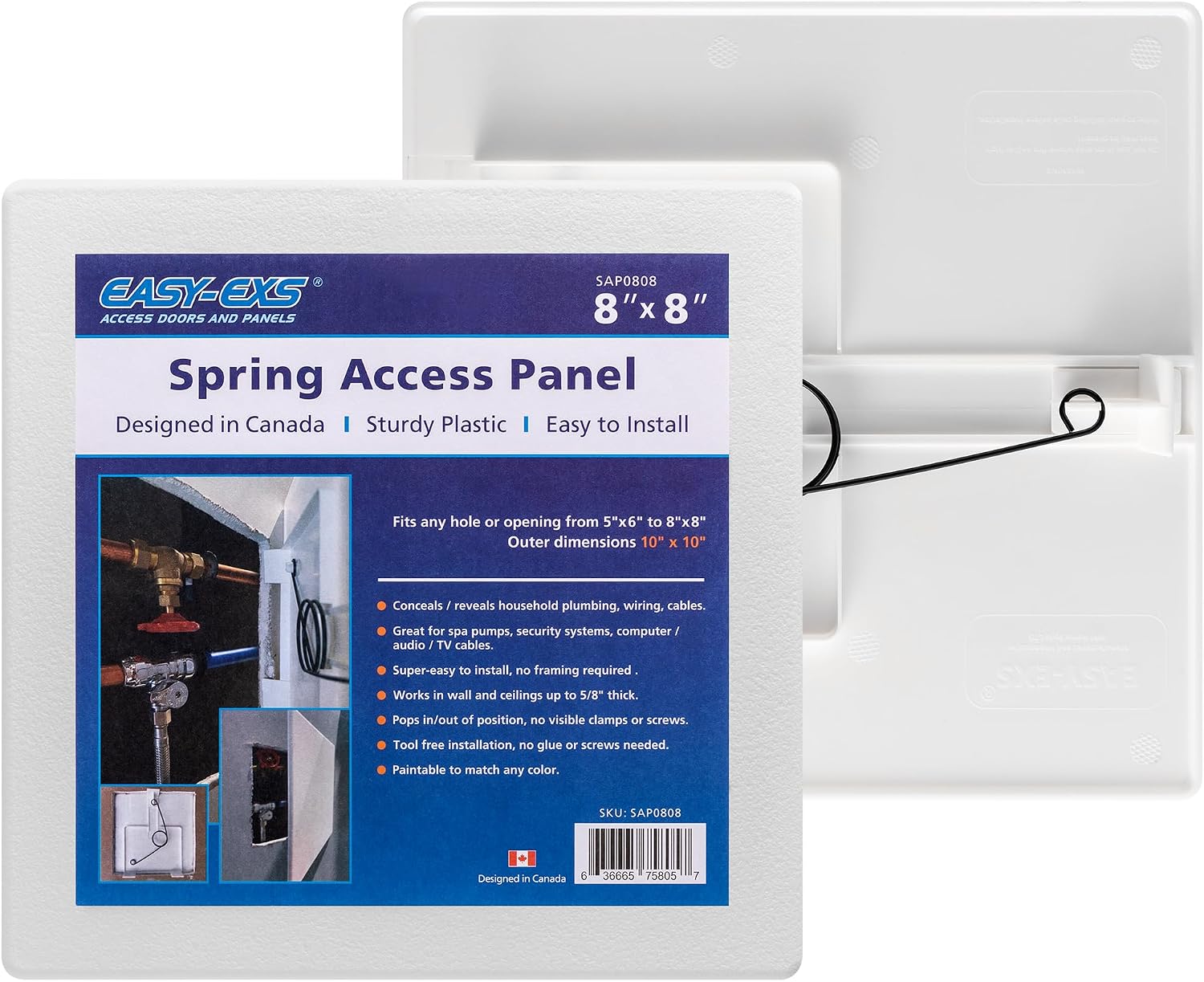
Easy-Exs · SAP0808
8x8 in Spring-Loaded Plastic Drywall Access Panel
Rated 4.6 out of 5, 718 ratings online
Fits 6 × 6 to 8 × 8 in openings · Overall 10 × 10 in
USD $9.49 each
- 10+ panels: $8.49 each
- 80+ panels: $7.49 each
The PAD0808 hinged door has a 6.35 × 6.35 in service opening, which is also the size of the cut-out. The PAD0606 has a 4.35 × 4.35 in service opening, so check that the cover and the transformer fit through it. SAP0808 spring-loaded panel: fits 6 × 6 to 8 × 8 in openings, overall 10 × 10 in. Overhead, a hinged door stays on its frame when open; see spring-loaded panels vs hinged access doors. The electrical access panels page lists every model with its opening.
Keep the junction box's own cover on behind the door: our doors and panels are not electrical enclosures and are not fire-rated. For the wider rules, see what is a junction box and can you drywall over a junction box?
Measure before you order: our guide on how to measure for an access panel shows how, and the access panel size chart compares every opening and cover. How to install an access panel in a ceiling covers fitting it.