
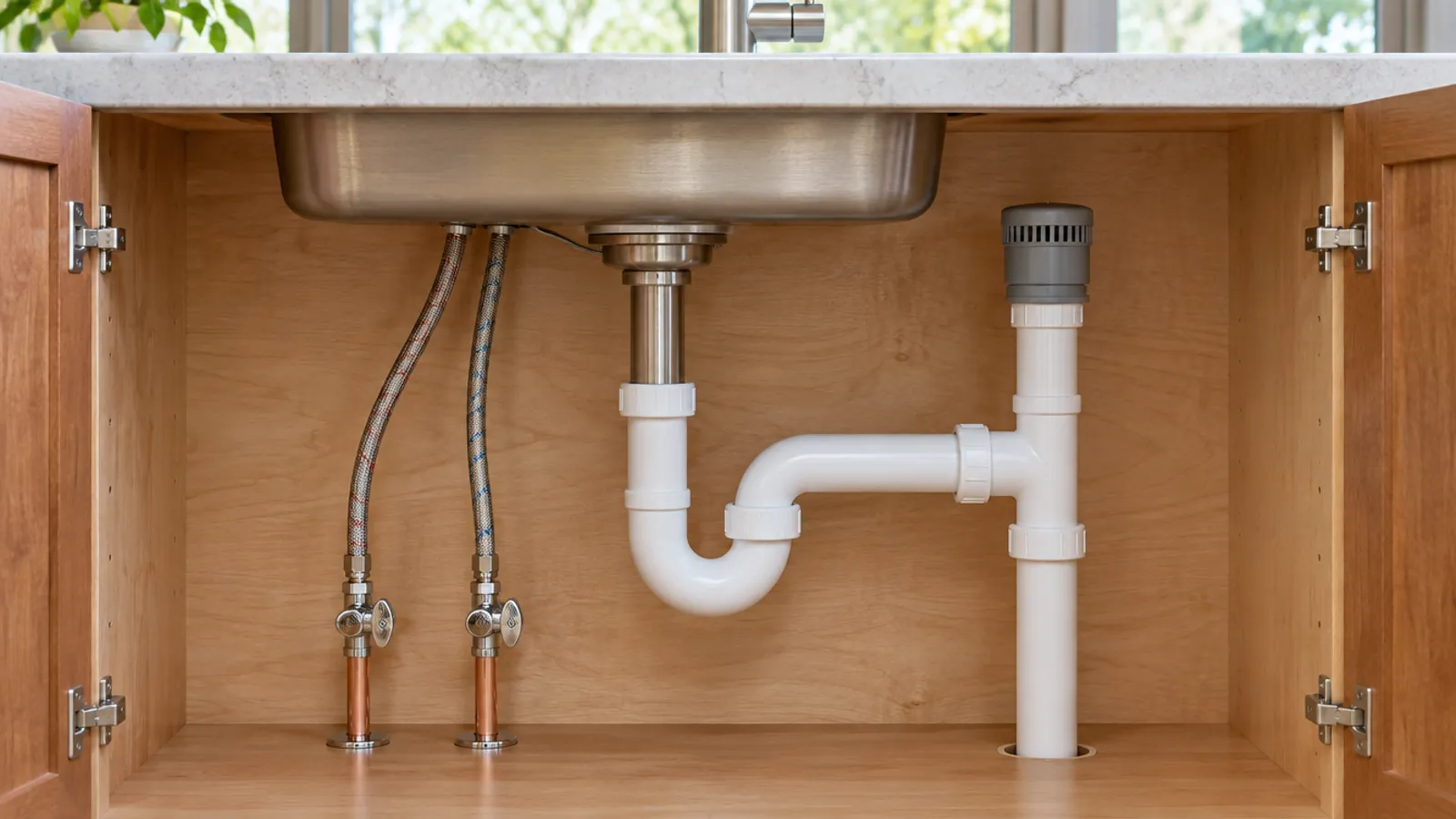
Air admittance valves aren't illegal everywhere: the International Plumbing Code recognizes them, with conditions, and many US jurisdictions allow them. Some places ban them. Minnesota law prohibits vent devices with internal moving parts, and Louisiana law bans vent systems that use AAVs. The reasons: the valve is a mechanical part that can fail, and it only lets air in.
Where they are allowed, an air admittance valve (AAV) has to be installed where it stays accessible and has air around it. This guide explains how the valve works, why some codes reject it, where it must go, and how to keep it reachable behind a finished wall.
What is an air admittance valve (AAV)?
Every drain system needs air. When water flows down the drain lines, it pulls air along behind it, and negative pressure develops in the pipe. If no air can get into the drainage system, the drain takes it from the nearest P-trap. The water in the trap is siphoned away, the trap seal is lost, and sewer gas can come up into the room. That's why plumbing fixtures get a vent: a pipe that brings air into the drainage system. In traditional venting, vent pipes run up through the walls and the attic to the roof, where they stay open to the outside air.
An air admittance valve does the same job locally, with a one-way valve. It is installed on top of a short vent pipe near the fixture. Inside the valve body is a light internal diaphragm, a rubber or silicone seal. When negative pressure develops, the diaphragm lifts and lets room air into the drain to prevent siphonage, so water flows freely and the trap seals stay full. When the pressure evens out, gravity drops the diaphragm back to its closed position, where it seals the pipe, blocking sewer gases from escaping into the house.
Plumbers use air admittance valves where it's hard to run vent pipes: island sinks, where the traditional method needs a looped vent under the counter, and remodels where a new sink or bathroom group sits far from any existing vent stack. One valve can replace a lot of pipe, framing work and roof penetrations. That convenience is also what makes some code officials wary: some inspectors still see an AAV as a shortcut, and some professional plumbers prefer a vent they never have to service.
What makes some places ban air admittance valves?
Three reasons come up again and again.
A moving part instead of an open pipe
An open vent pipe has no seal to wear out. An air admittance valve has a diaphragm that has to lift and reseat every time a drain runs. If it sticks closed, the drain can siphon the trap seal. If it sticks open or its seal wears, sewer gas leaks into the room. Debris or insects can also keep the seal from closing, and then the valve leaks. Minnesota's plumbing law says it plainly: under a heading that reads "Air admittance valves prohibited", the statute bans mechanical devices and fittings with internal moving parts from plumbing venting systems.
It only lets air in
An AAV handles negative pressure only. It can't relieve positive pressure, the push of air pressure that builds in drain lines during a surge of water or behind a blockage. A real vent gives pressure relief both ways, because it is open to the outdoors. That's why every code that allows AAVs still requires at least one vent stack or stack vent from the building drain to the open air. Valves can serve individual fixtures and branch vents, but they can't replace the whole vent system.
Model codes and local politics
US plumbing rules start from model codes, and the two main ones took different paths. The plumbing industry has used these valves since they were introduced in Europe in 1979, and Oregon's state building agency notes in its ruling on air admittance valves that the International Plumbing Code recognizes AAVs and their product standards. Oregon's own plumbing code is based on the model code published by IAPMO, the group behind the Uniform Plumbing Code, so the state approved AAVs through a separate "alternate method" ruling, with conditions. Before it did, its plumbing board discussed limiting them to remodels, repairs and hard spots like island sinks.
Then each state, county and city adopts a code and amends it. So the same valve can be legal in one town and refused across the county line. Here is what four jurisdictions' own texts say:
| Jurisdiction | What its own text says |
|---|---|
| Minnesota (state law) | Mechanical devices and fittings with internal moving parts are prohibited in plumbing venting systems. |
| Louisiana (state law) | The state's uniform construction code must prohibit plumbing vent systems that use air admittance valves. |
| Oregon (state ruling) | AAVs are conditionally acceptable in detached one- and two-family homes and townhouses, with at least one roof vent and access to every valve. |
| Portland, Oregon (city) | In existing commercial or industrial buildings, an AAV is accepted for new fixtures only where structure or an isolated fixture location prevents a vent. |
Sources: the Minnesota statute, the Louisiana statute, the Oregon ruling linked above and Portland's determination. We read these texts in November 2026. Laws and codes change, so check the current version with your local building department.
Does the International Plumbing Code allow air admittance valves?
Yes, with conditions. For houses, many US states and cities adopt the International Residential Code (IRC), often with amendments, so check what your local code says about AAVs. The IPC treats the valve as a way to protect trap seals at fixtures a vent pipe can't easily reach.
Code compliance is local
Jurisdictions adopt different editions and amend them, so code compliance is always a local question. Confirm with your local building department before you plan on an AAV, and pull a permit for the plumbing work where one is required.
ASSE 1051 and ASSE 1050: the product standards
Where AAV use is allowed, the valve itself has to meet a standard. Oregon's ruling, for example, requires NSF 14 for the materials plus ASSE 1050 or ASSE 1051 for performance. ASSE 1051 covers valves for individual fixtures and branch vents. ASSE 1050 covers valves for stack applications that serve several fixtures. The ASSE standards test for endurance, air tightness, pressure containment and frost closure. Before installation, check the marking on the valve and buy one that matches your system and pipe size.
What about Canada?
Each province adopts its own plumbing code with its own changes, so whether an air admittance valve is allowed, and for which fixtures, can differ from one province to the next. In British Columbia, Alberta, Quebec and the Atlantic provinces, ask your local building department or plumbing inspector before you buy a valve or plan the vent around one.
Can an air admittance valve replace a vent pipe?
For one fixture or a small group, often yes. For the whole house, no. Here is how the rules usually divide the work:
- At least one open vent stays. Every plumbing system keeps at least one stack vent or vent stack through the roof, sized as the code requires, to relieve positive pressure and carry sewer gas from the drain and waste pipes outdoors.
- Fixtures and branches can use valves. An AAV can vent single plumbing fixtures, or a horizontal branch drain that serves a small group such as one bathroom, kitchen or laundry. Oregon allows that only when the fixtures in the group are on the same floor level.
- Some uses are banned outright. Oregon's ruling and Portland's determination both bar AAVs from venting sumps and chemical waste, and from supply or return air plenums. Portland adds interceptors.
- Sizing still applies. The valve has to be rated for the size of the vent it caps.
So an AAV is a substitute for individual vents and for the traditional vent pipe installation at a hard-to-reach fixture, not for the vent stacks that serve the house. Good plumbing design treats the valve as the exception, for fixtures a vent can't reach. It saves you having to run vent pipes through finished walls, but the rest of the system still needs traditional venting. If your installation plan uses valves everywhere and no vent pipe reaches the roof, it won't pass inspection. Our guide to a basement bathroom rough-in shows how a new bathroom group ties into the existing vent and drain system.
Where should an air admittance valve be located?
Codes that allow AAVs set their location and installation requirements in a few rules. Oregon's list is typical. The valve must be installed above the fixture drain it vents, within the maximum developed length permitted for that vent, and in a space that allows air to enter it. Access must be provided for inspection, maintenance and removal. Your code gives the exact numbers, and the manufacturer's installation instructions add their own, so read both before you cut any pipe.
AAV installation requirements
| Rule | What it means on the job |
|---|---|
| After the trap, on a vertical vent | The vent rises from the trap arm or the horizontal branch drain, on the drain side of the trap, and the valve is installed on top. |
| Higher than the drain it serves | The valve is installed above the fixture drain or horizontal branch it vents. Check your local code and the maker's instructions for how high it must sit above the fixtures it serves. |
| Upright | The diaphragm closes by gravity, so the valve must be installed vertically, as the maker's installation instructions show. |
| Within the vent's length limit | The valve must be installed within the maximum developed length permitted for that vent pipe. |
| Air around it | The space must let air reach the valve: an open cabinet, an attic, or a wall opening with a vented cover. |
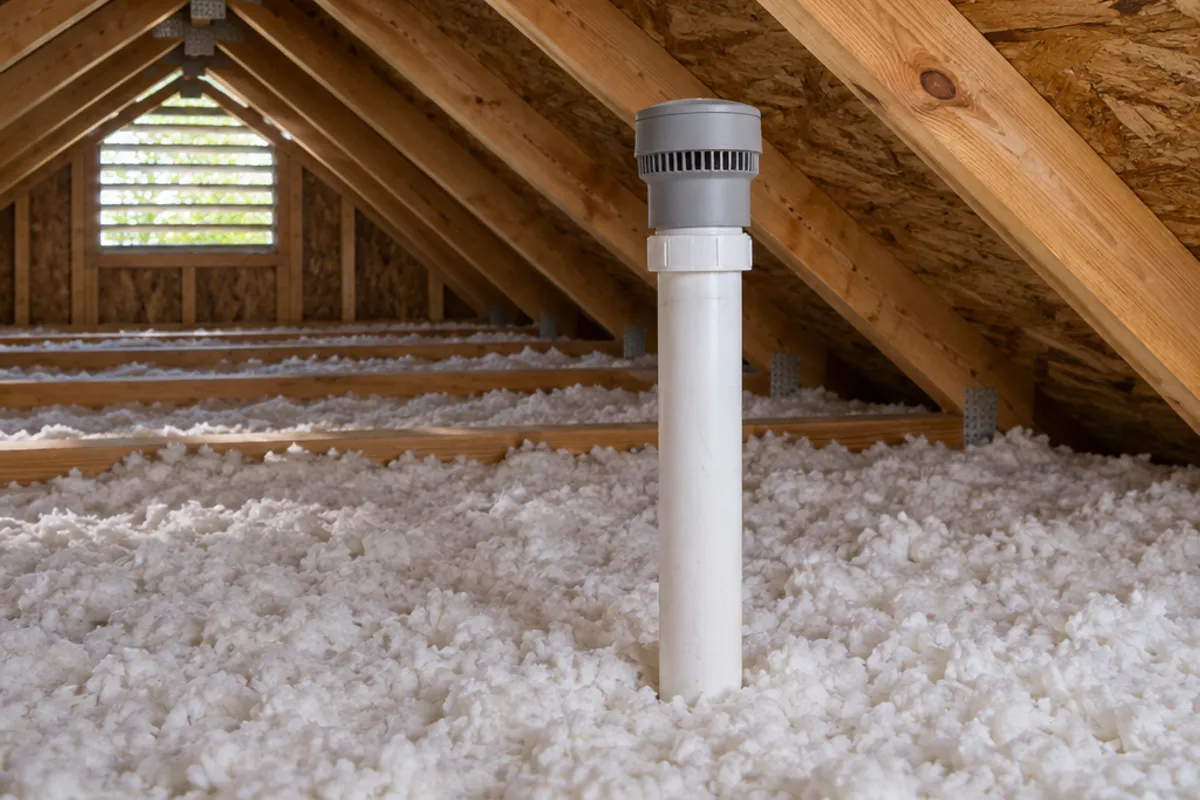
| Above insulation | Makers' instructions call for an attic valve to sit above the insulation, never buried in it. |
| Accessible | You must be able to see it, check it for leaks, reach it and unscrew it without opening the wall. |
The most common locations are under a sink, inside the vanity or island cabinet, where the cabinet gives both air and access, and in an attic above the insulation material. A valve installed in a finished wall is where most mistakes happen, because it's tempting to drywall over it.
Adding or moving a vent changes the drain-waste-vent (DWV) system. Many areas require a permit and a licensed plumber for the installation. Ask how the valve should be handled during the DWV testing required by your inspector, and follow the manufacturer's instructions for proper installation. After installation, run water and check every joint for leaks.
How do you keep an air admittance valve accessible in a wall?
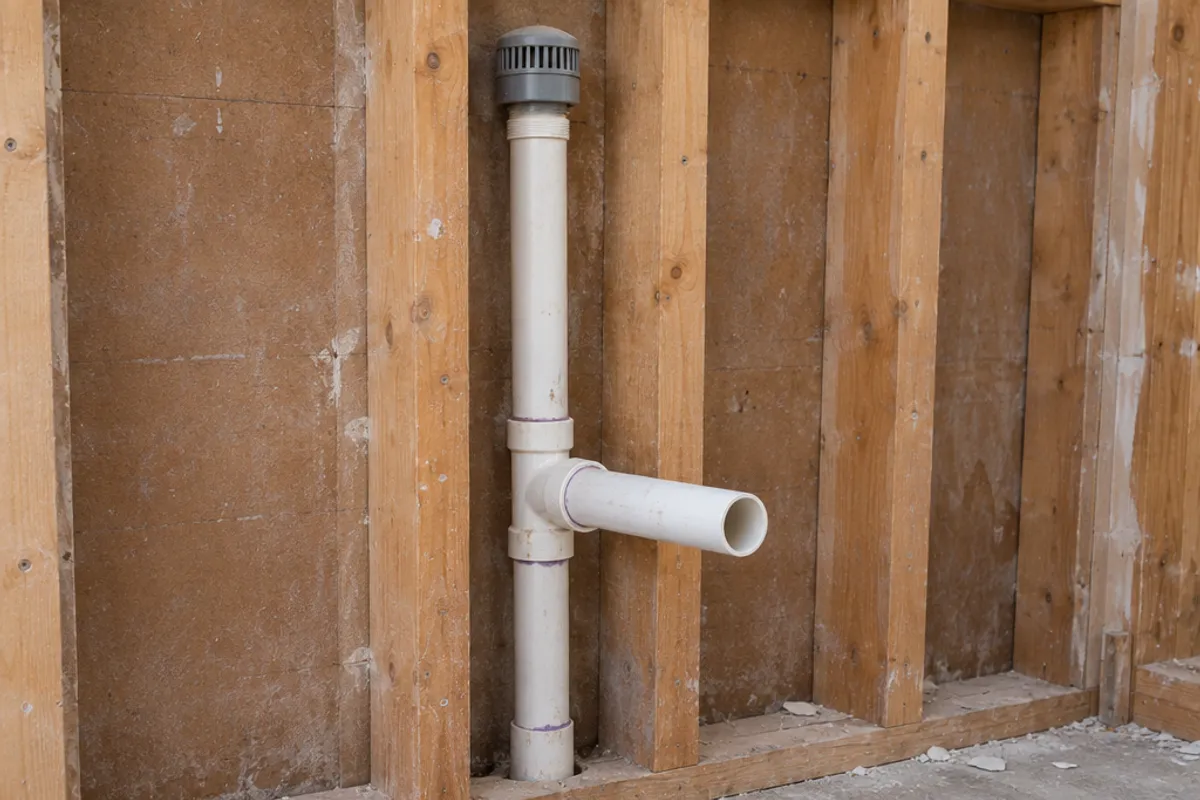
Plan the valve location and the opening during installation, while the wall is still open. Codes want the valve reachable for inspection, maintenance and removal, and in a space that lets air in. Drywall over it fails both rules. It also means the next person to smell sewer gas has to cut the wall open to find the leak.
An AAV needs air around it, so in a wall it is usually installed behind a vented grille or louvered cover that allows air to enter. Some valve makers sell a recessed wall box with a vented faceplate for this. The box is installed between the studs and holds the valve, and the faceplate lets air through while it hides the pipe.
Our access panels and doors have solid covers, with no vents. They suit an air admittance valve only where the valve maker and the local code allow a solid cover. Where they do, a removable panel keeps the valve reachable without cutting drywall:
- SAP1414 spring-loaded panel: fits 10 × 10 to 14 × 14 in openings, overall 16 × 16 in, room for a hand and the valve.
- The PAD0808 hinged door has a 6.35 × 6.35 in service opening and cut-out, with rounded corners.
If the valve needs a vented cover, a solid panel can still serve the parts nearby that need access but not air. A drain cleanout in the same wall, or a shut-off valve, is a good fit: SAP0808 spring-loaded panel: fits 6 × 6 to 8 × 8 in openings, overall 10 × 10 in. See our guides to sewer cleanouts and finding the water shut-off valve. The plumbing access panels page shows the panels for this kind of job.
How long do air admittance valves last?
Many years, in normal use, but not forever. Makers rate their valves for a large number of open-and-close cycles, and an air admittance valve (AAV) installed in a cabinet or attic can go a long time without any service. The diaphragm's seal still ages. When the seal fails, you'll usually notice:
- a sewer gas smell near the sink or in the cabinet, which means the valve may be stuck open, or its seal leaks and has stopped blocking sewer gases from the plumbing system;
- gurgling or slow drains, or a trap that loses its seal under negative pressure, which means it may be stuck closed;
- a valve that's dirty, cracked, leaking or buried in insulation.
One maker's installation guide suggests a simple check: unscrew the valve and shake it, and you should hear the internal diaphragm rattle. If you hear nothing, the seal may have stuck in the closed position. Most AAVs are installed on a threaded adapter and simply unscrew, so replacing one is quick when you can reach it.
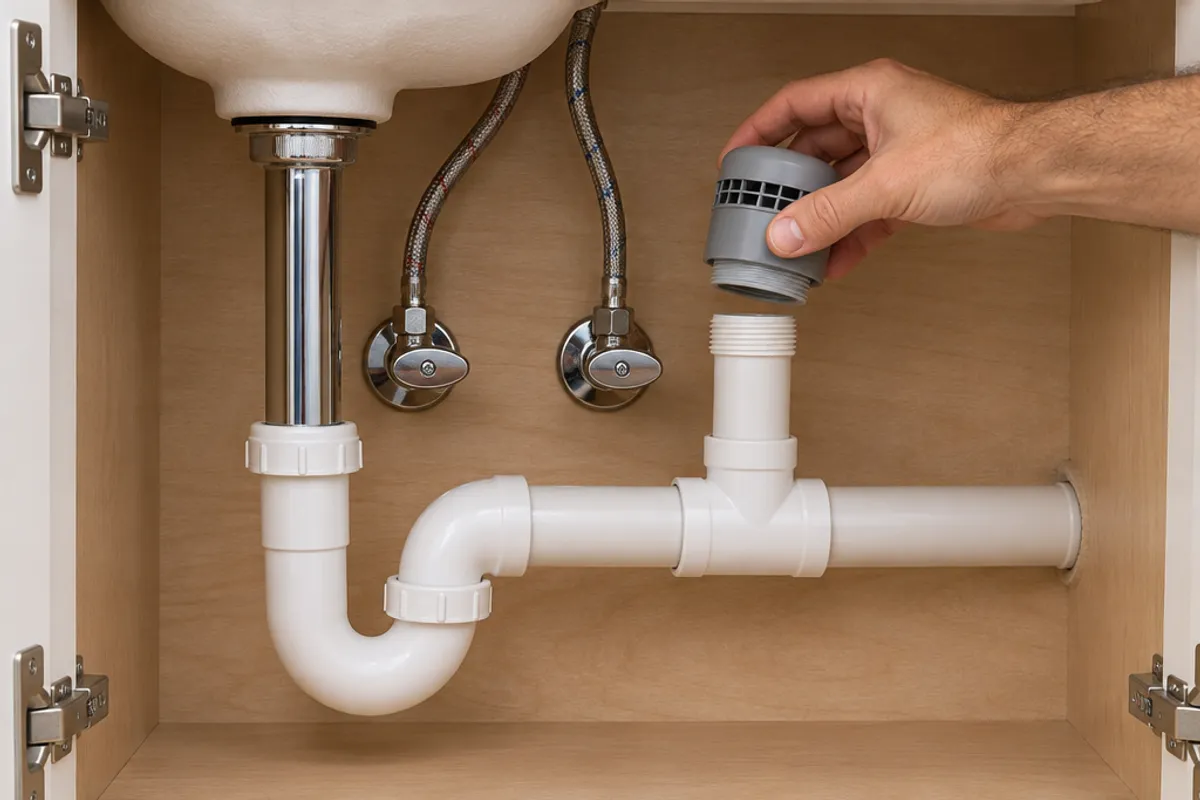
If you're buying a home with an AAV installed in a place that bans them, a home inspector may flag it. Ask a local plumber whether it has to be replaced with a traditional vent before any other plumbing work is permitted.
Measure before you order: our guide on how to measure for an access panel shows how, and the access panel size chart compares every opening and cover. How to install an access panel in drywall covers fitting it.