
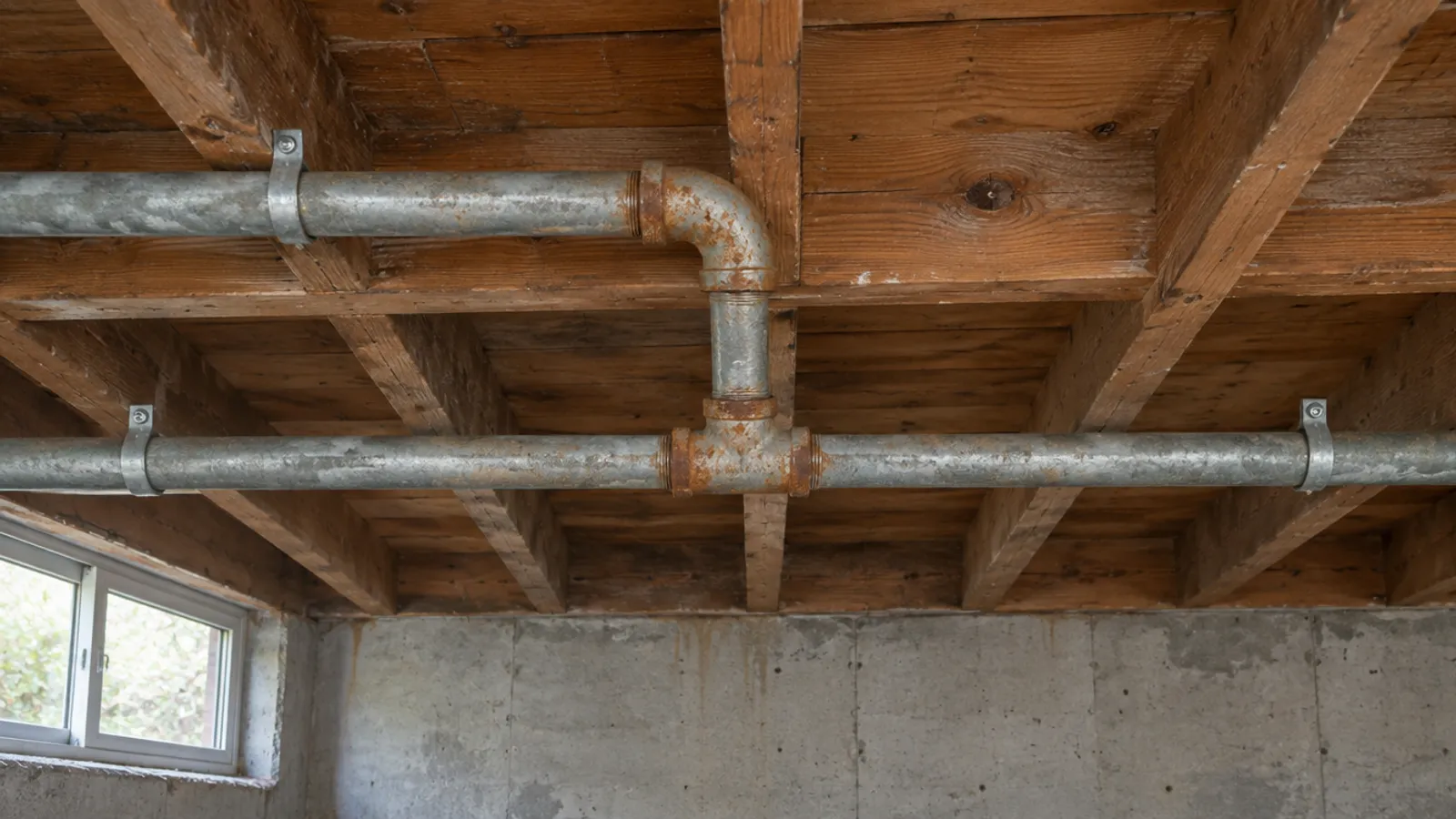
Galvanized pipe replacement swaps old zinc-coated steel water lines, which rust from the inside, for copper pipes or PEX. Replace galvanized pipes when you see low water pressure, rusty water or leaks. A full repipe removes them all; a partial one leaves joints between old and new pipe, and those joints are worth keeping reachable.
This guide is about the water supply lines. Drains, often cast iron in older homes, are a separate system. For the stages of a full repipe, see how long it takes to repipe a house.
What are the signs galvanized pipes need replacing?
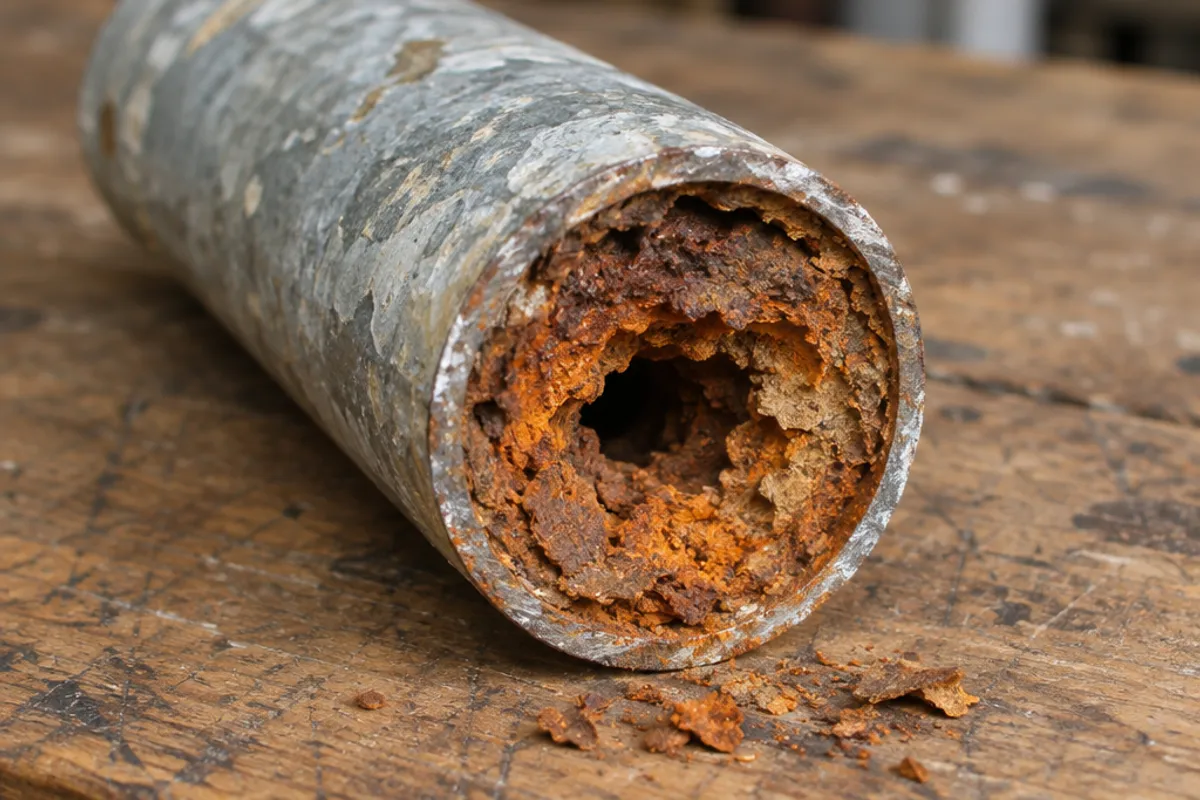
Galvanized steel pipes are steel pipes dipped in a protective zinc coating. The zinc corrodes first; once it wears away, the steel starts to rust. The East Bay Municipal Utility District (EBMUD) explains that corrosion deposits then build up inside, form mounds that can block water flow, and eventually leak. It adds that galvanized pipes were commonly used before the 1960s and are not generally used for drinking water today, so homes built before then are the ones to check.
| What you notice | What is happening inside the pipe |
|---|---|
| Weak pressure throughout the home | Rust deposits narrow the inside of the pipe |
| Good pressure at some taps, weak at others | Rust builds up unevenly, or part of the system was already replaced |
| Brown or rusty water, or discoloration in a sink | Iron from the corroding steel |
| Damp spots or drips along a run | Corrosion has worked through the pipe |
Is low water pressure always a pipe problem?
Not every one of these plumbing issues means old pipe. San Diego's public utilities department lists a sudden loss of water pressure among the signs that a pressure reducing valve is starting to fail (how long pressure reducing valves last), so rule that out first, or ask a plumber to check both.
How can you tell if you have galvanized steel pipes?
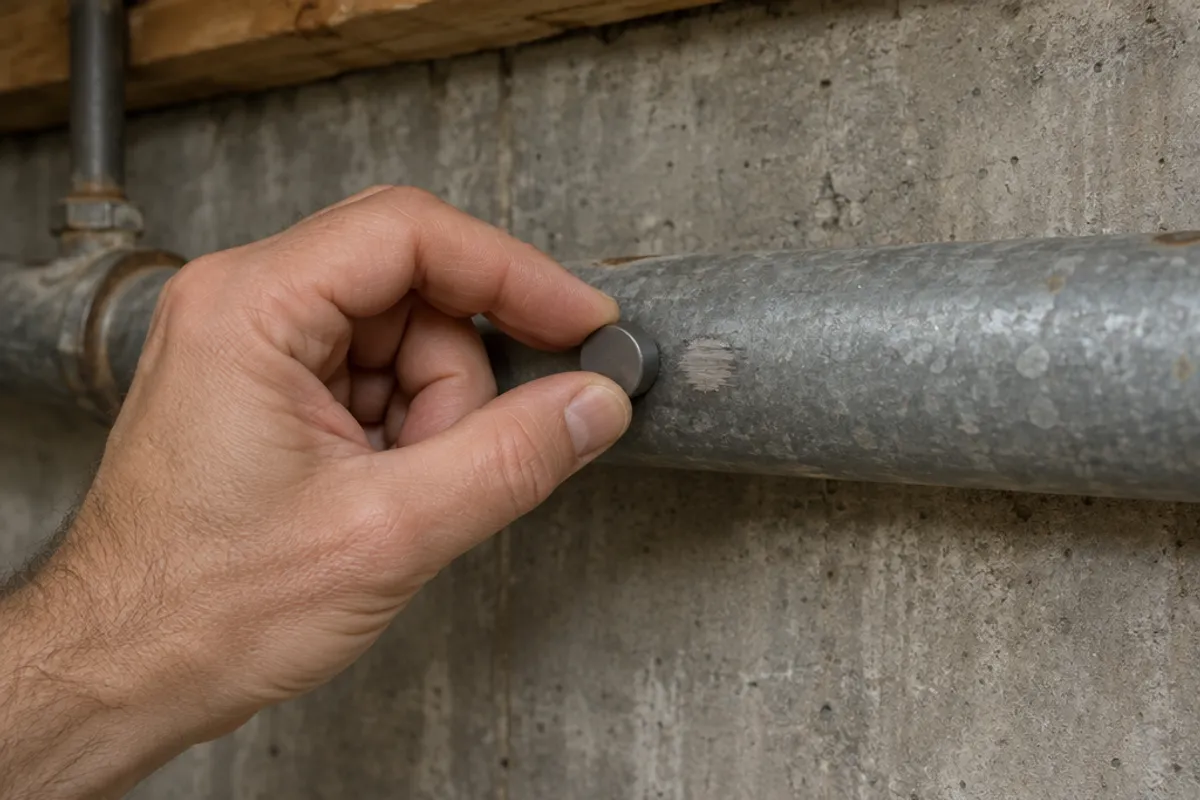
In an old house, start where the water line enters, near the meter or main shut-off, then check the exposed pipes in the basement or crawl space. Homeowners can run the test EBMUD suggests:
- Try a magnet. It sticks only to iron and steel, not to copper, plastic or lead.
- Scratch the surface. If it doesn't stick, scrape through paint and dirt with a screwdriver or coin.
- Read the scratch. Copper looks like a penny, galvanized steel stays dull gray, and lead is soft and shiny silver.
Test several spots. Some pipes have been painted over, and one plumbing company's guide notes that a single water line can include more than one material.
Can old galvanized steel pipes put lead in your water?
The short answer is sometimes. EBMUD says the zinc coating can contain lead and cadmium, and that if a lead pipe was ever connected upstream, lead-bearing scale can form inside galvanized steel pipes and come loose over time. In Washington, DC, high lead levels were measured in homes built with galvanized pipes even after the lead pipes feeding them were removed. EBMUD hasn't seen this in its own system, and says the only way to determine it is to test the water.
The EPA says lead is harmful to health, especially for children, with no known safe level in a child's blood, and that your local water authority is the first place to go for testing. Given that, test rather than guess. Contact the utility about the service line from the meter, too. Some utilities, such as WSSC Water, class a customer-side galvanized line that is or was downstream of a lead line as requiring replacement.
Should you replace galvanized pipes in part of the plumbing or all of it?
A partial job swaps out the easiest runs, usually the exposed pipes in a basement, and joins them to the galvanized steel pipes that stay. The plumbing company's guide cited above says this may improve water flow for a while but doesn't stop corrosion elsewhere, and that mixing old galvanized pipes with newer materials can increase corrosion at the connection points.
| Part of the job | Partial replacement | Full repipe |
|---|---|---|
| What is replaced | The worst or most exposed runs | Every supply line from the main shut-off to the fixtures |
| What stays | Galvanized runs behind finished surfaces | Disconnected old runs; ask which come out |
| Joints to old pipe | Wherever new pipe meets old | Only at the main, if the service line stays galvanized |
| What to keep reachable | Each transition joint and new shut-off | New shut-off valves |
The scope drives the cost and the labor: how many fixtures and floors, how the pipes run, and whether plaster has to be opened, which is labor intensive. Get written estimates from a professional plumber that show which runs are replaced, which stay and where each joint to old pipe will be. Ask whether the cost includes the permit, patching and paint, and what could raise the cost once walls are open, then budget for the rest. For the order of work in a full repipe, our Poly-B replacement guide walks through the same steps.
How do you replace galvanized pipes one section at a time?
Galvanized steel pipes are joined with threaded fittings, and after decades the threads rust tight, so most of the work is getting the old steel out cleanly. Expect stubborn joints. Tools: two pipe wrenches, a saw that cuts steel, thread sealant, and the adapters and tools the new pipe's fitting maker lists.
Replacing water piping can need a permit and a licensed plumber. For example, the City of Milpitas, California, requires a plumbing permit to install or replace water piping inside a building. Ask your local building department what your code requires.
- Shut off and drain. Close the main water shut-off valve and open a low faucet.
- Cut out the bad section. Cut the pipe mid-run, then unscrew each piece while a second wrench holds the fitting, so the next joint doesn't loosen. If a fitting is too difficult to turn or its threads crumble, go back to the next sound one.
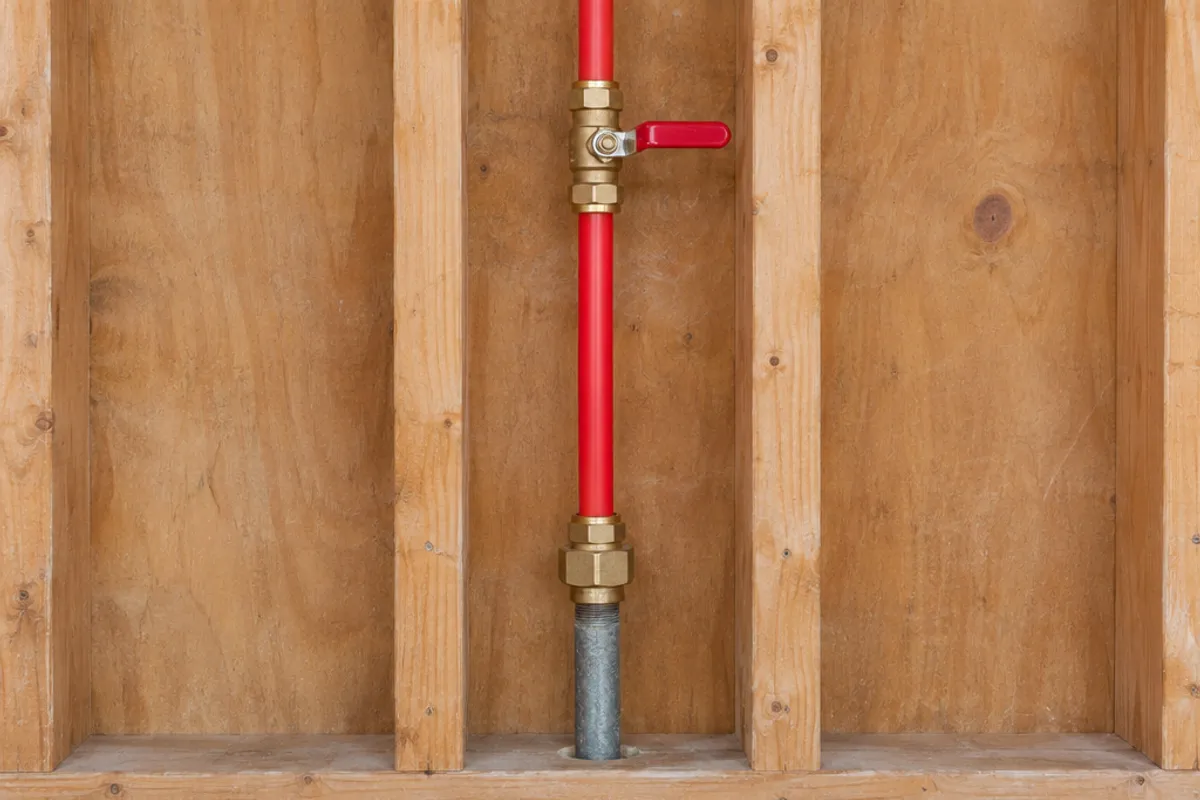
- Make the transition. Thread an adapter onto clean steel threads with thread sealant. For example, the City of Milpitas requires a dielectric union where steel pipes meet copper pipes. Your inspector decides which fitting you need.
- Run the new line and support it properly, with a shut-off where it starts.
- Test and flush. Turn the water on slowly, check every joint, then run the faucets to clear rust flakes and debris.
What happens to the electrical ground when metal pipe comes out?
Swapping metal supply pipe for plastic can affect the home's electrical grounding or bonding, so have a licensed electrician check it. For example, the City of Bellevue, Washington, requires the existing electrical grounding to be identified before re-piping and kept intact.
Don't move or remove a ground clamp yourself. Have a licensed electrician confirm the bonding before the old pipe comes out and again when the work is done.
What stays in the walls after galvanized pipe replacement?
Plumbers cut openings to reach the old runs, and the plumbing company's guide notes that those access points are planned to keep repairs down. Most get patched. Before they are, choose the ones to keep open:
- each transition joint to galvanized pipe that stays, since connection points are where corrosion can speed up, and a panel saves cutting into the drywall again;
- each new shut-off valve, so it can be closed fast in a leak;
- a tub or shower valve, or a manifold, if the new layout has one.
Old runs that are cut off and drained can be closed in. Pay attention to where every joint ends up: ask the professional plumber to mark each one, and size each opening for two wrenches, since a seized union takes both hands to undo:
- One valve or transition fitting: SAP0808 spring-loaded panel: fits 6 × 6 to 8 × 8 in openings, overall 10 × 10 in or PAD0808 hinged door: maximum service opening 6.35 × 6.35 in, overall 8 × 8 in.
- A shut-off, union and adapter together: PAD1212 hinged door: maximum service opening 10.35 × 10.35 in (estimated), overall 12 × 12 in or SAP1414 spring-loaded panel: fits 10 × 10 to 14 × 14 in openings, overall 16 × 16 in.
Our plastic access panels and doors are not fire-rated, and we publish no water-resistance rating for them, so don't fit one in a fire separation, such as the wall between a house and an attached garage.
More choices are on the plumbing access panels page.
What should you read next?
Planning which openings stay open?
Measure before you order: our guide on how to measure for an access panel shows how, and the access panel size chart compares every opening and cover. How to install an access panel in drywall covers fitting it.