
A pressure reducing valve most commonly lasts 10 to 15 years, according to one California water district, while another California city's water page says 5 to 10. Both report wide swings, from a few years to decades, depending on water conditions and maintenance. Rising water pressure, banging pipes and a dripping water heater relief valve are the usual warning signs.
The water pressure regulator sits on the main line, usually just past the main shut-off where the water enters the home. In a finished basement, it needs a way in for checks, service and, one day, replacement.
How long does a pressure reducing valve last?
No single life expectancy applies: the utilities that publish one differ by a significant margin.
| Source | Typical life | Range it reports | What affects it |
|---|---|---|---|
| Rainbow Municipal Water District, California | Most commonly 10 to 15 years | Some fail at three years; some still function at 20 | How regularly it is maintained; dirt on the seat |
| City of Lincoln, California | Generally 5 to 10 years | From a few years to as long as 40 years | Water conditions |
| One valve maker's manual (North American edition) | No figure given | Not stated | Normal wear on internal parts; water hammer; yearly cartridge service |
Rainbow notes that water pressure regulators have been called "life-of-mortgage" products. The reason: a faulty one was traditionally cleaned or repaired with a service kit rather than swapped out. Design-wise, the district likens it to a kitchen faucet, where dirt or foreign matter on the seating area is what causes trouble.
So treat age as a reason to test, not as a replacement date: an old regulator that still holds its setting is doing its job.
What causes a pressure reducing valve to fail?
In the sources we read, it comes down to dirt, wear and shock. The maker's manual says the internal parts wear even when a PRV is installed and maintained properly, and that one which won't hold its setting most likely has impurities on its seat. Water conditions contribute too, according to Lincoln. The manual also names water hammer as a common reason for failures, so if your pipes bang, fix that as well: see how to fix water hammer.
What does a water pressure reducing valve do?
A water pressure reducing valve, or PRV, has one function: it lowers the incoming water pressure from the public main to a lower, steadier pressure for distribution through the plumbing system. It is spring-loaded, and turning its adjusting screw changes the spring's compression, which sets the water pressure downstream.
Rainbow calls it essential for protecting a home's plumbing system and maintaining consistent water pressure, and says one set around 50 psi can reduce stress on pipes, fixtures and appliances and improve performance. Street pressure varies: in Rainbow's area, with significant elevation changes, it is largely a function of terrain and elevation, and the Lincoln water page notes that city water can enter a home at 150 or 200 psi, a strain that can, over time, make joints fail, fixtures leak and appliances break down.
Are water pressure regulators the same as PRVs?
Yes: water pressure regulator and pressure reducing valve are two names for one device. Don't confuse either with the temperature and pressure relief valve on the hot water tank, which lets water out when the pressure or temperature inside gets too high.
Does a pressure reducing valve save water?
It can. Higher water pressure pushes more water through every open fixture, so Lincoln suggests the lowest setting that still supplies your fixtures and irrigation system, for the most water savings. Lower settings also prolong plumbing life, the Ashley Valley Water & Sewer FAQ says: two benefits, and less water waste.
What are the signs of a bad pressure reducing valve?
A failing water pressure regulator usually lets too much pressure through, but it can also starve the plumbing system. The utilities list these signs:
| Sign | What you notice | Listed by |
|---|---|---|
| High water pressure | Hard spray at faucets and the shower, water leaking from faucets, frequent leaks, a toilet that keeps running | Lincoln, Rainbow, San Diego |
| Relief valve discharge | Water coming out of the relief valve on the hot water tank | Lincoln, Ashley Valley |
| Noise in the pipes | Thumping, banging or hammering in the walls, or whistling when the water is turned off | Rainbow, a Colorado district |
| Fluctuating water pressure | Pressure that surges or changes for no clear reason | Rainbow, San Diego |
| Low pressure or flow | A sudden loss of pressure or water flow | San Diego, Ashley Valley |
| Won't adjust | Turning the screw does little or nothing | San Diego |
High water pressure and a dripping relief valve
When the seat wears or collects debris, the regulator stops closing fully and the plumbing system gets more of the street pressure; the maker's manual recommends cleaning the removable cartridge. Excessive pressure also wears out other valves, which is why the San Diego Public Utilities FAQ lists frequent leaks and dripping faucets, and Rainbow ties a lower setting to less stress on pipes.
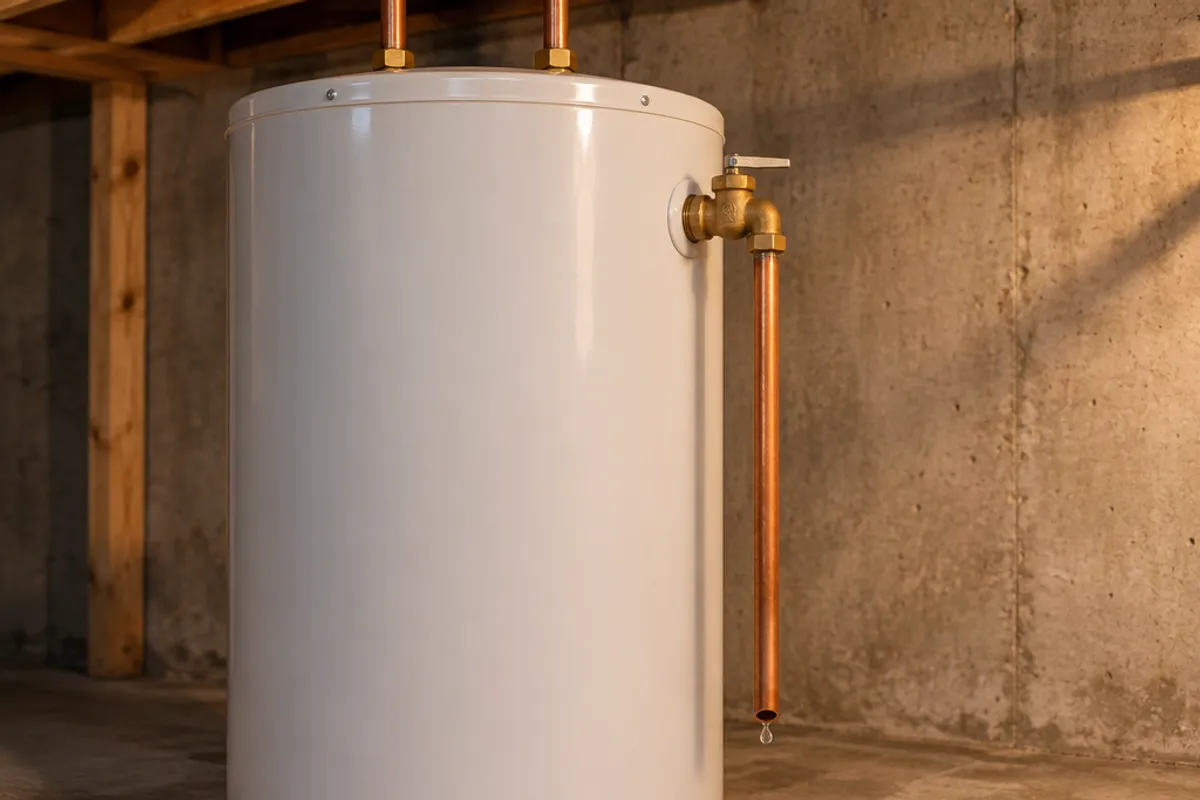
Water leaking from the relief valve on the water heater is on both Lincoln's list and Ashley Valley's. Not every rise is the PRV's fault: water expands as the heater warms it, and the same manual recommends an expansion tank between the PRV and the heater.
Fluctuating water pressure, low water flow and water hammer
A PRV can also fail the other way. San Diego lists a sudden loss of water pressure or water flow, and notes that an adjustment may resolve it. A Colorado water district adds banging or high-pitched whistling in the pipes, usually when the water is turned off.
How do you test a pressure reducing valve with a pressure gauge?
A water pressure gauge from a hardware store is the easiest way to determine whether the regulator works, and a quick health check for the whole plumbing system. This method follows Rainbow's FAQ:
- Turn off every faucet and water-using appliance, for a baseline reading.
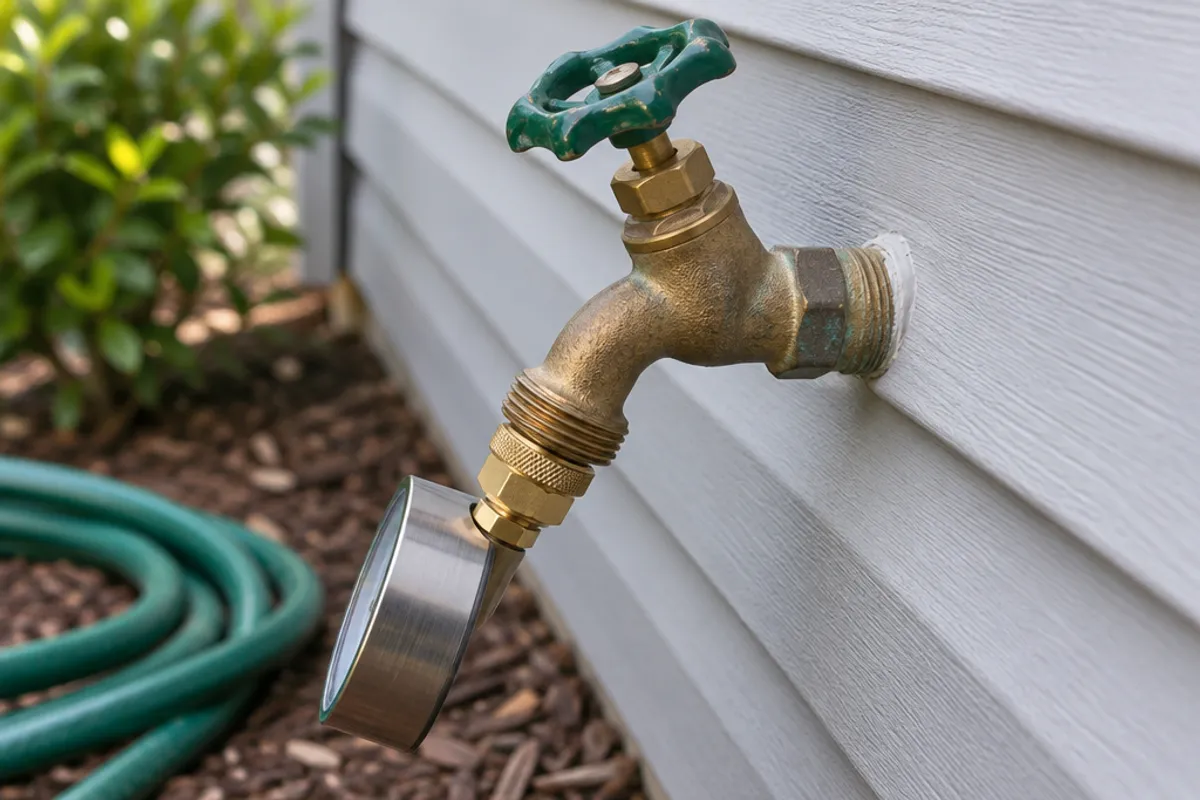
- Thread the gauge onto a hose faucet downstream of the PRV, and open the faucet.
- Read the pressure in psi. Rainbow says household plumbing should generally see between 30 and 80 psi.
- Check again later in the day, and after the heater has run, to catch pressure that creeps up.
Ashley Valley suggests a gauge on each side of the regulator: if the upstream gauge, showing the incoming water pressure, reads higher than the downstream one, the regulator is probably working. Repeat the test at least once a year, the same frequency the maker's manual gives for cleaning the cartridge. Some utilities will also check your system's water pressure on request.
Where is the pressure reducing valve?
Follow the main line in from the street. On new installations, Ashley Valley says, the water pressure regulator is usually just inside the foundation, next to the main shut-off valve; on some older ones it is on the street side of the water meter. The Colorado district says it is typically installed at the service entry point, after the first shutoff valve.
In mild climates it is often outdoors: Lincoln places water pressure regulators near the meter or near the household and irrigation shutoffs, and San Diego near a water line leading from the meter box. Rainbow says a PRV on your side of the meter is how you most effectively manage the water pressure entering your home, and in many cases a property needs two: one at the meter for the irrigation system and one at the home. Where winters freeze, the maker's installation recommendations say a PRV should not be installed outside unless it is protected from freezing and the weather, so in most of Canada and the northern states, look in the basement, crawl space or utility room, on the pipe leading in from the street. Our guide to where the water shut-off valve is helps you find the main line.
What does a residential pressure reducing valve look like?
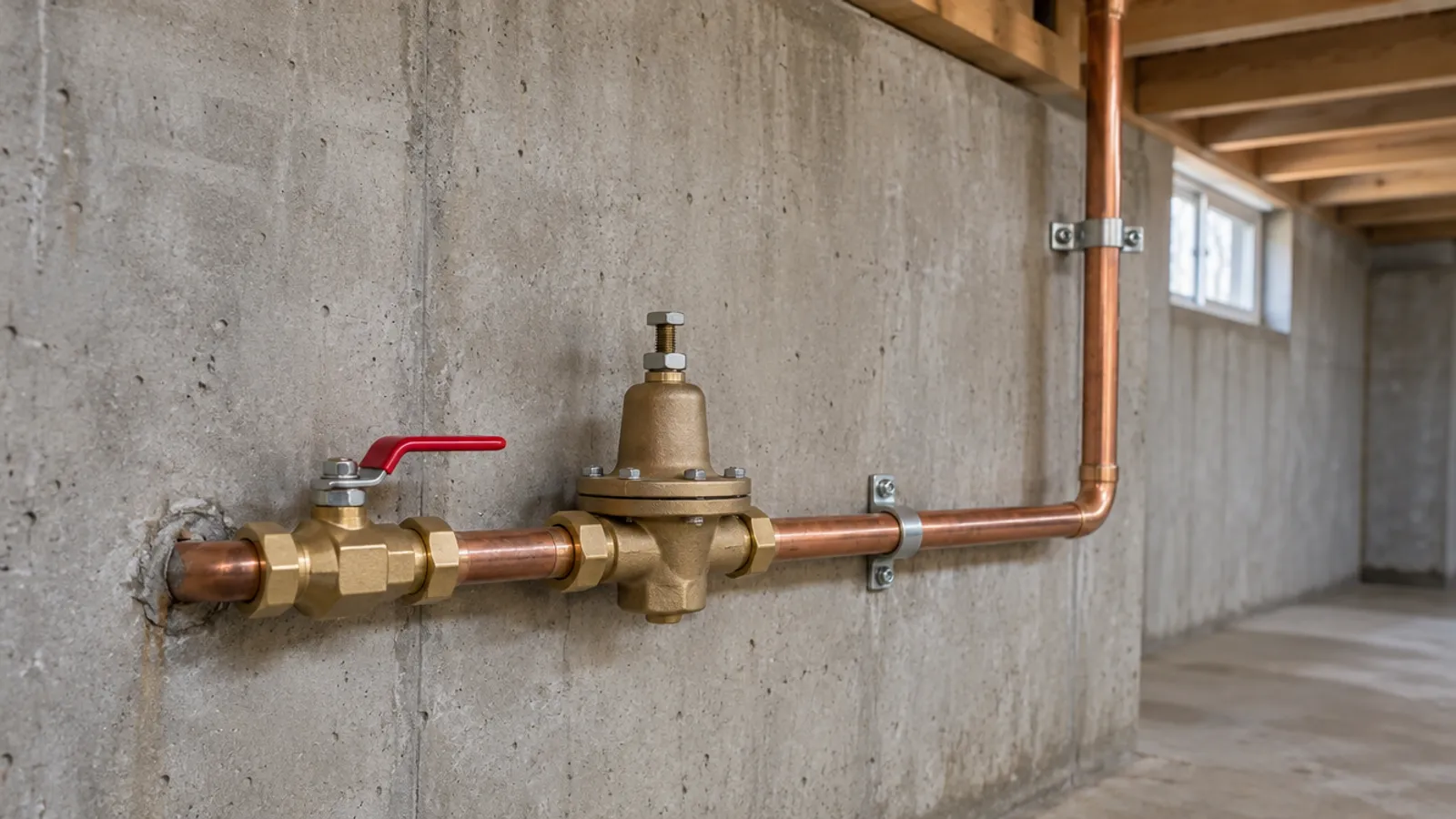
Look for a brass body on the main line with a domed or bell-shaped cap. The adjusting screw usually sits on top, often with a locknut, an arrow on the body shows the flow direction, and some models carry their own pressure gauge. Check the body and its joints for drips or corrosion while you're there.
Can you repair or adjust a water pressure regulator instead of replacing it?
Often, yes. Lincoln recommends calling a plumber to repair a malfunctioning regulator, with fixes ranging from cleaning out a plugged line to a rebuild or replacement. Ashley Valley says a homeowner or plumber can adjust a water pressure regulator with the maker's instructions: turning the screw clockwise generally raises the pressure and counterclockwise lowers it. Repair kits are usually available from the maker, and Rainbow says the job is no harder than fixing a kitchen faucet.
On your side of the meter, the PRV is yours: Rainbow and Ashley Valley both say the property owner is responsible for installing and maintaining it. Replace it when it won't hold a setting after cleaning or a rebuild; San Diego notes that as a PRV ages, adjustments often become hard or impossible. Rainbow and San Diego say owners may install a new one as a do-it-yourself project, but some cities, Lincoln for example, require a permit for repairing or replacing one. Either way, it's crucial that the main shut-off holds: see a shut-off valve leaking when closed.
Replacing or rebuilding a PRV is work on the main line of the home's water system. Use a licensed plumber where your area requires one, and ask your local building department whether the job needs a permit. Shut off the main and relieve the pressure in the pipes before anyone opens it.
How do you keep a water pressure regulator reachable in a finished basement?
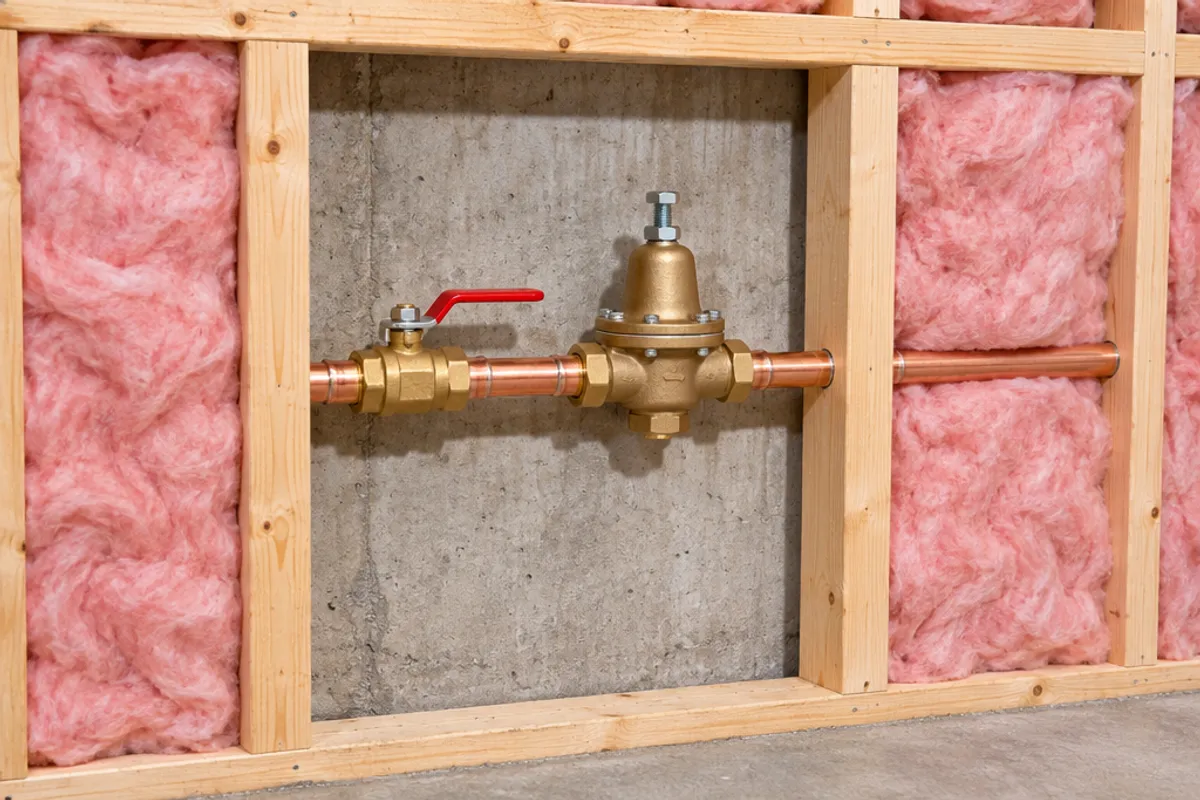
Maintaining a PRV means yearly cartridge service, the odd adjustment and, one day, replacement, so reaching it is essential and it can't vanish behind drywall. When you frame a wall or bulkhead around the main line where it is installed, leave one opening in front of the shut-off and the PRV, with room for a hand and a wrench, and close it with a door or panel instead of drywall.
| Model | Type | Opening | Overall size |
|---|---|---|---|
| PAD1212 | hinged door | Maximum service opening 10.35 × 10.35 in (estimated) | 12 × 12 in |
| SAP1414 | spring-loaded panel | Fits 10 × 10 to 14 × 14 in openings | 16 × 16 in |
The PAD1212 hinged door's advantage is that it latches and stays attached, well suited to a water pressure regulator you open every year; print the full-size template from its product page to mark the cut. The SAP1414 lifts out and fits a range of openings, handy if the plumber cut a larger hole. If the main comes in through an attached garage wall, read this first:
Our plastic access panels and doors are not fire-rated, and we publish no water-resistance rating for them, so don't fit one in a fire separation, such as the wall between a house and an attached garage.
More options are on the plumbing access panels page.
Measure before you order: our guide on how to measure for an access panel shows how, and the access panel size chart compares every opening and cover. How to install an access panel in drywall covers fitting it.