
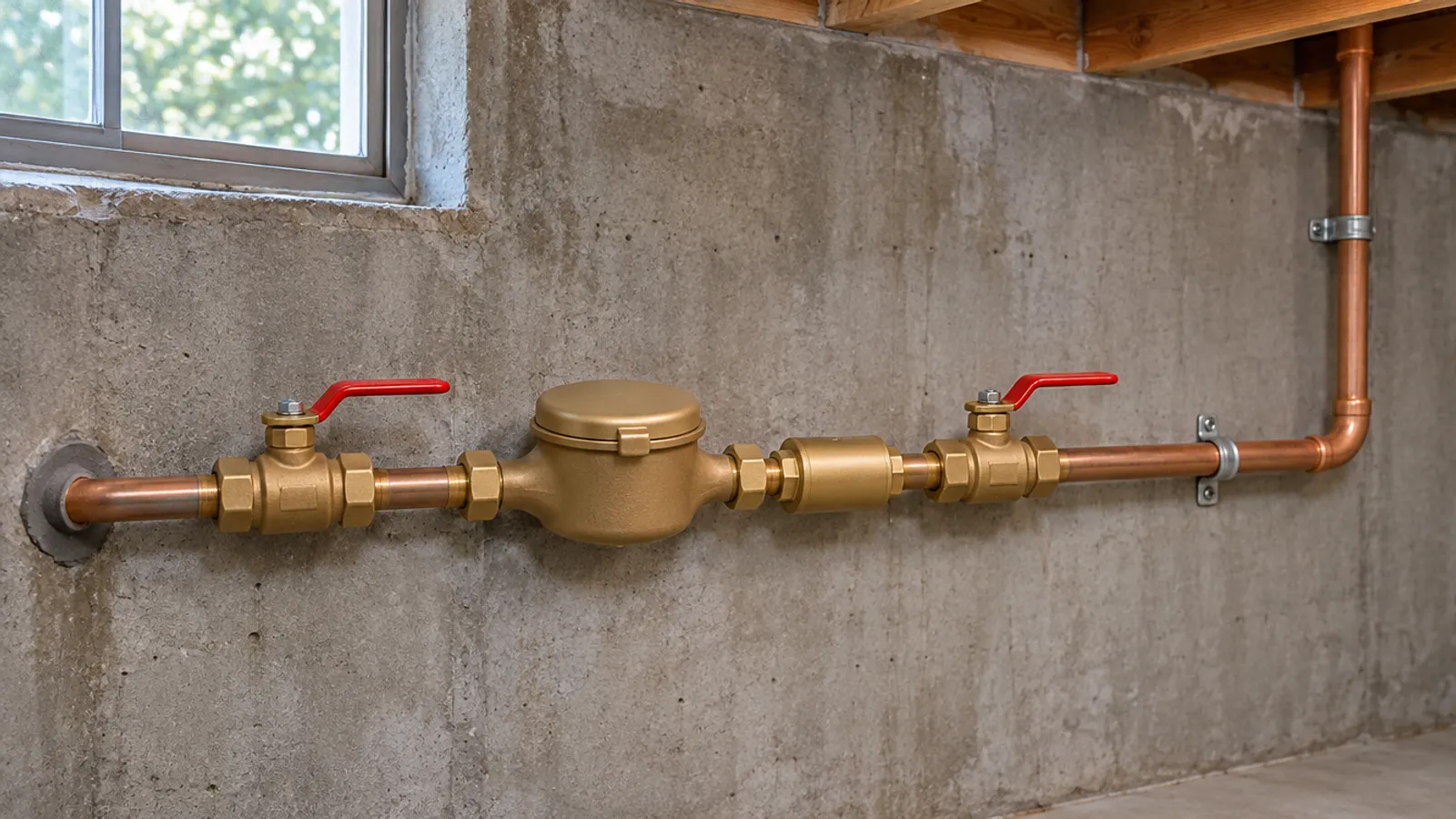
A dual check valve is a backflow prevention device: two check valves in one body, each held shut by a spring. Water utilities fit it on the outlet side of the water meter, so water flows into the house but cannot flow back into the public water supply. That closes the system, so heated water needs room to expand.
It is not the same as a double check valve assembly, the testable backflow prevention device often found on lawn sprinkler lines.
How does a dual check valve work?
Orange County Utilities in Florida runs a cross connection control program and publishes a standard sheet for each backflow prevention device it uses. Its dual check standard (read 2026-11-17) describes two internally loaded check valves that operate independently, and the two ways backflow can occur:
- Back pressure occurs when pressure on the house side rises above the supply pressure, for example from a pump. It forces both checks closed tighter, and if the second check is not working, the first check valve still stops the reverse flow.
- Back siphonage occurs when the supply side drops below atmospheric pressure, as in a water main break. The loading on each check closes it.
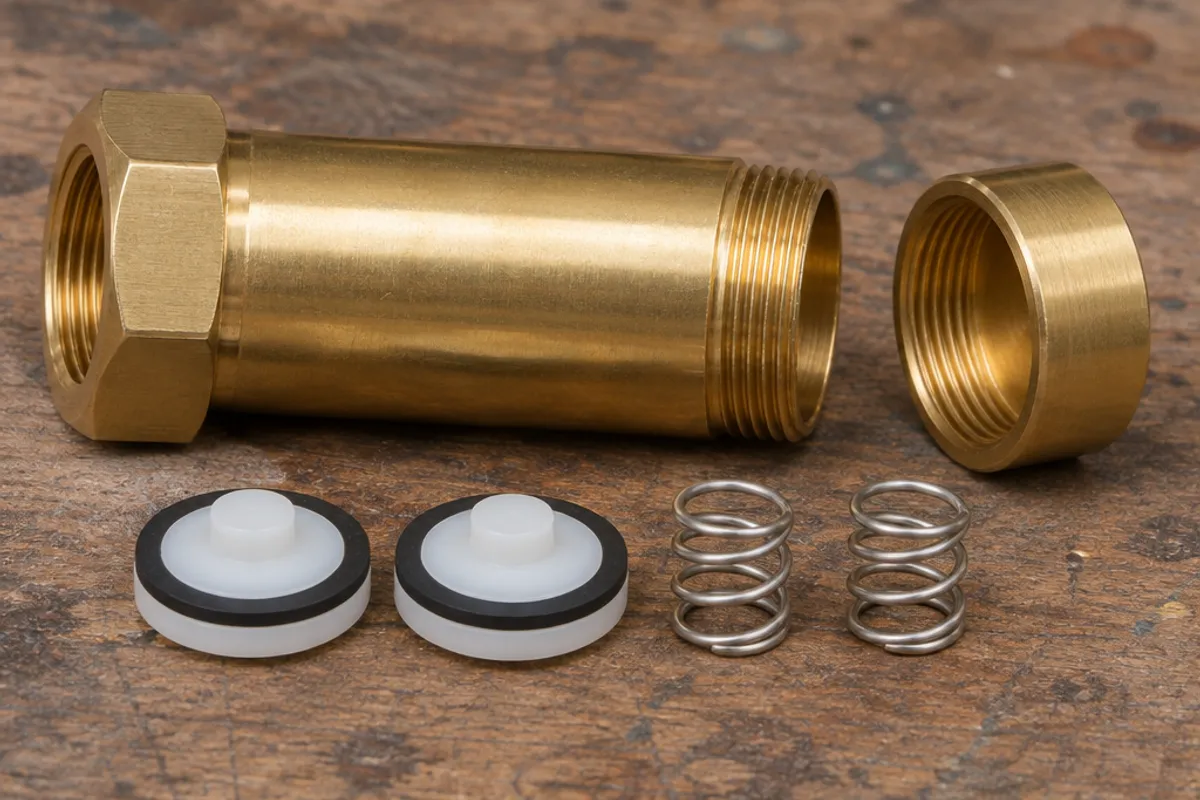
One maker's installation instructions for a meter dual check show the parts: two plastic poppets with rubber gaskets, each held on its seat by its own stainless steel spring, in a brass body with an O-ring sealed end cap. In normal operation, water flowing toward the house pushes the poppets open; when the flow stops, the springs close them.
Why is there a dual check valve at the water meter?
Some utilities fit one on every service line as basic backflow protection, to keep contamination out of the public's clean water supply. Grand Water & Sewer Service Agency in Moab, Utah, has a dual check device on its side of the meter for every customer (read 2026-11-17). The maker adds two reasons to put it at the meter: it stops hot water backflow from damaging meter parts, and it keeps the meter box from flooding when the meter is changed.
Where you find it depends on where the meter is. Orange County installs its dual checks below grade, in a box on the meter's outlet side, and only at homes in areas that irrigate with reclaimed water; that is one utility's rule. With an indoor meter, look on the meter's outlet, toward the house: the maker's field test starts by disconnecting the valve's inlet end from the line or the meter, so it is commonly fastened straight to it. Not sure? Ask your water utility, or in Canada your municipal water utility.
Dual check valve vs double check valve: how do these backflow preventers differ?
Both devices stop backflow caused by back pressure and back siphonage, but they are built differently. Orange County's double check valve assembly standard puts the two checks between two tightly closing shut-off valves, with four test cocks. A tester connects a gauge to those cocks to read the pressure differential across each check, which is how a double check assembly on a lawn irrigation line or fire sprinkler system gets its yearly test (how that works). A dual check backflow preventer has nowhere to connect test equipment. Orange County uses it for low hazard protection only and says it does not provide the same level of protection as a backflow prevention assembly.
| Orange County's standard | Dual check valve | Double check valve assembly |
|---|---|---|
| Parts | Two independent internal check valves | Two checks, two shut-off valves, four test cocks |
| Hazard | Low hazard only | Objectionable pollutants that are not an actual health hazard |
| Checking it | No cocks; the maker's field check takes the inlet end off the line | A gauge on the test cocks, in place |
| Location | Below grade, in a box on the meter's outlet side | Above ground, or below grade in a drained box at reclaimed water sites |
Why does a dual check valve cause thermal expansion?
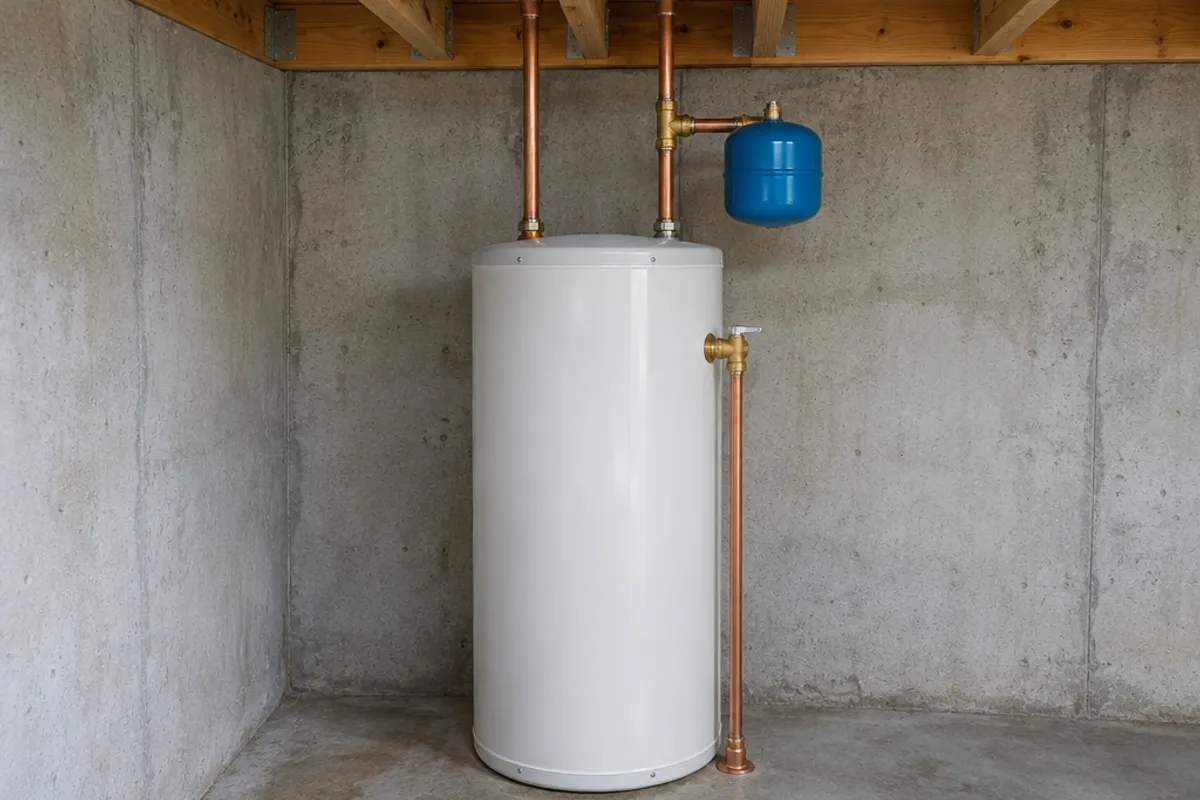
Thermal expansion occurs when a tank water heater warms the water and it expands. Without a one-way valve, the extra volume can flow back through the meter into the public water supply. A dual check stops that backflow, so the house becomes a closed system and the pressure rises instead.
One water heater maker's support page explains the result: the pressure can't dissipate into the main supply line, and the rise can be enough that the relief valve opens and releases water during each heating cycle. That can lead to premature failure of the valve or even the heater. Ashley Valley Water & Sewer in Utah adds that the extra pressure can wear out seals and damage the solenoid valves in washing machines and dishwashers (read 2026-11-17). Watch for a relief valve that drips while the heater runs, or pressure that climbs on a gauge at an outside faucet, the test in the pressure reducing valve guide.
Should the check valve be before or after the expansion tank?
Before it. The heater maker says to install an expansion tank in the cold water line between the water heater and the check valve, which puts the tank downstream of the dual check. Ashley Valley calls the tank a safety device that protects the heater and household plumbing: inside, a rubber bladder or diaphragm holds back an air cushion that the expanding water compresses, instead of raising the pressure in the plumbing. Follow the tank maker's instructions for sizing.
Grand Water encourages every customer to check their water heater for an expansion tank and get one installed. A homeowner brochure from the Pacific Northwest Section of the American Water Works Association calls the temperature and pressure relief valve the primary safety feature of a water heater, and says that where the water purveyor requires a check valve or backflow preventer downstream of the meter, a working relief valve and expansion tank are essential. Local authorities set the rules, so ask your local plumbing inspector what your area requires.
Don't remove or open the dual check to relieve pressure: it protects the public's clean water supply from backflow, and on some services it belongs to the utility. Adding an expansion tank means cutting into the water heater's cold supply, so use a licensed plumber where your area requires one.
Can a dual check valve fail?
Yes, and unlike testable backflow preventers, nothing shows when it fails. It has two check valves so that one can back up the other, but Orange County warns that debris or worn parts can affect both at once, leaving the device unable to prevent backflow without any outward sign of failure. If you suspect a failure, call the utility. The maker's design lets every internal part be replaced without taking the valve out of the line: the end cap comes off, the poppets, gaskets and springs come from a seal kit, and the valve is checked for leaks again. On the utility's side of the meter, that is the utility's job; on the property owner's side, call a plumber.
How do you keep the meter and its dual check reachable?
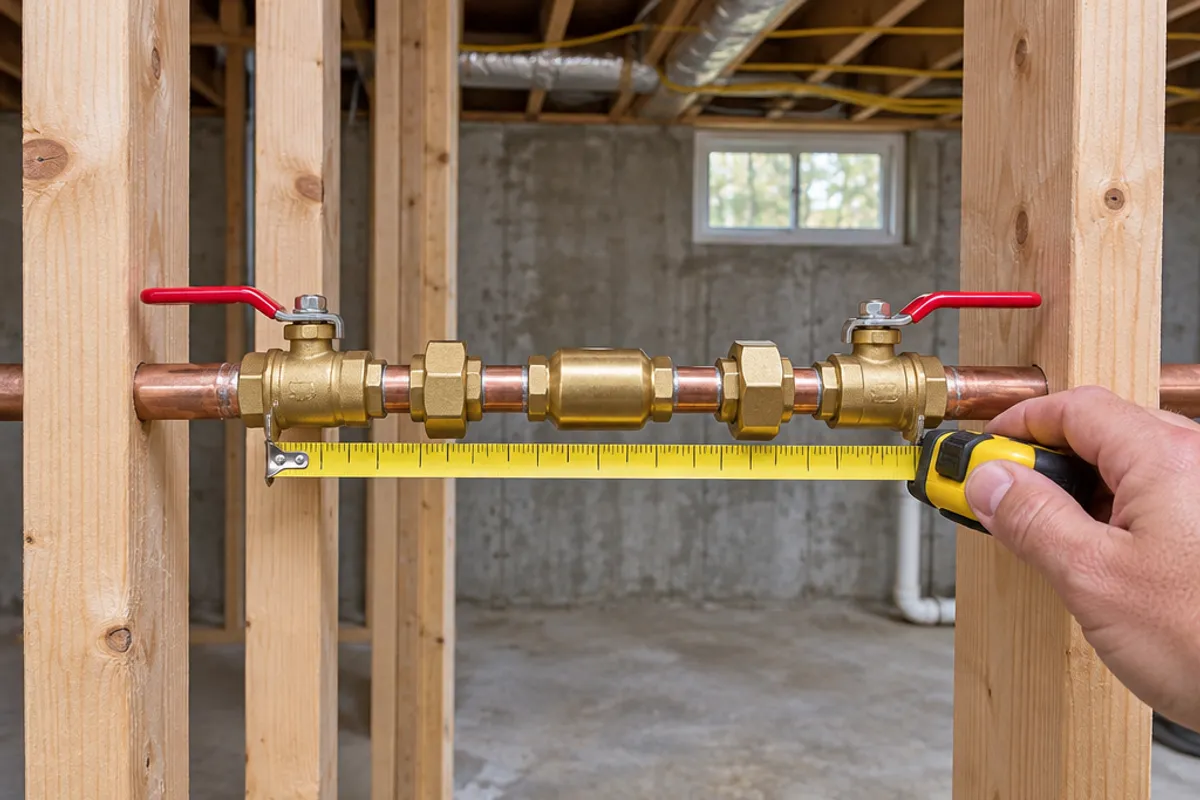
Utilities want the meter and the valves around it reachable for reading and replacement. The City of Longmont, Colorado, says a meter in a finished basement needs access to all the valves, unions and the meter itself, so a crew can remove the meter, catch the water and install a new one (read 2026-11-17). Denver Water wants nothing within 5 ft of an indoor meter, and if you enclose it in a finished space, an access panel or door 36 in wide, from the floor to the gate valve above the meter.
That is far bigger than any opening we sell. So before you frame anything:
- Ask your water utility what access it wants at the meter.
- If it sets a size, as Denver does, frame to that size and close it with a removable cover or a door built to fit.
- If not, measure the whole meter set, from the valve before the meter to the one after the dual check, whether they are ball valves or gate valves, plus room for a wrench on each union.
- Only if all of that fits inside the opening, use one of ours.
- A meter set on a vertical riser: PAD1216 hinged door: maximum service opening 10.35 × 14.35 in (estimated), overall 12 × 16 in
- A short, compact set: SAP1414 spring-loaded panel: fits 10 × 10 to 14 × 14 in openings, overall 16 × 16 in
Our plastic access panels and doors are not fire-rated, and we publish no water-resistance rating for them, so don't fit one in a fire separation, such as the wall between a house and an attached garage.
To find the main valve on the same pipe, see where the water shut-off valve is, or compare doors and panels on the plumbing access panels page.
Measure before you order: our guide on how to measure for an access panel shows how, and the access panel size chart compares every opening and cover. How to install an access panel in drywall covers fitting it.