
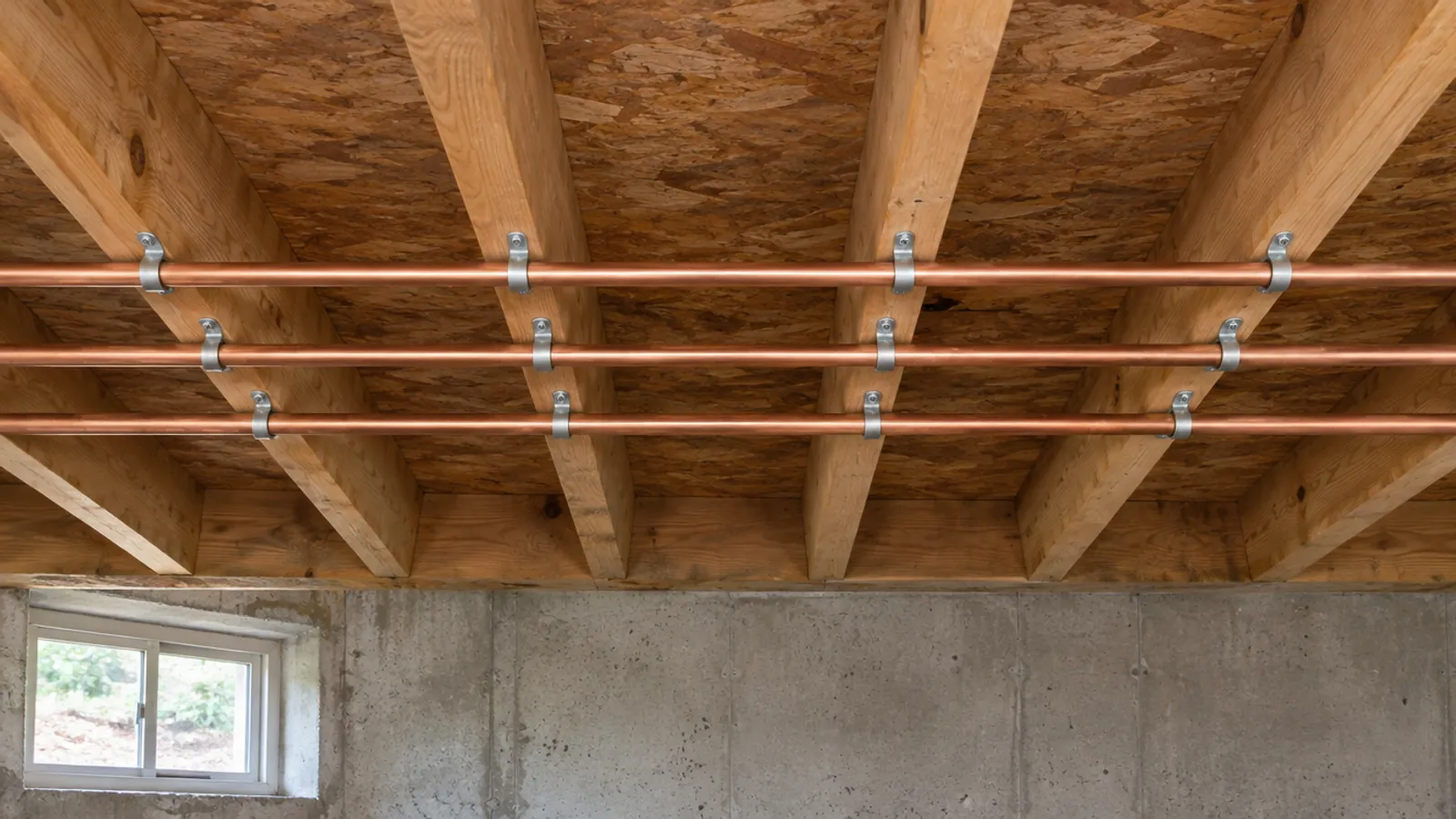
To fix water hammer, find the valve that triggers the bang, then work through four fixes: secure loose pipes, drain the plumbing system to recharge its air chambers, install water hammer arrestors at fast-acting valves, and check the home's water pressure with a gauge. Start with the pipes and valves you can see.
When the pipe or the arrestor sits inside a finished wall, you reach it through an opening, and an access panel keeps that spot reachable if the bang comes back.
What is water hammer in pipes?
Water moving through a pipe carries a lot of momentum. When a valve stops that water flow in an instant, the moving water slams to a sudden stop and a pressure spike, a shock wave, travels back through the piping system. That hydraulic shock pushes on the pipe walls and shakes the pipes, and the loud banging you hear is what is called water hammer.
Water hammer occurs most often when a valve closes quickly, or with other sudden changes in flow, such as a pump stopping. The faster the valve shuts, and the higher the pressure behind it, the harder the hammer sound.
What causes banging pipes when the water turns off?
The most common causes are a fast-closing valve, loose pipes and high water pressure, plus, in older homes, a lost air cushion. Often two of them work together.
Fast-acting valves
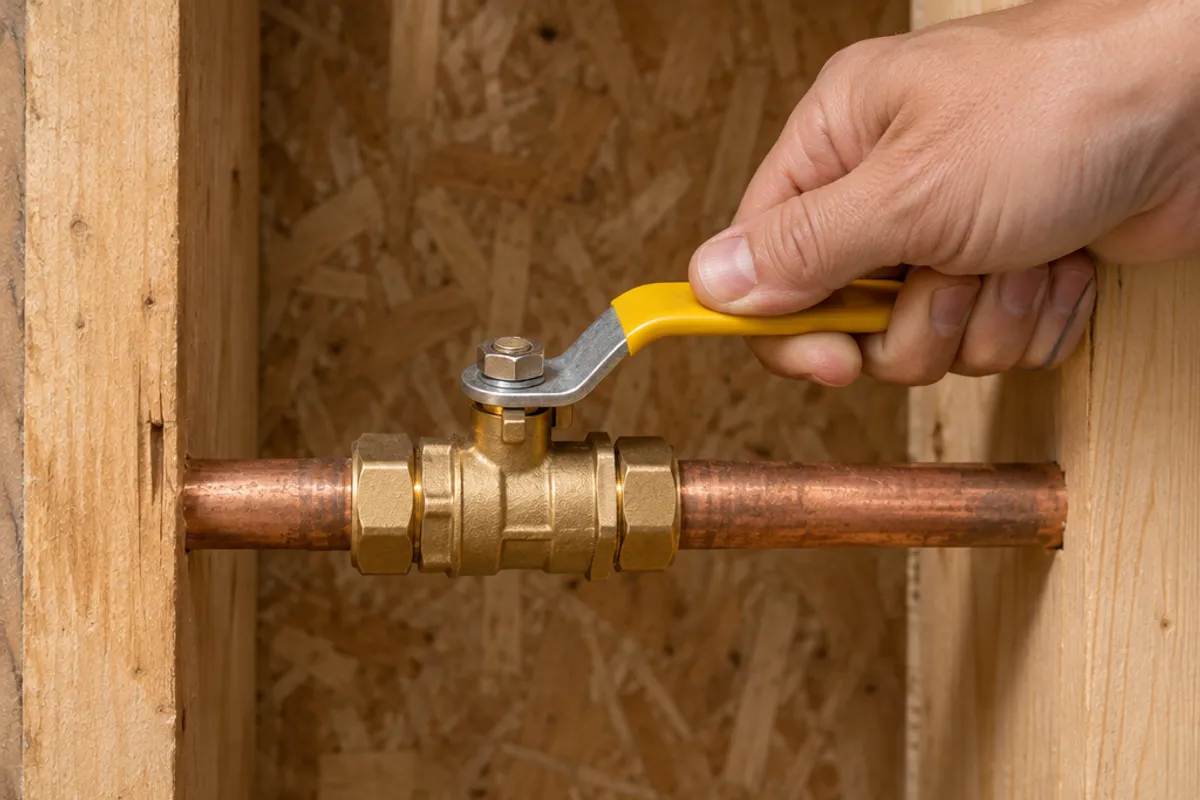
The solenoid valves that open and close the water supply in a washing machine, a dishwasher and a fridge ice maker snap shut on their own. So do quarter-turn ball valves closed with a flick, many single-lever faucets and some toilet fill valves. Each one stops the water flow almost at once.
Loose pipes
Noisy pipes that rattle while the water runs are usually loose. A pipe with too few pipe straps moves when the pressure surges, and it knocks against joists and studs. The valve starts the shock; the loose pipe turns it into noise.
High water pressure
High water pressure makes every sudden pressure change stronger, and it puts more strain on faucet and appliance valves.
Waterlogged air chambers
Many older homes have traditional air chambers: a short, capped vertical pipe above each faucet or appliance connection, hidden in the wall. The trapped air in it acts as a cushion. Over time the water absorbs that air, the chamber fills, and the loud banging noises return.
| What you hear | Likely cause | Fix | Wall opening needed? |
|---|---|---|---|
| One bang right after a washer, dishwasher or faucet shuts off | A valve that shuts fast | An arrestor near that valve | Only if the valve is fed inside the wall |
| Bangs at several fixtures that got worse over time | Waterlogged chambers (older homes) | Empty the pipes and refill them | No |
| Bangs everywhere, with hard spray at the faucets | High water pressure | Test it; a plumber adjusts or fits a pressure regulator | No |
| Rattling or knocking while the water runs | Loose pipes | Pipe straps or cushioned clamps | Only if the loose run is behind drywall |
| Ticking as the hot water runs | Hot pipes expanding against framing | Cushioned straps and more room at the holes | Only behind drywall |
How to fix water hammer: where do you start?
First find the trigger. Run each faucet, flush each toilet and start the washing machine and dishwasher one at a time, and note which one makes the noise. Then work from the easy fix on visible pipes to the bigger plumbing jobs.
Secure loose pipes
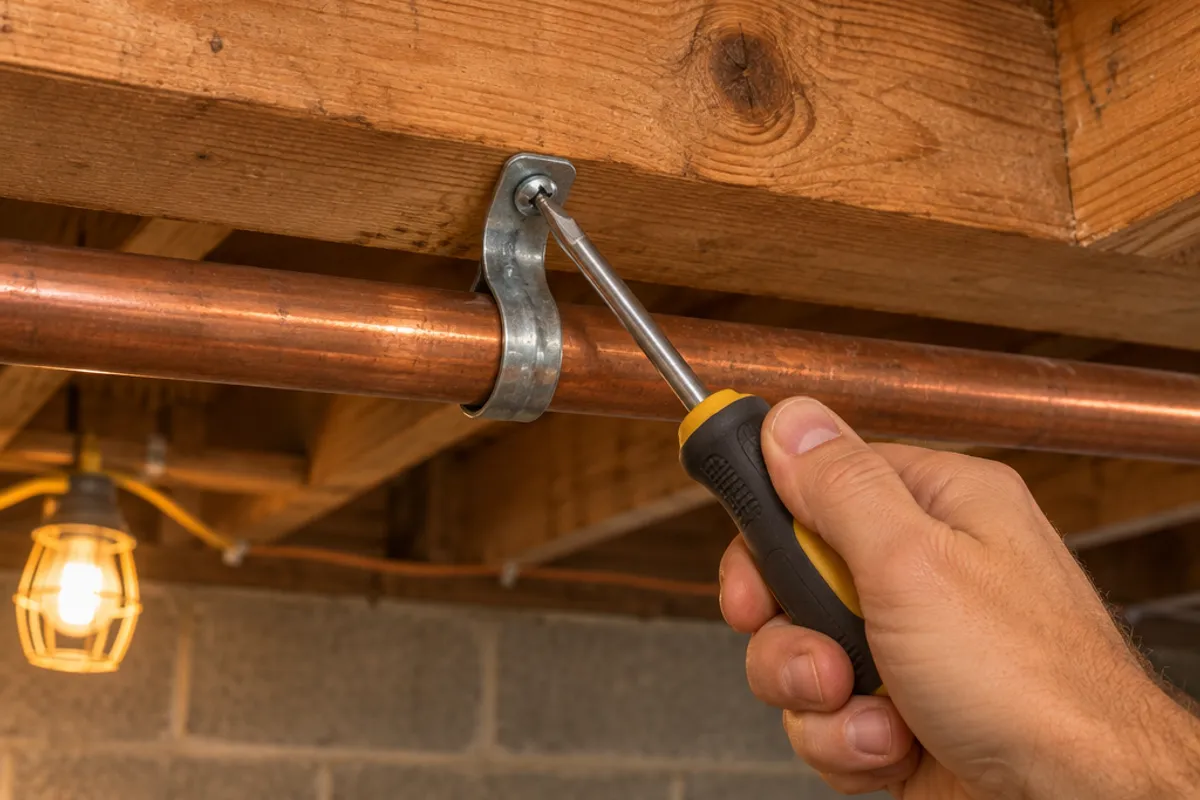
Follow the visible water lines in the basement, crawl space and under sinks while someone runs the problem fixture. Where a pipe moves, add pipe straps or cushioned clamps along it, and fit a cushion where it rubs on wood. Use straps made for that pipe material. Strapping alone doesn't prevent water hammer, but it stops the pipe from turning the shock into noise. To secure loose pipes inside a finished wall, you need an opening at that spot.
Drain the plumbing system to recharge air chambers
If your home has these chambers, emptying the plumbing system lets air back in:
- Close the main shut off valve where the water supply enters the house.
- Open the highest faucet in the house, then the lowest one, such as an outdoor faucet or a laundry tub.
- Let the water run out until it stops. If it never stops, the main valve isn't holding; see a shut-off valve leaking when closed.
- Close the faucets, then open the main valve slowly.
- Run each faucet until the water flow is steady, to push out entrapped air.
This only helps where the chambers exist. If the bang comes back within days, fit arrestors instead.
Installing water hammer arrestors
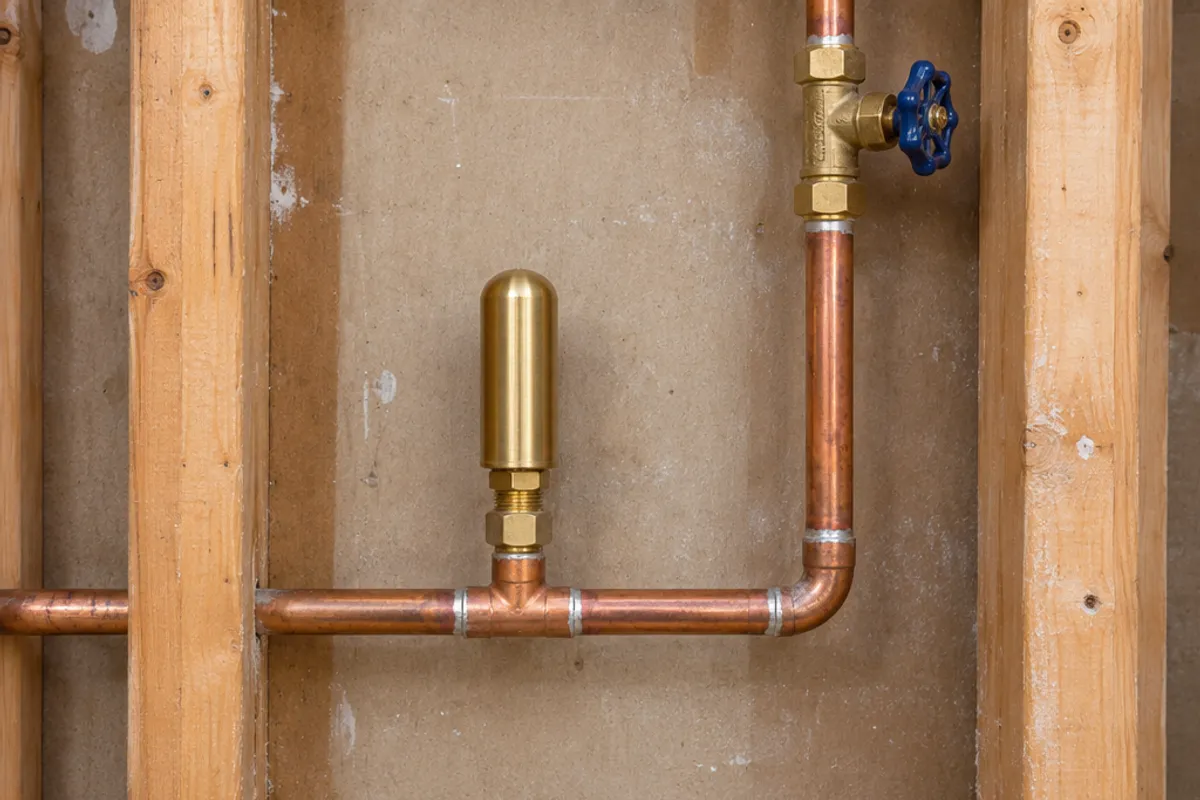
A water hammer arrestor does the job of an air chamber with a sealed cushion: an internal piston, or a bellows, keeps the air or gas away from the water, so it does not waterlog. Install water hammer arrestors on every line that feeds the valve that bangs: both the hot water and cold water lines at a washer or faucet, the single line at a toilet or ice maker.
- Washing machine. Its solenoid valves close hard, so screw-on arrestors install between each valve and its hose.
- Sinks and toilets. Some arrestors install at the stop valves, under the sink or behind the toilet.
- Valves fed inside a wall. An arrestor is installed on a tee in the supply line, which means opening the wall and usually soldering or crimping.
Choose the size and type the maker lists for the fixture and the pipe, and follow the maker's instructions. Installing water hammer arrestors at the right valve is the most lasting way to prevent water hammer from valves that shut fast.
Check the home's water pressure
Thread a water pressure gauge onto an outdoor faucet or the washing machine valve, turn it on with nothing else running, and read it in pounds per square inch (psi). Compare the reading with the range on your fixture and appliance instructions, and ask your water utility or a plumber what is normal where you live. If it is high, a plumber can adjust or replace the pressure regulator (pressure-reducing valve) on the water supply near the main shut-off, or fit one.
Cutting a tee into a supply line, soldering, and fitting a pressure regulator are jobs for a licensed plumber where your area requires one. Shut off the water supply first.
Where should a water hammer arrestor go?
As close to the valve that bangs as the maker's instructions say, on each water supply line that feeds it. One arrestor near the far end of a long run can't absorb a shock wave at a valve two rooms away. If several fixtures bang, treat each valve as its own water hammer problem.
Why do pipes still make a banging sound after a fix?
Banging noises after a fix usually mean a second cause is still there: another quick-closing valve, a loose run you haven't found, or high pressure. An arrestor that is too far from the valve, or one that has failed, also lets the bang return. A few sounds are not water hammer at all.
Entrapped air after the water was off
After a repair or a shut-off, air pockets make faucets sputter and pipes knock. Run each faucet, top floor down, until the flow is steady.
Ticking as the hot water runs
Hot water lines grow a little as they heat and rub on framing and straps, so they tick or creak. That noise is not water hammer; cushioned straps and roomier holes stop it.
Check valves, pumps and air relief valves on a well
On a private well, a thud as the pump stops can come from a check valve closing hard. Long lines that rise and fall may also need air relief valves at the high points. A well or pump contractor checks both.
Is water hammer bad for your pipes?
Yes, over time. Ignoring water hammer means each hydraulic shock caused by a valve strains fittings, solder joints, valves and supply hoses across the plumbing system, and a joint that starts to weep inside a wall can cause property damage before anyone sees it. Fixing the cause early helps prevent damage. Read about the signs of a water leak behind a wall.
How do you reach an arrestor or loose pipe inside a finished wall?
Screw-on arrestors at a washing machine or under a sink need no wall opening. An arrestor on a tee inside the wall, an old air chamber, or a loose pipe behind drywall does. Cut the opening between the studs at that spot, make the repair, then install an access panel instead of a patch, so you can look again if the noise comes back.
Make the hole big enough for the fitting, a wrench and your hand, then pick the closure that fits it:
| Repair inside the wall | Closure | Size from our catalog |
|---|---|---|
| One arrestor on a tee, or one strap | SAP0808 spring-loaded panel | Openings 6 × 6 in to 8 × 8 in; 10 × 10 in cover |
| Hot and cold lines, an arrestor on each | SAP1414 spring-loaded panel | Openings 10 × 10 in to 14 × 14 in; 16 × 16 in cover |
| A laundry wall you will open again | PAD1212 hinged access door | Service opening and cut-out 10.35 × 10.35 in (estimated), rounded corners |
For the door, print the 1:1 cut-out template from its product page to mark the drywall; the screws are included. Neither panel nor door is fire-rated or water-resistance-rated. See plumbing access panels, how a spring-loaded panel compares with a hinged access door, and how to install an access panel in drywall.
Measure before you order: our guide on how to measure for an access panel shows how, and the access panel size chart compares every opening and cover.