
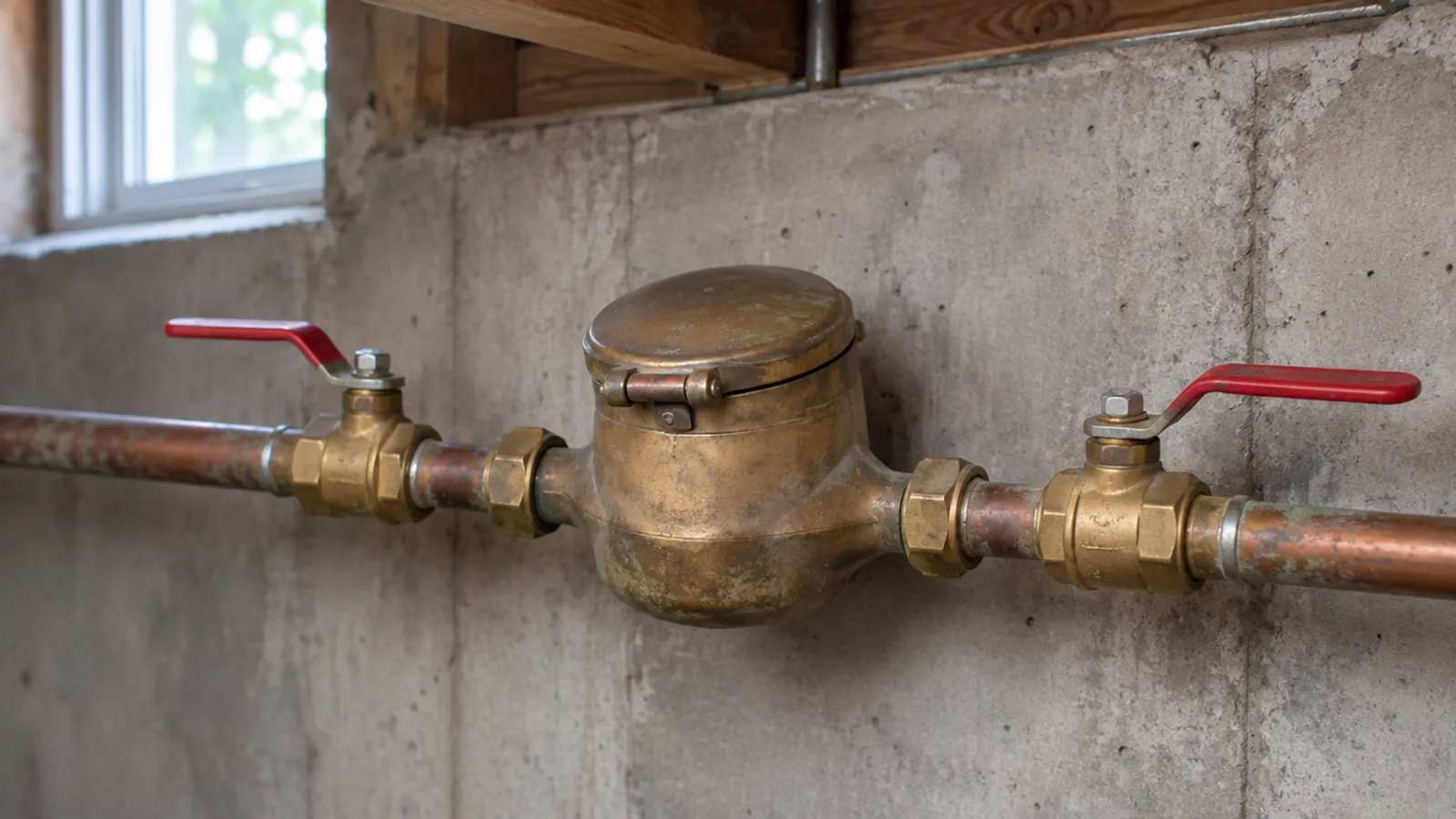
Most residential water meters last about 15 to 20 years. That is the typical life Calgary gives for its water meters, and Thornton, Colorado, says its residential meters last approximately 17 years on average. As mechanical water meters age, they tend to run slow, so your water utility replaces them on its own schedule.
You don't need to track it yourself. Replacing the water meter is the utility's job, and utilities such as Calgary and Madison, Wisconsin, send a letter or postcard when yours is due.
How long do water meters last?
About 15 to 20 years for most home meters, but each utility determines its own figure, and they don't all agree. Four examples (every utility page in this guide was read 2026-11-18):
| Utility | What it says about water meter life |
|---|---|
| City of Thornton, Colorado | A residential water meter lasts about 17 years on average; its FAQ gives a lifespan of 15 to 20 years |
| City of Calgary, Alberta | A typical life of 15 to 20 years; a multi-year program to replace residential and business water meters began in fall 2025 |
| City of Framingham, Massachusetts | A useful life of 12 to 15 years, after which accuracy may diminish |
| San Bernardino County, California | Its new ultrasonic water meters show an end-of-battery alarm after 19 years and 6 months |
A water meter that is still turning can still be wrong. Pittsburgh Water lists excessive wear, corrosion and debris clogging the meter strainer as things that affect accuracy, and says they mostly make a meter under-register: it records less water than you actually use. Calgary replaces water meters as they near the end of their life, to ensure accurate readings and billing, rather than waiting for them to stop.
How does a water meter work?
A water meter measures the volume of water that flows through it into your house: all your water use, indoors and outdoors, as Thornton notes. Some utilities, Framingham among them, also install a separate meter for irrigation. It only registers when water is moving, as Calgary puts it: a tap turned on, a toilet flushed. The total shows on the register on top, and most water meters now have a small radio transmitter that sends meter readings to the utility.
Mechanical meters
Calgary describes its water meter as a mechanical device, connected to the main shut-off valve and with no electric components inside. In Pittsburgh's water meters, water enters a measuring chamber and its motion turns a disc, called a nutating disc; the meter counts the disc's rotations to register your usage. The utility compares it to a measuring cup: each chamberful is filled, counted and passed on. That is why wear makes a meter miss water rather than invent it.
Ultrasonic (electronic) meters
Newer water meters can be fully electronic. San Bernardino County is replacing mechanical meters with ultrasonic ones that use solid-state electronics in a sealed housing. They have no moving parts, keep their accuracy over the long term, and avoid measurement errors from sand, air pockets and pressure fluctuations. A screen shows the reading, the flow rate and alarm symbols.
A water meter only counts water. It doesn't set your water pressure; if water pressure runs high or swings, look at the pressure reducing valve instead.
What are the signs of a bad water meter?
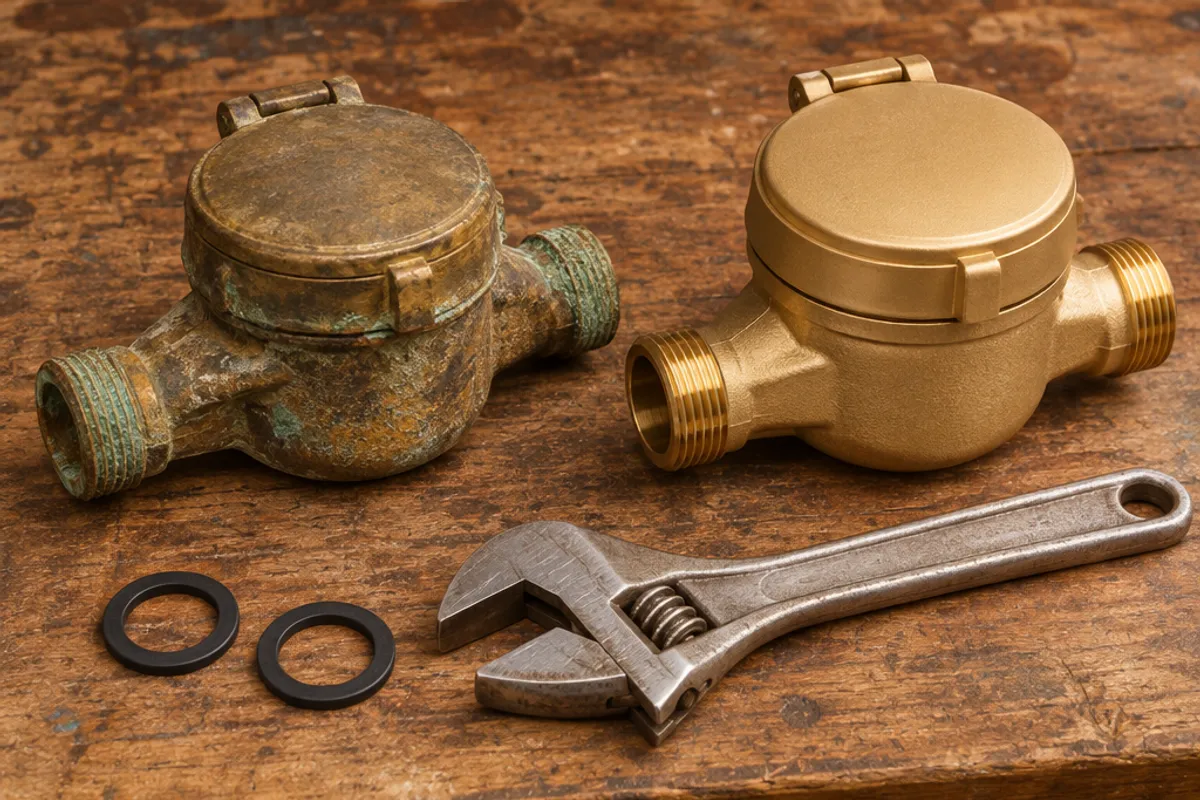
Because a worn water meter usually reads low, the signs are often quiet: you spot them by a visual inspection of the meter and a look at your bills. Watch for these, and report any problem to your water utility or water company instead of opening the meter:
| What you notice | What it can mean |
|---|---|
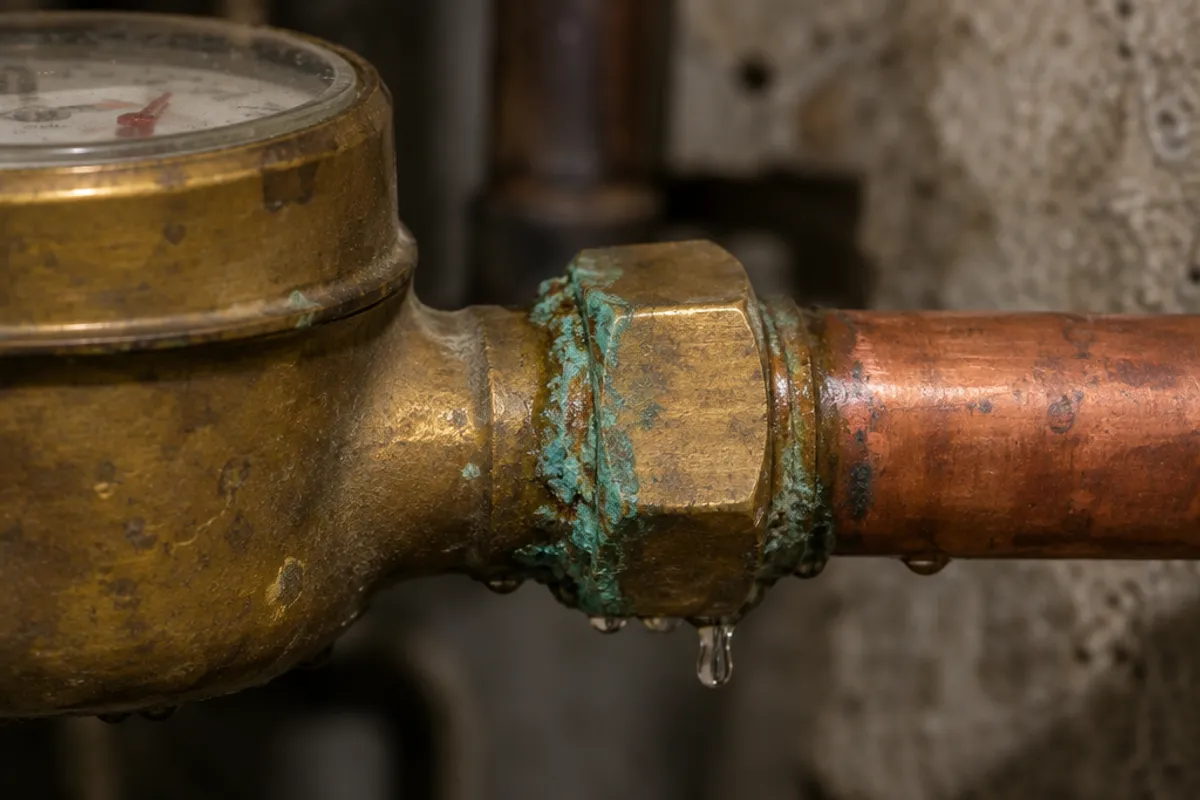
| Water dripping from the meter body or its couplings | The water meter itself is leaking. Calgary asks customers to report a leaking or malfunctioning meter or radio. |
| A tap is running, but the register doesn't move | The meter may have stopped registering; report the problem. |
| A water bill lower than usual, billing cycle after billing cycle, with no change in your water use | An older mechanical meter running slow. Thornton says these may register lower than actual flows. |
| An alarm symbol on a digital display | San Bernardino County's meters flag a suspected leak, reverse flow and the end of battery life on screen. |
| A cracked or frozen meter after a cold snap | Frost damage. Pittsburgh Water makes the customer responsible for protecting the meter from frost. |
A sudden jump in your water bill is more likely a leak than a bad water meter. Pittsburgh Water calls over-registering very rare, and Framingham notes that toilets can leak without your knowledge. To determine which it is, run the meter leak test with every fixture off before you call about the water meter. If you still doubt a reading, ask for a test: San Bernardino County has property owners fill out a meter calibration request form.
How often are water meters replaced, and who does it?
Usually when they near the end of their life: 15 to 20 years in Calgary and Thornton. Where the utility owns the meter, the utility replaces it. Pittsburgh Water owns, maintains and operates every meter it installs, and Calgary's water meter replacement program swaps its meters at no charge once they reach the end of their lifecycle. Replacement schedules come in three shapes:
- By age. Thornton replaces water meters regularly as they age, so they stay within their useful life.
- By testing. Madison Water Utility says Wisconsin's Public Service Commission requires water meters to be tested on a regular schedule, and it sends customers a postcard when theirs is due for a routine change.
- All at once. Big Lake, Minnesota, is replacing every water meter in the city because the old ones reached the end of their useful life and lack leak detection. The replacement is required for all customers.
New water meters often come with new reading technology. Thornton's replacement meters track hourly usage instead of monthly meter readings, which helps the city and its customers spot leaks much sooner. They are tested before they go in, too: Pittsburgh Water says each meter is tested by the manufacturer, and the utility must test a share of every shipment it receives.
What happens when new water meters are installed?
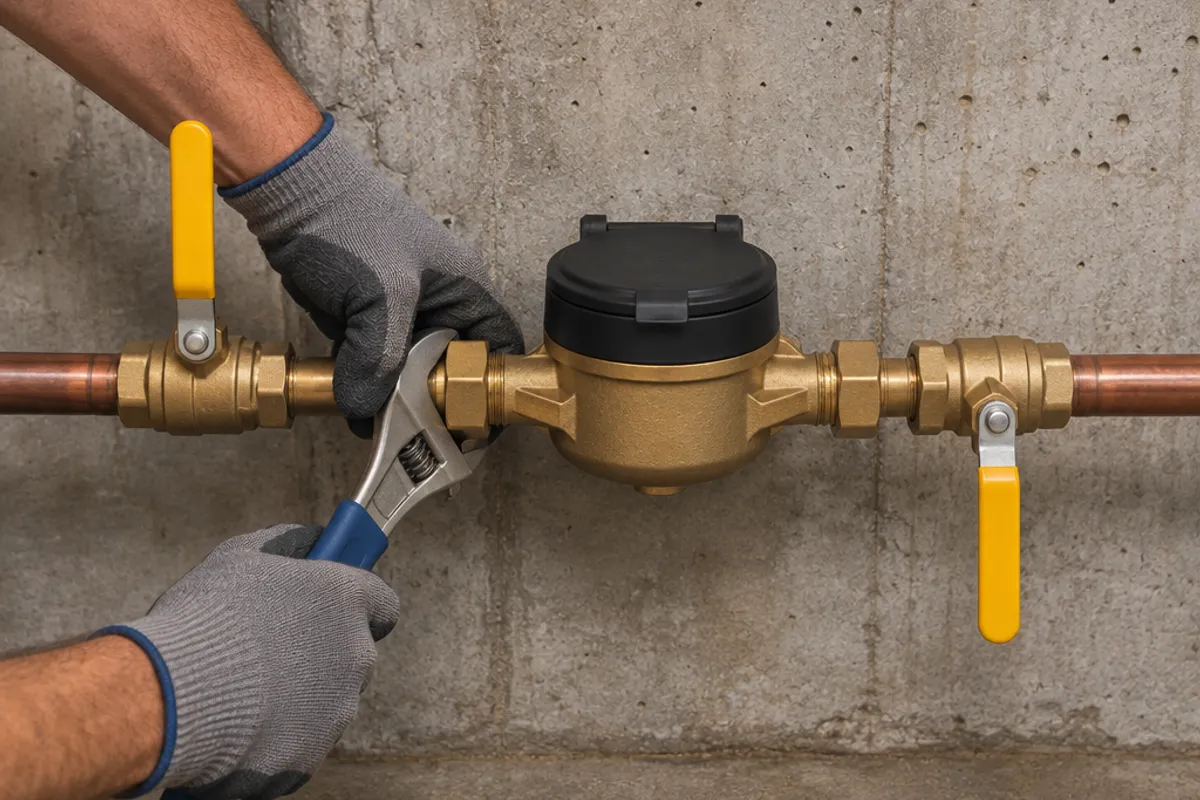
You don't book a new water meter on your own. Wait for the notice, then get the space ready for replacement day. Here is what to expect:
- Book the replacement appointment when the letter or postcard from the water company arrives.
- Clear a path to the water meter and the valves on each side of it.
- Check that your main shut-off turns. Big Lake needs the valves on both sides of the meter fully working; if one leaks or fails during the swap, you repair it.
- Have an adult home. Madison and Big Lake both require someone 18 or older to give access.
- Expect a short outage. In Madison the process takes up to an hour, with the water off for up to 15 minutes.
- Afterward, run several faucets to let air out of the lines, as Thornton advises.
Don't be surprised if the first water bill on the new meter is higher. Pittsburgh Water says replacing an old, worn meter with a more accurate one can raise the usage on your bill.
If a valve next to the meter needs replacing before the utility comes, Big Lake requires that work to be done by a licensed plumber, and a permit may be needed. Elsewhere, use a licensed plumber where your area requires one, and never cut or unthread anything on the utility's meter.
How do you keep an indoor meter ready for the exchange?
An indoor water meter in a finished basement needs room around it: the crew has to work on it, not just read it. Big Lake asks for an unobstructed path to the meter and the valves next to it, and room to operate both valves and to remove and replace the meter. If the crew can't reach it, the visit is rescheduled.
Calgary makes opening up a water meter hidden behind drywall your responsibility and cost; its installer can cut the drywall and leave a plastic insert. It is easier to plan the opening before the drywall goes up:
- For reading the register, the valve handles and a leak check, our largest openings work where the meter set fits behind them: PAD1216 hinged door: maximum service opening 10.35 × 14.35 in (estimated), overall 12 × 16 in or SAP1414 spring-loaded panel: fits 10 × 10 to 14 × 14 in openings, overall 16 × 16 in.
- For the exchange itself, the crew has to work both valves and lift the meter out, which may need more room than those openings. Plan a framed, removable cover or a closet door there, and ask your water utility what it wants; some set a size, as the dual check valve guide explains.
Our plastic access panels and doors are not fire-rated, and we publish no water-resistance rating for them, so don't fit one in a fire separation, such as the wall between a house and an attached garage.
See panels for plumbing on the plumbing panels page, or hinged doors on the doors page. To find the meter, see where the water meter is; for the main valve beside it, see where the water shut-off valve is.
Measure before you order: our guide on how to measure for an access panel shows how, and the access panel size chart compares every opening and cover.