
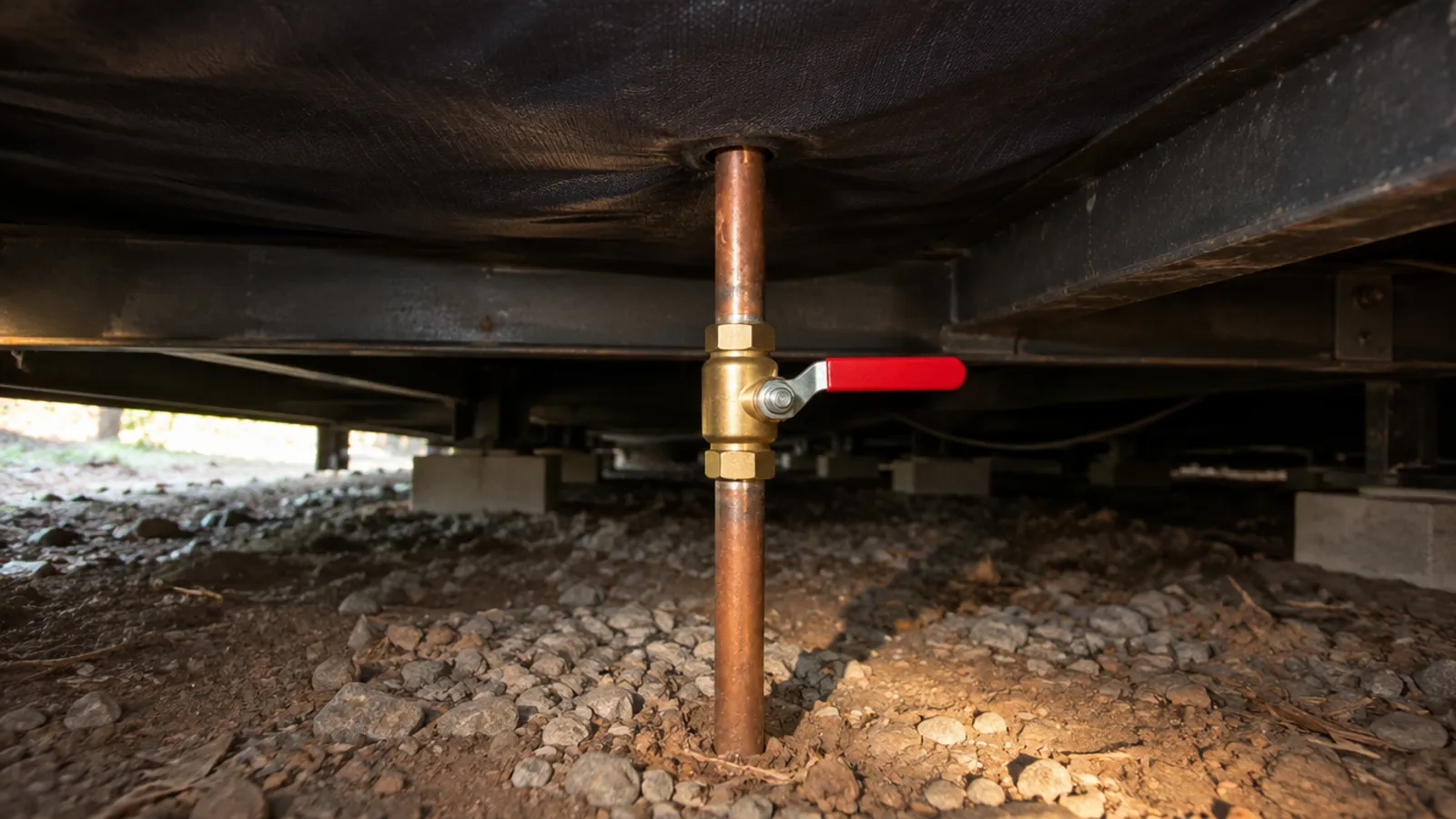
In a mobile home, the main water shut-off valve is typically on the water riser: the supply pipe that comes up out of the ground under the home, next to where it connects to the home's water inlet. That inlet is usually below the water heater compartment or the utility room, so start your search there.
Some homes may also have a master valve fitted at the factory. Here is how to locate each one, understand what it controls, close it, keep it from freezing and keep it reachable.
Where is the water shut off valve on a mobile home?
The federal model installation standards for manufactured homes call for an identified, accessible shutoff valve between the water supply and the inlet. Its riser must be underneath or adjacent to the home, and the valve must be a full-flow gate or ball valve, or an equivalent. That makes the riser the usual mobile home water shut off valve location, and the first place to go in an emergency.
One maker's site construction manual says the water inlet is typically under the water heater compartment or the utility room. It also asks installers for a skirting opening at least 18 in wide and 24 in high, placed so the utility connections under the home stay accessible.
- Under the home. Go in through that opening with a flashlight, below the water heater or utility room. Look for a pipe coming out of the ground and up to the inlet in the floor; in cold areas it should be wrapped in insulation. You may also see a pressure-reducing valve: the federal installation standard requires one where the supply pressure exceeds 80 psi. That valve isn't the shut-off.
- Beside the home. If the riser isn't underneath, simply check outside along that end.
- At the water meter. If your lot has a water meter, the supplier may have its own valve at the meter or the curb. Ask the supplier, or the community office if you rent your lot, before you turn it.
| Where | What you'll find | What it shuts off |
|---|---|---|
| Riser under or beside the home | The main shut-off, a gate or ball valve | All the water to the home |
| Main cold line, if fitted at the factory | A master shutoff valve | All the water to the home |
| Cold line into the water heater | The heater's supply valve | The water heater only |
| Under sinks and behind the toilet | Fixture stops | One fixture |
| Water meter or curb box | The supplier's valve | Ask the supplier first |
How do you find the main water line in a mobile home?
The main water line runs from the riser to the inlet, then branches out under the floor. The federal construction standard says that inlet is a threaded connection tagged or marked "Fresh Water Connection" (or "Fresh Water Fill"), so locate the tag where the pipe meets the floor.
Expect insulation on the main water riser, and sometimes heat tape under it. The site construction manual has installers plug heat tape into the outlet under the home near the water supply inlet, so a cord running along the riser toward that outlet helps you locate the main line. In a multi-section home, a crossover joins the water lines of each section, connected through access panels in the floor or below the bottom board.
Is there a main water shutoff valve inside a manufactured home?
There may be. The construction standard lets the manufacturer fit a master cold-water shutoff valve on the main feeder line in an accessible location. If it doesn't, the installation instructions must call for one on the supply line next to the home. Your owner's or installation manual says which yours has.
Inside, start where the cold line comes up through the floor, typically in the water heater compartment or the utility room, and follow it before it branches. The valve on the water heater's cold supply stops only the heater. Some water heater compartments are reached only from outside: another maker's homeowner guide says to re-seal that exterior panel after it's removed, to keep rain out.
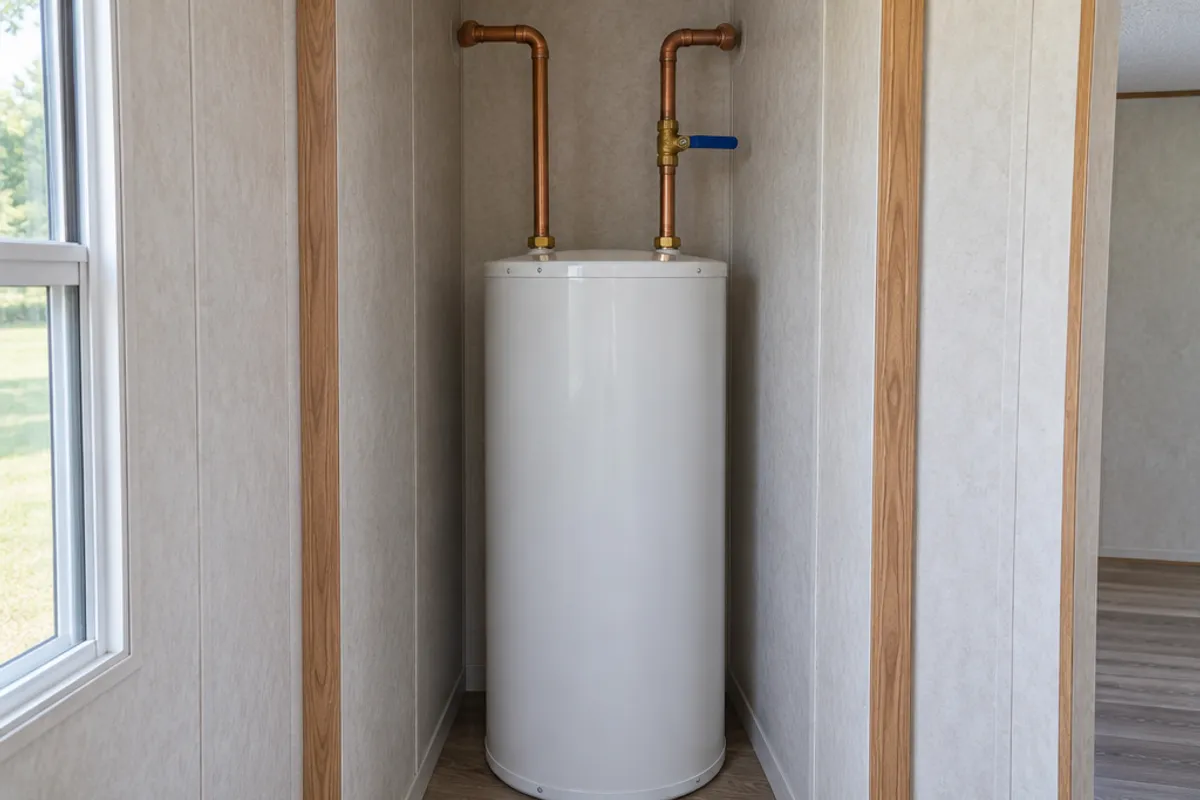
You'll also find access panels inside. The HUD standard for plumbing fixtures requires adequately sized, unobstructed access panels wherever slip-joint drain connections are closed in. It exempts diverter valves and other fixture-hardware connections, so a panel behind a tub may show the drain but not the faucet valve. That homeowner guide also says to check the plumbing connections once the water is on, "including removing and checking all access panels." That's the time to catch a leaking fitting.
How do you turn off all the water in a mobile home?
- Go to the riser, or to the factory main valve if your home has one. Under the home, take a flashlight and gloves, and check around the base of the riser before you reach in.
- Check the valve type. On a ball valve, a lever parallel to the pipe means open: turn the lever handle a quarter turn so it crosses the pipe. On a gate valve, turn the round handle clockwise by hand until it stops; no tools are needed.
- Open a faucet inside and check that the water stops once the line drains.
- To turn the water back on, open the valve slowly, then run each faucet until the air is out.
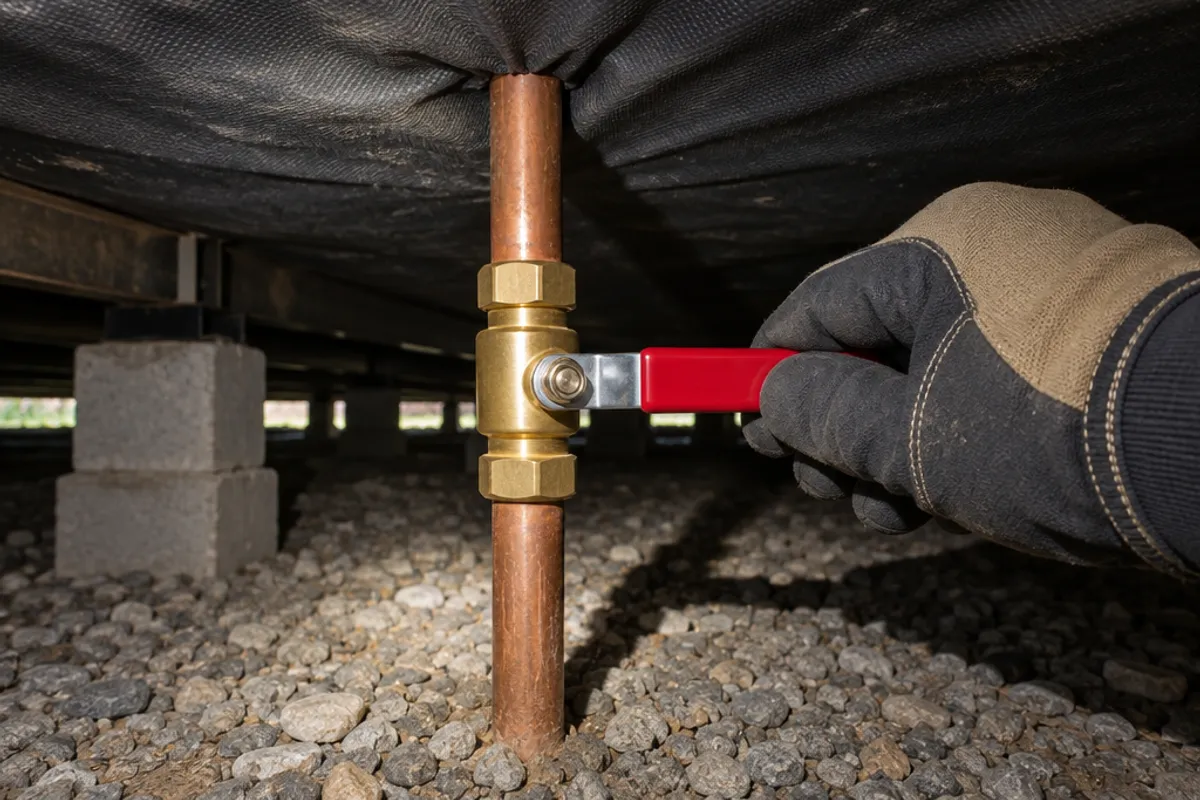
In an emergency, the important step is to close this valve first, then deal with the leak.
If the handle won't turn by hand, don't put a long wrench on it: an old gate valve can break or start leaking at the stem. Replacing the riser valve means cutting into the supply line, so hire a licensed plumber where your area requires one. Any new wiring, such as an outlet for heat tape, is work for a licensed electrician.
How do you keep the riser and shut off valve from freezing?
Where it freezes, the installation standard says exposed supply pipes, shut-off valves, pressure reducers and the pipes in water heater compartments must be insulated or otherwise protected. Any heat tape or pipe heating cable must be listed for that use and installed by its maker's instructions.
- Use heat tape only as its maker says. The site construction manual plugs it into the outlet near the water inlet, keeps it off the drain line and keeps that outlet for heat tape alone.
- Close the skirting. Put the access cover back in place every time you use it, so cold air stays off the riser.
- Get ready before the cold. NC State Extension says to know where and how to shut off your main valve, disconnect garden hoses, let a faucet on an exterior wall drip, and open sink cabinet doors. The homeowner guide adds insulated covers on outdoor hose spigots.
- Leaving for the winter? The guide says to close the main supply valve and drain the hot and cold lines before a long absence in cold weather. See this winterizing checklist.
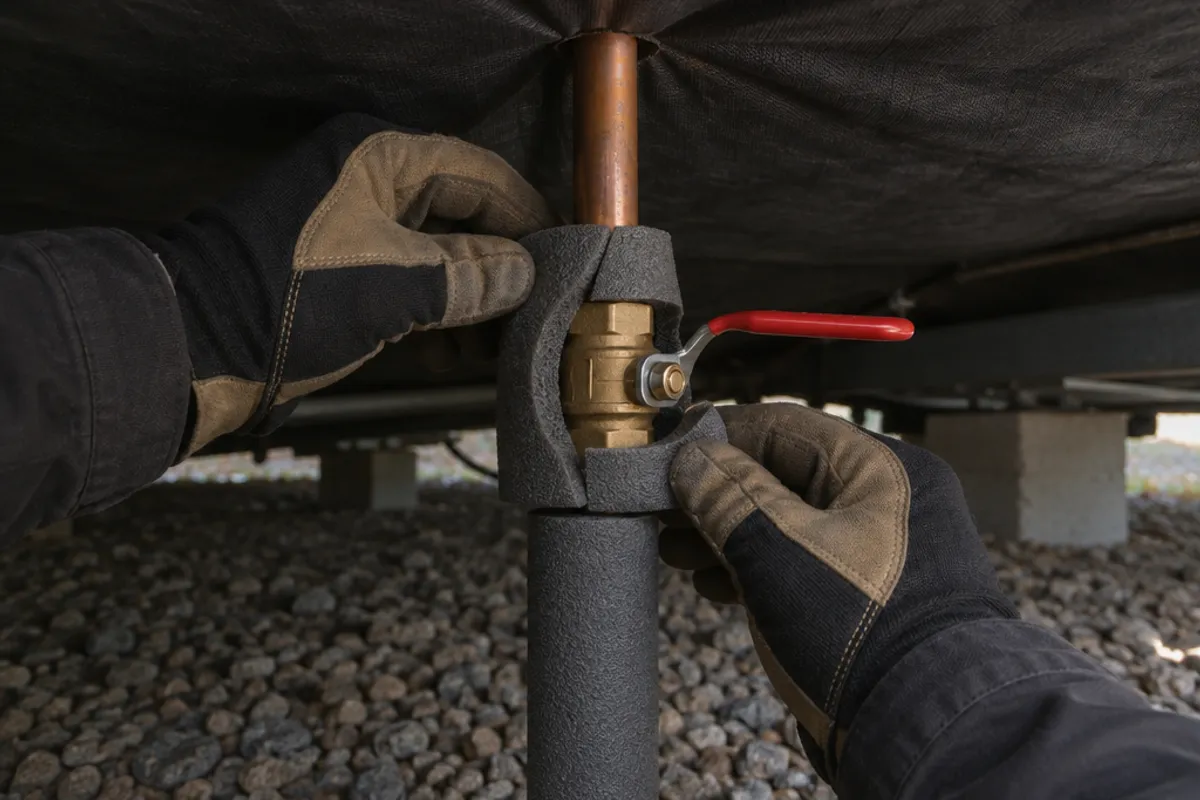
If a pipe does freeze, NC State Extension says to shut off the water and call a plumber to thaw it. For a frozen line indoors, see how to thaw frozen pipes in a wall.
How do you keep an indoor valve reachable?
A remodel can bury a valve or slip joint you used to reach, for example behind a new tub surround, a paneled utility closet or a replaced wall panel. Mark each valve and joint before you cover it, and leave an access sized to it:
- A single valve: PAD0808 hinged door: maximum service opening 6.35 × 6.35 in, overall 8 × 8 in or SAP0808 spring-loaded panel: fits 6 × 6 to 8 × 8 in openings, overall 10 × 10 in.
- A valve with its fittings, or a missing panel behind a tub drain: SAP1414 spring-loaded panel: fits 10 × 10 to 14 × 14 in openings, overall 16 × 16 in or PAD1212 hinged door: maximum service opening 10.35 × 10.35 in (estimated), overall 12 × 12 in.
Measure the valve and its fittings, or the old panel, and leave the room needed for a hand and a wrench. Each hinged door's product page has a 1:1 cut-out template. Fit the panel on the dry side of an interior wall, never inside a shower or a tub's splash area, and not in the skirting or the water heater compartment's outside door. The riser valve is reached through the skirting opening, which is larger than any of ours.
Our plastic access panels and doors are not fire-rated, and we publish no water-resistance rating for them, so don't fit one in a fire separation, such as the wall between a house and an attached garage.
Rules for older homes differ by state, so ask your installer or a local building inspector; in Canada, ask your provincial inspector.
For a site-built house, see our guide to the main water shut-off valve, or compare sizes on the plumbing access panels page.
Measure before you order: our guide on how to measure for an access panel shows how, and the access panel size chart compares every opening and cover. How to install an access panel in drywall covers fitting it.