
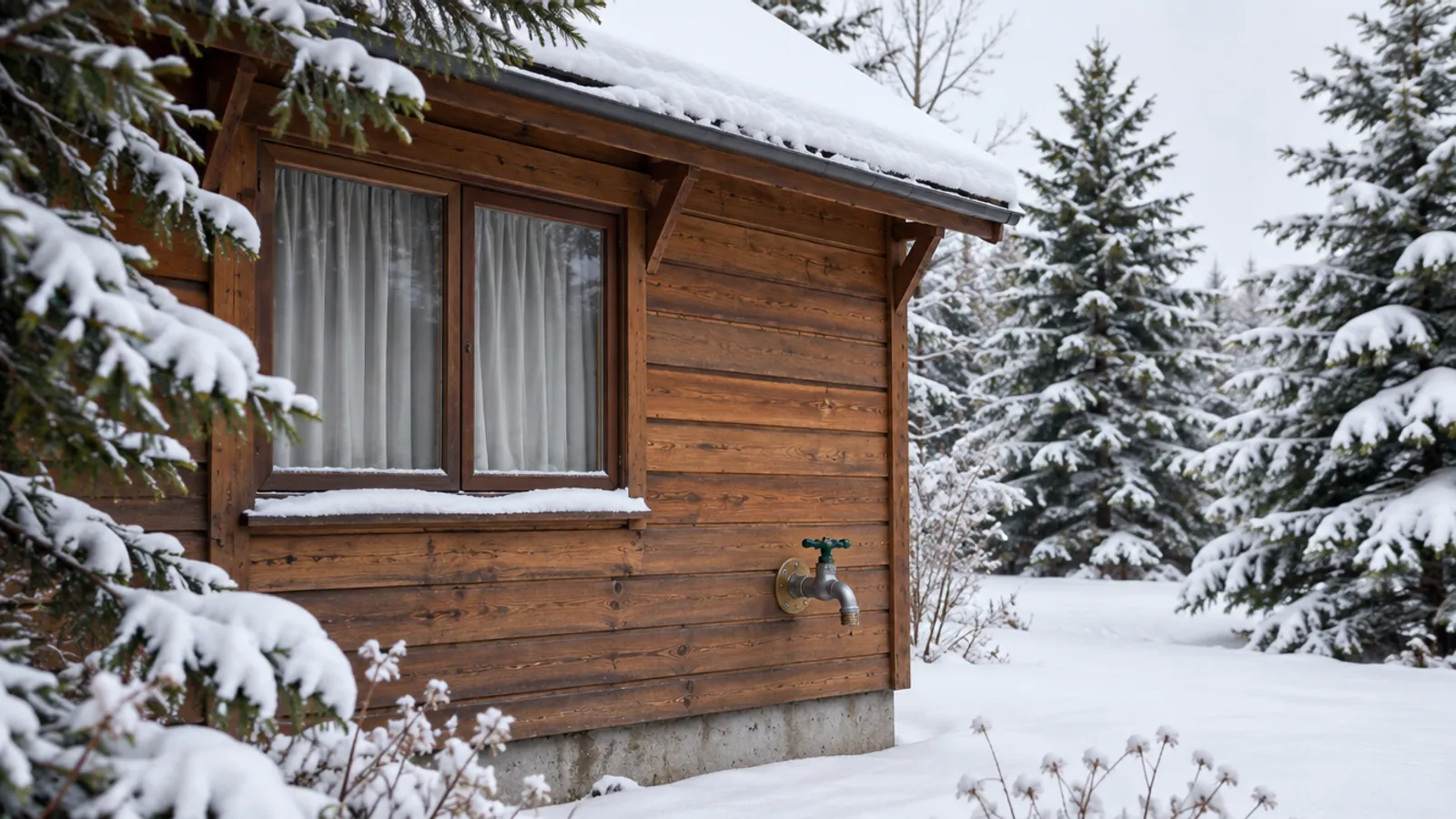
To winterize a vacant house, shut off the main water valve, open every faucet and drain the system from the lowest point, then turn off and drain the water heater following the manufacturer's instructions. Flush toilets and empty them, pour antifreeze made for plumbing into every P-trap, shut off the outdoor faucets, and have someone check the house.
This checklist is for a vacant home, cabin or cottage left empty for an extended period: snowbirds from BC, Alberta and the Maritimes heading south, owners of seasonal cottages, and homeowners in the northern US states. It covers the household plumbing only, so that spring brings fewer nasty surprises.
Should you keep the heating system on in an empty house?
- Heat on, water off. Many owners keep the home heating on and still close the water supply and drain the system. If the furnace fails, little water is left in the pipes to freeze or leak. Rather than the lowest setting, ask a heating professional what setting suits the home. To help prevent frozen pipes, insulate pipes located in exterior walls, a crawl space or other unheated spaces, and open cabinet doors under sinks so warm air reaches them.
- Heat off. If you turn the heat completely off, every pipe, trap and appliance drops to freezing temperatures, so everything on this list applies. Uninsulated pipes in a crawl space or exterior walls are often where water freezes first.
- Hot-water or steam heat. A boiler with radiators or in-floor heat, or an older steam heating system, holds water too. If the heat will be off, have a heating professional winterize that heating system.
- Fire sprinkler system. If there is one, ask its installer or your local fire department before you turn off the water.
- Electrical power. Leave the power on for the furnace, the sump pump and any heat tapes on the pipes (follow their instructions), and unplug unnecessary appliances.
A smart thermostat or an alarm system that sends an alert when the temperature drops can warn you between visits. For insurance coverage, check your insurance policy's vacancy terms before you choose.
How do you shut off the water and drain the system?
- Turn off the water heater first, so it is not heating while the tank empties: the breaker for an electric heater, or the gas control turned off on a gas heater, as its maker's instructions describe.
- If you have a private well, switch off the well pump at its breaker.
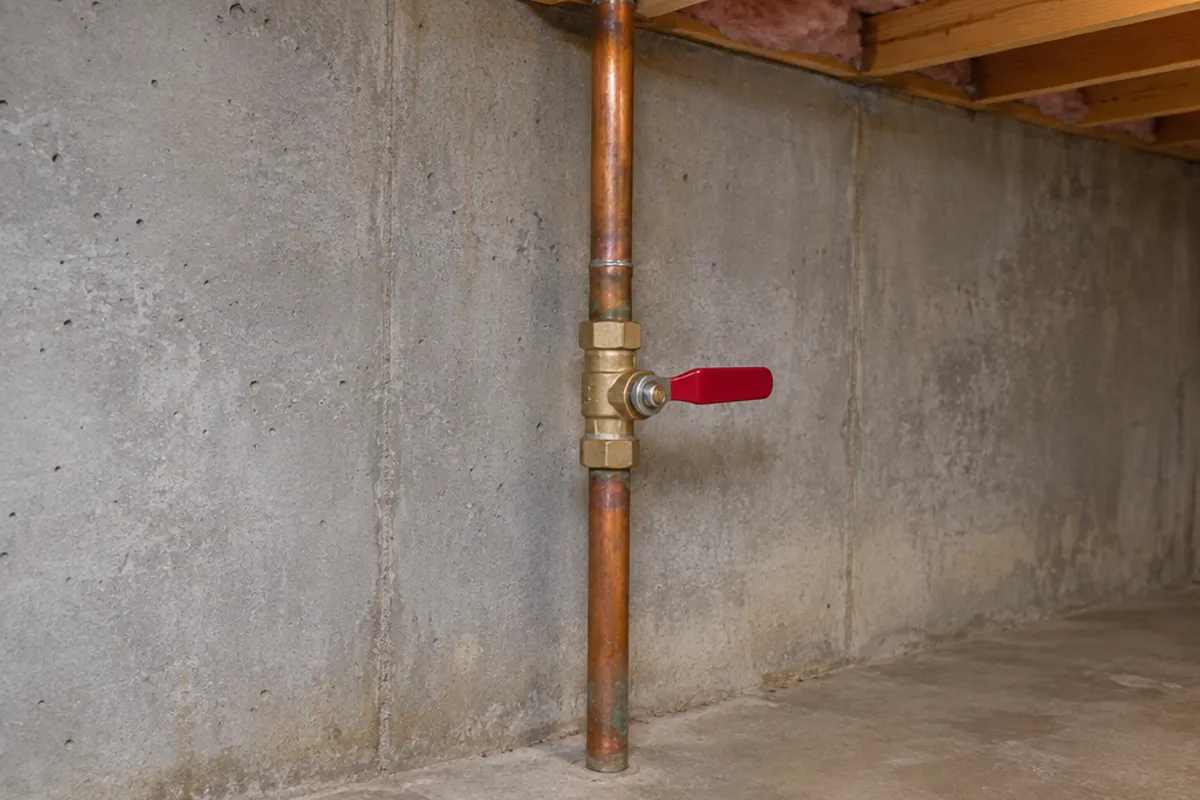
- Turn off the water supply at the main water valve. If you aren't sure where it is or which way it turns, see where the water shut-off valve is.
- Open every faucet, hot and cold, starting on the top floor and working down: sinks, tubs, showers and each outside spigot.
- Drain the system at its lowest point: a drain valve on the main line just past the shutoff, or the lowest faucet in the home. Let all the water run into a bucket or a floor drain until it stops.
- Leave the faucets and that valve open for the winter, so any residual water in the pipes has room to escape.
Sagging water lines can still hold remaining water, and frozen water in a low spot can split a pipe. Many cottage owners have a local plumber blow out the excess water with an air compressor: pushing compressed air through interior plumbing needs someone who knows the water systems involved. If the main valve drips or won't close fully, deal with it before you leave: see our guide to a shut-off valve leaking when closed.
How do you shut down and drain the hot water heater?
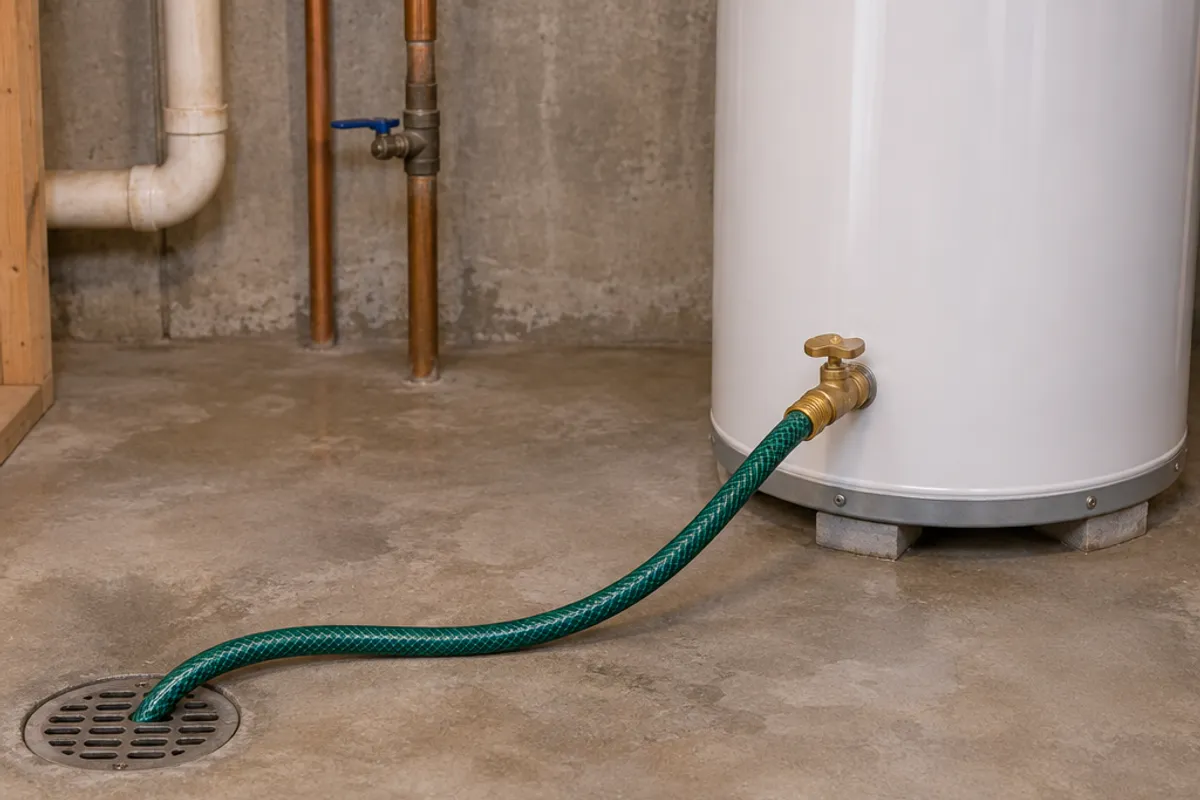
Gas or electric, tank or tankless, each heater has its own procedure, so follow the manufacturer's instructions. For a tank, the outline is usually:
- With the heater off, let the water cool, because water straight from the tank can scald.
- Connect a garden hose to the drain valve near the bottom of the tank and run it to a floor drain or outside, below the level of the valve.
- Check that a hot-water faucet upstairs is open, so air can get into the tank, then open the valve.
- Let it run until the tank is empty, then close the valve and remove the hose.
If sediment blocks the valve, don't force it. In spring, refill the tank completely before you turn the heater back on.
Turning a gas heater's control off, or relighting it in spring, follows the instructions on the heater. For anything beyond that, such as a gas valve that sticks, a smell of gas or a pilot that won't light, call a licensed gas fitter or licensed plumber where your area requires one.
How do you protect toilets, traps and pipes from freezing?
Every sink, tub, shower and floor drain has a P-trap: a bend that holds water on purpose, to keep sewer gas out. Shutting off the water supply does not empty it, and in a cold house the water in a trap or a toilet can freeze and crack it. Antifreeze made for plumbing keeps a seal there that won't freeze.
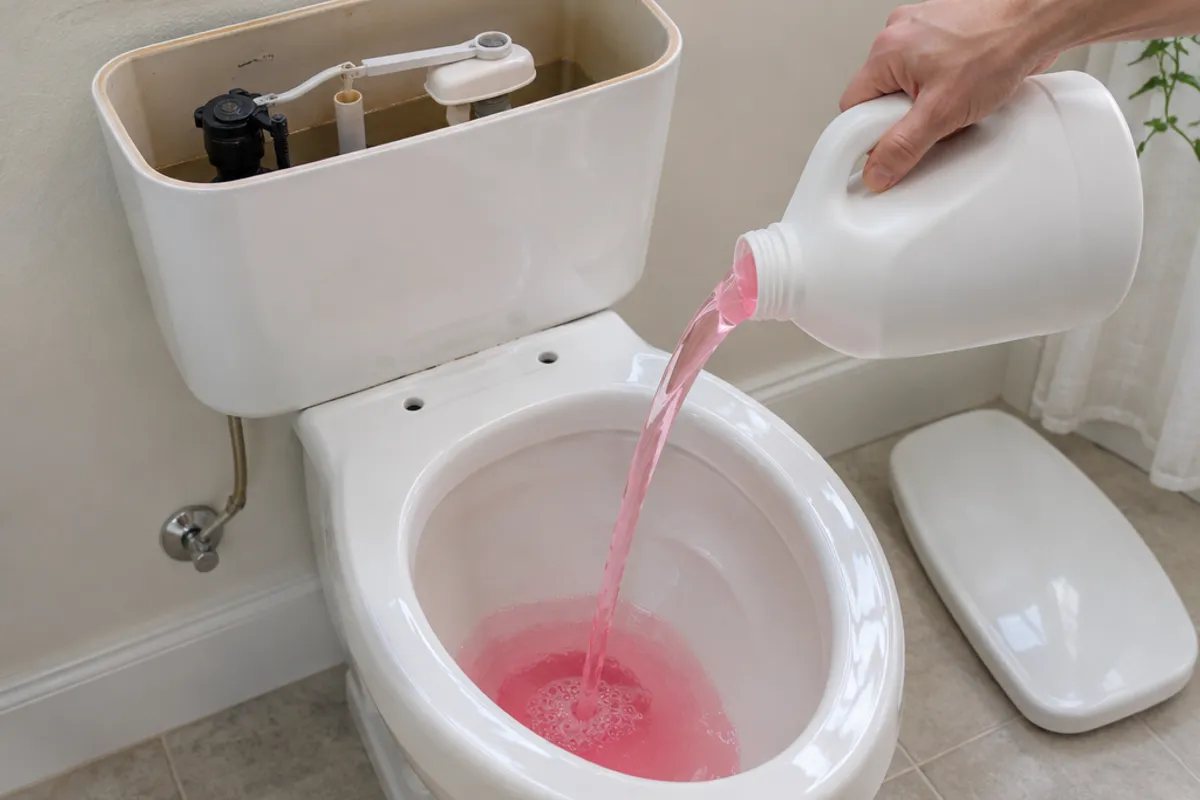
- With the water off, flush toilets to empty each toilet tank, then sponge out the water left in the tank and the toilet bowl.
- Pour antifreeze made for plumbing into each bowl, following the label for how much.
- Pour it into every sink, tub and shower, the P-traps of floor drains and the washing machine standpipe, again following the label.
- Empty the washing machine, dishwasher, fridge water line, water softener and filters as each maker's instructions describe.
Use only antifreeze labeled for plumbing systems, such as the kind sold for RVs and boats, and never the antifreeze made for car engines. If the house is on a septic system, check that the label says the product suits it.
What about outside faucets, sprinklers and the sump pump in cold weather?
- Outside faucets. Take the hoses off, close each outside spigot's indoor shut-off and empty the line. Our guide on how to turn off outside water covers finding that valve and frost-free faucets.
- Lawn sprinklers. An irrigation system has its own shut-off and backflow device. Have it winterized the way its installer recommends.
- Sump pump. If the house has one, leave its power on, so a thaw or snowmelt doesn't flood the basement while you are away.
- Before you lock up. Close the fireplace flue damper, and keep the gutters clear so melting snow runs away from the foundation.
Who should check for frozen pipes while you're away?
A drained home can still suffer freeze damage over the winter from a heating failure or a missed low spot. Arrange for a neighbor, friend or property manager to visit regularly and after every cold snap, storm or power cut. Show them the main shutoff, and leave your plumber's and heating professional's numbers. On each visit they should check the heat, look for water on floors and stains on ceilings, and listen for running water: a burst pipe found within days does far less damage than one found in spring.
Which plumbing system valves should stay reachable?
You will open and close the same valves every fall and every spring in cold weather: the main water valve, the drain valve beside it, and each outside tap's shut-off. In a finished basement, any of them can end up behind drywall or above a finished ceiling. If one is, fit an access door in front of it, so properly winterizing the cottage or home never starts with a saw. Before you close a wall over one, ask the local building department where the house is what access it wants.
Leave room to turn each handle all the way and to get a bucket or a hose under each valve. From our catalog:
- A single valve, such as an outside tap's shut-off. PAD0808 hinged door: maximum service opening 6.35 × 6.35 in, overall 8 × 8 in.
- The main with its drain valve beside it. PAD1212 hinged door: maximum service opening 10.35 × 10.35 in (estimated), overall 12 × 12 in.
- A valve you rarely touch. SAP0808 spring-loaded panel: fits 6 × 6 to 8 × 8 in openings, overall 10 × 10 in.
A hinged door suits a valve you open twice a year: it stays attached and latches shut. Its cut-out is the size of its service opening, with rounded corners, and each door's product page has a full-size template. The frame sits on the surface and is screwed on, and the screws come with the door. Compare them on the access doors page, or see options for pipes and valves on the plumbing access panels page.
What is the full checklist, fall and spring?
Print this, or keep it on your phone, and tick each line off as you go.
| Item | Fall: shut down | Spring: start up |
|---|---|---|
| Water heater | Turn off, let cool, empty (maker's instructions) | Refill completely, then turn on (maker's instructions) |
| Well pump | Switch off; empty the pressure tank | Switch on once every faucet and drain is closed |
| Main water valve | Close | Open slowly, last |
| Faucets | Open all, top floor down | Close all; then run each until the air clears |
| Lowest drain | Open and drain; leave open | Close before opening the main |
| Toilets | Flush, empty tank and bowl, add plumbing antifreeze | Flush until clear; look for visible cracks |
| Traps and floor drains | Add plumbing antifreeze (follow the label) | Run water to flush them |
| Appliances and filters | Empty per each maker's instructions | Reconnect per each maker's instructions |
| Outside taps | Hoses off, indoor valves closed, lines emptied | Faucets closed, indoor valves opened, check for leaks |
| Heat and sump pump | Decide heat on or off; leave the sump pump powered | Check both are running |
| House checks | Arrange visits; check your insurance policy's vacancy terms | Walk the house for drips and ceiling stains |
In spring, after the winter away, watch every valve and the ceilings under each bathroom as the water pipes refill: a pipe that froze despite everything shows itself then.
Next, if the outside faucets are the part you are unsure of, read how to turn off outside water.
Measure before you order: our guide on how to measure for an access panel shows how, and the access panel size chart compares every opening and cover.