
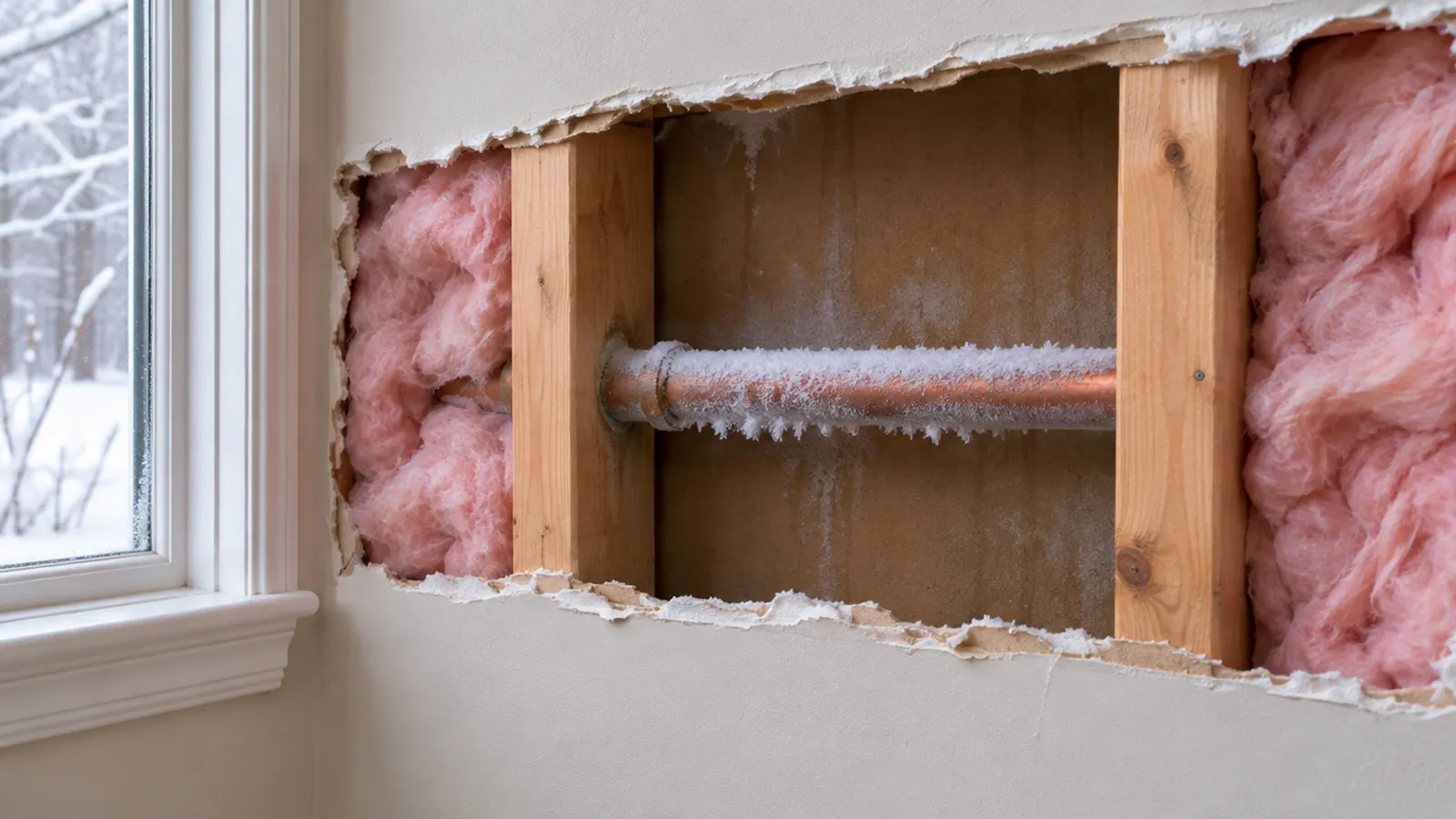
To thaw frozen pipes in a wall, open the faucet the pipe feeds, then apply heat gently: turn up the thermostat, use a hair dryer, or point a space heater toward it from a safe distance. Never use an open flame. If the wall is wet or a pipe may have burst, shut off the water supply first.
Frozen pipes in exterior walls are a cold weather regular in Alberta, the Maritimes and the northern US states.
How can you tell you have a frozen pipe in the wall?
In cold weather, the first sign of a frozen pipe is a faucet with little or no water pressure while other fixtures still run. Others: only the hot or cold side stops, a toilet doesn't refill, frost on exposed pipes in a cabinet or the basement ceiling, or a patch of drywall much cooler than the rest of the room.
A wet patch, a stain or bubbling paint means a frozen pipe has burst. Shut off the main first: our guide to finding the water shut-off valve shows where it usually is. In a manufactured home, see where the mobile home shut-off valve is.
How do you find the frozen water pipe?
Try every faucet and toilet, hot and cold, and note what still runs.
| What still runs | What it tells you | Where to look |
|---|---|---|
| Nothing anywhere | The main froze where it enters, or the water supply is off | Where the main enters and any unheated areas it crosses; ask your water utility |
| Everything except one fixture | The branch to that fixture froze | The exterior wall behind it, the cabinet under it and the ceiling below |
| Only hot or only cold water is out | One line froze | Follow that hot or cold water pipe back from the fixture |
| Nothing in one room | A shared branch froze | Where it crosses an outside wall, a garage or unheated crawl spaces |
Water freezes in pipes where they meet freezing air: exterior walls and unheated spaces such as garages, crawl spaces and attics, the rim joist, and drafty spots near outdoor hose bibs. Feel along the drywall and any exposed pipes; the coldest section of pipe is the likely frozen area.
Why are the kitchen pipes frozen but not the bathroom?
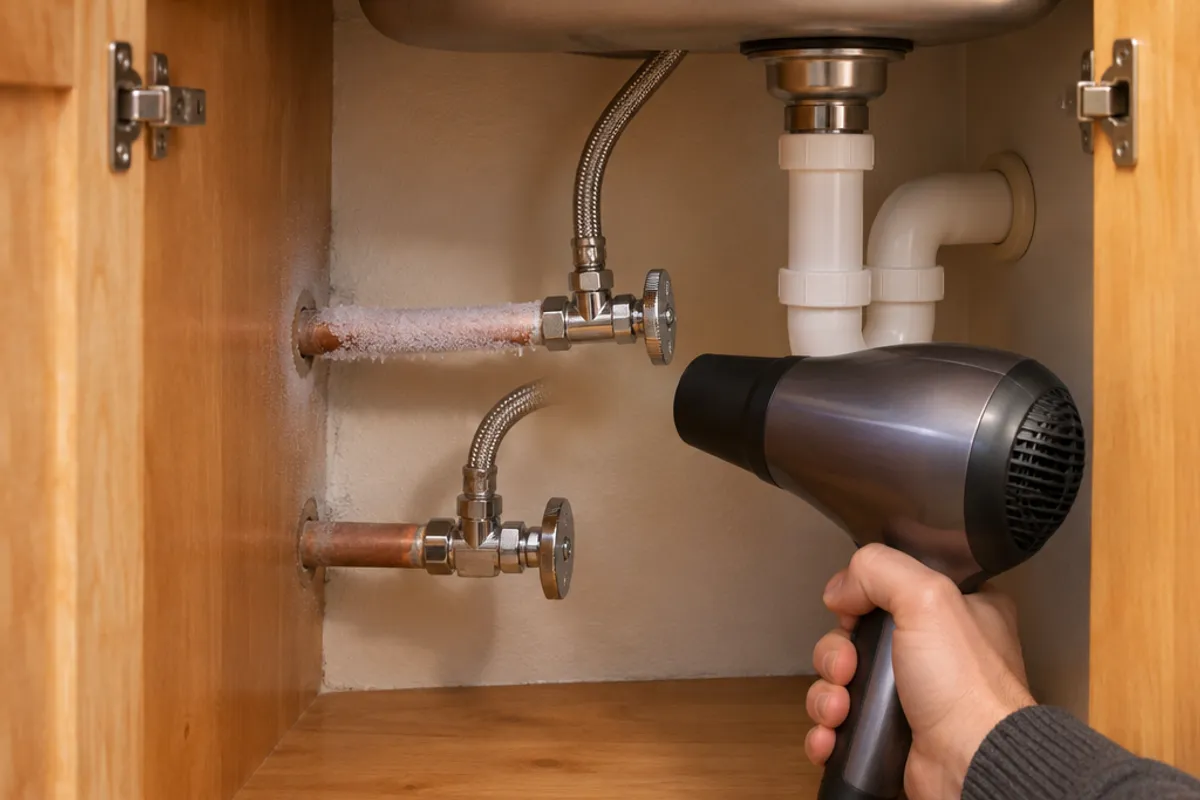
Many kitchen sinks sit on an outside wall, under a window, so their supply pipes rise through that framing into closed kitchen cabinets the room's heat barely reaches. Bathroom fixtures on interior walls stay warmer. So start looking for the frozen pipe in the kitchen: open the cabinet doors and feel the drywall behind the pipes.
How do you thaw a frozen pipe in a wall?
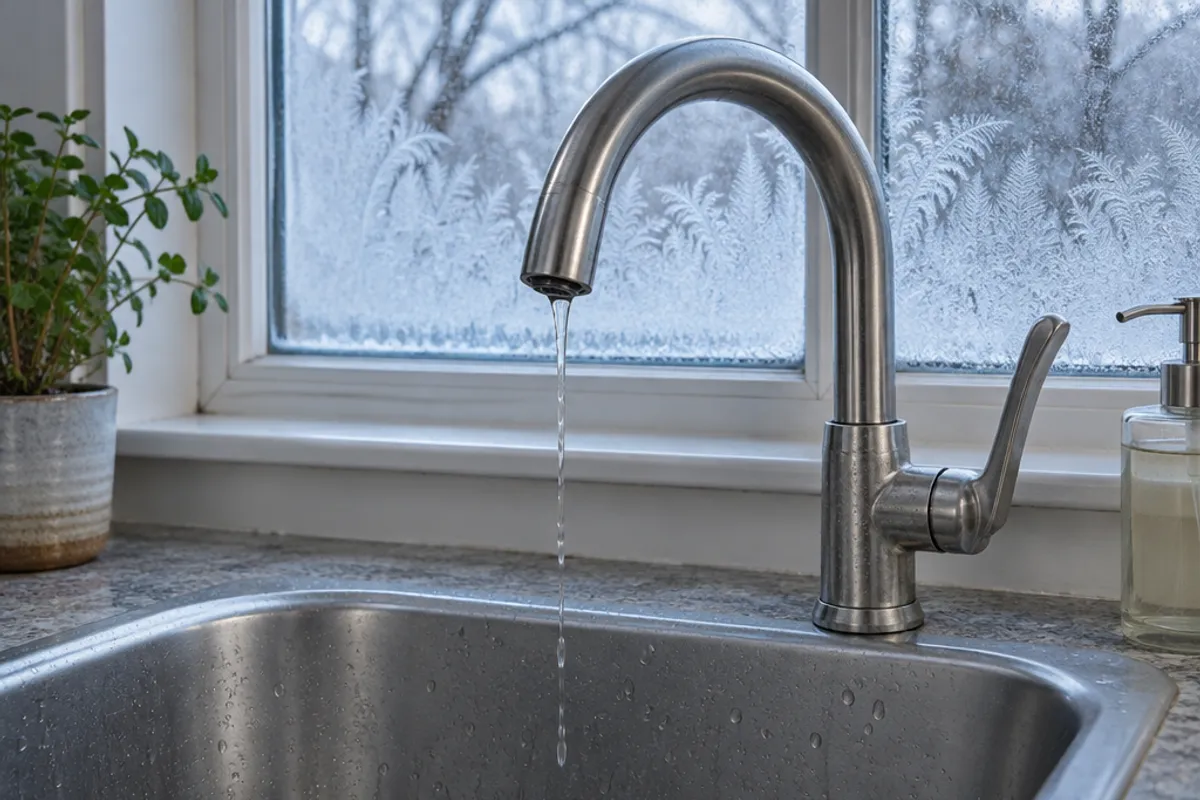
Open the faucet first
Before you thaw frozen pipes, open the faucet the frozen pipe feeds, hot and cold, even if the frozen section is far from it. Once the ice melts, trickling water shows the thaw is working, and the open faucet helps relieve pressure behind the ice. Turn up the thermostat and open any cabinet or closet doors so warm air reaches the frozen area.
Warm the drywall with a blow dryer or space heater
Aim a hair dryer or blow dryer at the drywall over the frozen pipe, moving it back and forth, starting nearest the faucet. For a longer stretch, set a space heater or heat lamp a safe distance away, as its instructions say, clear of flammable materials, and never leave it unattended. Keep cords and electrical heating elements away from standing water. Wait until full water pressure and flow return, then try every faucet again: more than one pipe may have frozen.
Use a heating pad or towels soaked in hot water
Where you can reach the frozen section itself, wrap it in an electric heating pad or in towels soaked in hot water, and replace the towels as they cool, until the ice clears.
Never thaw frozen pipes with a blow torch, a propane or kerosene heater or anything else that burns: drywall paper, framing and insulation can catch fire, and fuel-burning heaters give off carbon monoxide indoors. For PEX, the Plastics Pipe Institute's report on PEX and freezing also warns against electric-resistance pipe thawing machines; see can PEX pipe freeze?
When should you cut the drywall or call a licensed plumber?
Call a licensed plumber if you have a burst pipe, if you can't find or reach the frozen pipe, or if the thaw makes no progress.
If heat from the room does nothing, the pipe may sit behind the insulation. Opening the drywall puts the heat on the frozen pipe and shows you a split before it floods the cavity:
- Turn off the power at the breaker to every circuit nearby.
- Cut a small inspection hole between two studs over the coldest section of pipe.
- Cut the opening to a size a removable panel fits: 6 × 6 to 8 × 8 in for the SAP0808, or 10 × 10 to 14 × 14 in for the SAP1414.
- Warm the exposed pipe with the faucet open, and leave the opening uncovered until the pipe is repaired and the cavity is dry.
If you find wiring you don't recognize, a junction box or a gas line, stop, and use a licensed electrician or gas fitter where your jurisdiction requires one.
How do you check for leaks after thawing?
When water freezes it expands, and the ice in a frozen pipe can split it, break a fitting or push a joint apart. A leak from a burst or cracked joint may show only once water flowing again reaches it. Look at any exposed water pipe with the supply on, and watch the drywall and the ceiling below for the rest of the day. Then turn everything off and watch the water meter: if it still moves, water is going somewhere. If you find a leak, shut off the water, and see our guide to a water leak behind a wall to limit water damage.
How do you keep the pipe reachable next winter?
If you cut the drywall to reach the pipe, close it with a removable access panel instead of a patch. A run that froze once can freeze again, and a panel lets you check it, apply heat directly or catch a leak early without cutting again.
| Model | Type | Opening it fits | Size installed |
|---|---|---|---|
| SAP0808 | Spring-loaded panel | Openings from 6 × 6 to 8 × 8 in | 10 × 10 in cover |
| SAP1414 | Spring-loaded panel | Openings from 10 × 10 to 14 × 14 in | 16 × 16 in cover |
| PAD1212 | Hinged door | Service opening and cut-out 10.35 × 10.35 in (estimated) | 12 × 12 in overall |
A spring-loaded panel lifts out by hand. A hinged door's frame sits on the surface over a cut-out the size of its service opening, and the screws come with the door. Compare them on the drywall panels page and the plumbing panels page. Our product records list no air-sealing rating for any panel or door, so in an outside wall, ask your building department how to keep the vapor barrier continuous. To close it for good, see how to patch a hole in drywall.
If you plan to reroute the pipe that froze, or wall it in again, talk to your local building department first.
How do you prevent frozen pipes in cold weather?
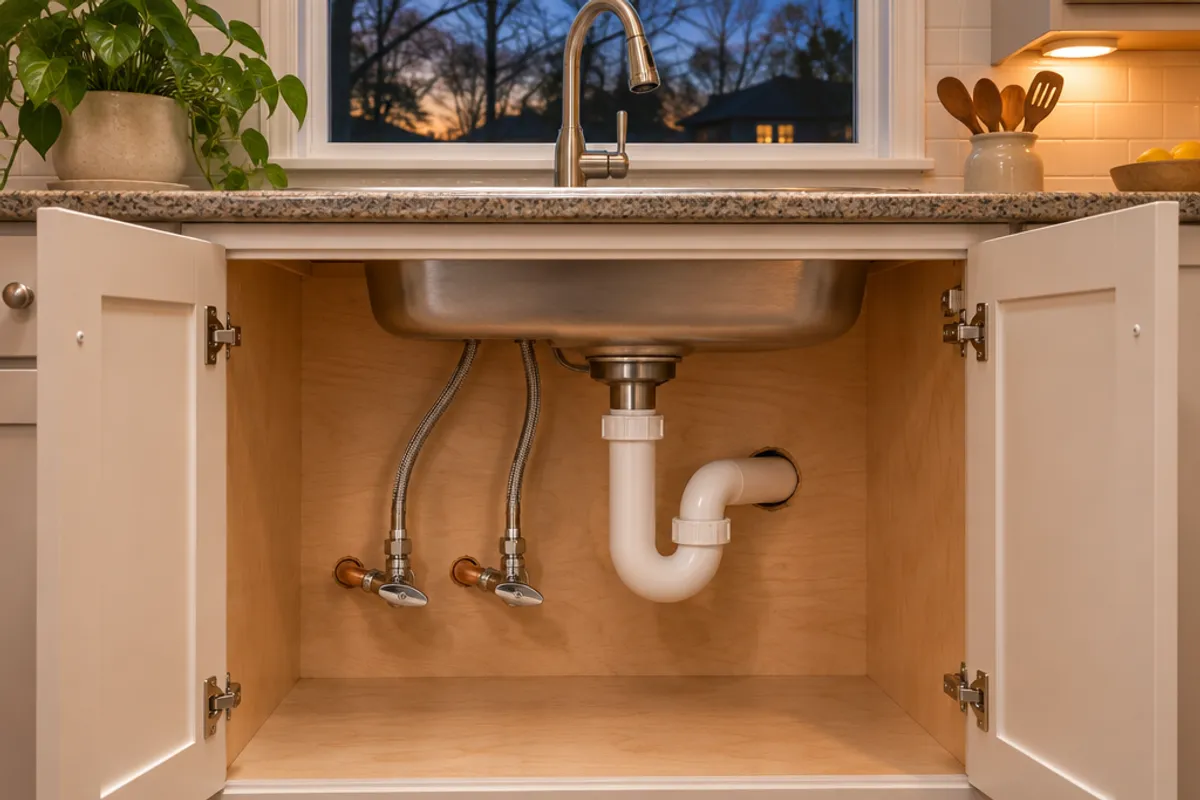
To prevent frozen pipes next winter:
- Keep the insulation on the cold side. A water pipe in an exterior wall should sit on the room side of the insulation.
- Seal drafts where pipes pass through the framing and along the rim joist.
- Open the cabinet doors under sinks on outside walls, and leave a cold water drip running on a line that has frozen before.
- Keep the heat on when you are away in freezing weather.
- Shut off and drain outdoor faucets and hose bibs before winter, as how to turn off outside water shows.
- Consider heat tape on a run that keeps freezing (below).
If the same frozen pipe comes back every winter, ask a plumber about rerouting that run through a heated space.
Can heat tape prevent freezing?
It can, on a run that keeps freezing. Use heat tape only if it is made for that pipe material and that use, and install it exactly as its instructions say. Heat tape is an electrical device, so check it each fall before winter. For PEX, the Plastics Pipe Institute names self-regulating heat cable recommended for plastic pipe.
Measure before you order: our guide on how to measure for an access panel shows how, and the access panel size chart compares every opening and cover.