
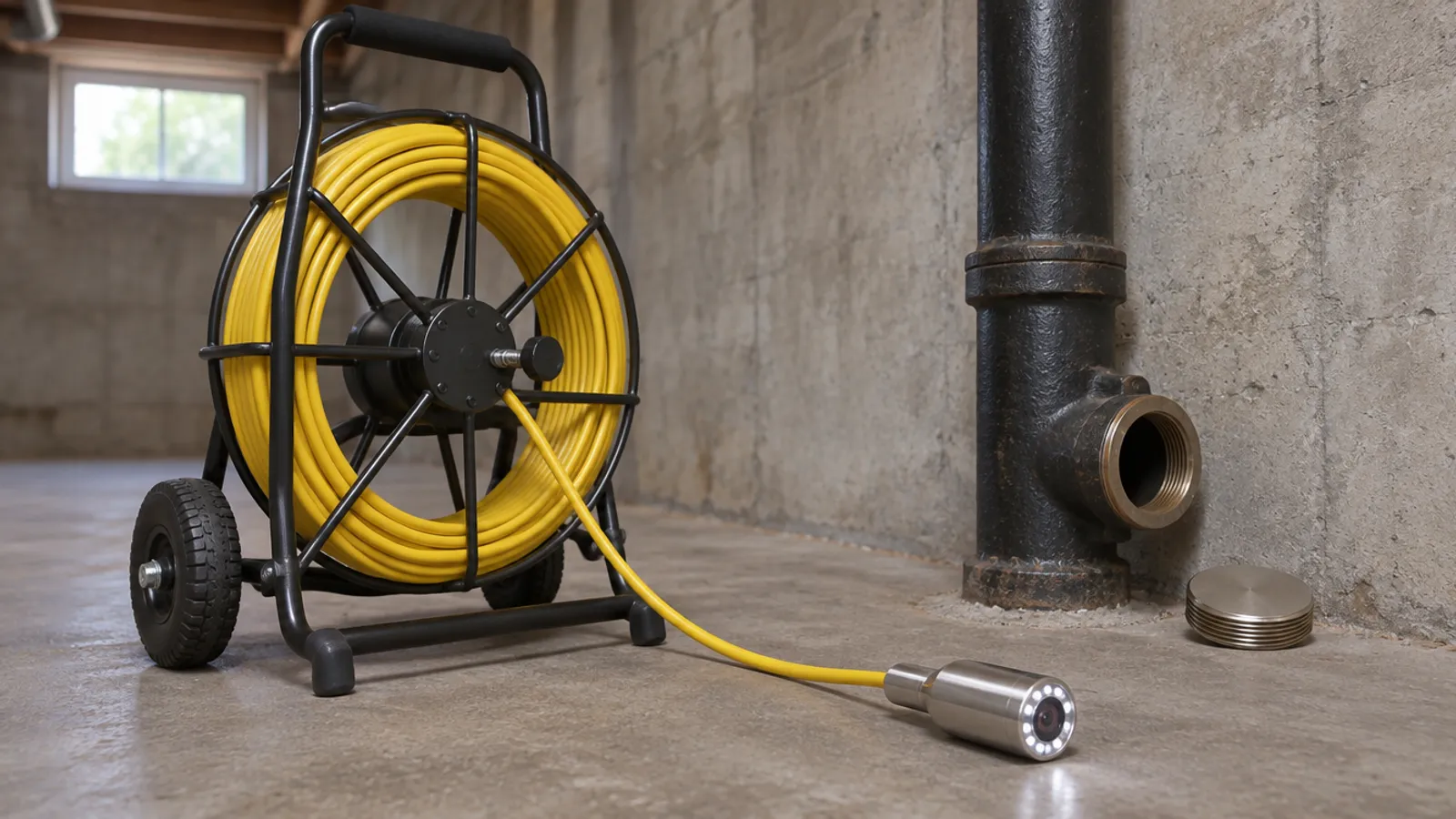
A sewer scope is a video inspection of the sewer line that carries waste from your home's plumbing to the city sewer main or a septic tank. An inspector or plumber pushes a small camera on a flexible cable through a cleanout and records the pipe from the inside, looking for tree roots, cracks, sags, offset joints and breaks.
Home buyers order a sewer scope inspection before closing, because the sewer line becomes theirs to repair; homeowners order one for slow drains or a clog that keeps coming back. This guide covers how the camera works, what it finds, how to read the report, and the cleanout access it needs.
What is a sewer scope inspection?
InterNACHI, the home inspectors' association, defines a sewer scope inspection in its sewer scope standards of practice as a video inspection of the lateral sewer line, from the house at or near the foundation to the city's or HOA's tap or the septic tank. Its purpose is to find and report the visible defects in that sewer line, and it usually identifies the pipe material too. A sewer scope inspection is non invasive: nothing is dug up, and the camera goes in through an existing opening.
The lateral is the private pipe between your home's plumbing system and the public sewer system. Who answers for the home's sewer line depends on where you live:
| City or utility | The owner's part of the sewer line |
|---|---|
| Minneapolis, Minnesota | The whole lateral to the city main, including the wye under the street (City of Minneapolis) |
| Fargo, North Dakota | Maintenance and repairs from the house to the public main, including the part under the sidewalk and street (City of Fargo) |
| Carlsbad, California | Maintenance, repairs and replacement of the lateral; the city takes over once sewage enters the main (City of Carlsbad) |
| Edmonton, Alberta | Maintenance and repairs of the sewer lines on your property, including a backwater valve if there is one (EPCOR) |
| Surrey, British Columbia | Keeping the sewer connection on the property clear; the service lateral passes an inspection chamber on its way to the main (City of Surrey) |
So a defect in the home's main sewer line is usually the buyer's problem once the deed changes hands, and so is the property damage from a backup: Carlsbad makes owners responsible for overflow cleanup and damages. A standard home inspection doesn't include the line. InterNACHI's home inspection standard doesn't require a sewer scope inspection, and many home inspectors offer it as an extra service (InterNACHI's guide for inspectors); plumbers and drain contractors run the same kind of specialized camera.
How does a sewer camera inspection work?
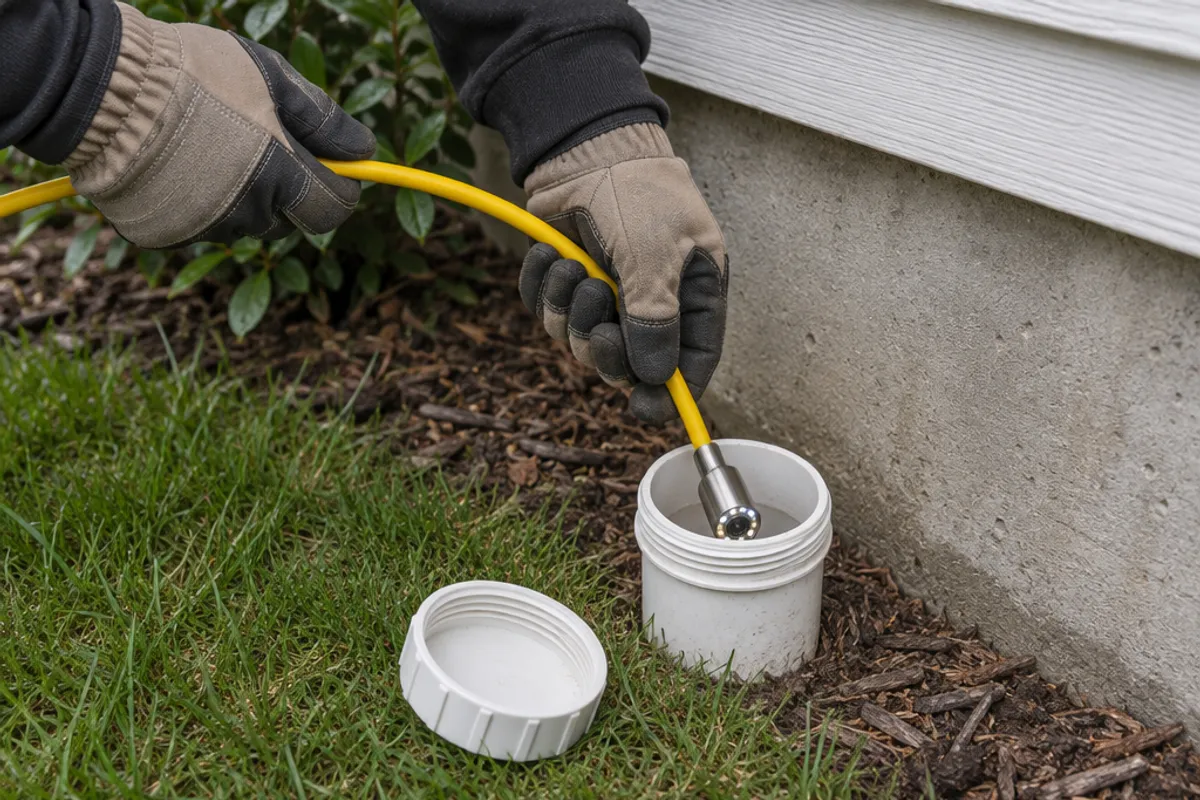
The specialized camera is a small sealed head on a flexible rod, a push cable wound on a reel, wired to a monitor that shows real time video as it travels down the sewer line. InterNACHI's guide describes a professional sewer scope inspection like this:
- Access is arranged first. The inspector's notice to the seller asks for access to the cleanout, and on arrival the inspector works out whether the access point is inside or outside.
- Nobody uses water. Occupants don't run sinks, showers, tubs, the washer, the dishwasher or toilets during the scan.
- Flush, then push. Water run through the sewer line floats the camera so it doesn't snag on debris. The inspector records the cleanout and setup, then feeds the flexible rod toward the street, pausing at each defect.
- Stop at the tap. The sewer scope inspection ends where the owner's pipe meets the city tap on the public sewer system; the camera doesn't enter a backflow device, the city tap or a septic tank.
- Record on the way out. The camera records as it comes back, the plug goes back in, and water runs again to check the cleanout for leaks.
After a sewer scope inspection, the whole video goes to the client, as a link or a copy. The inspector isn't required to pull toilets, enter unsafe crawlspaces, or scope the drains under the floor and inside the house; ask separately if you want those parts of the plumbing system checked.
What sewer line problems can a sewer scope inspection find?
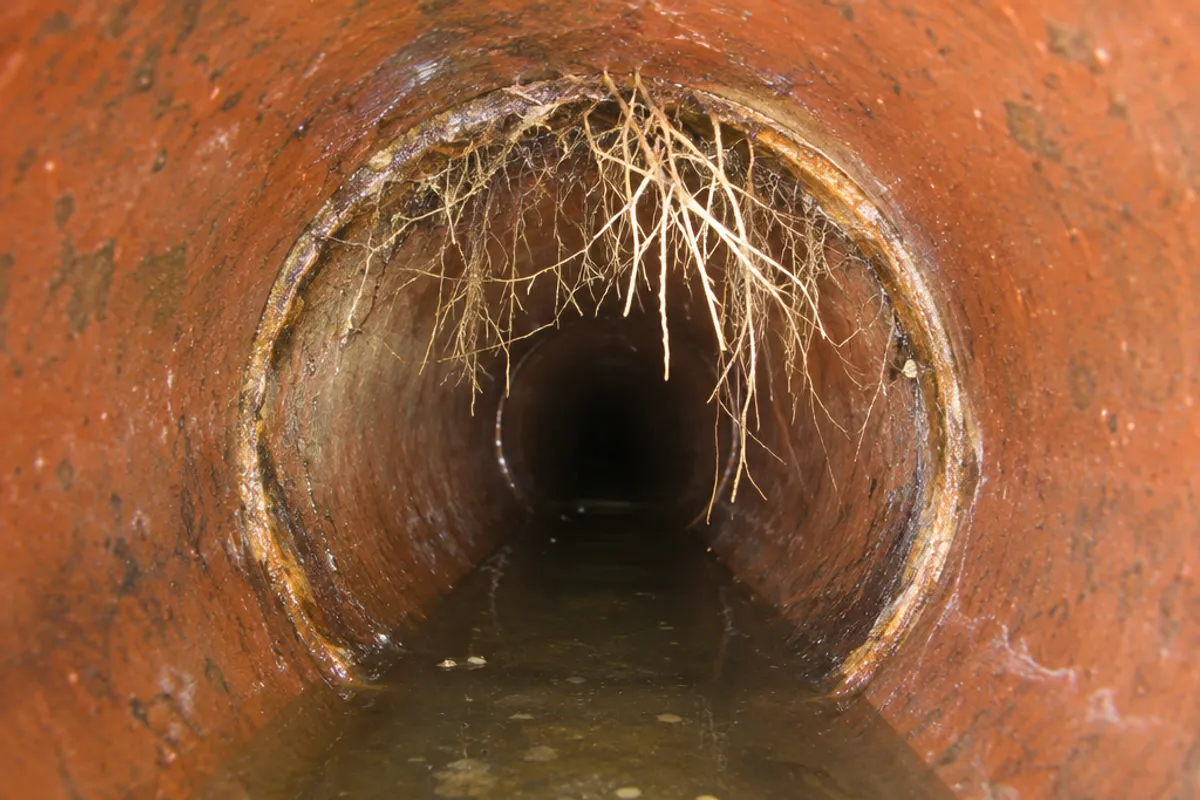
The standard lists what a sewer scope inspection must report as needing correction. Most items are structural issues; a few are buildup. Here is what each looks like on the video:
| The report says | What the camera shows |
|---|---|
| Root intrusion | Tree roots inside the pipe, growing in through a joint or crack |
| Offset over ¼ in | A joint where one pipe end sits higher or to one side of the next |
| Over 1 in of standing water | A sag, often called a belly, where water and waste sit instead of draining |
| Cracks, breaks or separation | Small cracks, a broken pipe wall, or a joint pulled apart |
| Crushed, egg-shaped or collapsed pipe | Pipe squeezed out of round or, in severe cases, collapsed sections |
| Blockage or restriction | Debris, grease buildup or foreign objects narrowing the sewer line |
| Excessive rust, scale or grease | Buildup on the pipe wall; rust and scale point to corrosion in metal pipe such as cast iron |
| Deteriorated concrete or delamination | The pipe's inner surface flaking or wearing away |
Why are tree roots among the most common issues?
Tree root intrusion is among the most commonly found problems. Carlsbad says about half of the lateral problems it hears about each year involve tree roots, and the other half come from grease and other things poured down drains. Tree root intrusion can grow into a blockage, so finding it in a sewer scope inspection gives you time to plan sewer repairs before further damage or a backup. Utilities look for the same sewer line damage in their own pipes: Surrey's crews review video of the city's sewer system for cracks, leaks, blockages, sags, roots, grease deposits and breaks.
Pipe material matters too. The sewer scope inspection report names it where the inspector can tell, but the standard doesn't require spotting Orangeburg (bituminous fiber pipe) or asbestos cement pipe, so ask about both. The City of Ann Arbor says Orangeburg flattens under the earth pressure around it as it deteriorates, and that where the line can be reached, a video scan may show damage patterns that help identify it.
Should you get a sewer scope before buying a house?
If the inspection period allows it, yes: book a sewer scope inspection alongside the home inspection. Your home inspection covers the house; the sewer scope inspection covers the pipe that leaves it. Minneapolis tells buyers to ask for a sewer inspection when purchasing a home, and warns that a sewer line that cracks, collapses or gets blocked by tree roots can back sewage up into the basement. A sewer scope inspection turns potential problems into a video and a written list, so you make informed decisions before you own the sewer line, and whatever the inspection reveals gives potential buyers something specific to negotiate repairs over with the seller.
One California utility builds a sewer line check into property sales. In the East Bay Municipal Utility District's private sewer lateral program in California, buying or selling a property triggers the need for a compliance certificate, issued once the lateral is shown to be leak-free (EBMUD). Ask your local utility whether your city has a rule like it.
When should homeowners order a sewer inspection?
For homeowners, the trigger for a sewer scope inspection is usually sewer line problems: repeat clogs, sewer backups, slow drains across the house that point to the main sewer line rather than one fixture, water backing up into a basement floor drain or tub, or foul odors. Gurgling noises are often the first sign; why a drain gurgles walks through the causes. InterNACHI's guide adds two signs of potential problems: a damp, sunken patch in the lawn over the sewer line, and backflow into the home.
Without symptoms, regular inspections still help, because early detection of potential problems leaves time to plan. Carlsbad advises routine maintenance on the lateral and a professional camera inspection every three to five years, and more often with a sewage-like odor or frequent clogged drains.
How do you read a sewer scope inspection report?
Read a sewer scope inspection report in this order:
- What was inspected, and what wasn't. The report outlines the sections inspected and names any that weren't, with the reason. A section skipped because the cleanout was blocked, or because the camera couldn't pass a restriction, is an open question, not a clean result.
- The defects needing correction. Watch the video at each one, and ask which are minor issues that routine maintenance such as cleaning can handle, and which are major problems, such as cracked or collapsed sections, that need repairs.
- The pipe material and the limits. The standard calls a sewer scope inspection not technically exhaustive: it reports the pipe's condition on the day of the inspection, won't find concealed defects, and doesn't predict pipe failure.
The standard doesn't require the inspector to mark the exact location of a defect on the ground, give the length of the sewer line, or estimate repair costs. For those, a professional plumber or sewer contractor locates the problem and quotes the sewer repairs, which might be cleaning such as hydro jetting, a spot repair, or sewer line replacement. Older homes may also have a house trap on the main drain, with cleanout plugs of its own.
Why does a sewer scope inspection need a reachable cleanout?
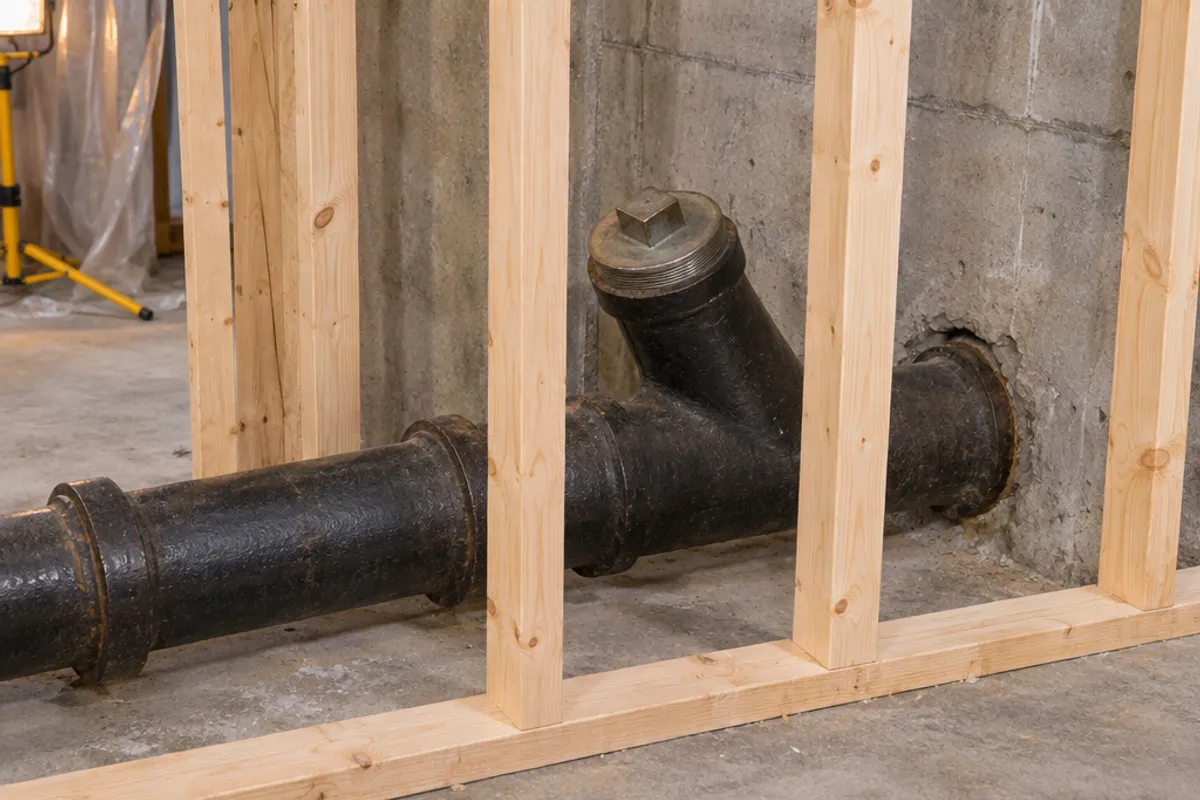
A sewer scope inspection needs a way in for the camera. InterNACHI's standard has the inspector scope the sewer line from a proper cleanout or the roof vent stack, and note in the report when no cleanout is visible or accessible. The same standard says the inspector doesn't have to pull toilets, climb a roof they judge unsafe, or move wall coverings, ceiling tiles and other obstructions. A cleanout sealed behind drywall can therefore mean a note in the sewer scope inspection report instead of a video.
Carlsbad makes the same point from the utility side: a cleanout is the access point used to inspect the lateral and clear it, and one buried under landscaping or cement has to be exposed again and made accessible. Outside, that means digging it out. Inside, for homeowners finishing a basement, it means a removable opening in the wall at the plug, big enough to take the plug out and feed the push cable straight into the line:
- A cleanout that will be opened for each sewer scope inspection and cleaning: PAD1212 hinged door: maximum service opening 10.35 × 10.35 in (estimated), overall 12 × 12 in
- A plug set deeper in the wall, or where you want more room around it: SAP1414 spring-loaded panel: fits 10 × 10 to 14 × 14 in openings, overall 16 × 16 in
A cleanout set in the basement floor needs a floor cover instead, and we don't sell those.
Our plastic access panels and doors are not fire-rated, and we publish no water-resistance rating for them, so don't fit one in a fire separation, such as the wall between a house and an attached garage.
The plumbing access panels page lists the other sizes. If you don't know where your cleanout is yet, start with what is a sewer cleanout, then measure the opening:
Measure before you order: our guide on how to measure for an access panel shows how, and the access panel size chart compares every opening and cover.