
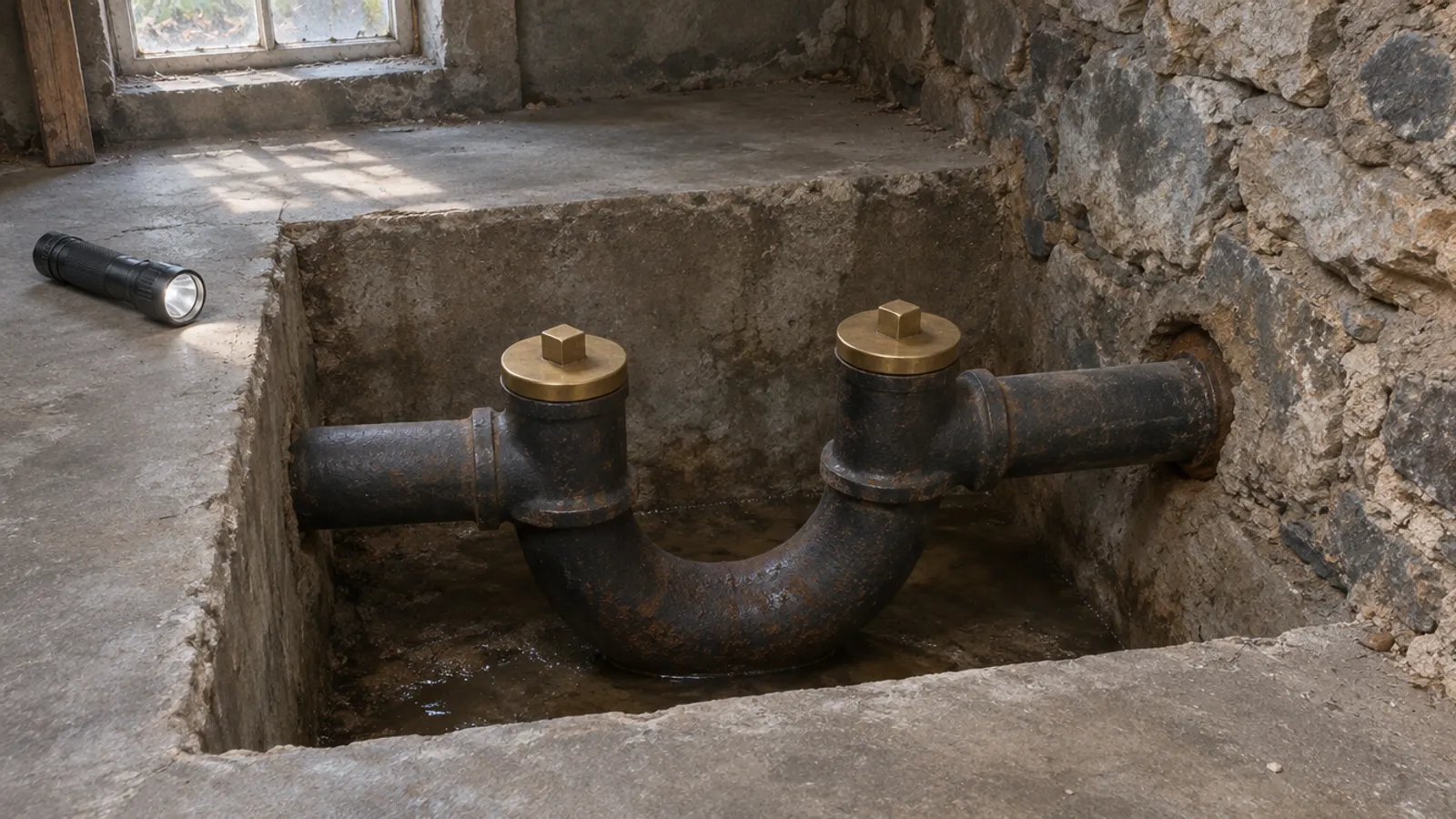
A house trap is a U-shaped trap on the main drain of an older home, usually located in the basement floor near the front wall. The water held in its bend blocks sewer gas from the city sewer. Two cleanout plugs give a plumber a way in, and a fresh air inlet vents the house side.
Newer plumbing systems rely on a trap at every fixture instead, but many older houses still have a house trap.
What is a house trap, and how does it work?
A house trap is a U-shaped section of pipe on the main drain line, where the building drain inside the house meets the sewer line to the street. Like the trap under a kitchen sink, it holds water in its bend. That water creates a seal that prevents sewer gas, odors and vermin from the municipal sewer from coming back up, while wastewater flows through (one New York sewer contractor's guide). The same guide says they were commonly installed in buildings from before the mid-20th century. They are usually cast iron, sometimes clay (a Pittsburgh plumber's guide).
Early plumbing textbooks describe the same fitting. Samuel Edward Dibble's Elements of Plumbing says the house trap is installed just inside the foundation, where the house drain ends, with a cleanout on each side of the water seal (Elements of Plumbing, chapter XI). R. M. Starbuck's Modern Plumbing Illustrated calls it the main trap, there to keep gases and odors from the sewer out of the plumbing system (Modern Plumbing Illustrated). You may also hear sewer trap, running trap, building trap or whole house trap.
What is a running trap?
A running trap is a horizontal pipe that dips down and comes back up, so the low point holds water while the inlet and outlet stay in one horizontal run. George B. Clow's Practical Up-To-Date Plumbing calls it the simplest trap: a horizontal pipe bent into a pocket that stops air and gas from passing (Practical Up-To-Date Plumbing).
Dibble's checklist for a house trap opens with the rule that it should be a running trap. So in an old basement, the running trap on the main drain is the house trap.
How is a house trap different from a P-trap?
Every fixture in a plumbing system needs its own trap: P-traps sit below most sinks, showers and bathtubs, and toilets and floor drains have traps built in (a Minnesota home inspector's guide). Those individual fixture traps block sewer gas at each fixture. A house trap doesn't replace them; it adds a second seal that prevents sewer gas from the city sewer from reaching any of them.
| Feature | House trap | P-trap |
|---|---|---|
| What it serves | The whole house: all plumbing fixtures drain through it | One fixture, such as a kitchen sink or a tub |
| Where it's installed | On the main drain line, near the front of the house | Under or behind its fixture |
| Access | Two cleanout plugs, one on each side of the seal | Slip nuts or a plug on the bend |
| Venting | A fresh air inlet on the house side; no vent of its own | A vent on the fixture drain keeps its seal from being siphoned |
That second seal sits on the one pipe the whole house depends on, which is why newer work dropped it in favor of vented traps under sinks, tubs and showers. The drum trap is another old trap that fell out of use, because solids settle in it.
What does the house trap's fresh air inlet do?
The fresh air inlet pipe is located just behind the house trap, on the house side of the seal, not the sewer side. It runs out through the foundation and usually ends at a perforated grate on the front or side of the house, or in a U-shaped pipe pointing down at the sidewalk (the same contractor's guide to finding the trap).
The inlet lets air into the drain system, so wastewater flows smoothly. That air sweeps the drainage system and leaves through the vent stack on the roof, and the main trap needs no vent of its own (Cyclopedia of Architecture, Carpentry, and Building).
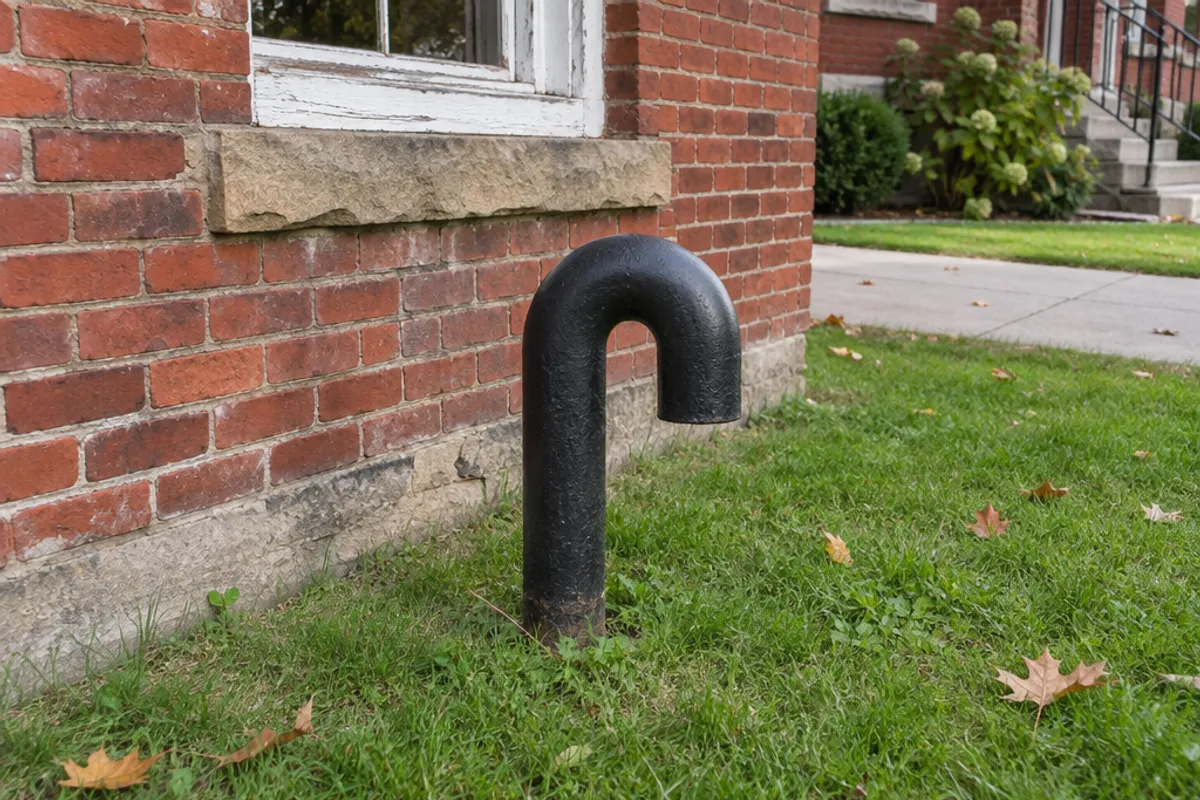
If you have one:
- Keep the grate easily accessible and clear of leaves, soil and mulch. Its perforated cover keeps birds and small animals out of the drain.
- Expect an occasional whiff of sewer gas. When the house drain runs full, air is pushed out of the inlet, and Dibble warns that it carries odors, which is why he kept inlets away from windows (fresh-air connections).
- Never drain into it. The inlet pipe carries air only.
Why does a house trap clog the whole drain system?
Every drain in the house runs through one bend on its way to the sewer line, so a clogged house trap backs up every fixture in the plumbing system above it. A trap forces the flow down through the U and back up, and each change of direction slows the water and lets solids settle (a Maine plumbing company's guide). Grease sticks in the bend, and hair, paper and other debris catch on old cast iron that has corroded rough inside. Starbuck records the same complaint from early critics: that the main trap obstructs the flow and soon stops up.
Signs the clog is at the house trap, not at one fixture:
- Several drains slow down or back up at once, often gurgling; see why a drain gurgles.
- Gray water comes up first at the lowest opening, such as a floor drain.
- Water pools around the cleanout plugs.
A house trap can let sewer gas in without clogging, too. In a house that sits empty, the water seal can evaporate (see how to winterize a vacant house), and a missing or worn plug lets gas and rodents in.
How is a house trap cleared through its cleanouts?
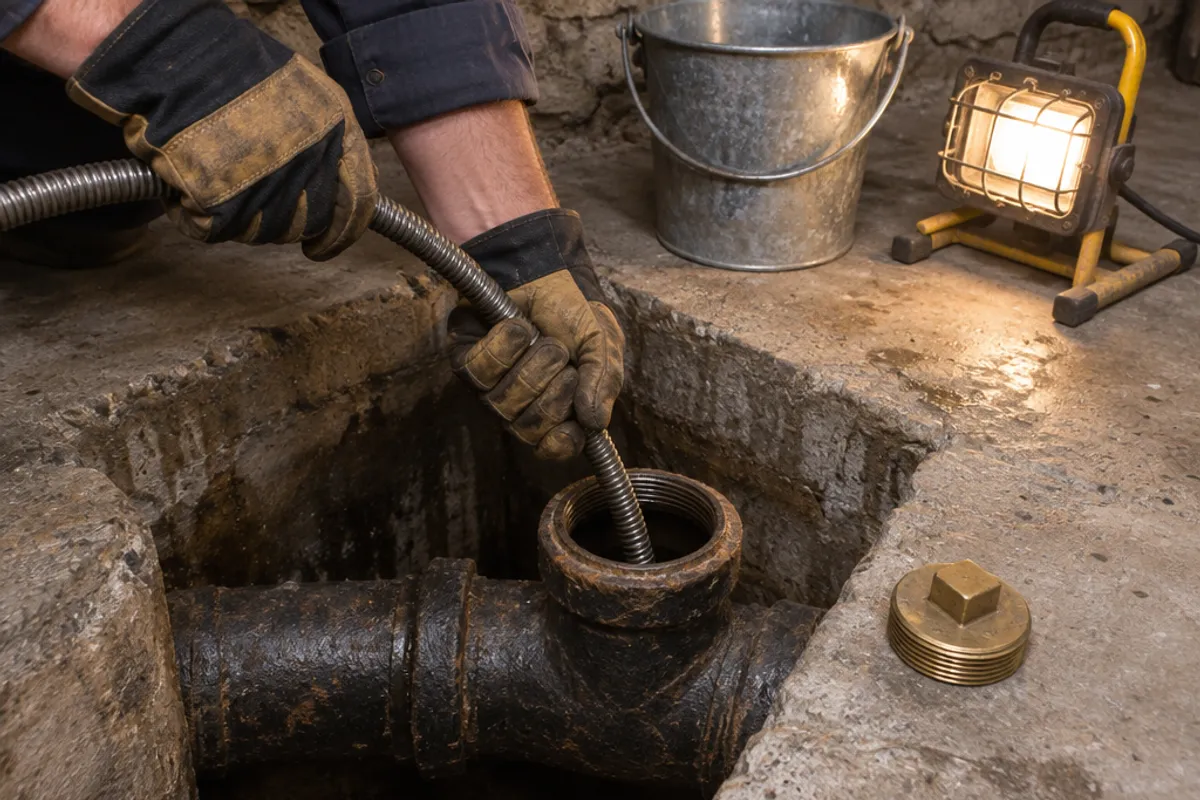
A clogged house trap is cleared through its two cleanout plugs, one on each side of the running trap's U-bend, so a plumber can run a cleaning cable toward the street sewer or back into the house drain, the New York guide explains. The Maine guide adds that a camera run down a cleanout shows the condition of the trap, including debris or roots, and the sewer line beyond it before anyone digs. A clog farther out in the sewer line can look the same, which is why the camera comes first.
The New York guide gives two rules. Never open the trap while the city sewer is backed up, and open the street-side plug first: if the trap is blocked, backed-up water from the house side then spills into that open hub instead of flooding the pit.
Check that it's the right trap, too. A single-cleanout trap set higher in the same pit may serve the storm sewer system or a yard drain; with its plug out, a flushed toilet sends no water through it.
Opening a house trap can let sewage and sewer gas escape into the basement, and an old plug can be seized in its hub. Use a licensed plumber where your area requires one.
To find other cleanouts on the line, see what a sewer cleanout is.
Should you keep an old cast iron house trap or remove it?
Plumbers disagree. The Pittsburgh guide calls the house trap a last barrier against sewer gas in older systems and recommends maintaining it. The Maine guide argues that a trap that keeps clogging should come out, replaced with straight pipe and a cleanout once a camera confirms it is the choke point.
- History and condition. A trap that has never caused trouble and looks sound on camera can stay. One that needs cleaning again and again, corroded cast iron pipe, or roots in the sewer line point to replacement; see cast iron drain pipe replacement.
- The fixtures above. Without the house trap, each fixture trap and its vent must protect the plumbing system on its own.
- Local rules. Ask your plumbing inspector whether removal needs a permit.
How do you keep a house trap's cleanouts reachable?
The New York guide says there must always be ready access to the house trap and its pit, and that flooring or concrete laid over the pit is a mistake; the same pit often holds the main water valve (finding the water shut-off valve). Dibble's checklist says it in four words: accessible at all times.
| Where the cleanout is | How to keep it reachable |
|---|---|
| Plugs flush with the basement floor | Leave them exposed for cleaning; no tile, laminate or carpet over them |
| Trap at the bottom of a pit | Keep the pit open for cleaning; a floor access cover is the route, and we don't sell one |
| A cleanout that new framing would hide | A removable panel centered on the plug |
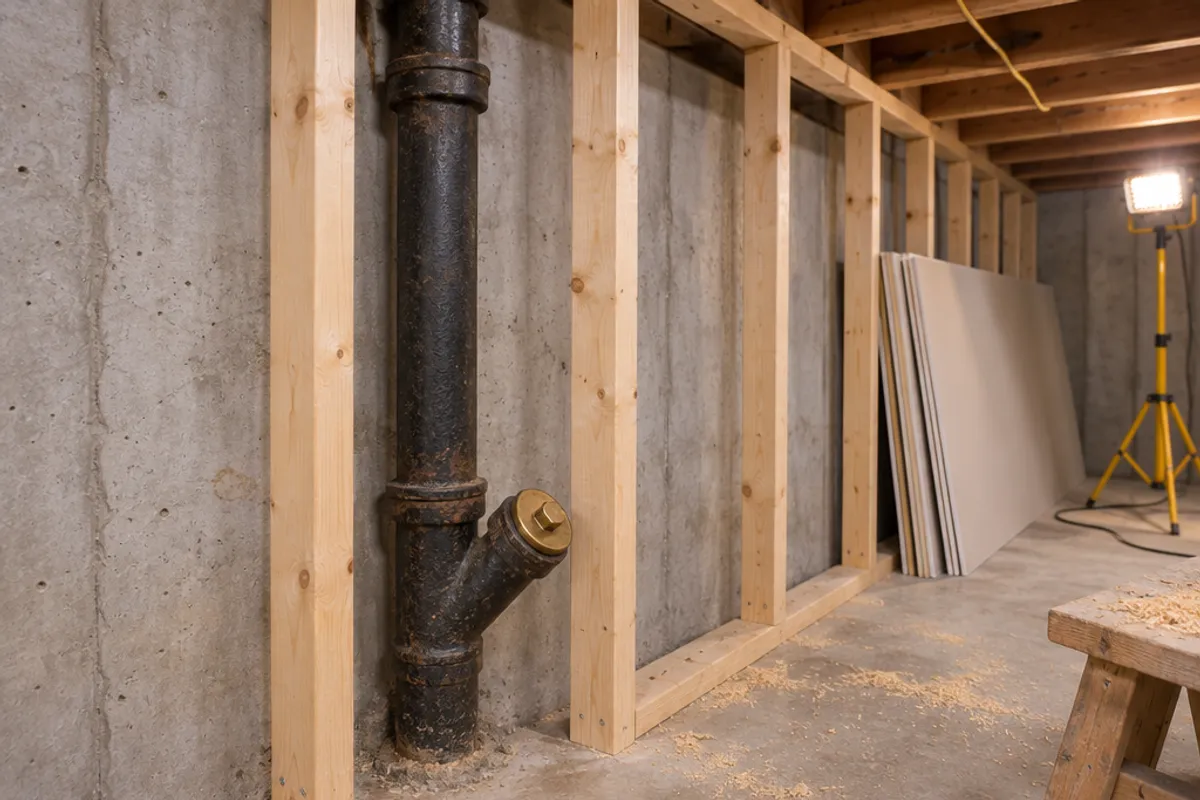
Our panels and doors are for walls and ceilings, not floors. They help in a finished basement: if your house trap is installed above the floor along the front foundation, or a cleanout would end up behind new framing, cut an opening at the cleanout and close it with a removable panel, so it stays an accessible cleanout:
- SAP1414 spring-loaded panel: fits 10 × 10 to 14 × 14 in openings, overall 16 × 16 in
- PAD1212 hinged door: maximum service opening 10.35 × 10.35 in (estimated), overall 12 × 12 in
That opening lets you see the trap, turn a plug and pass a cable in. Both plugs plus room for a drain machine can need more than our largest openings; then leave that corner unfinished, or have a larger framed, removable cover built.
Our plastic access panels and doors are not fire-rated, and we publish no water-resistance rating for them, so don't fit one in a fire separation, such as the wall between a house and an attached garage.
Before you finish, read do you need a permit to finish a basement and see plumbing access panels.
Measure before you order: our guide on how to measure for an access panel shows how, and the access panel size chart compares every opening and cover. How to install an access panel in drywall covers fitting it.