
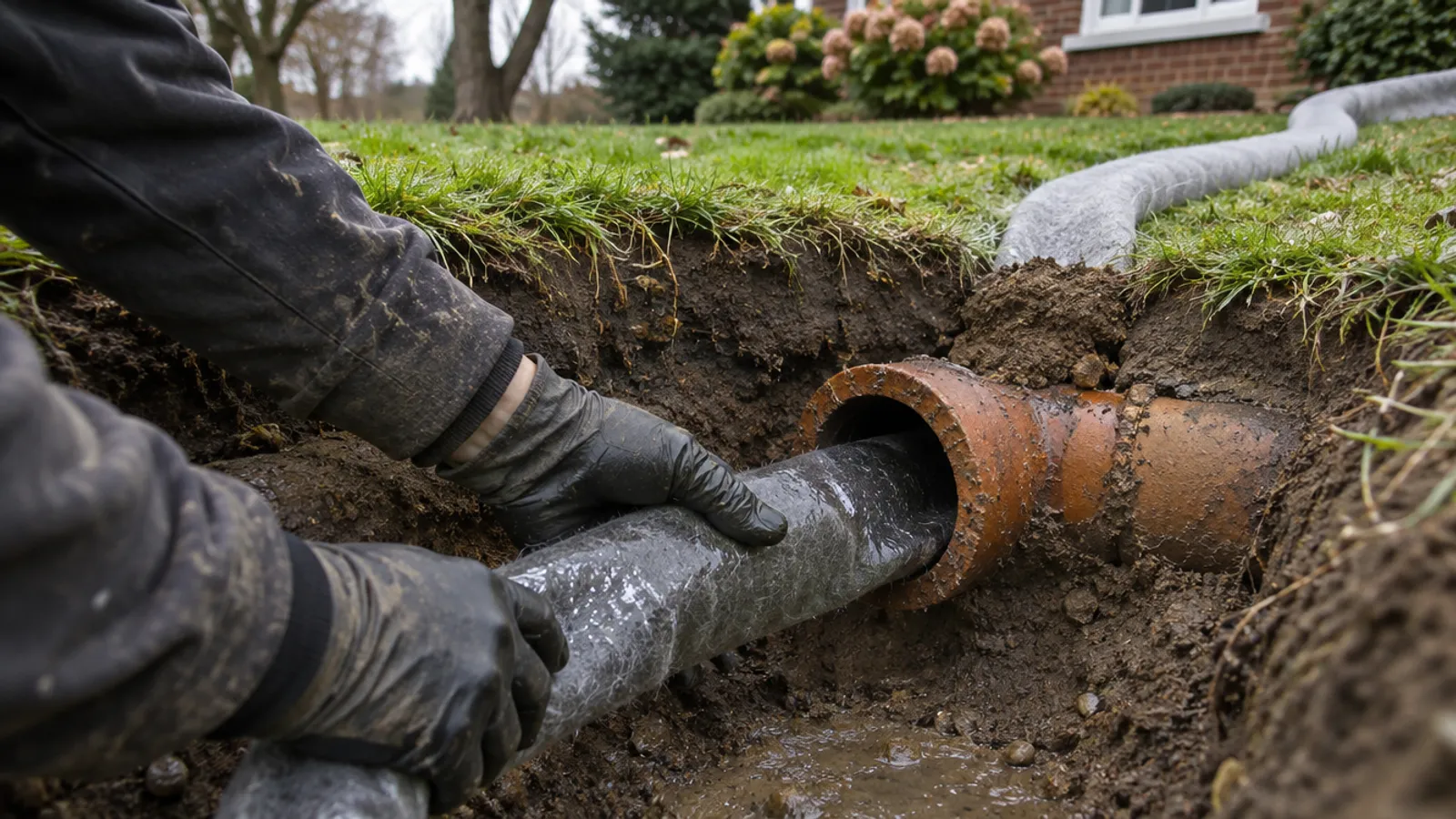
Pipe lining is a trenchless pipe repair that builds a new pipe inside an old one. A crew cleans the damaged sewer or drain line, feeds in a flexible tube soaked in resin, presses it against the old pipe wall and cures it hard. The old pipe stays where it is and becomes the host for the new one.
This guide is for homeowners whose plumber or city has proposed pipe relining for an old sewer line, and for anyone finishing a basement around a cleanout. Lining matters because, as a trenchless sewer repair, it can fix cracks, leaks, corrosion and root intrusion with minimal disruption to yards, sidewalks and driveways, but the crew still needs a way into the pipe: the city sewer, a cleanout, or both.
What is pipe lining, and what is pipe relining?
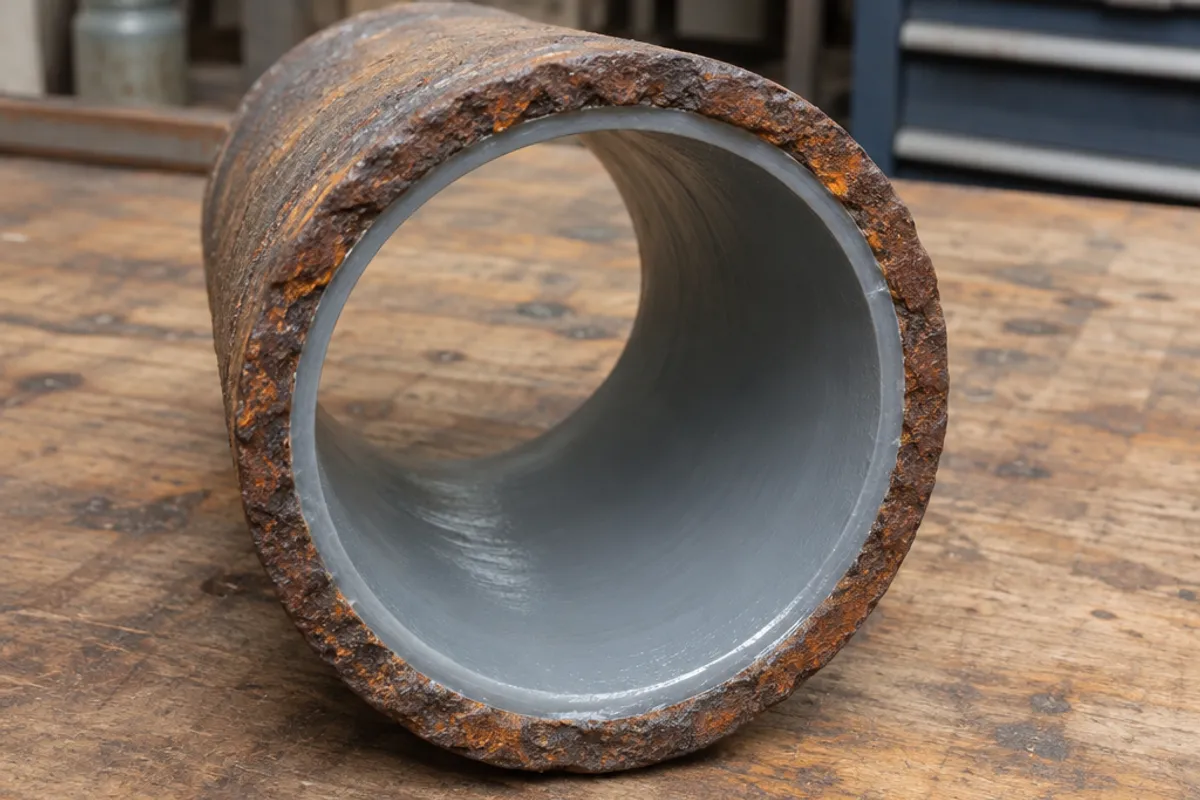
Cured-in-place pipe (CIPP) is the main kind of pipe lining. NASSCO, the National Association of Sewer Service Companies, describes the process as a resin-saturated tube inserted into the existing pipe and cured in place by heat, by UV or LED light, or at ambient temperature (NASSCO's pipe rehabilitation page). The result is a seamless new pipe inside the old one, with renewed structural integrity. NASSCO says CIPP can line all pipe materials and shapes, and repair cracks, leaks and corrosion.
Pipe relining is the same repair under another name; it is also commonly referred to as sewer pipe lining, trenchless pipe lining or CIPP. "Trenchless" means nobody digs a trench along the run of sewer pipes, and Naperville's sewer program calls trenchless methods generally less disruptive than conventional excavation. The crew may still need a cleanout or small pits to reach the existing line, as NASSCO notes for laterals, the private sewer pipes from a home to the city main.
NASSCO lists several trenchless rehabilitation methods. These are the ones a homeowner is likely to hear about:
| Method | Materials that go into the old pipe | The old pipe afterward |
|---|---|---|
| CIPP lining | A resin-soaked felt, fiberglass or hybrid tube, cured in place | Stays, as the host pipe |
| Spot repair | A short liner on an inflatable packer, cured at one defect in a sewer main | Stays; only the bad section is lined |
| Pipe coating | Polyurea, polyurethane or epoxy resin, sprayed or brushed onto drains inside buildings | Stays; the coating is not structural |
| Pipe bursting | A new pipe, pulled in behind a bursting tool | Broken apart and replaced |
How does cured in place pipe lining work?
NASSCO and the sewer program in Naperville, Illinois (Naperville's service line rehabilitation sheet) describe sewer pipe lining in this order:
- Camera inspection. A camera goes up the line to show its condition, and a locator maps its route. Naperville starts from the city main; sharp bends or roots mean going in from the home, through the basement cleanout.
- Cleaning. Tree roots, debris and obstructions come out before liner installation begins.
- Wet-out. A tube made to the pipe's length and diameter is soaked with resin before it is inserted.
- Liner installation. The resin saturated liner is inserted, pulled in or inverted, into the existing pipe from the home, a cleanout or the sewer main, then pressed against the host pipe.
- Curing. Hot water, steam, hot air, UV light or ambient temperature hardens the resin.
- Reopening connections. A cutter on a spinning cable, or a small robot with a camera, reopens the branch lines the liner covered.
- Final camera inspection. The process ends with a video of the lined pipe along its entire length.
Does a pipe need hydro jetting before lining?
It needs cleaning before pipe relining, whatever the tool. Saint Paul, Minnesota requires all debris and obstructions to be removed before lining (Saint Paul's private sewer lining specification), and Naperville's contractor clears out all tree roots first. A jetter or a cable machine does that work; what is hydro jetting explains how a jetter scours a line. A clean pipe also gives the camera a clear view of the damaged pipe before the liner is inserted.
Which materials are used: polyester, vinyl ester or epoxy resin?
NASSCO says the tube is felt, fiberglass or a hybrid of the two; those are the liner materials, and the resin is what hardens them. A Florida Department of Health fact sheet lists the most popular CIPP resins as styrene-based polyester, styrene-based vinyl ester, styrene-free vinyl ester and styrene-free epoxy (Florida Department of Health). Epoxy resin is also used in pipe coating, sprayed or brushed onto drains inside buildings.
The same sheet says the curing process can release chemicals that travel through the plumbing system into nearby buildings, and that the federal workplace safety institute recommends ventilating the site. Ask the crew which materials and resin they use and how they will vent the work. If you smell it indoors and feel unwell, the health department's advice is to leave the area and report it to your local health department.
Which existing pipes can be lined, and which can't?
Relining is a repair for sewer pipes that are damaged but still in one piece. NASSCO says CIPP lateral lining is appropriate when the host pipe has cracks, fractures or holes but has generally kept its original shape, and calls it "a permanent solution against root intrusion", the most common problem in laterals.
| What the camera shows | Relining? | Source |
|---|---|---|
| Cracks, fractures, holes or leaks, pipe still round | A lining candidate | NASSCO |
| Roots growing in at joints | A candidate once the roots are cleaned out | NASSCO, Naperville |
| Old clay sewer lines in older neighborhoods | Lined in Naperville's program | Naperville |
| Cast iron drains pitted by corrosion inside the building | Lining, or a non-structural coating | NASSCO |
| Collapsed pipe | No | Saint Paul |
In severe cases, trenchless lining is off the table. Saint Paul won't accept a liner in collapsed pipe, or in pipe so far gone that relining would not end the insanitary condition. And because the liner is pressed against the host pipe, it follows the original pipe's shape, so ask what the camera shows along the whole run, not only at the worst crack.
What about cast iron pipes inside the home?
NASSCO describes pipe coating for drains inside walls and under concrete slabs: it handles elbows and branch fittings and can give cast iron pitted by corrosion a second life, but it is not a structural repair, and NASSCO doesn't recommend it for the building sewer outside. Cast iron plumbing that is cracked through or flattened usually needs replacing; the cast iron replacement guide covers spot repairs and full stacks.
Is pipe lining the same as pipe bursting?
No. Relining keeps the old pipe as the host; pipe bursting replaces it. NASSCO describes the bursting process as breaking the existing lateral apart with a bursting tool, and as the tool goes through, pipe bursting pulls a new pipe of the same or larger diameter in behind it. Both count as trenchless sewer repair, but bursting is a pipe replacement, and NASSCO notes that excavation is generally required, so expect more digging than for relining. Bursting suits a lateral that has lost its shape, or one that should be bigger; the camera footage decides which trenchless sewer repair fits.
How long does pipe lining last?
NASSCO says a properly designed, installed and tested CIPP lateral has a minimum life expectancy of 50 years. Naperville's program agrees, giving lined sewer mains and service lines at least 50 years. Those are design service life figures for pipe relining done right, not a promise for one job, and the before and after videos are how you check the repair.
Pipe relining doesn't end maintenance. Naperville says lined service lines need significantly less maintenance than the clay pipe they line.
What should the camera inspection show before and after lining?
Saint Paul's specification makes a good inspection checklist for any pipe relining job. Its sewer utility asks the installer for:
- a video recorded within one month before lining, showing the pipe free of debris, its connection to the sewer main and the full length of the lateral;
- the date, the property address and footage measurements on screen;
- a video within seven business days after lining, showing the full length of the repair free of debris.
It also lists the defects a finished liner must be free of: dry spots, pinholes, excessive wrinkling and ridges, delamination and foreign inclusions. Ask for both videos and keep them with your records; the next plumber will want them.
Where does a lining crew get into the existing sewer line?
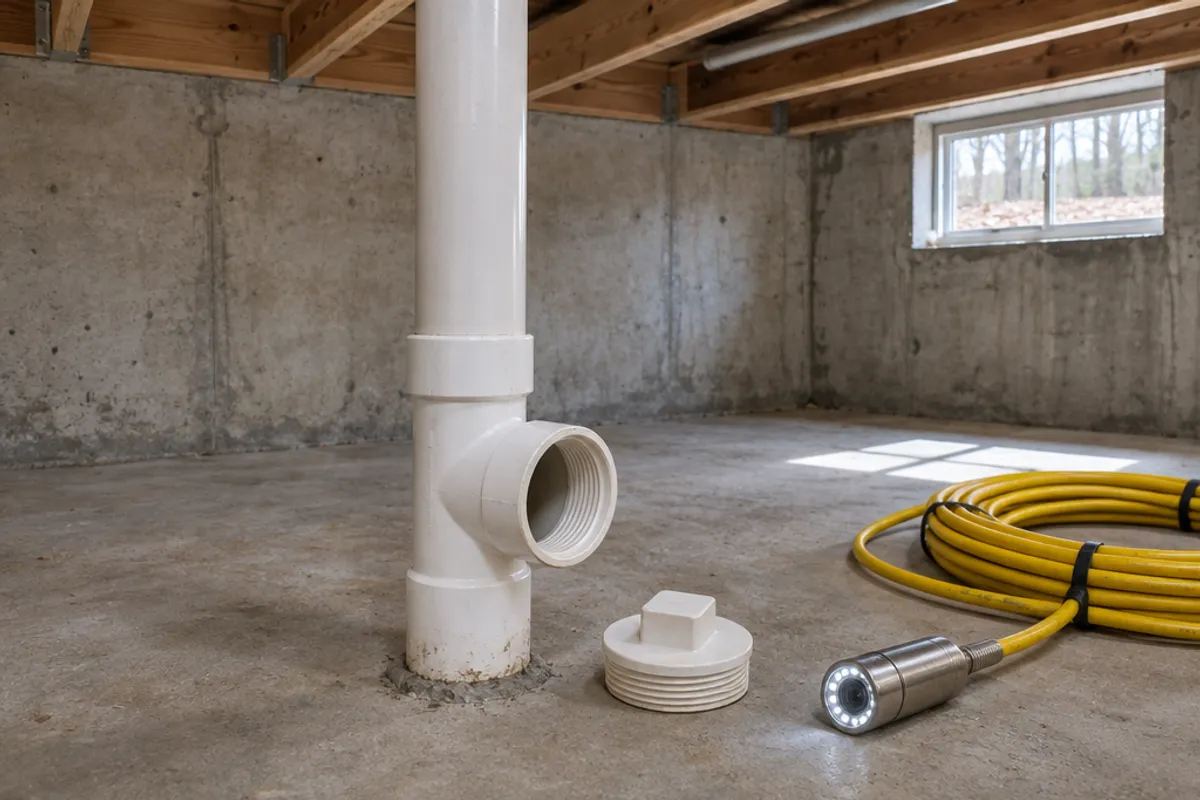
Even trenchless pipe lining needs a way in: through the city main, a cleanout, or both. NASSCO says the tube goes into a lateral "from the house or cleanout, or from the mainline sewer", and that the access needed depends on the liner's length and the installation process.
Naperville installs a cleanout in the front yard and launches the liner from the city main. Its camera crew comes inside only when the camera can't get up the line from the street, then uses the access cleanout in the basement wall or floor.
So the indoor cleanout is the opening a sewer pipe lining crew may ask for, once to inspect and again for the relining. What is a sewer cleanout shows where to look for yours.
How do you keep a basement cleanout ready for the crew?
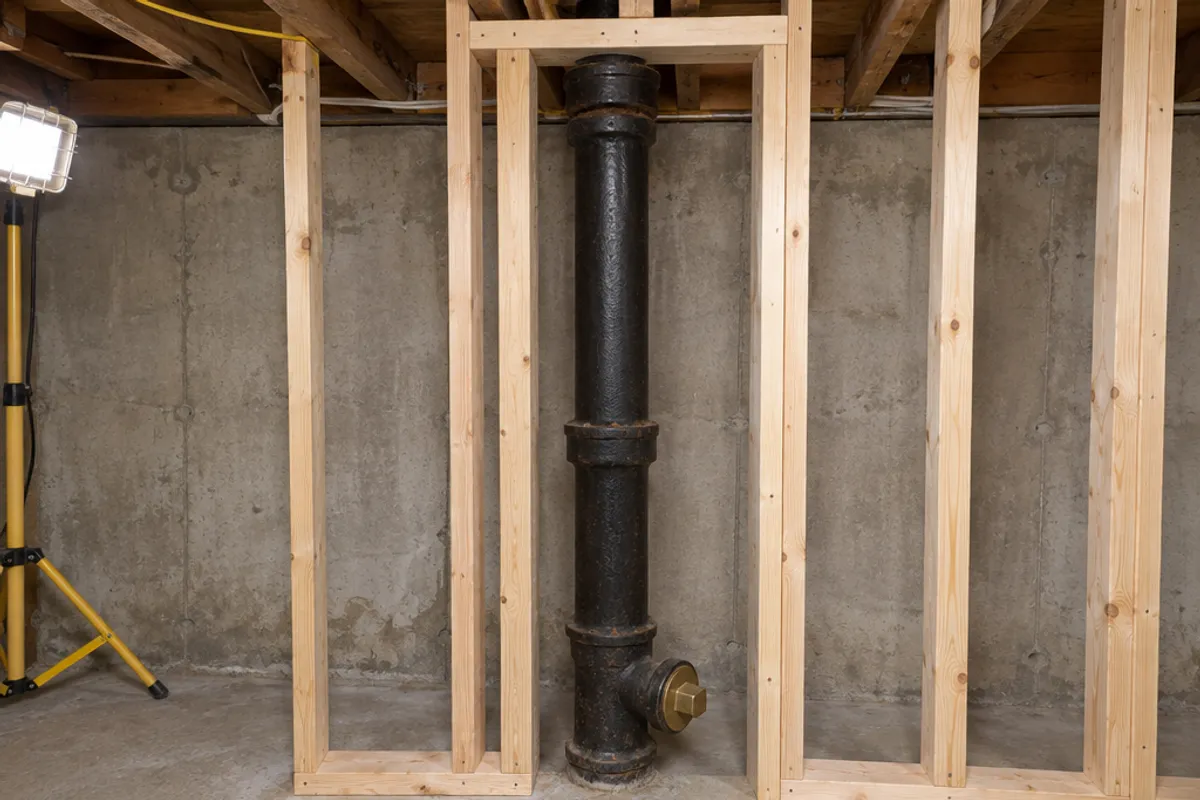
When a basement is finished, the cleanout on the stack or the main often ends up behind drywall. Don't close it in: a buried cleanout turns a trenchless pipe repair into a wall repair. Leave a removable opening sized for the work rather than the plug alone: room to swing a wrench on the plug, feed a camera cable in by hand, and catch what comes out when the plug is pulled. Lining equipment may need more room than that, so ask the crew how much before you close the wall.
- A plug facing straight out of the wall: PAD1212 hinged door: maximum service opening 10.35 × 10.35 in (estimated), overall 12 × 12 in. The door hangs open on its hinge while the crew works.
- A plug set back in the stud bay, or one the crew reaches at an angle: SAP1414 spring-loaded panel: fits 10 × 10 to 14 × 14 in openings, overall 16 × 16 in.
Our panels and doors go in walls and ceilings only. A cleanout set into the basement floor needs a cover made for floors, which we don't sell, and a yard cleanout needs nothing from us; just keep its cap clear of plantings.
Our plastic access panels and doors are not fire-rated, and we publish no water-resistance rating for them, so don't fit one in a fire separation, such as the wall between a house and an attached garage.
The plumbing access panels page shows the rest of the range for drain and cleanout work.
Sewer pipe lining puts resin, steam or hot water and cutting tools inside your plumbing, and some cities license who may do it: Saint Paul accepts only its licensed house sewer contractors, or licensed master plumbers for the part on private property. Use a licensed plumber or sewer contractor where your area requires one, and ask your city's sewer utility whether a permit applies.
What should you read next?
If several drains slow down at once, why a drain gurgles covers the signs of plumbing issues in the main line.
Measure before you order: our guide on how to measure for an access panel shows how, and the access panel size chart compares every opening and cover.