
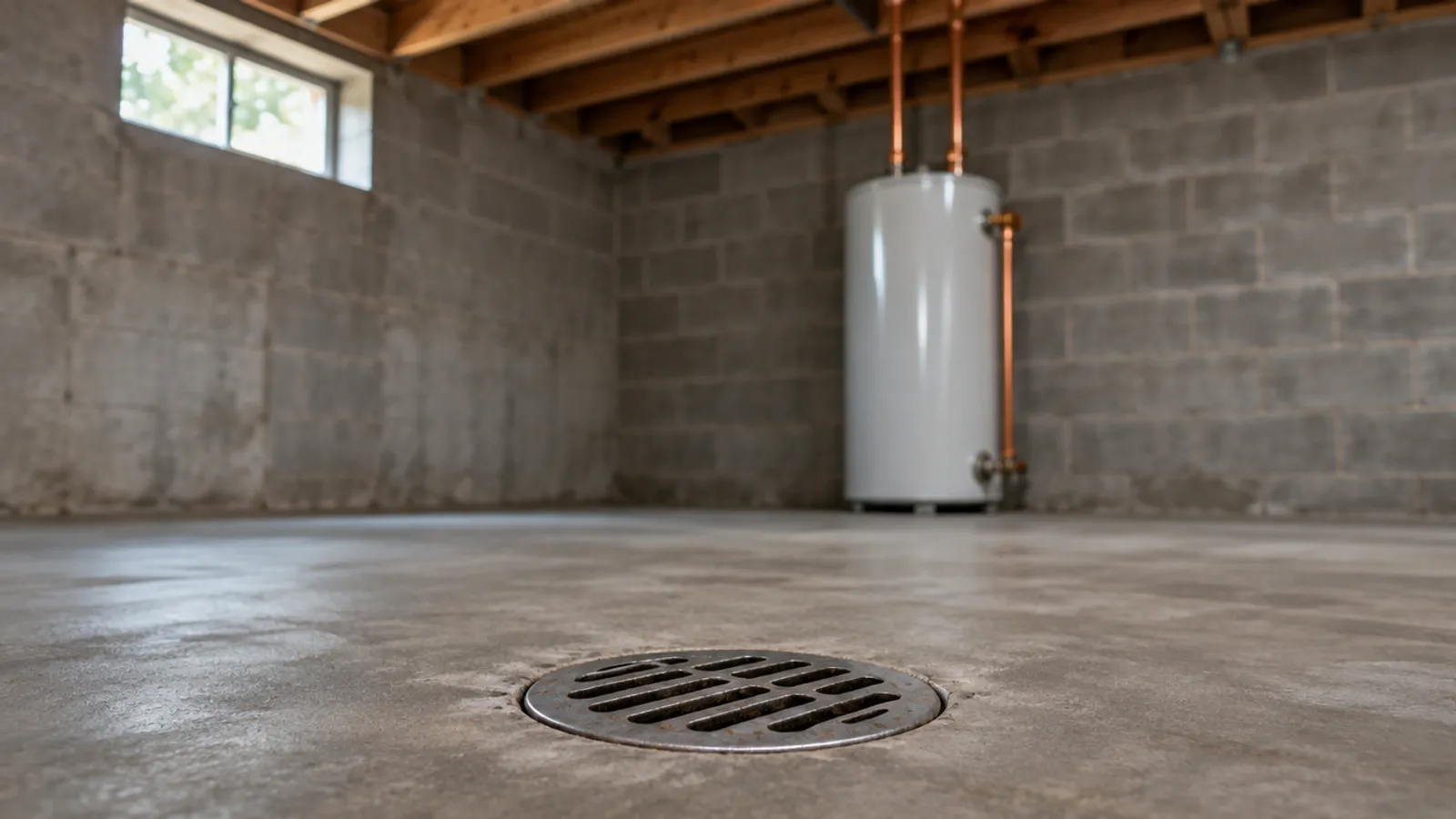
A trap primer, or trap seal primer, is a plumbing device that automatically adds water to a floor drain trap. The water in a trap is a seal that keeps sewer gas out of the building. In floor drains that are used infrequently, that water seal is lost to evaporation, and the primer tops it up.
Most trap primers sit on a cold water line in a wall, so a trap primer valve behind drywall needs a way back in for maintenance.
What is a trap primer, and why does a floor drain need one?
Every drain in a plumbing system connects to the sewer through a trap: a bend in the pipes that holds water. That water seal is there to prevent sewer gas, insects and bacteria from entering the room. Sinks, tubs and toilets refill their traps each time they are used. Floor drains in basements, mechanical rooms and commercial restrooms get infrequent use, often none for months, so the trap seal dries out and sewer gas can enter.
Before trap primers, someone simply had to remember to pour water into each floor drain; a primer adds water on its own. If a room smells of sewer gas, check for a dry floor drain trap first. Our guide to what a sewer cleanout is covers the sewer side. Older houses can also have a house trap, with a water seal of its own, on the main drain.
How does a trap seal primer work?
A trap seal primer is connected to the water supply, usually the potable water system. A thin tube runs from its outlet, often under the floor, to a primer connection on the floor drain trap. When something triggers it (a pressure drop in the line, a programmed timer, or a nearby sink or toilet emptying), it releases a small amount of water down the tube into the trap to maintain the water seal.
Is a trap primer a backflow preventer? Not as its main job. But because it connects drinking water to a drain, it needs backflow protection to prevent waste being drawn back into the supply: a vacuum breaker, which lets air in to break a siphon, or an air gap, built in or added as the manufacturer and your local code require.
What are the types of trap primers?
There are three common types of trap primers. Two types of trap seal primer draw from the water supply; the third type reuses water that is already going down a drain. Knowing the type helps you figure out what to check.
Pressure drop trap primer valves
The most common type reacts to pressure fluctuations. When water flow starts at a faucet or a toilet on the same line, the pressure drops for a moment, the valve opens and a small amount of water goes to the drain. It needs no power, but it has to sit close to the taps and toilets it relies on: the farther away it is, the less likely it is to sense the drop. Each model is designed for a range of line pressures, and many have an inlet screen to keep debris from hurting performance.
Electronic trap primers and distribution units
An electronic trap primer uses a programmed timer and a solenoid valve instead, usually with a vacuum breaker. It feeds a manifold whose outlets are piped to separate floor drains. It can be installed anywhere in the building, and the timer sets how often and how much flows to each drain. It needs power.
Drain-fed trap primers
A drain-fed primer has no moving parts and uses nothing extra. Fitted below the flush valve of a toilet or urinal, or on a sink's tailpiece, it diverts a little of that waste water to the floor drain trap. It only works where the floor drain is close to that fixture.
| Type | Source | Trigger | Power |
|---|---|---|---|
| Pressure drop | Cold water supply | Taps or toilets in use nearby | None |
| Electronic | Cold water supply | A timer | Yes |
| Drain-fed | A nearby sink, toilet or urinal | That fixture emptying | None |
Trap primers are built to product standards from the American Society of Sanitary Engineering. When you replace one, ask which ASSE standard your local code calls for.
Where is a trap primer valve installed?
On a cold water line, usually near a toilet or sink that is used often. In a mechanical room it may be in plain view; in a finished basement or a restroom it is usually in a wall or above a ceiling, with its tube running under the floor. To find one, look for a thin tube or a capped port on the floor drain, then follow the nearest pipes in the wall above it.
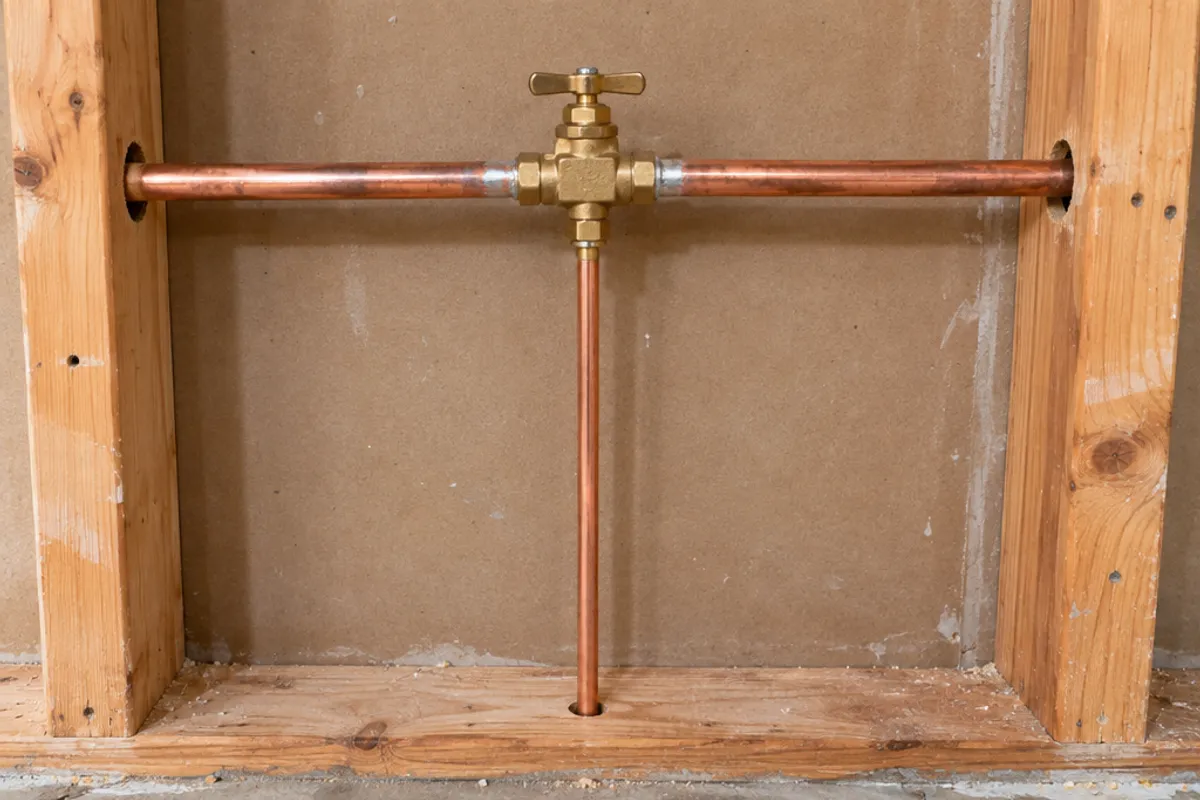
In cold regions such as Alberta, Quebec and the Maritimes, keep it and its tube out of exterior walls, as with any supply pipe.
What are the signs of a failed trap primer?
| What you notice | Likely cause |
|---|---|
| A sewer gas smell near the floor drain | The trap has dried out |
| Nothing comes from the tube when nearby taps run | A clogged screen or tube, a closed shut-off, or a primer too far away |
| A steady trickle from the tube | The primer is stuck open, or the timer runs too often |
| A stain on the wall at the primer | A leak at the primer or a fitting |
In a vacant or seasonal house, a pressure drop unit has nothing to trigger it; see how to winterize a vacant house.
How is a trap primer tested and serviced?
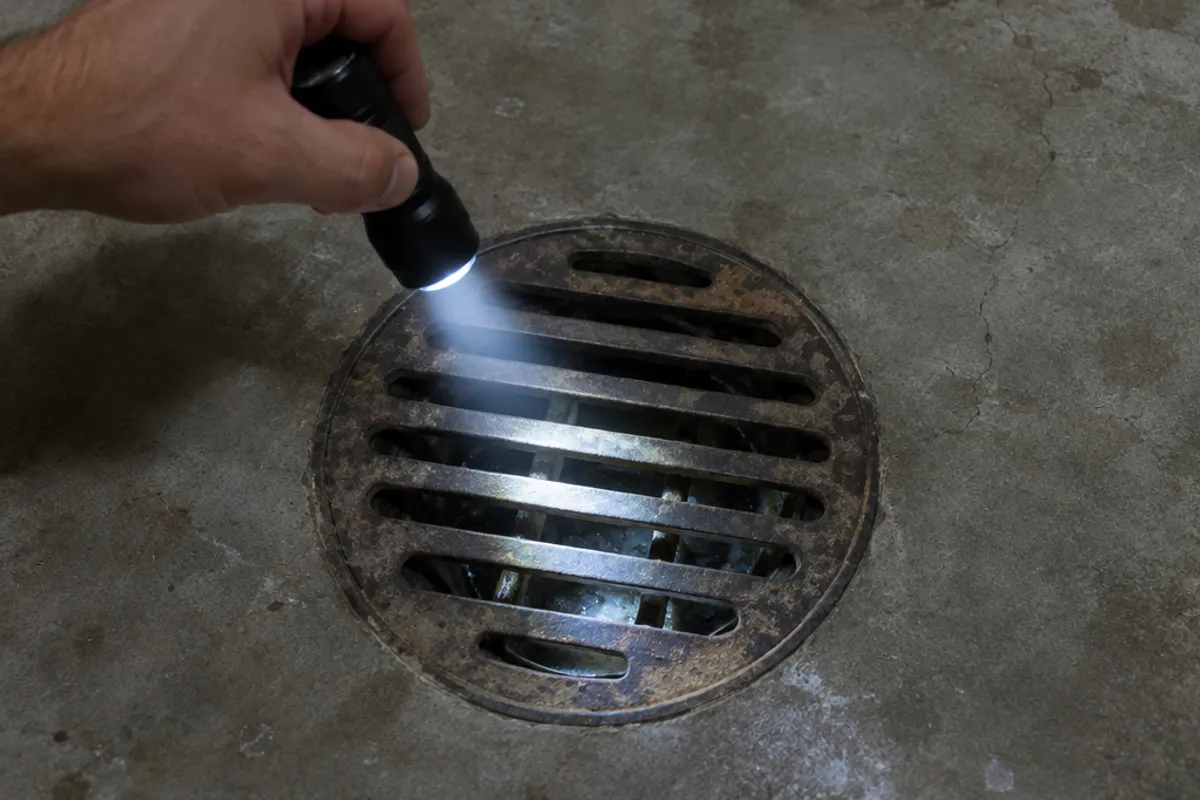
To maintain a trap primer, test it now and then: run a faucet or flush a toilet nearby and watch the floor drain for a trickle from the tube. If nothing comes:
- Pour a bucket of water into the floor drain to refill the trap.
- Shut off the water to it, at its own shut-off or the main water shut-off valve.
- Reach the primer, through an access panel if there is one.
- Clean the screen and the parts inside, following the manufacturer's maintenance instructions.
- Clear the tube, turn the water back on, check for drips and test again.
A new installation can mean cutting and soldering pipe, and an electronic primer needs power. Use a licensed plumber or electrician where your area requires one.
Why does a trap primer valve in a wall need an access panel?
A trap primer needs maintenance, and most designs are meant to be installed where they can be reached. Behind drywall, the only way back is through the wall, so put an access panel at the primer during installation, or when the wall is opened for a repair.
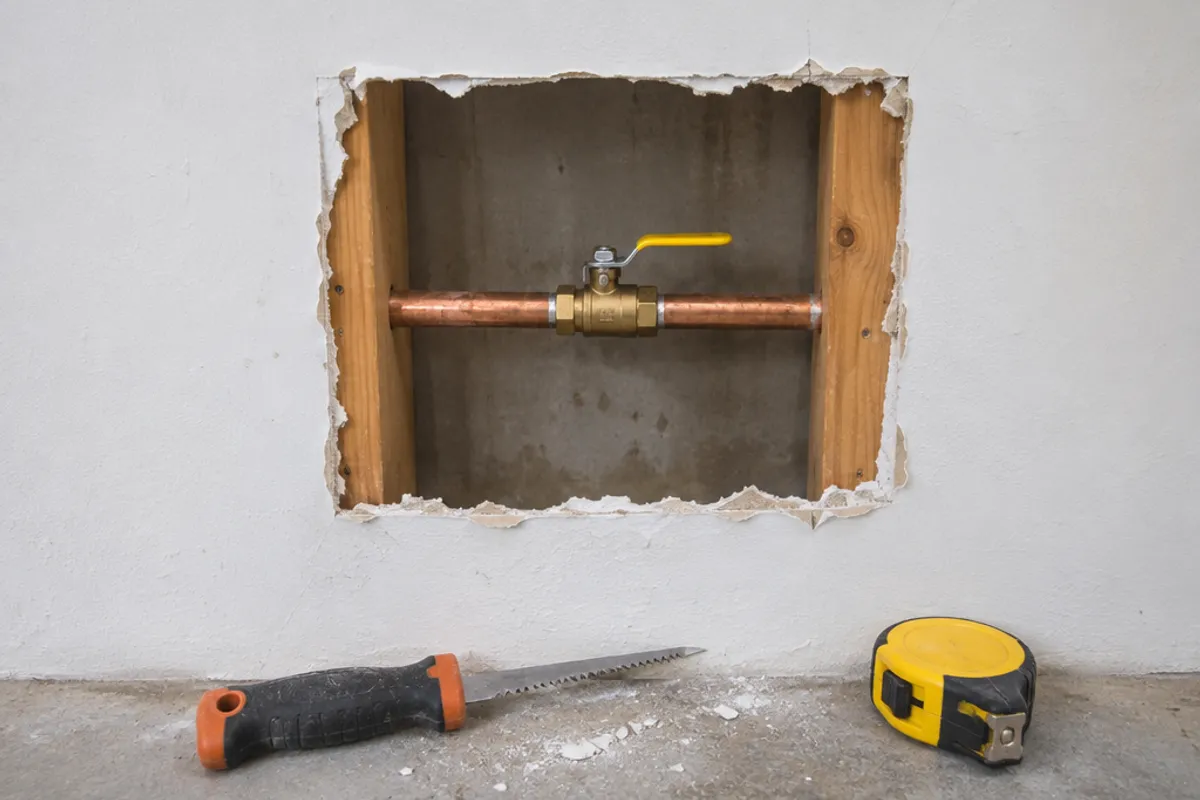
Size the opening around the primer, its shut-off and fittings, with room for your hands:
- SAP0808 spring-loaded panel: fits 6 × 6 to 8 × 8 in openings, overall 10 × 10 in.
- SAP1414 spring-loaded panel: fits 10 × 10 to 14 × 14 in openings, overall 16 × 16 in, for more room to work.
Neither panel is fire-rated or water-resistance-rated. See plumbing access panels and how to install an access panel in drywall.
Do plumbing codes require trap primers?
It depends on your local plumbing code, and your inspector decides. Before you finish a basement around a floor drain, ask your local building department, or in Canada your municipal building office, whether that drain needs a primer or another way to protect its trap seal, and which one it will accept.
Next, read what an access panel is, and compare every opening and cover on the access panel size chart.