
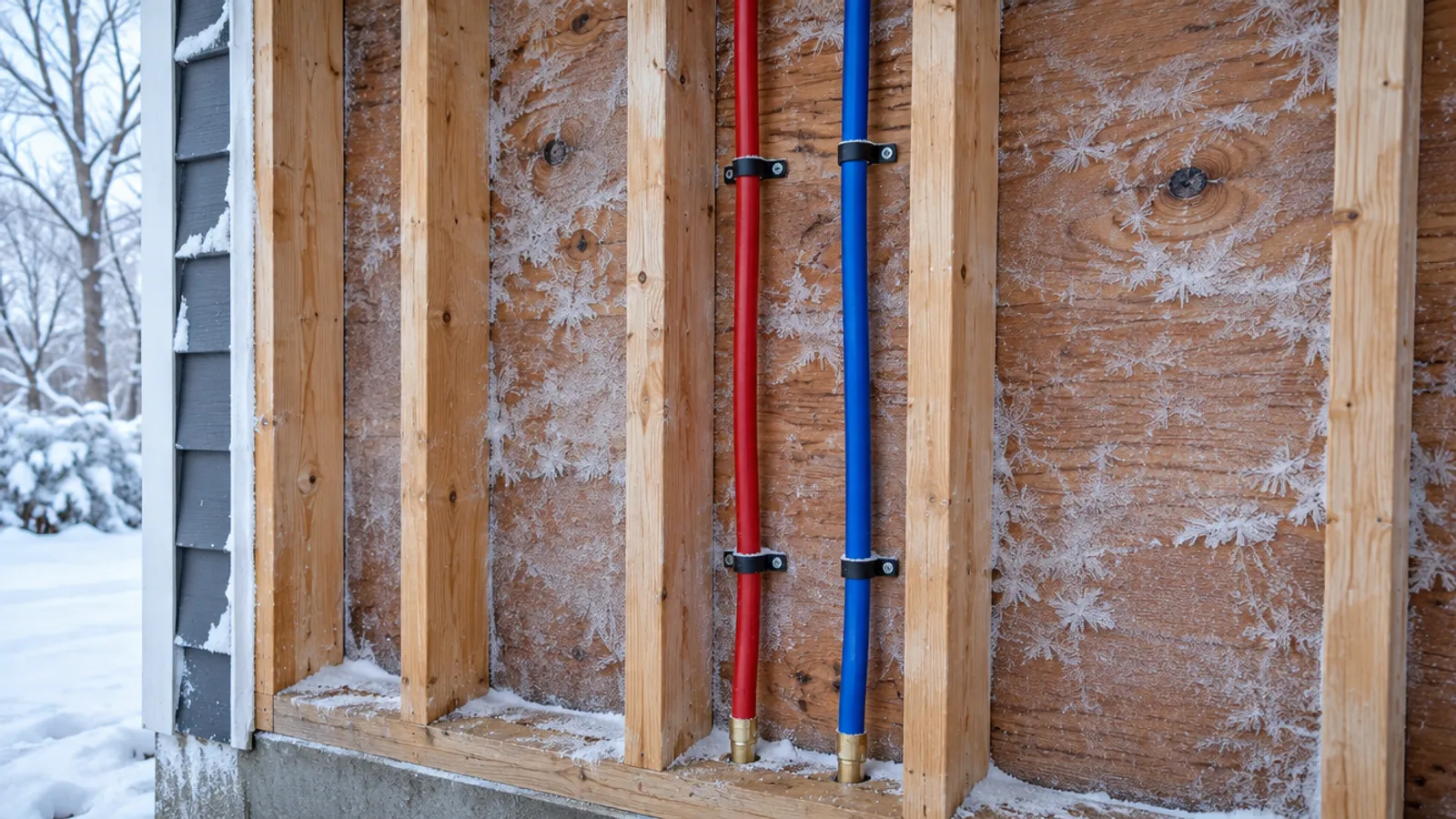
Yes, PEX pipes can freeze. The pipe doesn't stop the water inside from turning to ice, so a PEX line in a cold wall can stop flowing like any pipe. What differs is the damage: the Plastics Pipe Institute says PEX typically stretches as the water freezes and returns to size when it thaws, though it can still split.
This guide is for homeowners and builders in cold climates such as Alberta, the Maritimes and the northern US states, whether in a new build or when retrofitting an older home.
At what temperature do PEX pipes freeze?
Water starts to freeze at 32°F (0°C), its freezing point, and PEX pipes face the same cold weather as other pipes. What matters is the temperature around the pipe, how long it lasts, and how well the run is insulated. The risk is highest where PEX plumbing crosses unheated spaces in winter.
PEX is cross-linked polyethylene, a flexible material that conducts heat far more slowly than metal. The same institute (PPI) says in its technical report TR-52 (2020) that this can delay freezing compared with copper or steel pipe, but not prevent it. Frozen PEX pipes give no water flow, and PPI's caution is that PEX plumbing systems should not be deliberately frozen. The model plumbing codes the report quotes require pipes in unheated spaces to be protected, PEX included.
Will frozen PEX pipes burst?
Often they won't, but PPI's report says freezing can still damage or burst PEX in some situations. It describes how PEX pipes behave:
- They stay flexible. PEX pipes can still be bent at temperatures below -40°F (-40°C).
- They stretch. When water-filled PEX pipe freezes, it typically expands without cracking or splitting, then returns to its original diameter afterward. PEX resists breaking, which makes it freeze resistant, not freeze-proof.
- They need room to do it. That holds when the pipe can expand evenly along its length, as inside walls and ceilings. PEX pipe that freezes in a concrete slab or highly compacted soil may not expand evenly and may split.
On PEX tubing with an oxygen-barrier layer, often used for heating, PPI notes that the thin barrier may delaminate or crack when the pipe expands. The report also covers radiant heating and cooling loops, which need insulation below them where they run over an unheated crawl space.
What causes burst pipes?
Trapped water. Research cited in the report found that burst pipes happen once ice blocks a pipe in two places and further freezing builds high pressure between the blockages. In PEX, that pressure can pass the pipe's elastic limit and split or burst it, and a burst line can flood a ceiling once it warms up. So check the plumbing system afterward, even when nothing leaks.
How do PEX pipes compare with copper pipes in winter?
| Part | What can happen | What to do |
|---|---|---|
| PEX pipes | Usually stretch and recover; can split where they can't expand evenly | Check the run afterward |
| Copper pipes | Far more rigid than PEX and quicker to lose heat, so they may freeze sooner | Protect them the same way |
| Fittings and valves | Not covered by PPI's report; the freeze-thaw research it cites recorded failures at two polymer fittings | Check them first, and follow the maker's guidance |
PPI's figures show the contrast: copper is roughly 180 times more rigid than PEX, and for the same thickness PEX conducts heat 68 times more slowly. Like other rigid pipes, copper lacks PEX's elastic give.
What about fittings?
Fittings are the rigid points of a PEX plumbing system: brass or polymer bodies installed on the pipe with rings or sleeves. PPI's report does not address them, so check every fitting you can reach first, and follow the guidance of the company that made them. Because PEX pipe is flexible, a run needs fewer fittings than rigid pipes, which PPI notes means fewer transition points where ice blockages tend to form.
Where do PEX pipes freeze in a house?
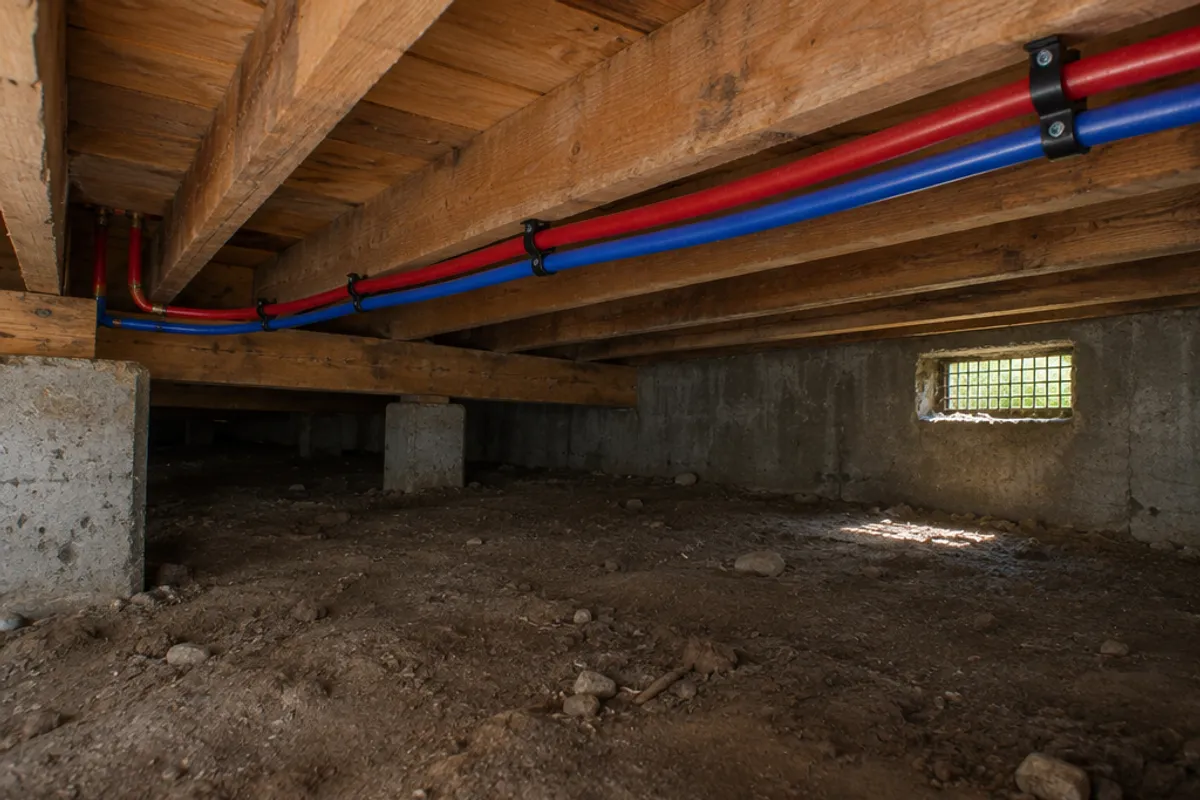
Anywhere a run passes through a space that drops below freezing: exterior walls behind kitchen sinks, laundry hookups and bathrooms; crawl spaces near foundation vents and the rim joist; garages; the attic; and lines to outdoor spigots where the pipe leaves the basement. Frost on the framing near a run is a warning sign of frozen pipes.
PPI recommends that you run pipes through heated spaces, and that PEX installed where it can get cold be insulated enough to prevent freezing. How much that takes depends on the climate, and local codes apply. For a water service line, PPI says PEX pipe should be buried below the frost line. When you install plumbing or run water lines in a new build, that is easiest to get right before the drywall goes up.
How do you unfreeze PEX and get water flow back?
- If you see a leak or a stain, shut off the main first: the line may have burst. Our guide to finding the water shut-off valve shows where to look.
- Open the faucet on the frozen line so melting water can drain and to keep water moving.
- Warm the frozen section gently, starting with the last few feet of pipe nearest the faucet: a hair dryer or warm towels you wrap around the pipe, or warm air on the drywall over it.
- On an exposed run, self-regulating heat cable recommended for plastic pipe can also do it, PPI notes. It is an electrical device, so check that the pipe maker allows it, and keep electrical cords dry.
- Keep going until full flow returns, then check for leaks.
PPI warns against using an open flame, excessive heat or an electric-resistance pipe thawing device on PEX. Pipe treated that way may show no visible damage yet be weakened enough to fail early, and PPI says to replace it as soon as possible. Call a licensed plumber if a pipe has burst, if you can't find the frozen section, or if it won't clear.
For frozen pipes behind drywall, see how to thaw them safely. Afterward, check every fitting and valve you can reach with the supply on, watch the ceilings below for stains, and watch the water meter with everything off. If you find a leak, call a plumber to replace the damaged section, and see our guide to finding a hidden leak to limit water damage.
Why keep the manifold and cold runs reachable?
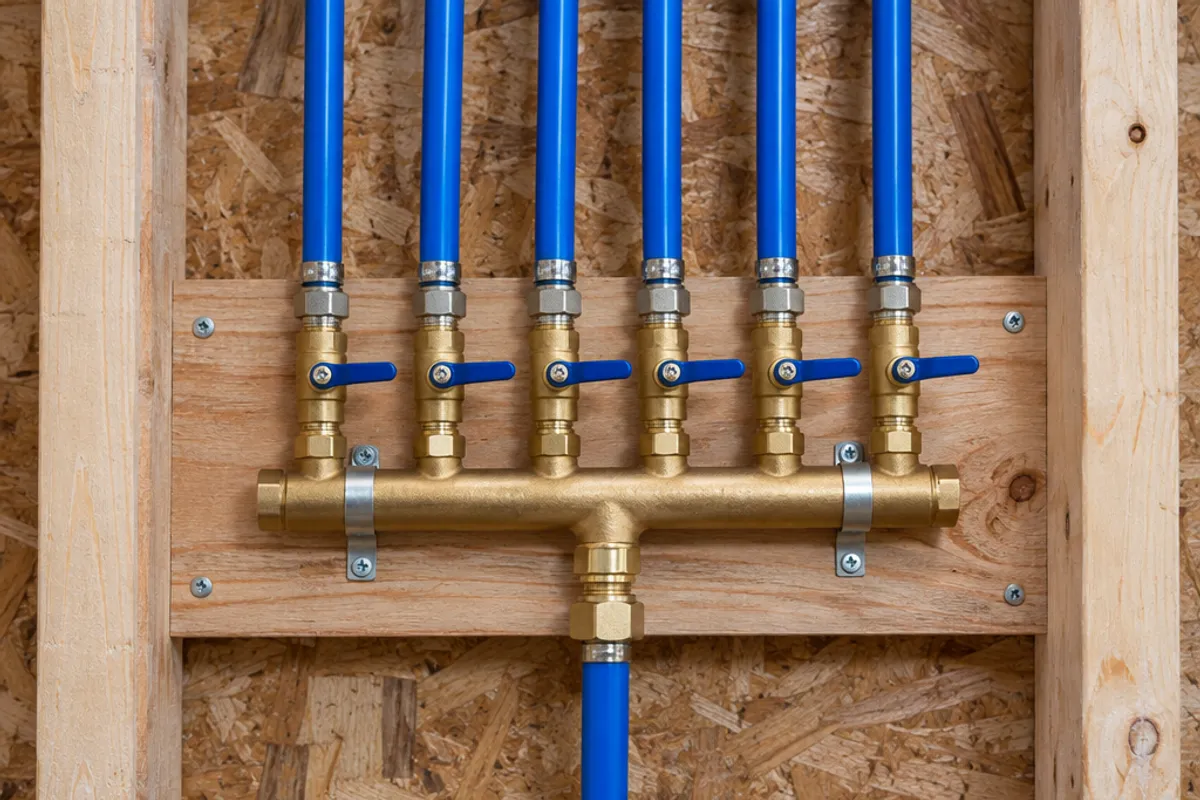
Many systems run each line from a central manifold with its own valve, so you can shut off one frozen or leaking line before it floods a ceiling and keep every other fixture running, but only if you can reach the valves once the drywall is up. When retrofitting, plan that access before the drywall goes back.
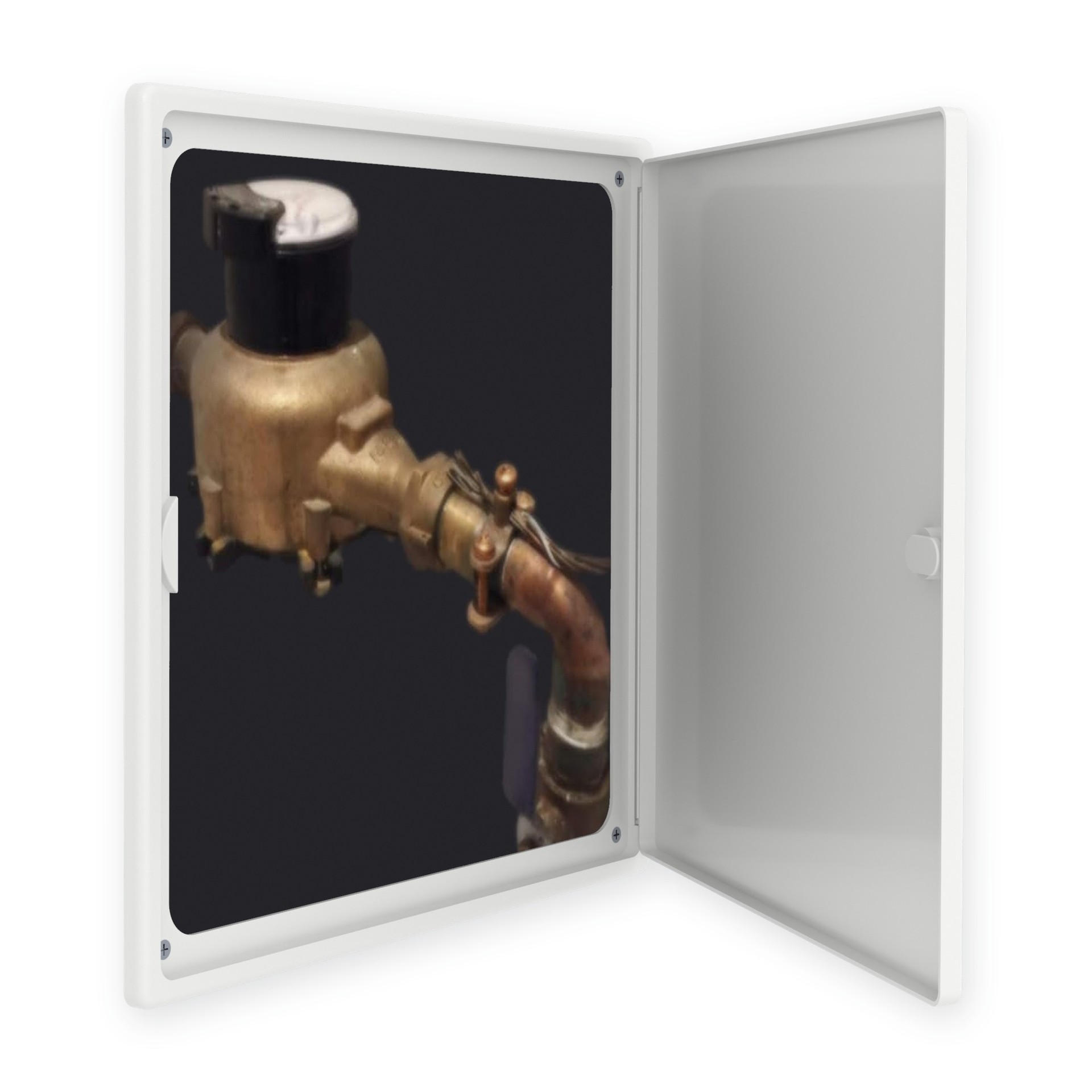
- Behind a hinged access door. Install the door in front of the valves. The PAD1216 has a service opening of 10.35 × 14.35 in (estimated), and the PAD1212 one of 10.35 × 10.35 in (estimated). Measure the valve handles you will turn, and place the door so they sit inside its opening.
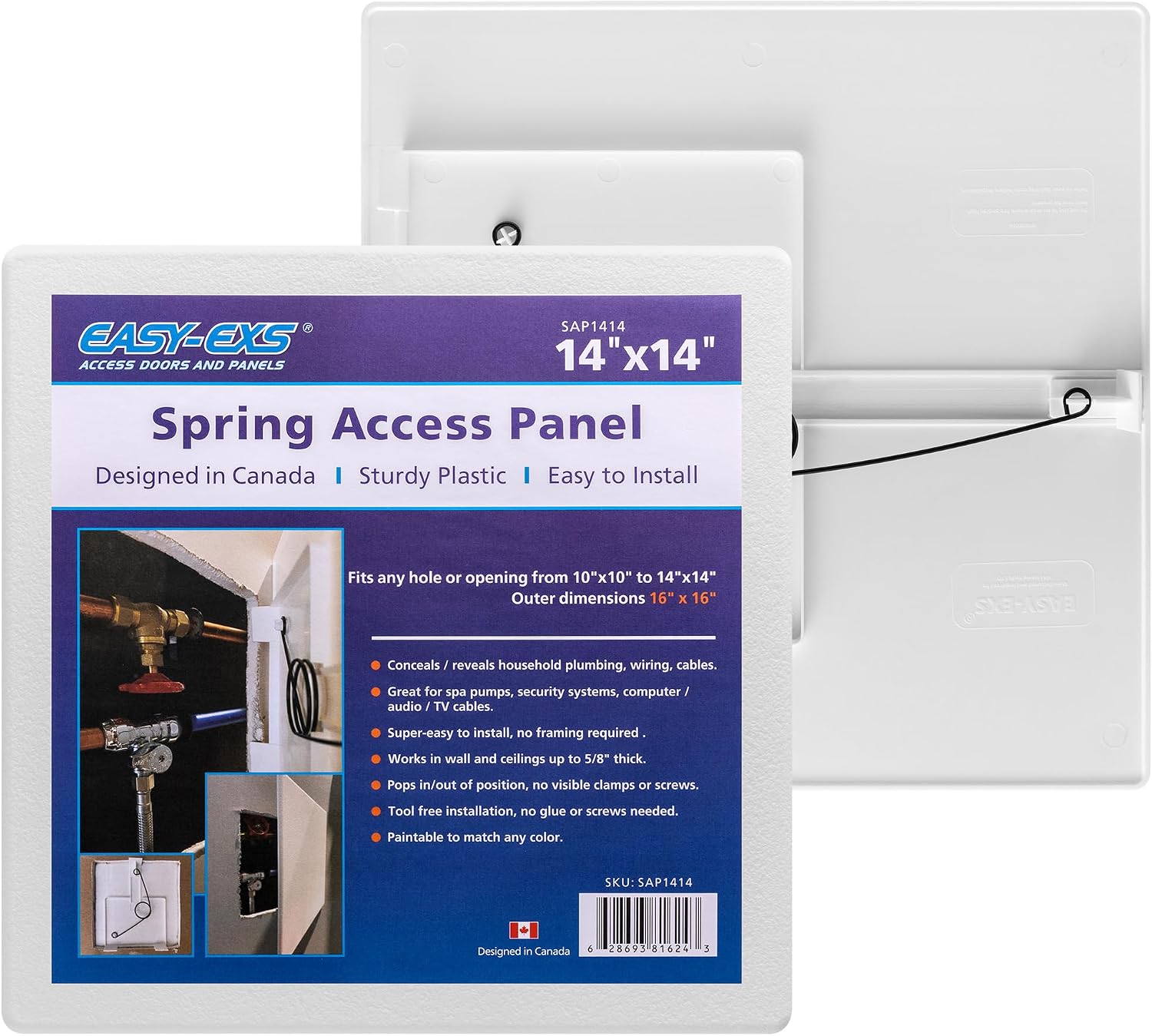
- At a cold run. If a run crosses a cold space, such as the ceiling over a garage, fit a removable panel at the coldest point so you can check it in winter. The SAP1414 fits openings from 10 × 10 to 14 × 14 in.
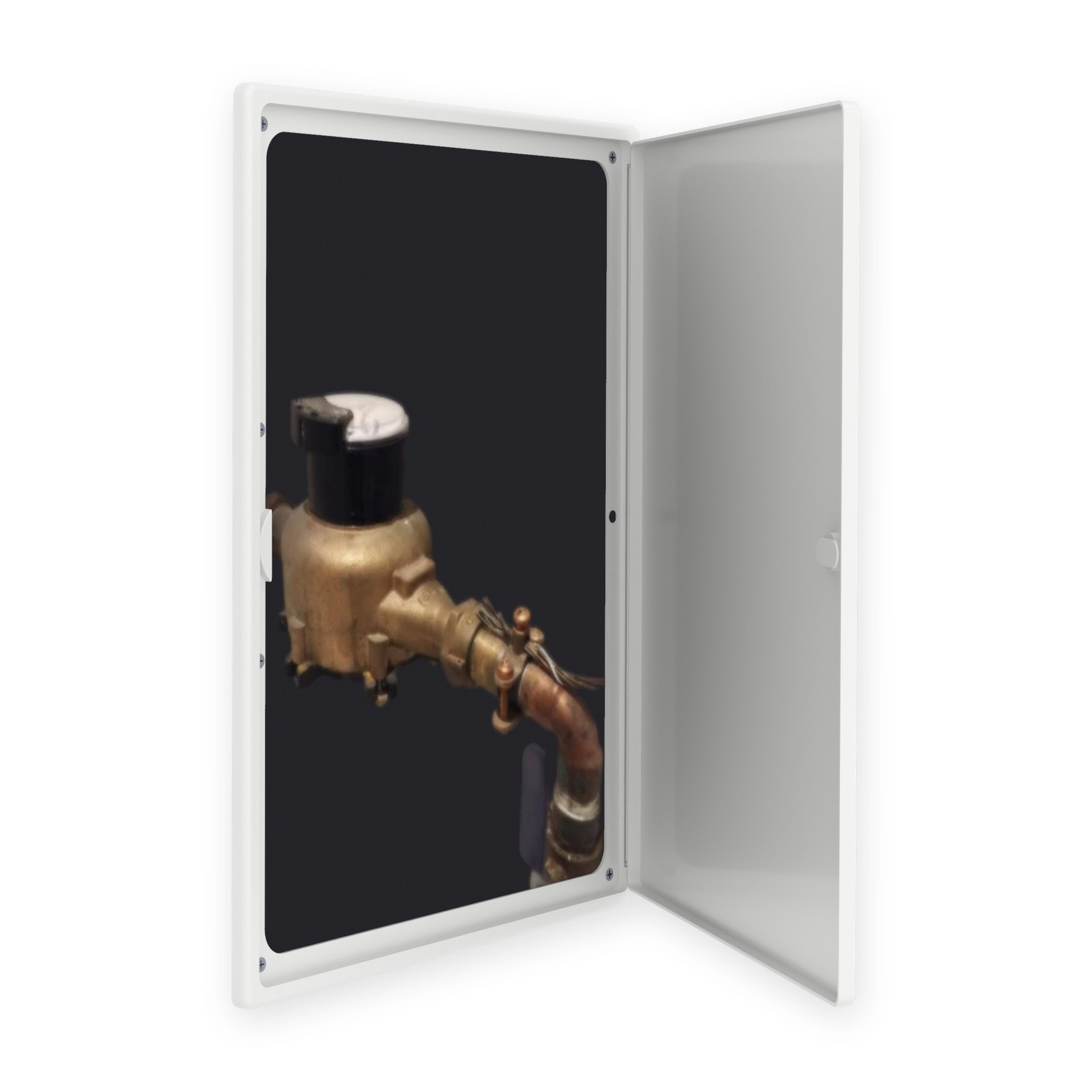
Easy-Exs · PAD1216
12x16 in Plastic Drywall Access Panel with Hinged Door
Rated 4.4 out of 5, 2,789 ratings online
Maximum service opening 10.35 × 14.35 in (estimated) · Overall 12 × 16 in
USD $16.49 each
- 10+ panels: $13.99 each
- 80+ panels: $10.99 each
Easy-Exs · PAD1212
12x12 in Plastic Drywall Access Panel with Hinged Door
Rated 4.4 out of 5, 2,789 ratings online
Maximum service opening 10.35 × 10.35 in (estimated) · Overall 12 × 12 in
USD $13.99 each
- 10+ panels: $10.99 each
- 80+ panels: $9.49 each
Easy-Exs · SAP1414
14x14 in Spring-Loaded Plastic Drywall Access Panel
Rated 4.6 out of 5, 718 ratings online
Fits 10 × 10 to 14 × 14 in openings · Overall 16 × 16 in
USD $18.49 each
- 10+ panels: $16.49 each
- 80+ panels: $14.99 each
A hinged door's frame sits on the surface over a cut-out the size of its service opening, with rounded corners; each door's product page has a 1:1 cut-out template, and the screws come with the door. See the access doors page and the plumbing access panels page. Our product records list no air-sealing rating for any panel or door, so where the opening breaks a vapor barrier, ask your building department how to keep it continuous.
Before you drywall around the manifold, ask your local building department how it wants those valves left reachable.
How do you keep PEX pipes from freezing?
Before cold weather arrives and the temperature drops, reduce the risk to your plumbing:
- Keep runs on the warm side of the insulation, toward the room.
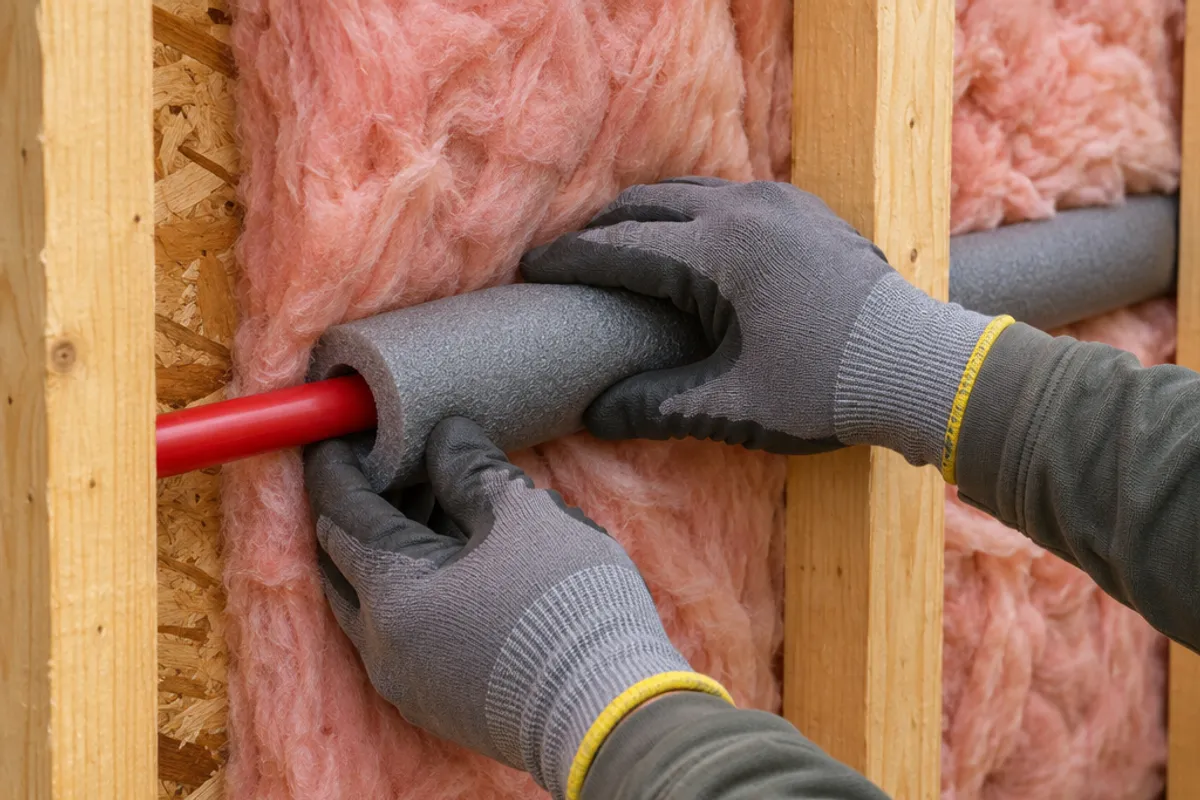
- Wrap runs with pipe insulation where they cross crawl spaces and the attic.
- Seal drafts where pipes pass through the framing and along the rim joist.
- Keep water moving on a line that has frozen before: open the cabinet doors under any sink that has frozen before and let a faucet drip in a deep cold spell.
- Keep the furnace running at a steady temperature when the home is empty; see how to winterize a vacant house.
- Use only self-regulating heat cable made for that pipe material, installed as its instructions say and with the pipe maker's approval.
- Shut off and drain outdoor spigots before winter.
If a run keeps freezing, ask a plumber about rerouting it through a heated space.
Measure before you order: our guide on how to measure for an access panel shows how, and the access panel size chart compares every opening and cover.