
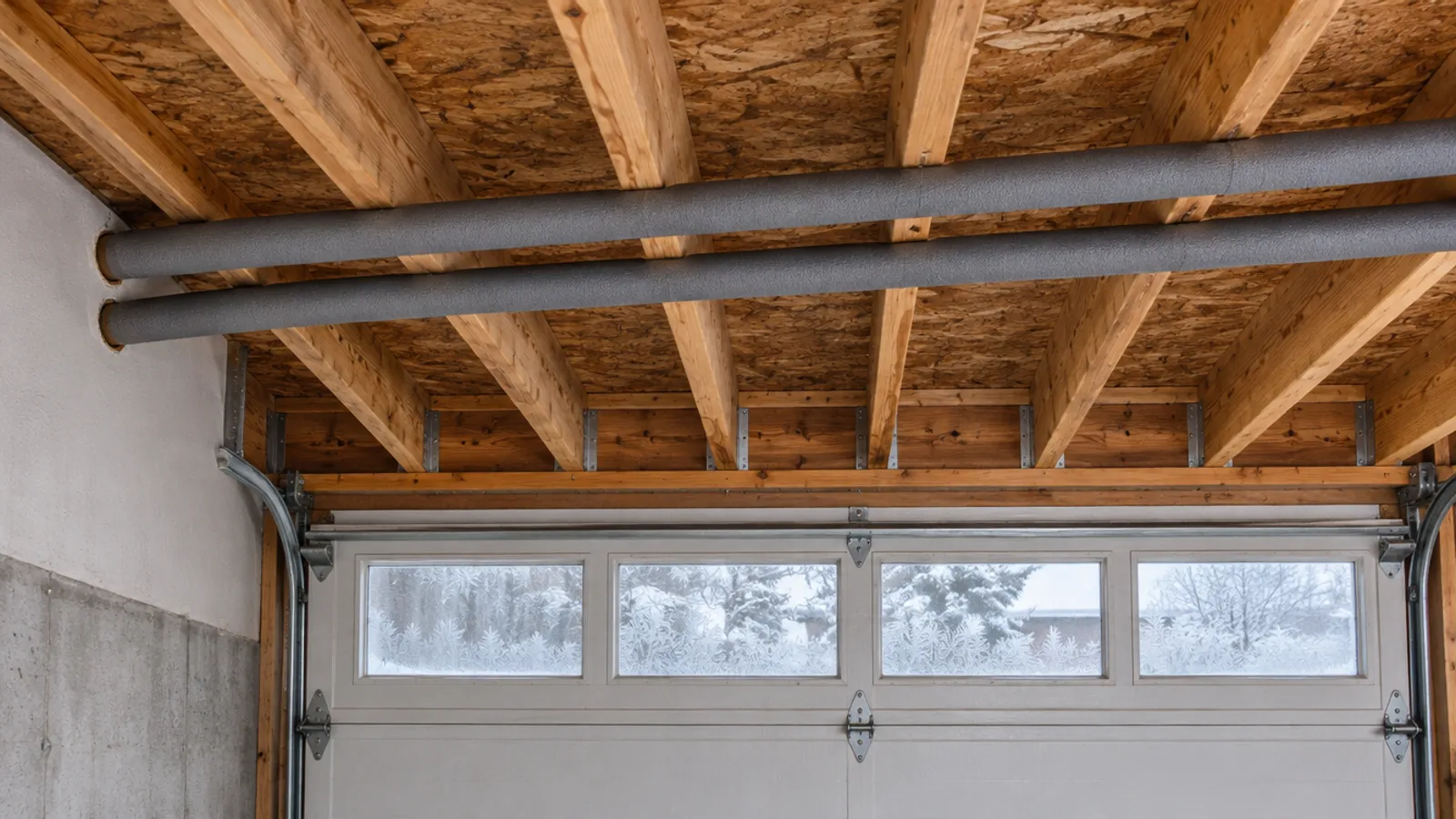
To keep pipes from freezing in a garage, insulate every run of water line and seal the drafts around it, keep the garage door closed, and let the faucet that run feeds drip in a deep cold spell. On a run that still freezes, add listed heat cable, installed exactly as its maker's instructions say.
That holds wherever winter brings freezing temperatures, from Alberta and the Maritimes to the North and the Northeast of the US.
Why do pipes freeze in unheated garages?
A garage isn't built to stay warm: many have no heat, a big door that lets outside air in each time it opens, and thinly insulated walls, so any water line there is at risk. Seattle Public Utilities names garages among the exposed or unheated areas where water pipes need protection from freezing, and lists pipes running against exterior walls among the likely places a pipe freezes.
The plumbing is rarely there by choice. It crosses the ceiling to a bathroom or kitchen above, feeds a laundry tub or washer, or passes through a wall to a hose bib. When temperatures stay below freezing long enough, water freezes in the pipe and expands against the pipe walls, and ice that blocks the line builds pressure between itself and a closed faucet. A burst pipe often shows only once it thaws.
Where do water lines run in a garage?
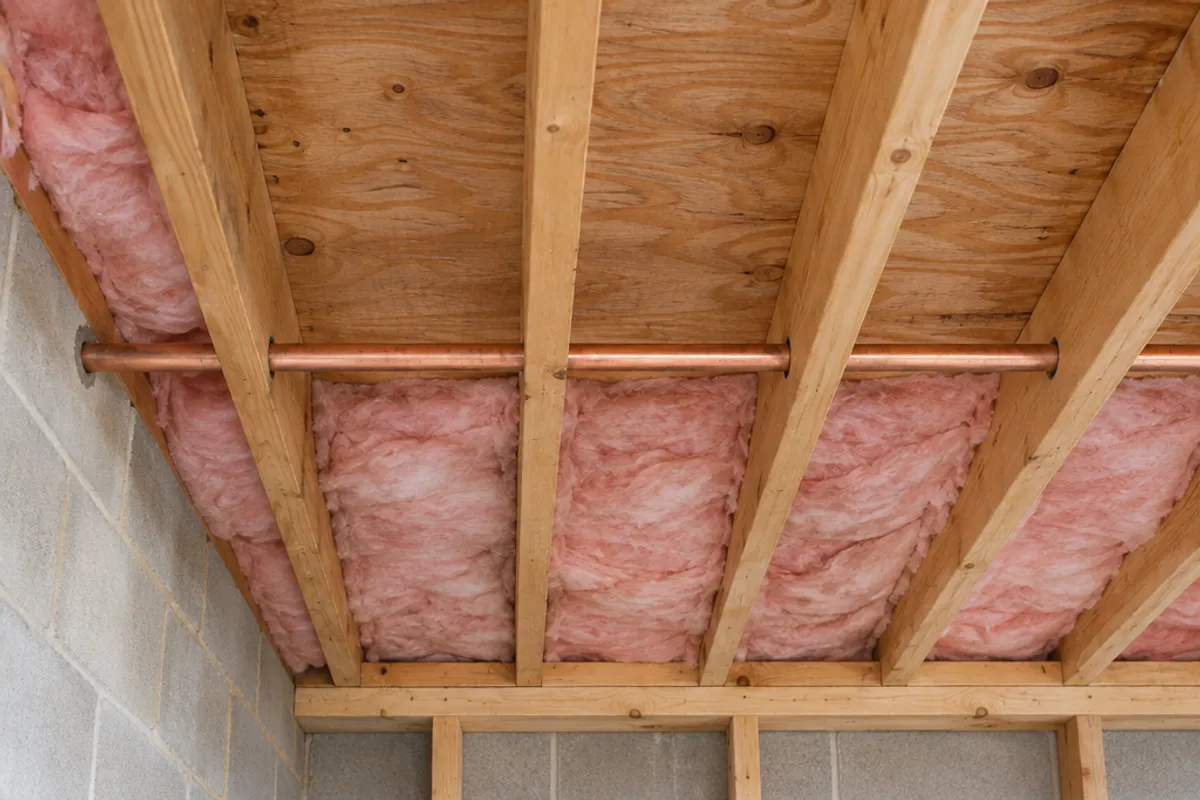
Walk the garage and trace each run of plumbing; each place below is vulnerable for its own reason.
| Where the line runs | Why it is vulnerable | First thing to do |
|---|---|---|
| Ceiling under a room | Cold air underneath | Keep the pipe against the warm subfloor, insulation below it |
| Exterior wall | Outside air on one side | Wrap the pipe and fill the cavity behind it |
| Wall shared with the house | Drafts at the holes it passes through | Seal the cracks around the pipe |
| Laundry hookup | Exposed pipes and valves | Sleeve them; let the tap drip in a cold snap |
| Line to a hose bib | It runs to the outside | Shut it off and drain it before winter |
How do you insulate pipes in garage walls and ceilings?
Insulation slows heat loss from the water; it adds no heat. Even proper insulation only lowers the risk when freezing temperatures last for days, so where it sits matters as much as how much you use.
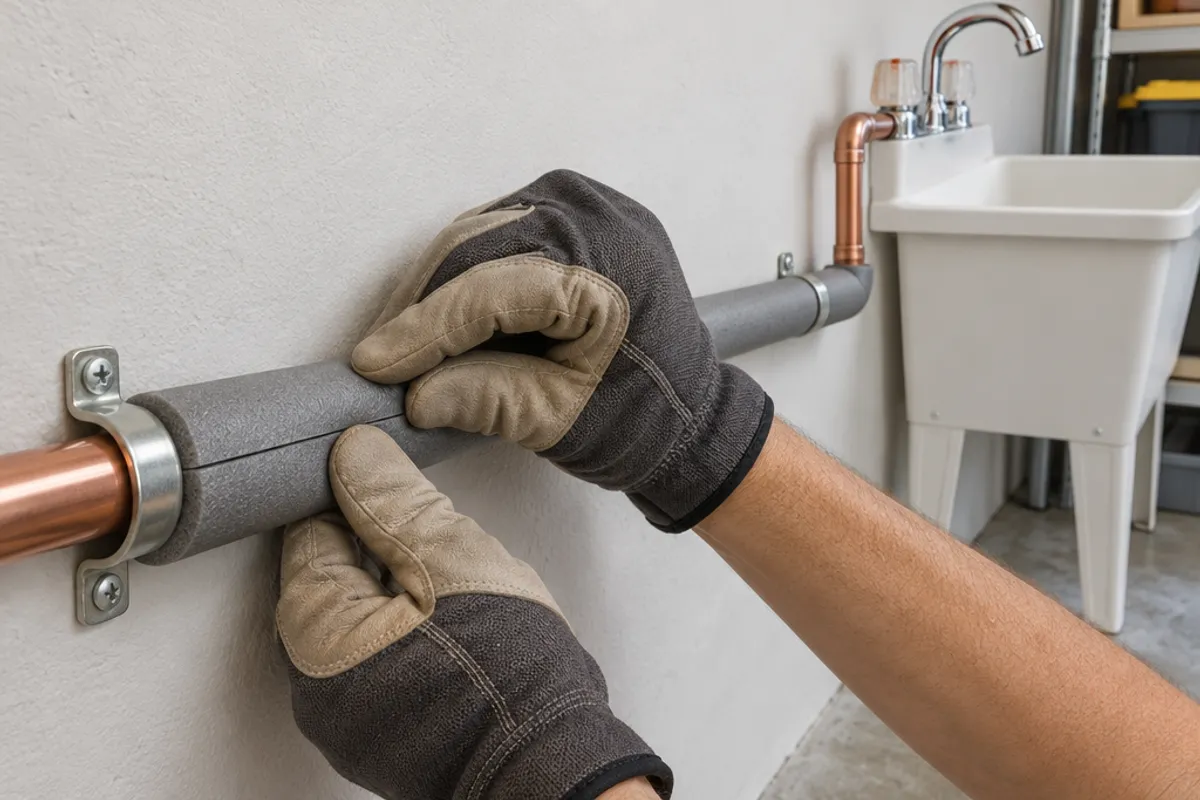
- Wrap every exposed run of plumbing, hot and cold. The US Department of Energy's Building America guide names tubular sleeves, spiral wrap and fiberglass batts taped around the pipe, and says all three can be effective.
- Hold it in place every 1 to 2 ft with tape, a tie or a clamp, as the guide says, and wrap plastic over fiberglass insulation that has no moisture barrier.
- In exterior walls, air seal the cavity and put the cavity insulation behind the pipe, between it and the outside, as the guide advises.
- In a ceiling under a room, turn that idea on its side: keep the pipe tight to the warm subfloor above and the insulation below it. Batts packed above the pipe cut it off from its only heat.
- Seal the drafts where each pipe enters the garage, and check the seal along the bottom of the garage door before winter.
How else can you prevent frozen pipes in cold weather?
Water utilities add a few free habits:
- Keep the garage doors closed. Denver Water says to keep an attached garage's doors shut, because plumbing is sometimes routed through that unheated space.
- Keep the heat on day and night. Seattle Public Utilities says no lower than 55 degrees, even when you're away.
- Let a faucet drip in severe cold. Seattle suggests one indoor faucet, the one farthest from your front door, dripping cold water slowly.
- Drain the hose bib before winter: close its inside valve, then open the bib outside so the line keeps draining. See how to turn off outside water, and how to winterize a vacant house if you'll be away. See also how to winterize an outdoor shower.
What about a heated garage?
Leave the heater on at a steady setting whenever temperatures drop below freezing. A portable space heater adds its own risk: keep it away from fuel and paint, follow its instructions and never leave it running unattended.
Does heat tape keep garage water pipes from freezing?
It can, on a plumbing run that still freezes once insulated. The City of Calgary suggests a pipe sleeve or UL-listed heat tape or heat cable for pipes in cold areas, and Denver Water warns that improper use of heat tape can cause fires. The DOE guide says plug-in heat tape belongs only in a GFCI receptacle, that in climate zones 6 to 8 a cable hardwired by a licensed electrician is safer, and that all heat trace should be installed so it is accessible and replaceable.
Products differ, so read your cable's manual first. One maker's manual for self-regulating cable calls for 30-mA ground-fault protection, fiberglass insulation over the cable, 10 in of distance from combustible surfaces such as wood, and a yearly check. It has separate tables for metal and plastic pipe, so match the cable to your copper or PEX tubing.
Use a licensed electrician for a new circuit, outlet or hardwired connection, or wherever your jurisdiction requires one. If you open a ceiling and find wiring or a gas line beside the plumbing, stop and call the right trade.
What should you do about frozen pipes in a garage ceiling?
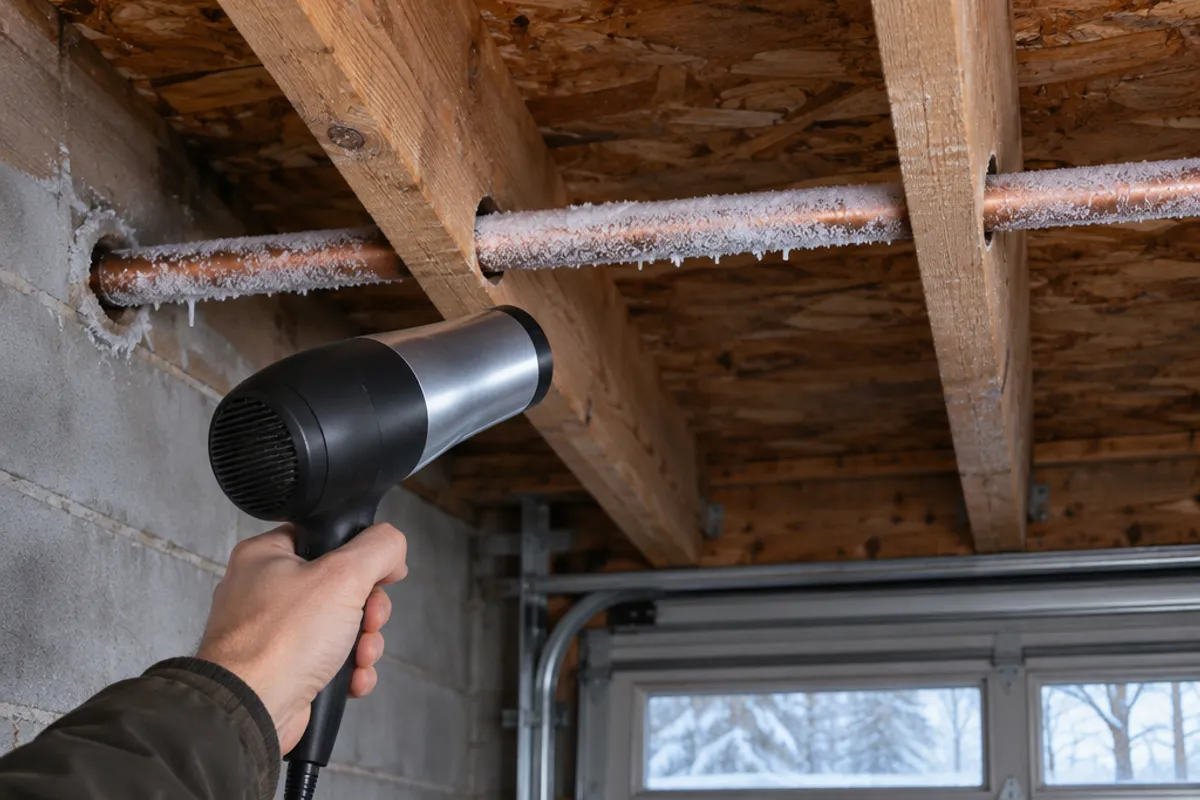
A faucet that gives only a trickle is the usual first sign of frozen pipes. With pipes frozen in a garage ceiling, look at the drywall under the run first: a damp patch or a sag may mean the pipe has already burst.
If it's dry, open the faucet the line feeds and warm the section gently. Seattle Public Utilities lists towels soaked in hot water, an electric heating pad or an electric hair dryer, warns against electrical devices where there is standing water, and rules out a blowtorch, a kerosene or propane heater or any other open flame, which matters even more in a garage full of fuel.
Heat reaches frozen pipes slowly through drywall; the safest way, and when to open it, is in our guide to thawing frozen pipes in a wall. For PEX, read can PEX pipe freeze? Call a licensed plumber if you can't find, reach or thaw the frozen section.
How do you limit water damage if a pipe bursts?
Shut off the main first: see where the water shut-off valve is. Then open a faucet to drain the line, move what's stored underneath, and call a plumber for the repairs. A burst line in a ceiling can cause extensive water damage to the room above and everything below; what to do about a ceiling leak covers drying out and the ceiling repairs.
Where can an access panel go in a garage ceiling or wall?
A run in a finished ceiling stays out of sight until it freezes or leaks. A removable panel at the spot that froze before, or the most vulnerable point on the run, lets you check for ice, top up the insulation or warm the pipe next winter without cutting into the ceiling again.
First, ask your building department whether that ceiling or wall is a fire separation. A garage ceiling under a bedroom or bonus room, or a wall shared with the house, can be one. If it is, don't fit one of our panels there.
Our plastic access panels and doors are not fire-rated, and we publish no water-resistance rating for them, so don't fit one in a fire separation, such as the wall between a house and an attached garage.
Where the department confirms it isn't:
- Along a ceiling run: SAP1414 spring-loaded panel: fits 10 × 10 to 14 × 14 in openings, overall 16 × 16 in. It lifts out by hand for a quick look on a cold night.
- At a valve in a wall: PAD1212 hinged door: maximum service opening 10.35 × 10.35 in (estimated), overall 12 × 12 in.
Lay a loose piece of insulation back between the panel and the pipe, so the opening doesn't become the cold spot. The ceiling access panels page compares the options.
Measure before you order: our guide on how to measure for an access panel shows how, and the access panel size chart compares every opening and cover. How to install an access panel in a ceiling covers fitting it.