
A stop and waste valve is a shut-off with a small drain, the "waste", on its outlet side. Close it to stop the water flow to one line, such as an outdoor faucet or an irrigation system, then let the water left in the pipe beyond it run out before cold weather can freeze it.
Plumbing training material from British Columbia notes that they are also called stop and drain valves. Most sit indoors, where the line to an outside tap or a lawn sprinkler system leaves the house, and they are commonly emptied every fall to prevent freeze damage. That is why one above a finished ceiling needs a way in.
What is a stop and waste valve, and how does it work?
Inside, it is an ordinary stop: a washer and seat, or a ball, that seals the pipe. The difference is a small drain port on the side of the body. The name describes both jobs: the valve stops the supply, and the port lets the leftover water go to waste.
The port faces the outlet side, toward the faucet or the sprinkler system. With the valve off, unscrewing the port's cap lets air enter the pipe beyond it, so the water trapped there can run out. One maker's support page describes it the same way, and says it is crucial to empty every supply line to an outside hose faucet that is not frost-free before the cold season, to prevent the valve and pipe from freezing and bursting.
You will meet three kinds of stop and waste valves:
- Multi-turn stop and waste valve. A round wheel handle that takes several turns to stop the water, with a small knurled drain cap on the body.
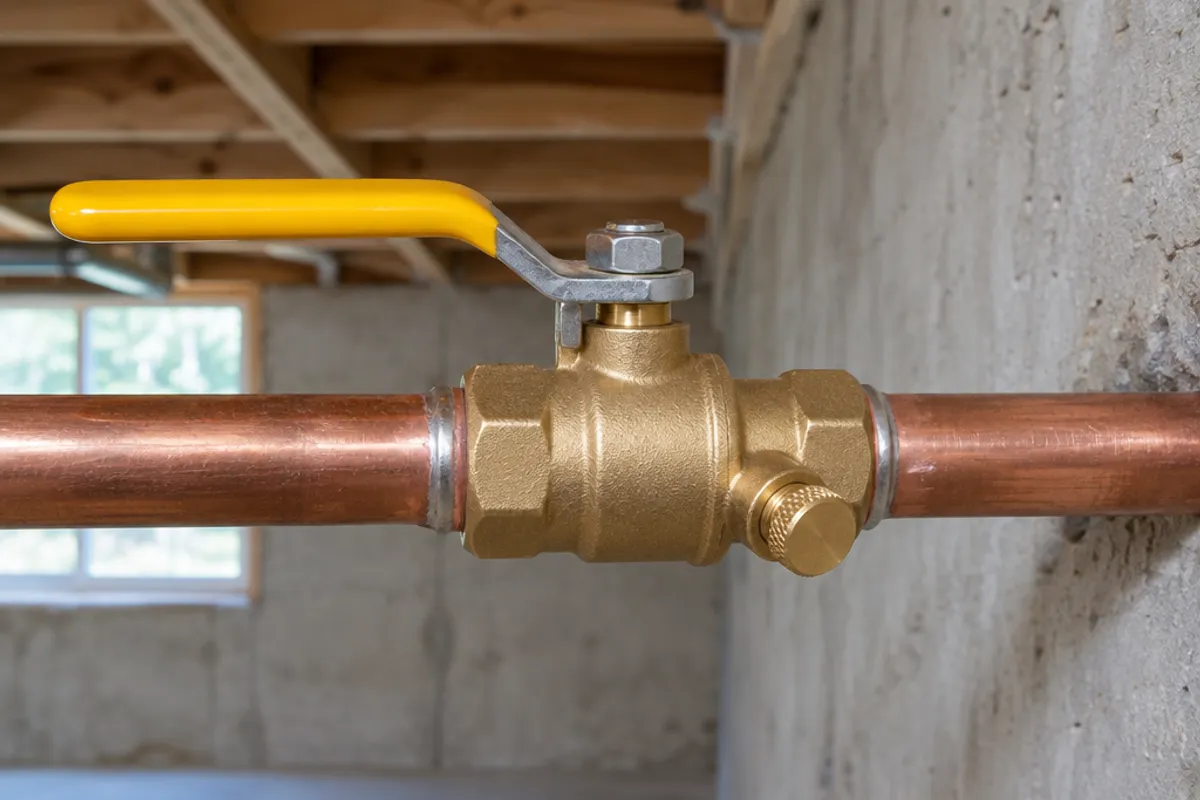
- Ball valve with drain. A quarter-turn ball valve with a lever and a drain cap. In the off position, the lever lies across the pipe.
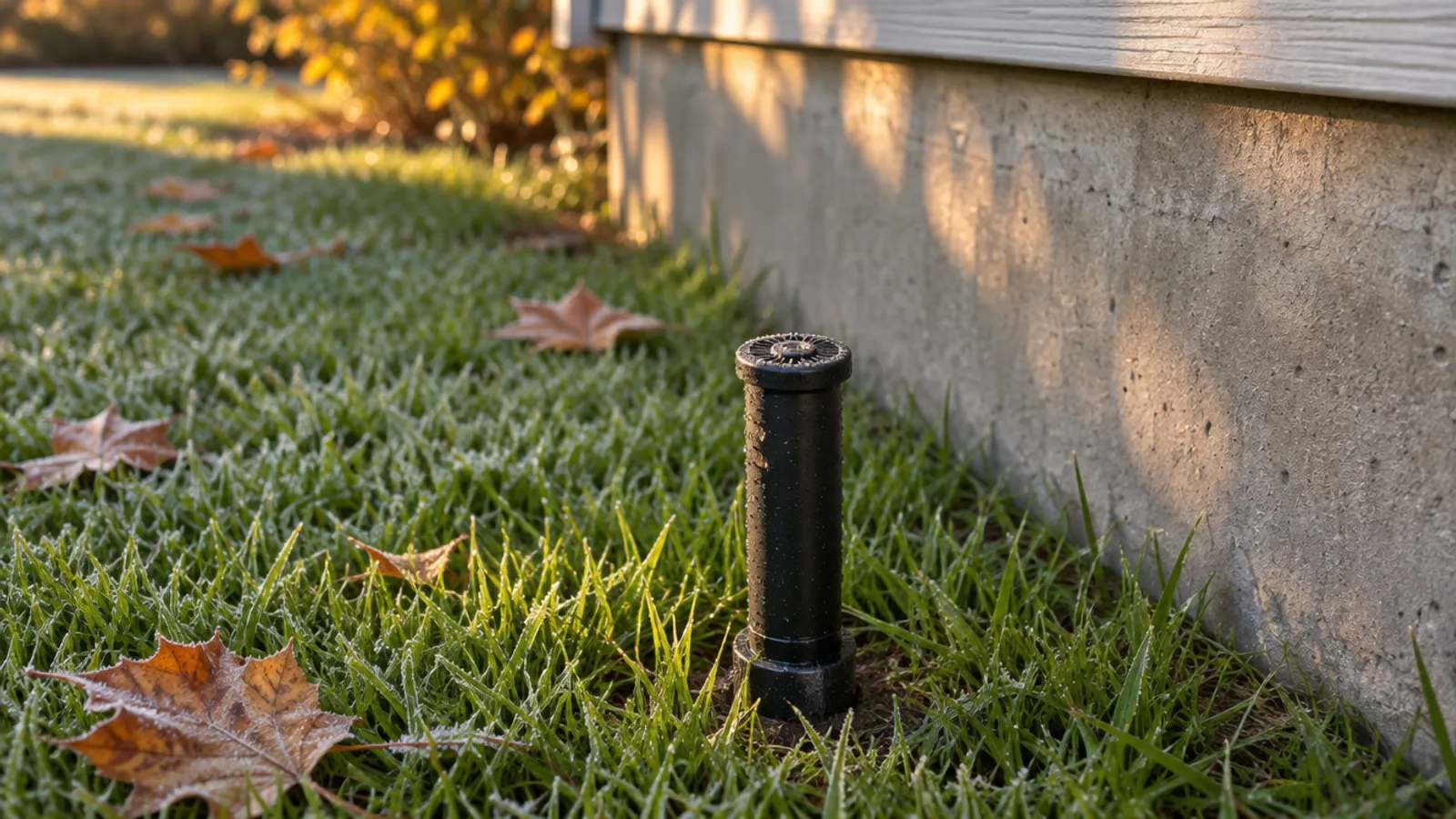
- Buried stop and waste valve. Common on irrigation lines in the yard, and turned from the surface with a long key. It has only a drain hole, and one maker's install sheet says to backfill around a buried valve with pea gravel so that hole stays unobstructed.
What is the difference between a stop and waste valve and a ball valve?
A plain ball valve only stops the water, and the pipe beyond it stays full. A ball valve with a drain port is a stop and waste valve in quarter-turn form. What matters is the drain:
| Question | Plain ball valve or stop | Stop and waste valve |
|---|---|---|
| Stops the water flow? | Yes | Yes |
| Empties the pipe beyond it? | No, that pipe stays full of water | Yes, through its drain port |
| Which way does it go? | As its maker marks it | Drain port on the outlet (downstream) side, as the arrow shows |
| Typical job | Isolating one fixture or branch | A line that must be emptied for winter: outdoor faucets, a sprinkler supply |
Where is the stop and waste valve located?
Look on the line that feeds whatever needs emptying. For an outdoor faucet that is not frost-free, the valve sits indoors in the heated part of the house, usually near where the pipe goes through the wall: in a basement ceiling near the rim joist, in a crawl space or in a utility room. Our guide to turning off outside water covers tracing that branch back from the faucet. Plumbing an outdoor shower? See where its indoor shut-offs and drains go.
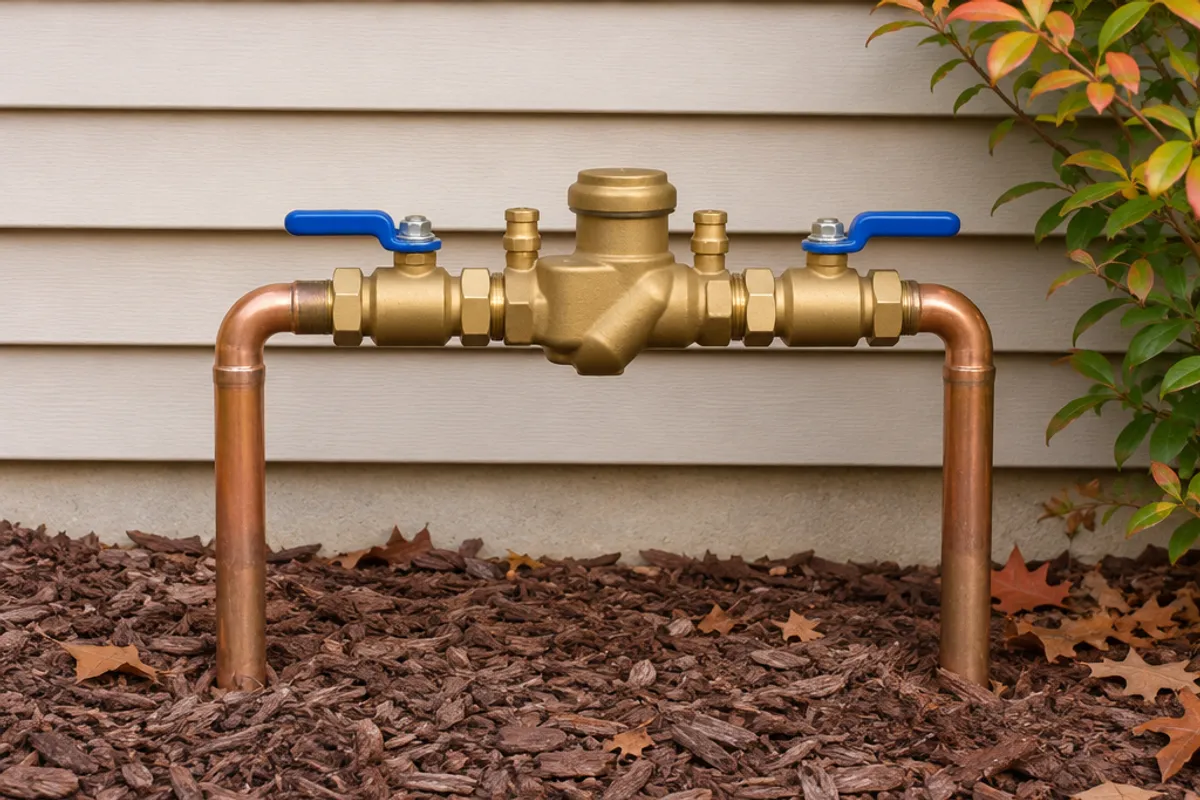
For a lawn sprinkler or irrigation system, Colorado State University Extension says a stop and waste valve, or a drain of some type, should be installed between the water supply and the backflow device. It may be in a basement, a crawl space or underground, and a buried one may need a long key. Start where the irrigation supply leaves the main, often near the main shut-off, and follow it toward the backflow preventer outside.
Is the stop and waste the sprinkler system shut off valve?
Usually, yes. The important difference: switching the sprinkler controller off stops the zones from running, but the pipe up to the zone valves stays under pressure. The stop and waste is the sprinkler system shut off valve that stops the water to the whole system, and winterization starts there.
It is only the first step. To prepare a system for winter, the same extension page warns not to trust drain valves alone, because buried lines shift and can hold water in low sections, and water expands as it freezes, breaking pipes, fittings and sprinklers. It recommends blowing the system out with compressed air, and it says pressure vacuum breaker and reduced pressure backflow assemblies must never be blown out that way, because the heat can melt their rubber seals. Both hold check valves and test cocks with their own winterization steps, so contact the installer or follow the maker's instructions for the rest.
How do you drain a stop and waste valve?
Here is how to drain a stop and waste valve indoors, as routine fall maintenance. The hose and faucet side of the job is in our outside water guide linked above.
- Shut the valve all the way, and don't stop halfway. The maker's sheet linked above says its valve is designed to work fully open or fully closed, never as a throttle.
- Open the far end of the line: the outdoor faucet, or the drain point the sprinkler installer set up. That sheet says doing this once the valve is off prevents a partial vacuum, so the line empties faster and more completely.
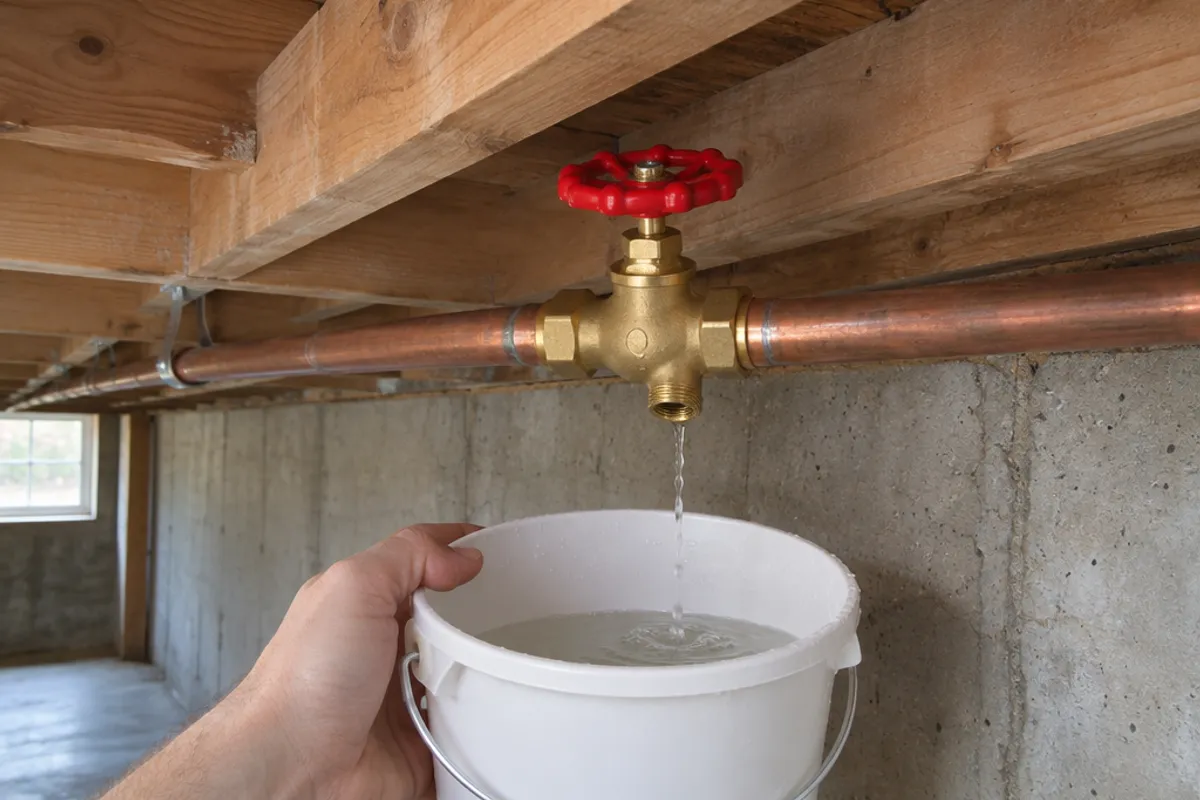
- Hold a small bucket or a rag under the port and remove its cap. The water from the pipe beyond the valve runs out, then slows to drips.
- When the dripping stops, screw the cap back on. With no water left in it, the line has nothing to freeze and break through the cold months. Take a picture of where the valve is, for spring.
A buried valve is different. Turn it with its key until the cap on top sits across the water line, which the same sheet says means closed, and leave its drain insert alone: the sheet says not to tighten or loosen it. In spring, turn off the faucet or outlet at the far end first, then reopen the valve slowly.
Why is my stop and waste valve leaking from the drain?
If water keeps running from the port while the valve is off, look at the arrow on the body first. One maker's install sheet says the drain hole must be on the outlet side, and that a valve installed against its flow direction will leak constantly in the closed position. If the arrow does point toward the faucet or sprinkler line and the drip goes on, the seat or ball is no longer sealing. A drip at the stem when you turn the valve is a different fault: our guide to a shut-off valve leaking when closed covers both.
A reversed or worn stop and waste valve is usually replaced, not repaired. Match the new valve to the line: that maker's sheet limits its own stop and waste ball valve to cold water line applications. It is important to fit the new one with its port on the outlet side, or it will leak the same way.
Swapping a stop and waste valve means shutting off the main, cutting the supply pipe and, on copper, often soldering. Use a licensed plumber where your area requires one, and ask your local building department whether the plumbing work needs a permit.
How do you keep a stop and waste valve reachable behind a ceiling?
You drain this valve every fall and reopen it every spring, and the important thing is room to turn the handle and hold a bucket under the port. When a basement is finished, it often ends up above the new drywall. Before the ceiling goes up, mark the valve and plan a cut-out centred on the valve and its drain port, to ensure you can reach both. If it is already covered, cut in at the valve and fit an access door rather than patching the ceiling. From our catalog:
- A valve you use twice a year: PAD0808 hinged door: maximum service opening 6.35 × 6.35 in, overall 8 × 8 in. The hinged door stays on the ceiling and swings down out of the way while both your hands are busy.
- A valve you rarely touch: SAP0808 spring-loaded panel: fits 6 × 6 to 8 × 8 in openings, overall 10 × 10 in. The whole panel lifts out, so nothing hangs in the way.
Whichever you choose, ensure the door or panel leaves room to turn the valve through its full travel and to get a bucket under the port.
Our plastic access panels and doors are not fire-rated, and we publish no water-resistance rating for them, so don't fit one in a fire separation, such as the wall between a house and an attached garage.
Compare the doors on the access doors page, or see the ceiling access panels. If the house will sit empty for the winter, these valves are one line on a longer list: see how to winterize a vacant house.
Measure before you order: our guide on how to measure for an access panel shows how, and the access panel size chart compares every opening and cover. How to install an access panel in a ceiling covers fitting it.