
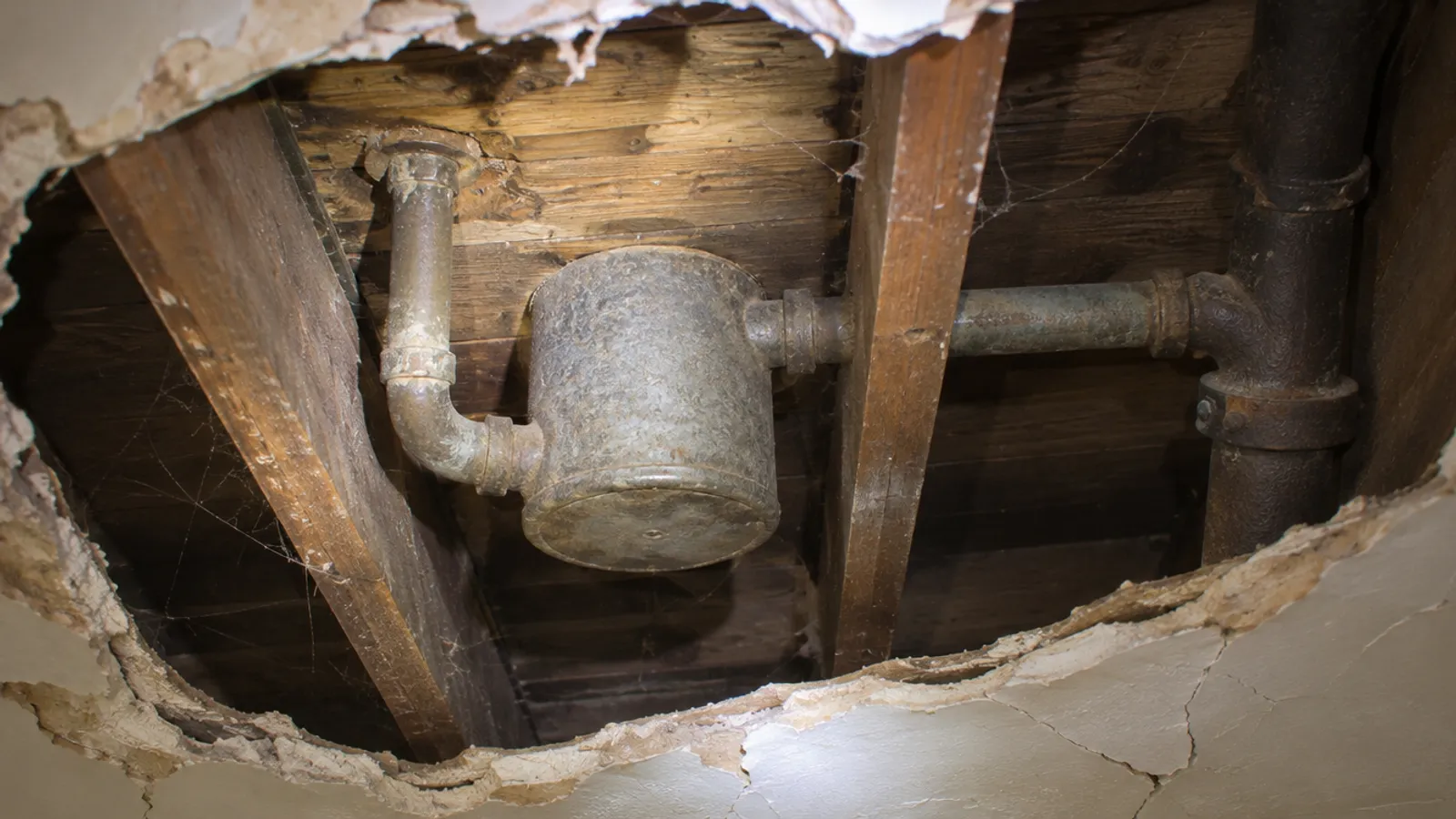
A drum trap is an old style of plumbing trap: a short, wide canister, usually lead or iron, that holds a large volume of water as a seal against sewer gas. Older houses have them under bathtubs and sometimes at laundry sinks. Home inspectors flag them as outdated, and a troublesome one is replaced with a P-trap.
The drum trap on a bathtub drain sits under the bathroom floor, so reaching it often means opening the floor or the ceiling below the tub. Plan that opening so the new trap stays easy to reach.
What is a drum trap, and how does it work?
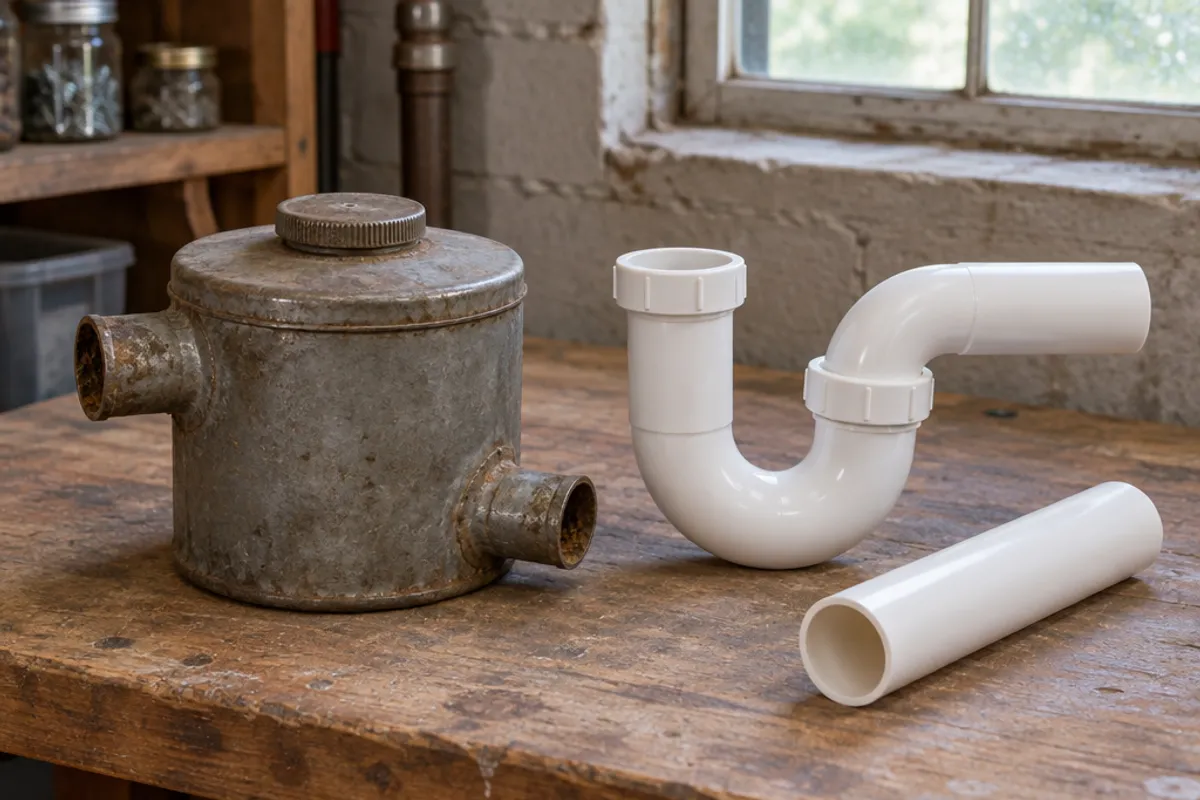
Every fixture empties through a plumbing trap that holds water. That water, the trap seal, sits between the room and the sewer and keeps sewer gas out of the living space. A P-trap is the common water seal trap today: it holds the water in a U-shaped bend of pipe. A drum trap consists of a canister instead: the pipe from the tub enters near the bottom of the drum and leaves through a second pipe set higher up, so the drum stays partly full even when the tub is empty (Fine Homebuilding).
Why use a drum trap? It holds so much water that it is very hard to siphon dry, which mattered when fixtures were not properly vented (American Society of Home Inspectors). Siphoning pulls water out of a drum trap the same way it does from an S-trap or a P-trap, but enough is left to keep the seal. Most drum traps also have a removable cover on top, meant to make cleaning and retrieving lost items easier.
Drum traps came in different shapes and sizes and were fitted in any orientation. They were common at bathtubs, and a few drum traps served a laundry sink or a kitchen sink. An older house may also have a house trap on its main drain.
How is a drum trap different from a P-trap?
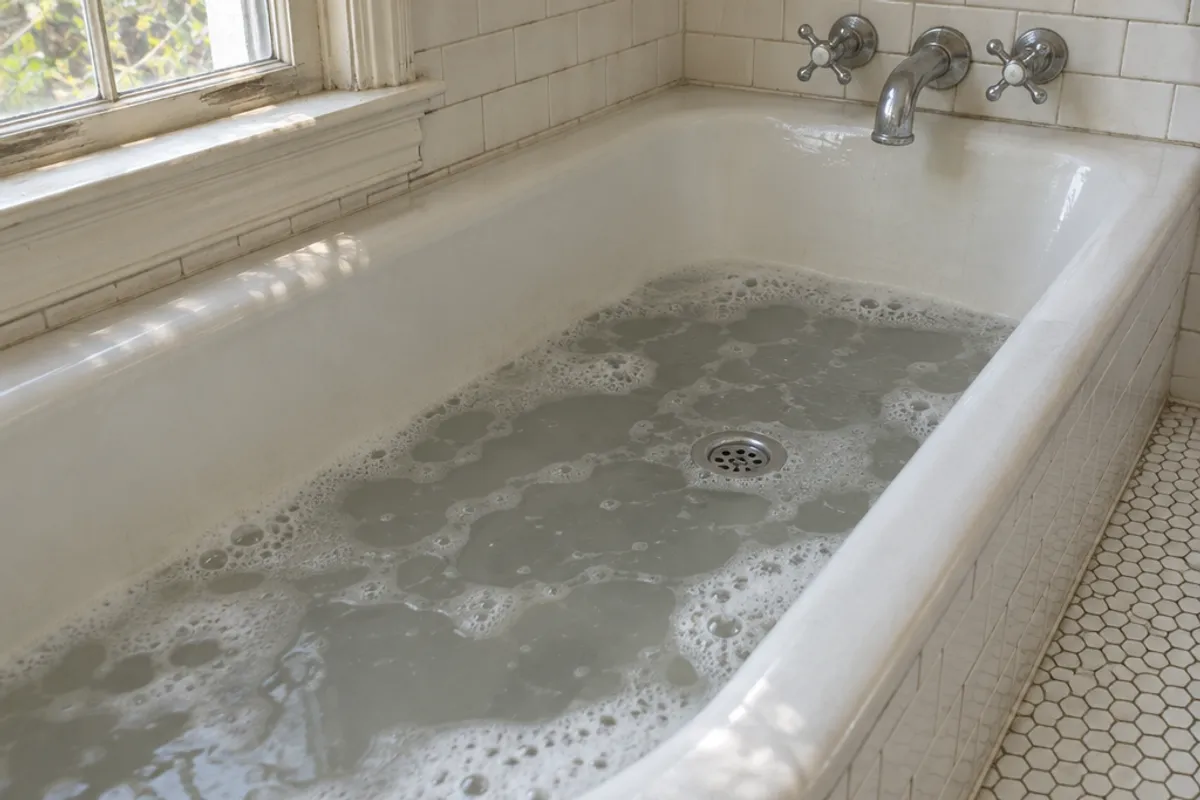
The difference that matters is self-scouring. In a properly installed P-trap, water drains through fast enough to carry hair and solid materials along with it, so the bend stays fairly clean. In a drum trap, the flow slows in the wide canister, so solids entering the trap settle at the bottom instead of being pulled directly through. That settling is what makes drum traps clog: the layer builds up until the tub empties slowly, and because the solids remain in standing water, the trap can start to smell.
| Feature | Drum trap | P-trap |
|---|---|---|
| Shape | A canister, inlet low and outlet higher | A U-shaped bend in the pipe |
| Water seal | A large volume of water in the drum | The water held in the bend |
| Self-scouring | No: solids settle in the drum | Yes: flowing water carries debris through |
| Clearing a clog | Open the cover, if you can reach it; a poor access point for a snake | Clear it with a drain wire, or take it apart |
| Material | Lead or iron in old houses | Usually PVC today |
Where do drum traps hide in an old house?
Under the bathroom floor, at the outlet end of the bathtub. Most sit right below the floor, between the floor joists, close to the tub's drain and overflow. In many bathrooms the drum trap's cleanout cap is set in the floor next to the tub, where you can kneel and unscrew it (The Seattle Times). A later floor may have buried it.
Others were installed upside down, with the cleanout facing the ceiling of the room below, on their sides, or in such a way that the cover can't come off. From a basement or an opened ceiling, look for a short, wide can on the pipe leading away from the tub.
Signs of an old bathtub drum trap:
- A round metal cap in the bathroom floor near the outlet end of the tub.
- A tub that empties slowly while the bathroom sink runs clear.
- A sewer odor bad enough to notice at the tub drain.
Is an old drum trap lead or cast iron?
Fine Homebuilding describes old drum traps as iron or lead. Lead is dull gray and soft; iron is darker and rusts. A magnet is a quick check from below: it sticks to cast iron and not to lead. Find out before anyone puts a wrench on the cover, because lead drum traps are easily damaged when forced, and tell the plumber what you found.
Why do home inspectors flag drum traps?
If an inspection report mentions an old plumbing trap called a drum trap, here is why. The American Society of Home Inspectors says drum traps have mostly been dropped from model plumbing codes, mainly because they are not self-scouring. In a report, inspectors point to the practical problems:
- Clogs. Settled hair and debris make very slow draining traps.
- A cover you can't reach. The cleanout cover often sits tight under the floor, faces down or is boxed in, so it is very hard to open without cutting the floor.
- Rusted threads. Many covers are rusted shut.
- Lead. Lead is a soft metal. Inspectors find lead drum traps collapsed where someone forced the cover, often with makeshift repairs around them.
- A poor seal. A cover that isn't sealed properly can leak or let sewer gas into the room.
Even so, the ASHI article says there's no need to make a big deal of one. An old drum trap that empties well usually keeps working, so keep hair and other debris out of the tub drain with a strainer. In Fine Homebuilding, the magazine's editorial director writes that the drum trap on his own tub has been in service since 1926 and still works.
Whether a remodel means the old trap must go is a local decision: ask your building department, or in Canada your municipal building office, before you open the bathroom.
Can you clean out an old drum trap?
Yes, if you can reach its cover and it turns.
- Find the cover: the cap in the floor beside the tub, or the drum trap itself from below.
- Put down towels and set a bucket close, since the drum is full of dirty water.
- Turn the cover gently with a wrench. If it won't move, or you find a severely corroded cap, stop: forcing rusted threads can tear or crush the trap, above all a lead one.
- Pull out the hair, soap scum and other debris, then flush the drum with clean water.
- Clean the threads, refit the cover so it makes a tight seal, then run the tub and check for leaks and smell.
If the trap clogged shortly after its last cleaning, or the cover is buried, faces the wrong way or won't turn, call a plumber. That is usually the point where replacing the drum trap makes more sense than cleaning it.
How is a drum trap replaced with a P-trap?
Drum trap replacement means cutting into the waste pipe and often into a floor or ceiling, and an old lead trap is soft and easily damaged. Use a licensed plumber where your area requires one, and ask whether the work needs a permit.
Getting to the trap is the hard part. With good access, Fine Homebuilding notes, the work itself is not difficult: a couple of cuts with a reciprocating saw and new fittings. In a This Old House demonstration, its plumbing expert cut through the ceiling below the bathtub to reach the trap (This Old House). With the water off, the old drum trap is cut out with a reciprocating saw and lowered into a bucket, since it is full of water. The new PVC P-trap and PVC drain lines are joined to the old pipe with threaded adapters or no-hub couplings, dry-fitted, then glued with primer and cement.
What the plumber checks along the way:
- The pipe beyond the trap. If it is cast iron or galvanized steel in poor shape, this is a good time to look at the rest of the line; see cast iron drain pipe replacement.
- The floor joists. Some old traps sit where a new one would mean cutting a joist. Don't notch or bore framing without advice from a builder or your inspector.
- The vent. A P-trap relies on a working vent to keep its seal, and drum traps were often used where fixtures were poorly vented. A tub that gurgles after the change needs its vent checked; see why a drain gurgles.
- The tub side. The tub's waste and overflow connect to the trap from above; how to remove a bathtub drain explains those parts.
How do you keep the new P-trap reachable?
The hole cut for the drum trap replacement is the access you will want again: to clear the new trap with a snake, check a slow leak at the drain and overflow, or trace a stain. Instead of patching it closed, ask the plumber to keep the opening square and centered under the tub's outlet, inside the opening range of the panel you will fit:
- Under the bathtub's outlet and new P-trap: SAP1414 spring-loaded panel: fits 10 × 10 to 14 × 14 in openings, overall 16 × 16 in
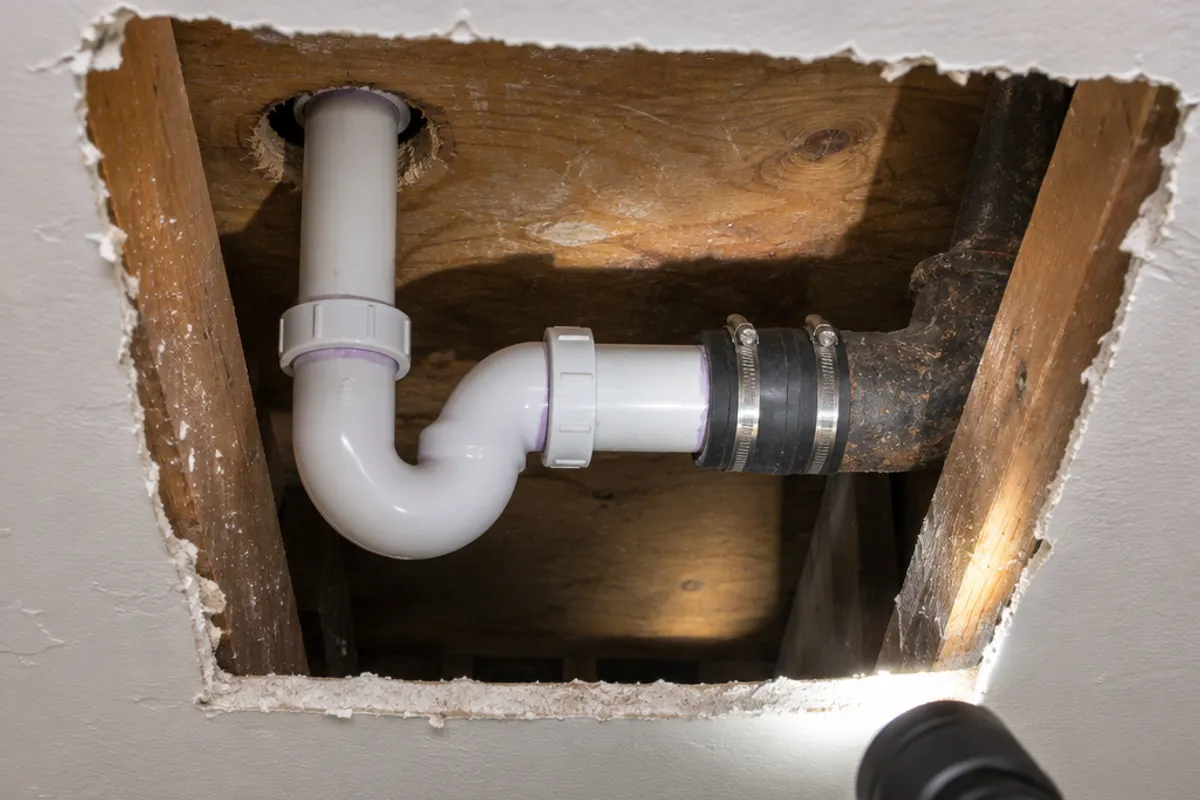
A later water stain on that ceiling is easier to trace through a panel than through new drywall; leak behind a shower wall covers finding a leak around a tub or shower.
Our plastic access panels and doors are not fire-rated, and we publish no water-resistance rating for them, so don't fit one in a fire separation, such as the wall between a house and an attached garage.
If a garage or another home is below the bathroom, ask your building department whether that ceiling is a fire separation before anyone cuts it. See bathtub access panels and ceiling access panels.
Measure before you order: our guide on how to measure for an access panel shows how, and the access panel size chart compares every opening and cover. How to install an access panel in a ceiling covers fitting it.