
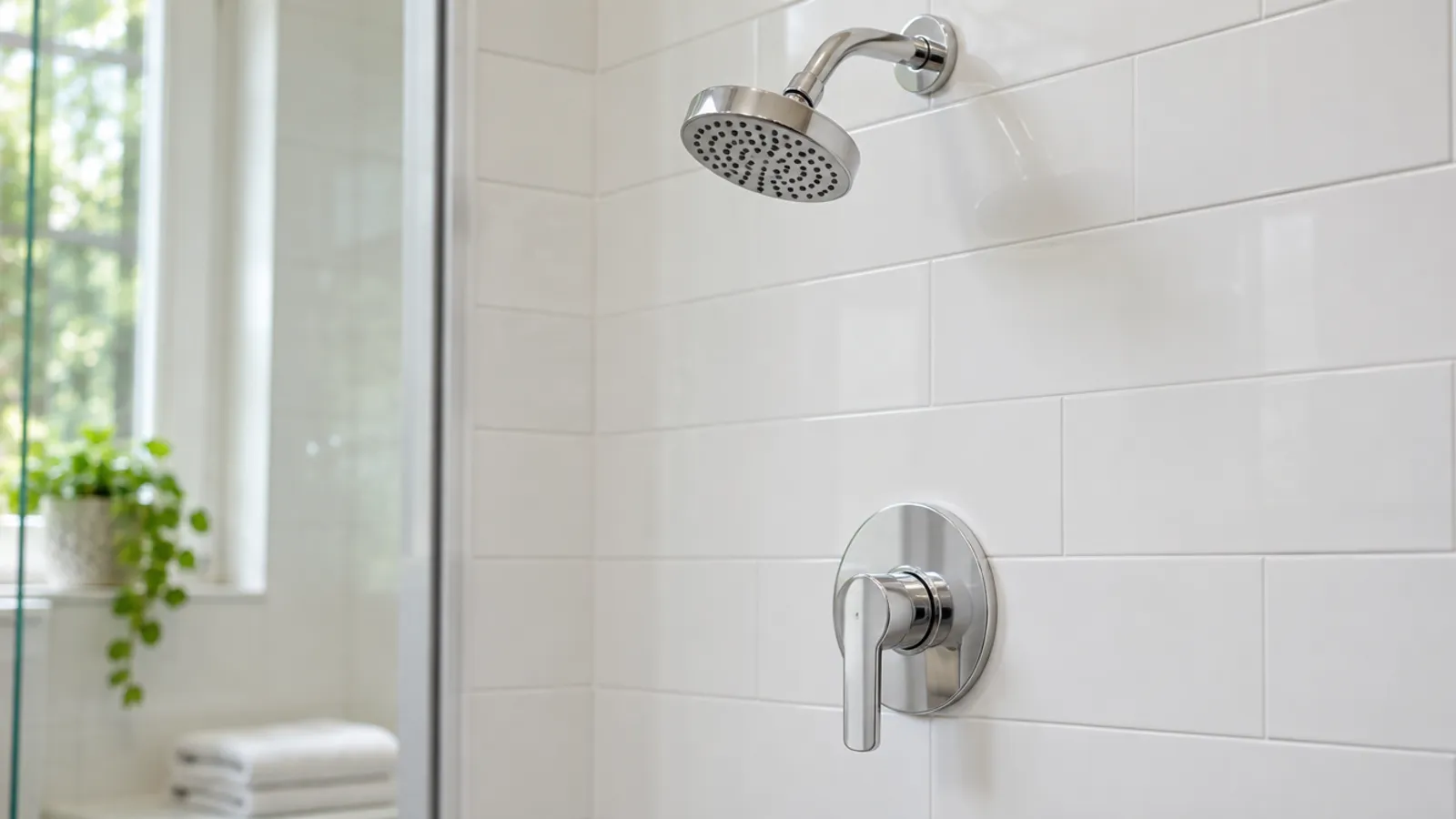
A shower valve is the fitting behind the shower wall that controls your shower. Hot and cold lines connect to it, and it mixes them to the water temperature you choose, controls the flow and sends the water to the shower head or tub spout. Many also hold the temperature steady.
It has three parts: the valve body in the stud bay, the cartridge inside it, and the trim you see. Most repairs are made from the front, through the trim. The body and its joints are reached from behind, and that is where an access door earns its place.
What is a shower valve, and what does it do?
The visible handle is the only part most people touch, but the shower valve behind it does five jobs:
- Turns the water on and off.
- Mixes hot and cold water. Turning the handle changes how much hot water and cold water pass through, which sets the water temperature.
- Controls the water flow. On many valves one handle controls temperature and flow together. Others add a volume control, for more control over water volume.
- Maintains a steady temperature. A pressure balancing or thermostatic valve reacts when someone flushes a toilet or runs a tap elsewhere in the house, so the shower doesn't turn suddenly scalding or cold.
- Sends water to the right outlet. On a tub and shower, a diverter valve makes the switch between the spout and the shower head.
The hot and cold water supply pipes enter the valve body through its inlets, the cartridge mixes them, and the water leaves through the outlets: up to the shower arm, down to the tub spout, or both on a valve with two outlets. The inlets are under water pressure all the time; the pipes leaving the valve only while the shower runs.
Is a shower valve the same as a shower faucet?
Not quite. People often say "shower faucet" for the whole set. Strictly, the shower valve is the working part hidden in the stud bay, and the faucet is the trim you see and use.
What are the parts of a shower valve?
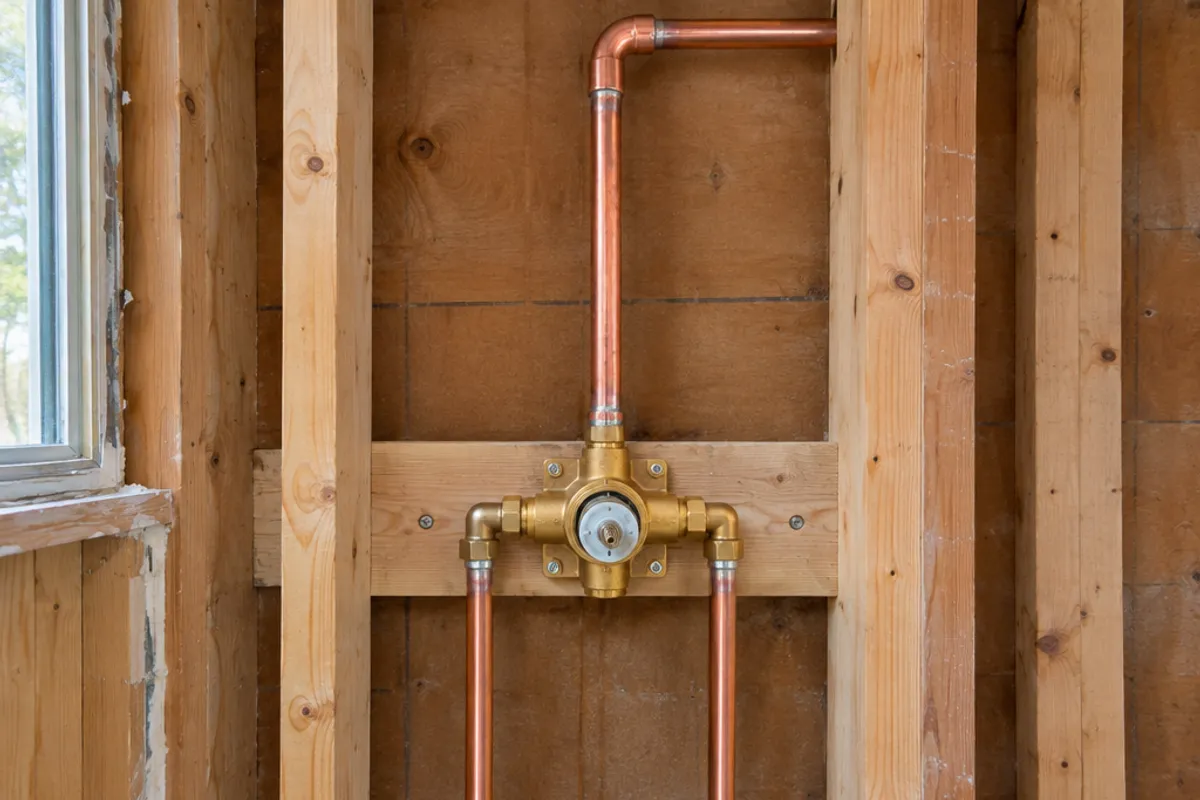
The valve body
The valve body is the metal fitting, often brass, fixed between the studs behind the handle. It goes in at the rough-in stage, before the tile, and stays for the life of the shower unless it fails. Its connections suit your home's plumbing: soldered copper, threaded, PEX or push-fit, depending on the model.
Many bodies have built-in stops: small shut-offs on the inlets that stop the water to the valve without shutting off the house. They are usually reached from the front, once the trim plate is off. Most new bodies also come with a plastic guard that shows how deep to set the valve; follow the manufacturer's installation instructions.
The cartridge
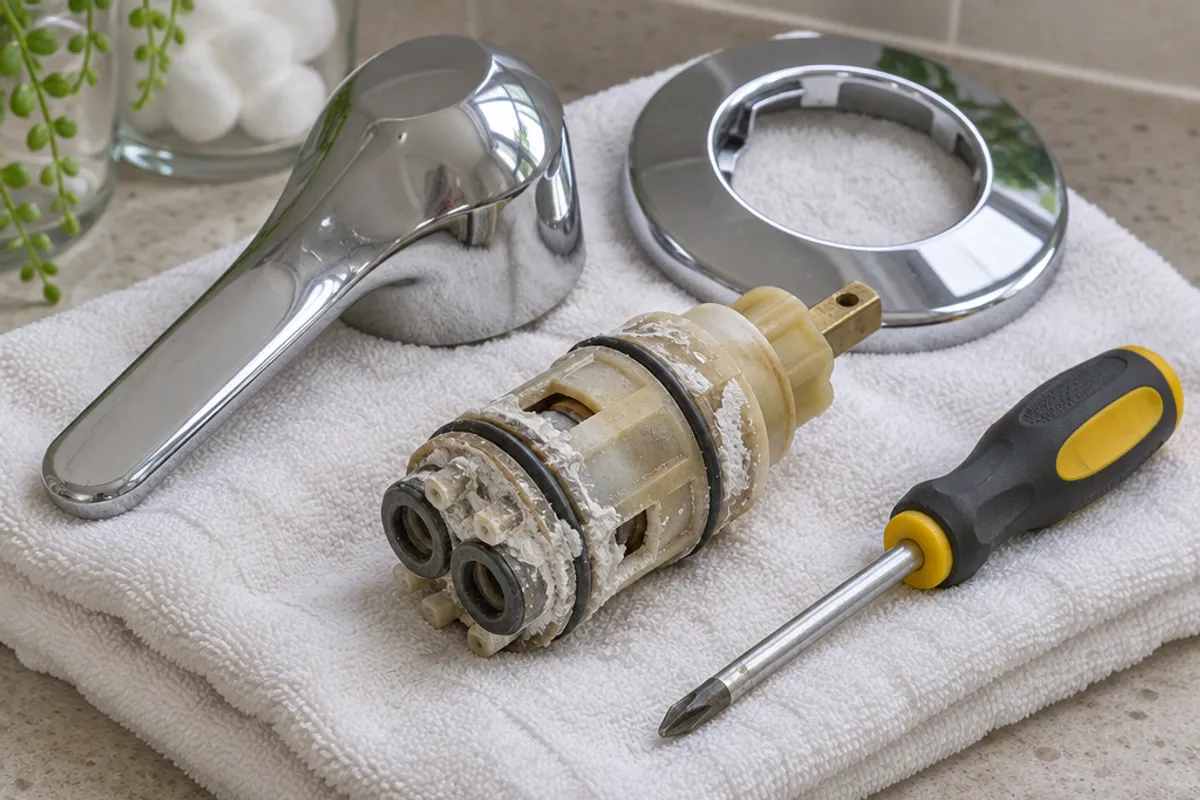
The cartridge sits inside the body and does the work. In a single-handle valve, one cartridge turns the water on, mixes hot and cold and, in a pressure balancing valve, often balances the water pressure too. It is a wear part, and a replacement has to match the shower valve's maker and model. Older two- and three-handle valves use a stem with washers for each side instead.
The trim
The trim is everything on the finished side: the handle, the plate around it, the shower head and arm, and the tub spout. Trim kits are made for particular valve bodies, so a new trim kit usually has to match the valve behind the tile.
| Part | Where it is | What it does | Reached from |
|---|---|---|---|
| Valve body | Between the studs | Joins the lines to the outlets; holds the cartridge | Behind |
| Built-in stops (many valves) | On the inlets | Shut off the valve for service | Usually the front |
| Cartridge or stems | Inside the body | On, off, mixing and balancing | The front |
| Trim | On the finished side | Handle, plate, shower head, spout | The front |
What are the common types of shower valves?
The types of shower valves differ in how they maintain the water temperature and how many outlets they feed. Knowing which one you have matters when a part wears out.
Pressure balancing shower valves
A pressure balancing valve, sometimes just called a pressure valve, watches the water pressure on the hot and cold sides. When one side drops, for example when a toilet refilling pulls cold water away, a spool or diaphragm inside cuts the other side to match, so the mix stays where you set it. A shower that turns suddenly scalding when someone flushes is the problem it solves.
Most pressure balancing shower valves are single-handle, and on many the water flow isn't adjustable. They are common in standard tub and shower combinations. Their limit: they balance water pressure, not temperature, so if the water heater can't keep up, the shower cools. Many have a limit stop under the handle that caps how far it turns toward hot; adjust it following the manufacturer's instructions.
Thermostatic shower valves
Thermostatic shower valves watch the temperature itself. A sensing element works like a thermostat: it reacts to the heat of the mixed water and adjusts the hot and cold water to maintain your setting, even through pressure changes. That gives precise temperature control and keeps the shower comfortable while other bathroom fixtures run.
A thermostatic valve usually has separate controls for temperature and for water flow or outlets. Thermostatic valves are often used in larger showers with multiple outlets, such as a fixed shower head, a handheld sprayer and body sprays, where one valve controls the temperature for the whole system. Some valves are a combination of both types in one body.
Diverter shower valves: spout, shower head or handheld
A diverter valve sends the water to one outlet or another. It may be the knob you pull up on a tub spout, the middle handle of a three-handle valve, or a separate diverter valve with its own trim. Two-way and three way diverters switch between two or three outlets; some also have a shared position.
Is a transfer valve a diverter valve?
Yes, a kind of diverter. Transfer valves can run outlets one at a time or together, depending on the model, and are often paired with thermostatic shower valves in custom shower systems with multiple shower heads.
Two- and three-handle valves
Older homes often have two-handle valves, one for hot water and one for cold water, or three-handle valves with a diverter in the middle. Most have no pressure balancing, so a flush can still change the water temperature. If you replace one, ask a plumber or your local building department what type of new shower valve is required.
What is the difference between a pressure balancing valve and a thermostatic valve?
Both stop sudden swings, but they watch different things, and the difference matters when you pick one:
| Feature | Pressure balancing valve | Thermostatic valve |
|---|---|---|
| Reacts to | A change in hot or cold water pressure | A change in the mixed water temperature |
| Holds | The ratio of hot and cold water | The temperature you set |
| Controls | Usually one handle | Usually separate temperature and flow controls |
| Outlets | Usually one or two | Often several |
| Service part | The cartridge, which on many holds the balancing spool | The cartridge and its thermostatic element |
How do you choose the right shower valve?
For a single shower head or a tub and shower, a pressure balancing valve does the job. If the valve will feed several outlets, or you want to set the ideal temperature once, exactly the way you like it, a thermostatic valve gives more control. Then match the connection type and the number of outlets to the plumbing, and pick trim kits made for that valve. A plumber's expert advice helps when you're choosing the right shower valve for a remodel. The right valve for your shower is also one you can reach again, so plan the access before the tile goes on.
Where is the shower valve behind the wall?
Directly behind the handle, in the stud bay. The body is fixed to a wood cross brace or to the studs, so it doesn't move when the handle turns. By convention, the hot supply comes in on the left and the cold on the right. A pipe runs up to an elbow fixed behind the shower arm, and on a tub and shower another runs down to the spout.
To find it from the room behind, measure from a corner and from the floor to the center of the handle, then transfer both measurements to the other side. Our guide to what size access panel you need for a shower valve walks through it.
In regions with hard winters, such as Alberta, Quebec and the Maritimes, a shower valve in an exterior wall can freeze, so plumbers generally keep valves in interior walls where the bathroom layout allows. A frozen valve body can crack, and the leaks may only show once it thaws; see how to thaw frozen pipes in a wall.
What usually goes wrong with a shower valve?
Most problems start in the cartridge or its seals, which wear with use, scale and debris. The valve body usually outlasts them, but it can crack after freezing, suffer corrosion or leak at a joint.
| What you notice | Likely cause | Reached from |
|---|---|---|
| Drips after you shut it off | A worn cartridge, or stem washers on an older valve | The front |
| Temperature swings, or no comfortable temperature | A worn or clogged cartridge or balancing spool | The front |
| Low flow, or no hot water | Scale or debris in the cartridge, or a stop not fully open | The front |
| Water from the spout while the shower runs | A worn diverter in the spout | The front |
| A stain on the far side, or the water meter moves with everything off | A leaking joint or seal, or a cracked body | Behind |
| Leaks only while the shower runs, high up | The pipe to the shower arm, or its elbow | Behind |
Do pressure balancing valves go bad? Yes. The spool in a pressure balancing valve can stick with scale, and the shower then runs only hot, only cold or lukewarm; a new cartridge is often the cure. For leaks you can't see, our guide to a leak behind a shower wall walks through the tests.
How do you reach a shower valve for repair?
From the front, through the trim
Cartridge, stem, seal and trim work is done from the bathroom side. Shut off the water at the built-in stops, or at the main shut-off valve, take off the handle and plate, and follow the maker's maintenance instructions. Take the old cartridge with you so the new one matches.
From behind the wall
The valve body, its joints and the pipe up to the shower arm are reached from behind. If the shower backs onto a closet, hallway, bedroom or utility room, open the drywall on that side between the studs, with the valve roughly in the middle. Breaking tile on the shower side is the harder alternative.
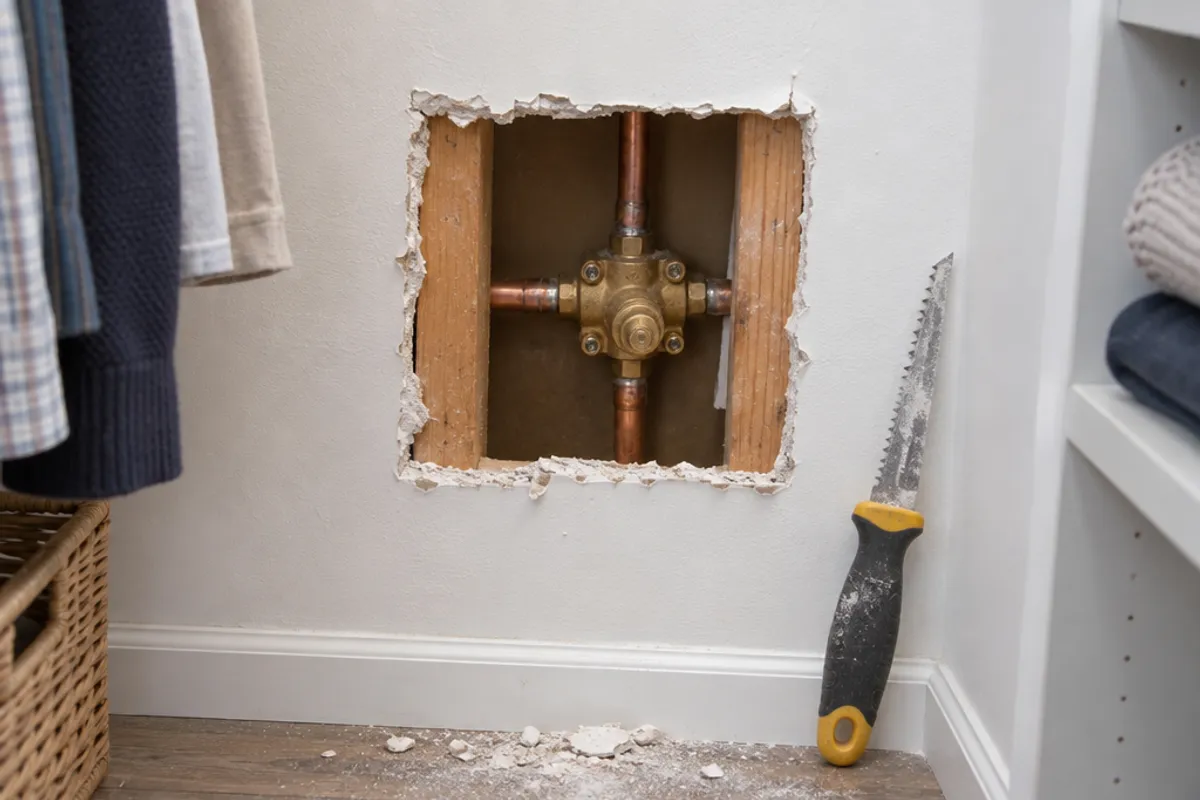
Don't patch that opening shut. Close it with a hinged access door, and the next repair takes a latch instead of a saw. Two doors from our catalog suit many shower valve openings:
- PAD1212: 12 × 12 in overall, with a service opening of 10.35 × 10.35 in (estimated).
- PAD1216: 12 × 16 in overall, with a service opening of 10.35 × 14.35 in (estimated), taller to take in more of the pipe above the valve.
The service opening is also the cut-out, with rounded corners, and each product page has a 1:1 cut-out template. Compare both on the access doors page, or see shower access panels.
A new valve body means cutting and joining pipe, and soldering where the lines are copper. Use a licensed plumber where your area requires one, and ask whether the installation needs a permit. Before you cut into drywall, shut off the water and check for wiring.
Before you close the wall, ask your local building department what access it expects at the shower valve, and follow the valve maker's instructions.
Now that you know the types of shower valves and where they sit, size the opening with what size access panel you need for a shower valve, then follow how to install an access panel in drywall. Compare every opening and cover on the access panel size chart.