
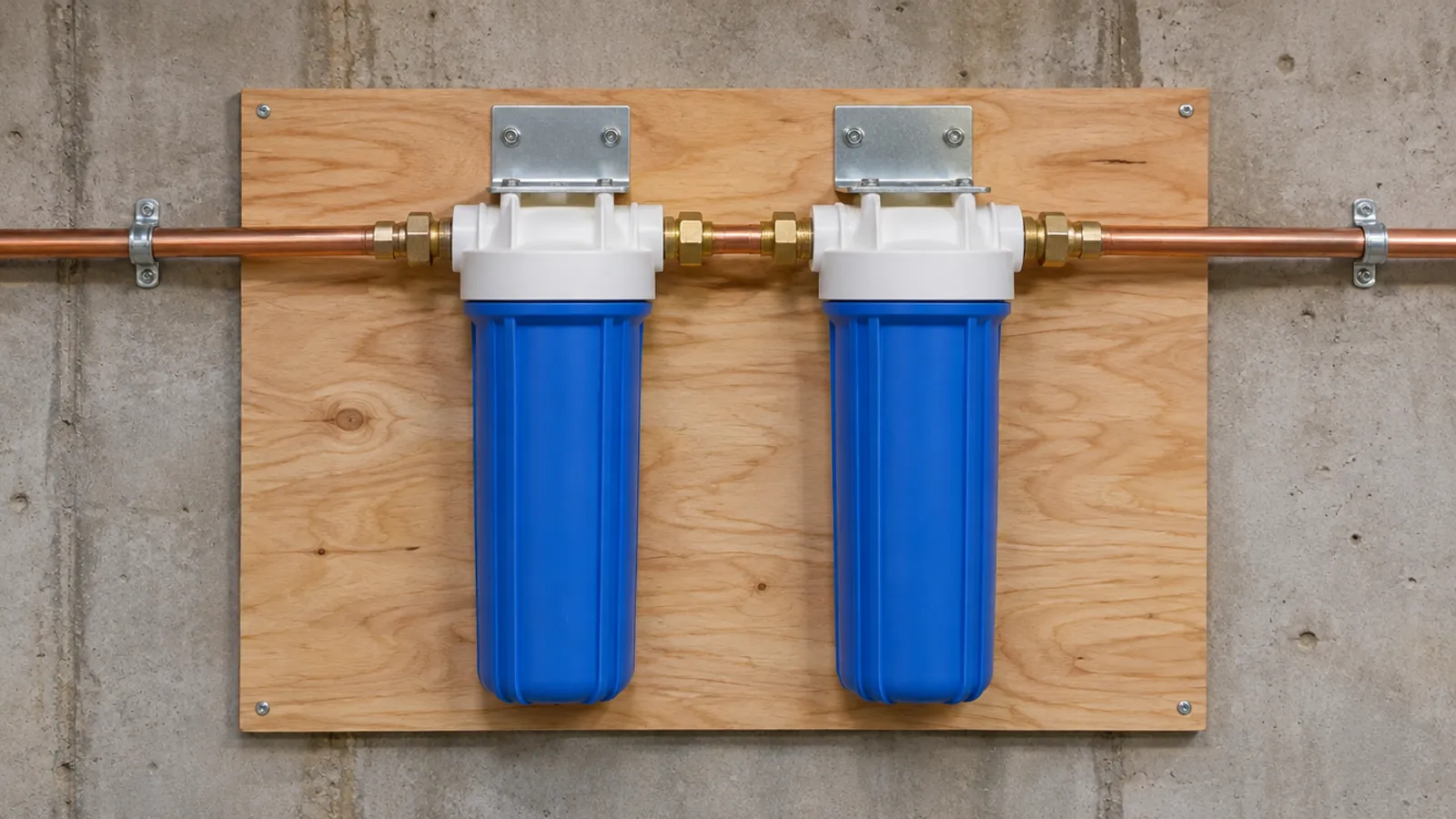
Install a whole house water filter on the main cold water line, close to where it enters the house: after the main shut-off valve and the water meter, before the line branches and before the water heater. Choose a clean, dry indoor spot with shut-off valves on both sides, a bypass, and room to change the cartridge.
That way every tap in the home gets water from the filtration system, and the filter stays where you can service it.
Where to install whole house water filter systems in your home?
The first thing to find is the main shut-off (our guide on where the water shut-off valve is shows where to look). Then follow the pipe downstream. The filter goes on the main line:
- After the main shut-off valve, so one valve stops the water to the filter for repairs or a cartridge change.
- After the water meter. The meter, and often a valve on its street side, may belong to your water company, so leave both alone.
- Before the first branch. Any tee upstream of the filter sends unfiltered water to whatever it feeds.
- Before the water heater, so the hot side is filtered too.
One maker's owner's manual for a whole house water filter puts the installation location plainly: where the main water line enters the home, before it connects to the water heater. It recommends an indoor spot out of direct sunlight, because long exposure to light can weaken plastic parts, and says to protect the unit from freezing.
In many homes that means a basement wall near the foundation, a utility room or a garage wall where it never freezes. A filter in an unheated space can freeze, just as pipes can. If the main splits early to an outdoor faucet, it makes sense to filter only the indoor branch, so garden water doesn't use up the cartridge. On a private well or other water source, follow the filter manufacturer's instructions and ask your well contractor.
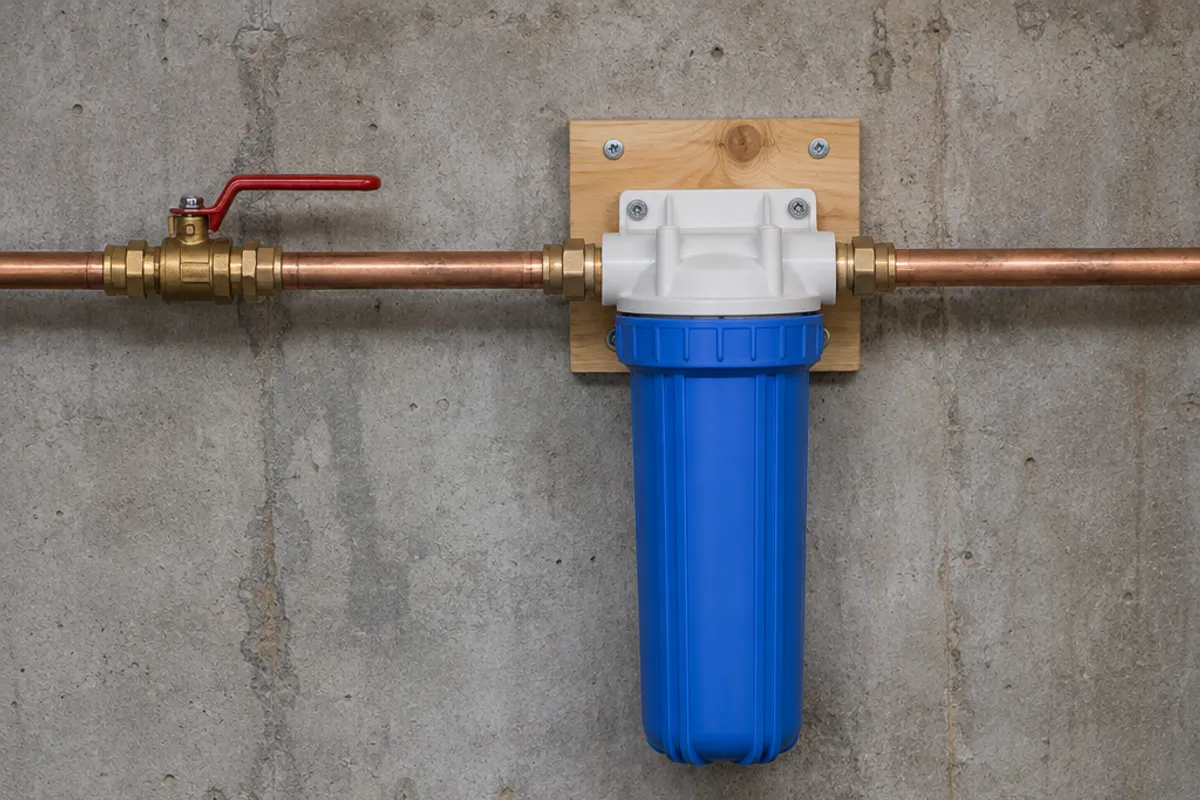
Does a whole house filter go before or after the water heater?
Before. A whole house water filter on the cold main sends filtered water into the heater and on to every hot tap, so sediment, rust and chlorine are reduced before they reach the tank. Put it on the cold line past the heater's branch and only the cold faucets get filtered, while sediment still reaches the tank.
The manual linked above is direct: do not install its filter after the water heater or on the hot water line. Check the temperature range on your filter's label, and use a filter on the hot side only if its maker designed it for hot water. A thermostatic mixing valve, if you have one, is the part that sits at the heater's hot outlet.
Where do the sediment filter and softener go in a whole house filtration system?
Many homes treat water in more than one stage. In the setups that maker's manual shows, water flows through each part in this order:
| Order | Part | What it does |
|---|---|---|
| 1 | Sediment filter (recommended) | Catches sand, dirt, rust and scale particles before the next stage |
| 2 | Whole house water filter (carbon) | Reduces chlorine, taste and odor |
| 3 | Water softener or descaler | Treats hard water |
| 4 | Post-filter (optional) | A final cartridge stage |
| 5 | UV unit (optional) | Last in line, with a power outlet nearby |
The sediment filter goes first to keep the stages after it clean. It may be a cartridge housing or a spin-down filter with a clear bowl you rinse out through a small drain valve. The manual warns that the wrong sequence of equipment will affect performance and could damage the filtration system, so follow your own instructions where they differ.
If your house has a pressure-reducing valve on the main, compare the pressure range on the filter's label with the pressure at each side of that regulator, and follow the maker's instructions. The same manual notes that homes with high pressure may need a pressure relief valve and a water hammer arrestor.
What valves does a whole house water filter need?
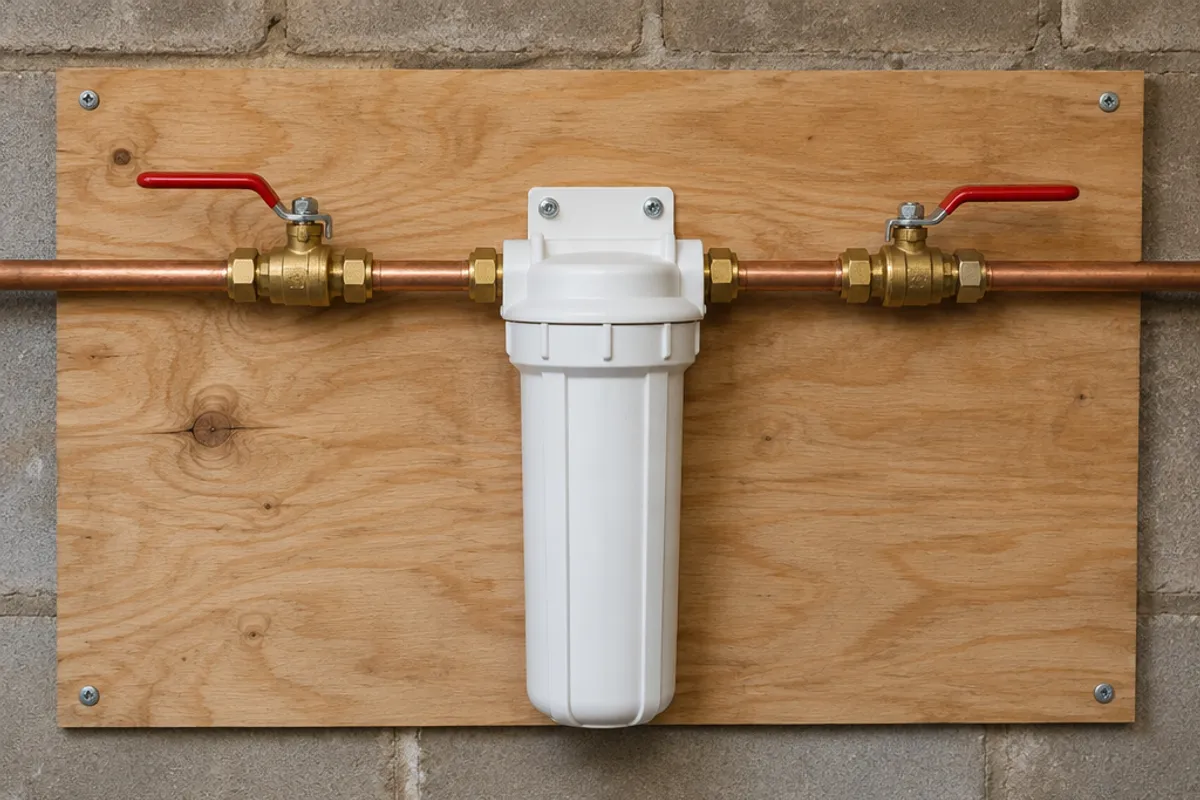
Before installation, plan three valves around the filtration system:
- An inlet shut-off before it.
- An outlet shut-off after it. A filter-housing maker's installation instructions recommend a shut-off on both the inlet and outlet sides.
- A bypass valve on a short loop around the filter. With the inlet and outlet closed and the bypass open, water flows around the filter, so the house still has water (unfiltered) while you change a cartridge.
A quarter-turn ball valve works well in each spot, because the lever gives you a quick view of whether it is open or closed. Use fittings made for your pipes, whether copper, CPVC or PEX, and point the port marked IN toward the incoming supply. Label each one and share the layout with everyone at home, so anyone can tell normal flow from bypass.
If your water pipes are used to ground the house's electrical system, a plastic filter housing interrupts that path. The housing instructions linked above say to install jumper wires around the filter, and the tank manual calls for grounding clamps and a copper wire across the filter location. Have a licensed electrician install or check the jumper where required, and use a licensed plumber where your area requires one to cut into the main or solder copper.
How much room do you need to change a whole house filter cartridge?
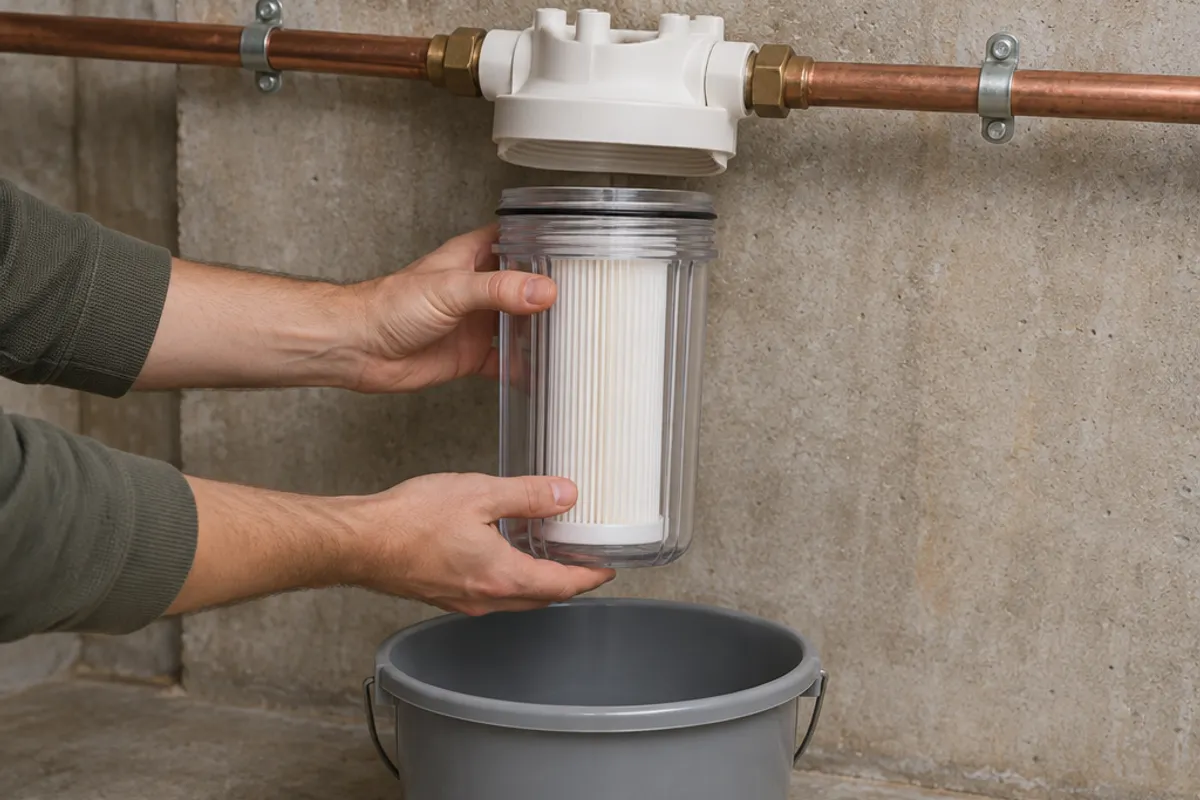
More than the housing itself. Each time you change a cartridge, you unscrew the bowl, lower it straight down, empty it into a bucket and fit the new one, so the space below matters most. Measure the housing before installation, then add the clearance its manual asks for. Two examples from the instructions linked above:
| Filter type | Clearance in the maker's instructions |
|---|---|
| Cartridge housing kit | At least 2 in above the filter head, and at least 3 in below the bowl for changing the cartridge |
| Whole house carbon tank | An estimated minimum of 28 in for the height of the tank |
Your model's manual is the one that counts. Also leave room for a filter wrench, your hands, a bucket and the pressure-release button on top. A floor drain nearby saves a mess, because water spills when the bowl comes off. Install the housing level, on solid support, at a height you can reach.
- Close the inlet and outlet valves to stop the flow, and open the bypass.
- Press the pressure-release button, then unscrew the bowl over a bucket.
- Remove the old cartridge, clean the bowl and wipe the O-ring.
- Fit the new cartridge and screw the bowl back on.
- Hold the release button while the housing fills as you slowly open the inlet, then flush as the maker directs and check for leaks.
What goes wrong when a whole house filter is in the wrong place?
These issues usually start with a spot that seemed handy on installation day:
| Mistake | What happens | Better plan |
|---|---|---|
| Filter after a branch | Some faucets get unfiltered water | Move it upstream of the first tee |
| Filter after the heater | Sediment and chlorine still reach the tank | Put it on the cold main |
| No shut-offs or bypass | Every cartridge change shuts off the whole house | Add inlet, outlet and bypass shut-offs |
| Housing close to the floor | You can't remove the bowl | Raise it to the clearance in the manual |
| Outdoors, in sun or frost | Plastic parts weaken or freeze | Choose an indoor spot |
| Behind drywall | Leaks at fittings go unseen and nothing can be reached | Leave it open or put a door in front |
Hidden issues such as a slow leak at a filter fitting can run unnoticed; our guide to a water leak behind a wall covers the signs.
Can you put a whole house water filter in a closet or behind a wall?
In a closet, yes, if the closet door leaves the clearance above. Behind a finished wall, only with a way in. When the main enters inside a finished basement wall, plan access during installation, before the drywall goes up, and check with your local building or plumbing inspector.
A tank system or a full-size housing needs an open utility space or a full-size door. An access door suits the parts you reach less often but still need to turn: the shut-offs, the bypass, or a compact housing you have measured with its clearance and wrench swing. Measure the opening around those parts, then compare:
- Valves you may need in a hurry. PAD1216 hinged door: maximum service opening 10.35 × 14.35 in (estimated), overall 12 × 16 in. It stays attached and latches shut.
- A bypass you rarely touch. The SAP1414 spring-loaded panel takes a cut-out anywhere between 10 × 10 and 14 × 14 in, and its 16 × 16 in cover hides the cut edges.
If the housing and its clearance are bigger than the opening, install the filter in the open and put only the valves behind the door. See every hinged option on the access doors page, or compare panels on the plumbing access panels page.
Do you need a plumber to install a whole house water filter?
Often, and the first question is whether your area requires a licensed plumber. You shut off the main, drain the lines, cut into the pipe and fit the filtration system and its fittings without leaks. Copper may need soldering, and plastic pipe needs the right connectors and tools. The tank manual recommends a professional if pipe cutting is required, says the installation must comply with state and local plumbing codes, and notes that some local codes may require a licensed plumber for work on a drinking water line. If the main is old, corroded or hard to reach, leave the cut to the pros.
Installation tips if you install it yourself
- Flush the new filter as the maker directs before you drink the water.
- Open the water slowly and check every joint before you close any wall or door.
- Keep the filter wrench, a spare cartridge and a spare O-ring next to the housing, so the next change takes less time.
- Keep the floor around the housing clean and clear, so a drip is easy to spot.
These tips all assume you can stop the water, so find your main water shut-off valve first and make sure it still turns. If the filter's valves will sit behind a wall, check sizes in the access panel size chart.