
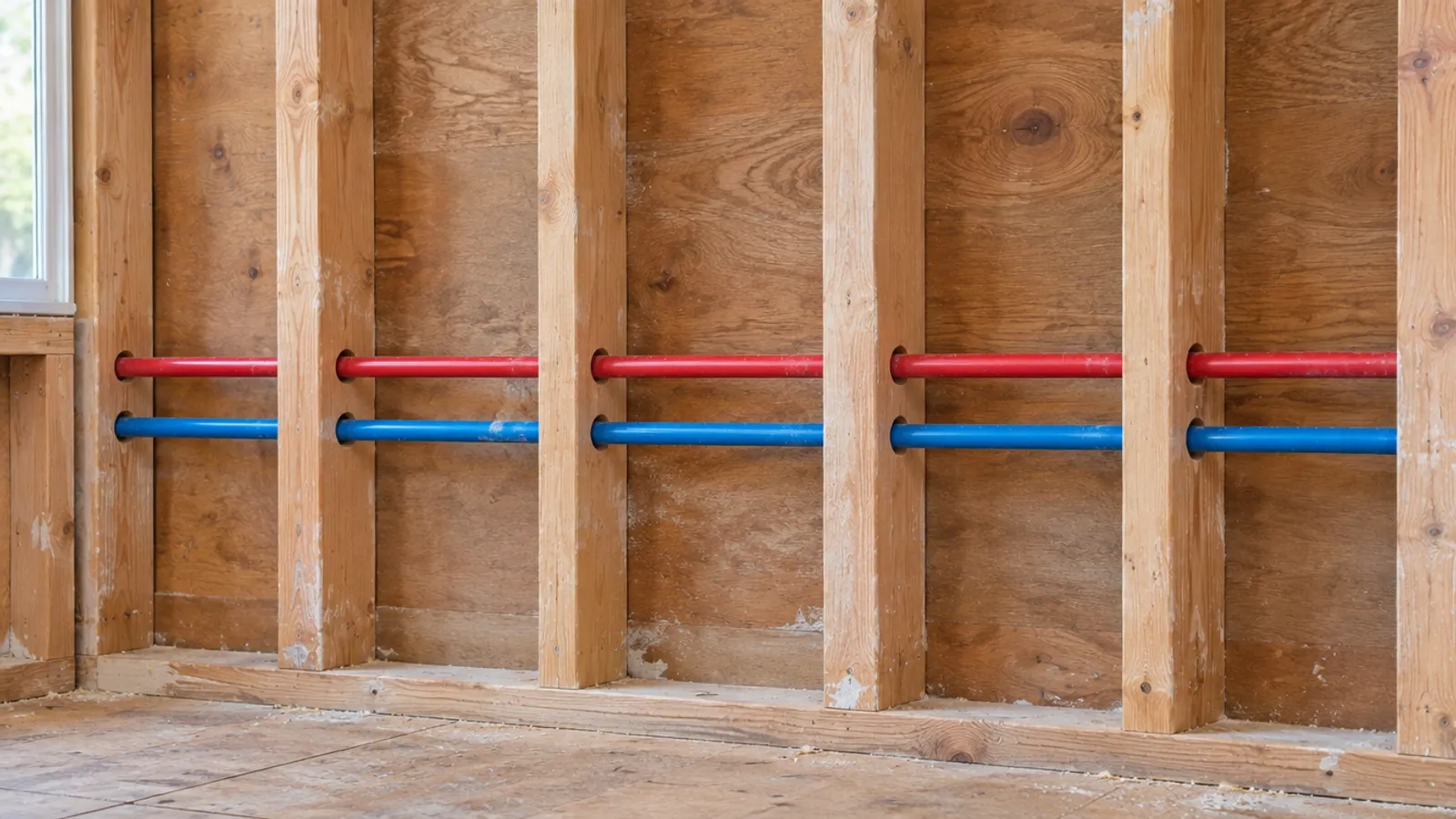
PEX pipe has no fixed lifespan, but PEX pipes made to the North American standards for drinking water must show a minimum extrapolated life of 50 years in a hot, aggressively chlorinated water test. Most homes run cooler and gentler than that test, so it is a floor, not an expiry date. Heat, sunlight and chemicals shorten it.
If you own a home plumbed with PEX, or are planning a repipe, this guide explains what the 50-year figure means, how to read the code printed on your pipes, what shortens their life, and why the fittings and manifold, not the pipe, are what you keep reachable.
How long does PEX pipe last?
PEX pipes have been used for plumbing and heating in the US and Canada since 1984, according to PPI's overview of PEX UV resistance, so no installation here is much more than 40 years old. The 50 years comes from a test, not a track record.
PPI technical note TN-53 explains it. The ASTM F2023 test runs hot chlorinated water through PEX pipes at temperatures well above normal use, then extrapolates to an end-use condition. The product standards (ASTM F876, ASTM F2788, AWWA C904 and, in Canada, CSA B137.5) require a minimum extrapolated time-to-failure of 50 years, and the test has been mandatory for all PEX plumbing tubing since 2003.
| Condition | In the ASTM F2023 test | In most plumbing systems, per PPI |
|---|---|---|
| Water temperature | 140°F (60°C) end use | Below 140°F |
| Water pressure | 80 psi | At or below 80 psi |
| Water quality | Very aggressive: for example 4 ppm free chlorine at pH 6.8, slightly acidic water | Less aggressive |
| Required result | At least 50 years, extrapolated | No promise for any one house |
PPI says the test water gives conservative results; 4 ppm is the maximum disinfectant level the US EPA sets for water distribution systems.
What is cross linked polyethylene?
PEX tubing is cross linked polyethylene: polyethylene whose molecular chains are chemically linked, which PPI says improves its strength at high temperatures, its chemical resistance and its resistance to slow crack growth. PPI lists PEX systems in plumbing applications such as hot and cold water lines and water service, and in radiant heating systems including radiant floor heating, and snow melting. For non-potable, non-chlorinated uses such as radiant heating systems and snow melting applications, TN-53 points to a separate PPI note, TN-52; the 50-year chlorine test is about drinking water.
Will PEX last 50 years? What about a 100-year life expectancy?
No standard or maker's document we read gives PEX pipes a life expectancy beyond the 50-year minimum, so treat 100-year claims with caution. Inside its rating, the test is built to be conservative; outside it, the margin shrinks.
Does PEX last longer on cold water than hot water?
The chlorine ratings count the share of time at 140°F against the rest of the time at 73°F, so they are built around hot water exposure. No source we read gives separate lifespans for hot and cold water lines.
Does PEX-A last longer than PEX-B or PEX-C?
No standard says so. The letter names the manufacturing process: peroxide (PEX-A), silane (PEX-B) or electron beam (PEX-C). PPI's overview says the letters are not a performance rating, and that PEX tubing made all three ways must meet the same technical requirements. So the PEX type is not a lifespan choice: pick PEX-A, PEX-B or PEX-C pipes by the fittings and connection method your system uses, then read the code printed on the pipe.
How do you read the PEX print line?
TN-53 says every PEX pipe must carry a material designation code: "PEX" and four digits. The first is chlorine resistance, the second UV resistance (values from PPI's overview), and the last two long-term pressure strength. The minimum for drinking water under ASTM F876 and CSA B137.5 is PEX 1106.
| Digit | Value | What it means |
|---|---|---|
| First (chlorine) | 0 | Not tested, or fails: not for drinking water |
| First (chlorine) | 1 | Hot water at 140°F up to 6 hours a day |
| First (chlorine) | 3 | Up to 12 hours a day (timed recirculation) |
| First (chlorine) | 5 | Up to 24 hours a day (continuous recirculation) |
| Second (UV) | 0, 1, 2, 3 | Not rated, 1 month, 3 months, 6 months or more of sunlight |
One maker's manual reads PEX 5306 as suitable for constant hot water circulation, with up to six months of UV exposure. Typical pressure ratings such as 160 psi at 73°F are a different thing, TN-53 adds, and not the conditions hot chlorinated plumbing systems run at.
What shortens the life of PEX pipes?
PEX pipes don't rust; they age by oxidation. TN-53 says frequent or continuous exposure beyond the test conditions (above 140°F, above 80 psi, or more aggressive water quality) may cause premature oxidation and eventual brittleness. The main risks:
- Hot water beyond the rating. Recirculating PEX plumbing systems need a first digit of 3 or 5; above 140°F, ask the maker of the PEX pipe.
- High temperatures near heaters. One maker's PEX installation manual says not to connect its pipe directly to a gas-fired water heater: run at least 18 in of metal pipe, such as copper, first, keep PEX pipes more than 6 in from the vent, and at least 12 in vertically and 6 in horizontally from flues and heating appliances.
- Direct sunlight. PPI's labeling guideline, TN-32, says UV damage is not visible to the naked eye and may reduce service life. Store PEX pipes indoors in their packaging and stay within the maker's exposure limit; the same maker allows its plastic manifolds only 15 days of UV light.
- Chemicals. The manual keeps its PEX systems away from paints, solvents, glues and cleaners, advises against its PEX pipes where a building doses chlorine dioxide, and says disinfection solution must not stand in new plumbing systems over 24 hours.
- Expansion with no room to move. PEX expands and contracts with temperature, the manual notes, which stresses the pipe, fittings and valves unless the pipe is properly supported and the layout allows for the movement.
- Freezing temperatures. The manual says PEX's flexibility helps it resist freeze damage, but it should not be installed where water freezes, and never thawed with a torch. To prevent freezing and burst pipes, see whether PEX pipe can freeze.
Water hammer is less of a threat: the manual says the flexibility of PEX reduces pressure surges compared with metal plumbing materials such as copper, so damage is highly unlikely, though the pipes can still bang. Our guide to fixing water hammer covers the noise.
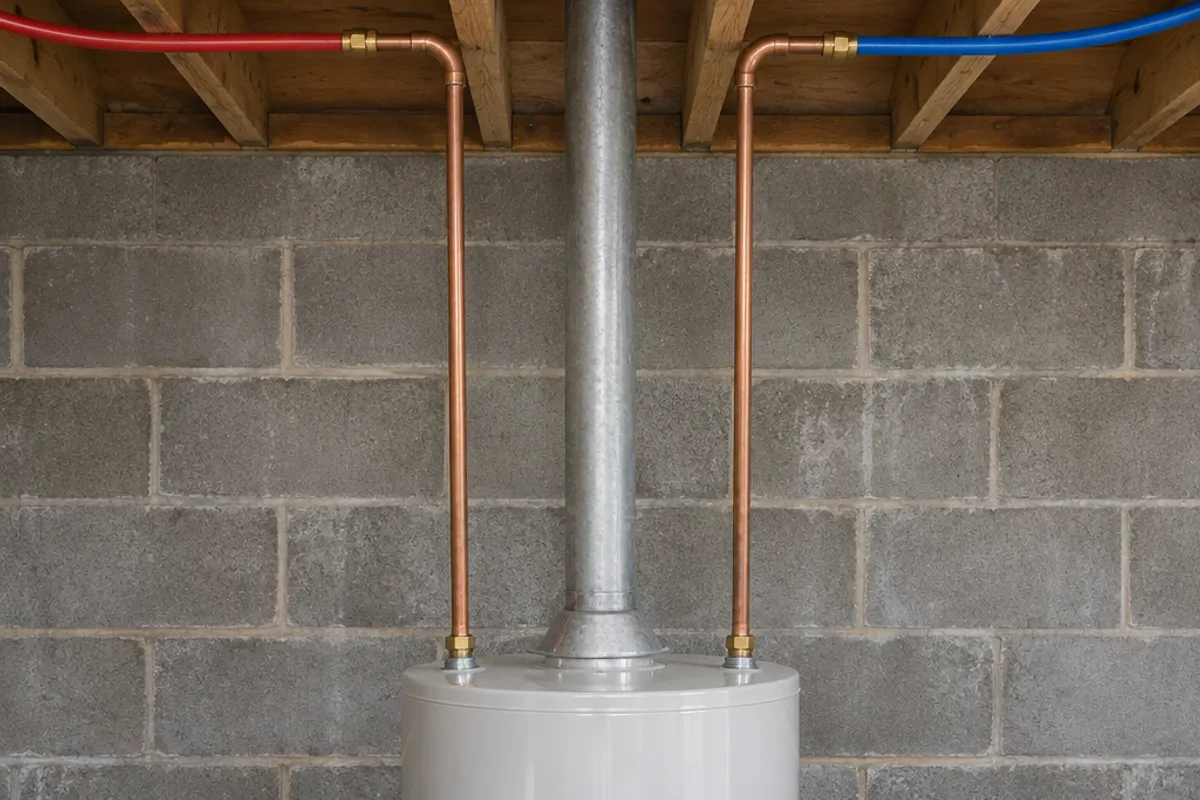
Connections at a gas heater, and soldered copper transitions, can need a permit and licensed professional plumbers. Use them where your area requires it, and keep any flame away from PEX and other plastic pipes and fittings.
Does water chemistry affect PEX and copper pipes the same way?
No. For PEX plumbing the concern is chlorine as an oxidizer in hot water. Copper pipes fail by corrosion: Butler County, Ohio's water and sewer department describes pinhole leaks as tiny pits of corrosion that break through the copper pipe wall from inside. It says the cause of pitting is still unknown, and that pinholes can occur in copper whatever the water's buffering capacity.
How does PEX compare with copper pipes and other piping materials?
Unlike metal pipes, PEX pipes cannot rust or pit the way copper can; PPI lists corrosion resistance among their advantages. In the PEX vs copper debate, no source we read gives copper a life in years we could check, so compare how each plumbing solution, from traditional piping materials to plastic pipes, fails in a house:
| PEX vs other pipes | What usually ends their life |
|---|---|
| PEX pipes | Oxidation from hot chlorinated water, UV exposure before they are covered, heat sources, badly made joints |
| Copper pipes | Corrosion of the copper, including pinhole leaks from pitting |
| Galvanized steel pipes | Rust and scale building up inside the pipe |
PVC pipes and cast iron mostly carry drains, so PEX vs PVC isn't like-for-like. PPI, citing a housing research lab, says PEX went from under 10% of residential plumbing in 1997 to more than 60% by 2016.
How long do PEX fittings last?
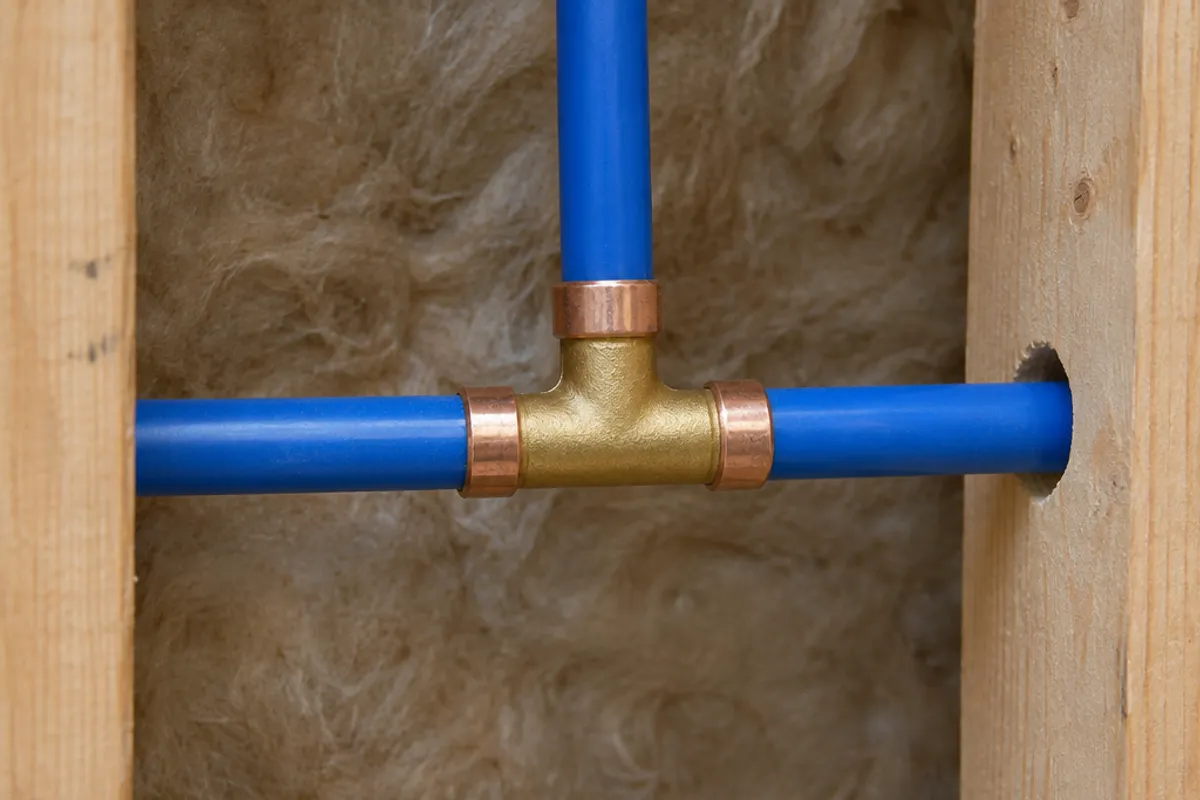
No standard or maker's document we read gives PEX fittings a life in years. The chlorine test method, quoted in TN-53, notes that some fitting types and materials can impact failure times, and recommends testing PEX pipes and fittings together, as they run in real plumbing systems. Two things shorten a fitting's life in our sources:
- Poor installation. Proper installation of mechanical fittings means the right tool and full insertion; one maker's press fittings show an unpressed joint during the leak test, so a fitting that isn't properly installed shows up before the walls close. Push-to-connect and compression fittings are different designs: see push-to-connect fittings behind drywall.
- A joint in the wrong place. The same maker advises against fittings inside a concrete slab except for repairs, wrapped or sleeved. Fewer fittings in a slab, a closed wall or other tight spaces means fewer joints you can't reach.
Why keep PEX manifolds and fittings reachable?
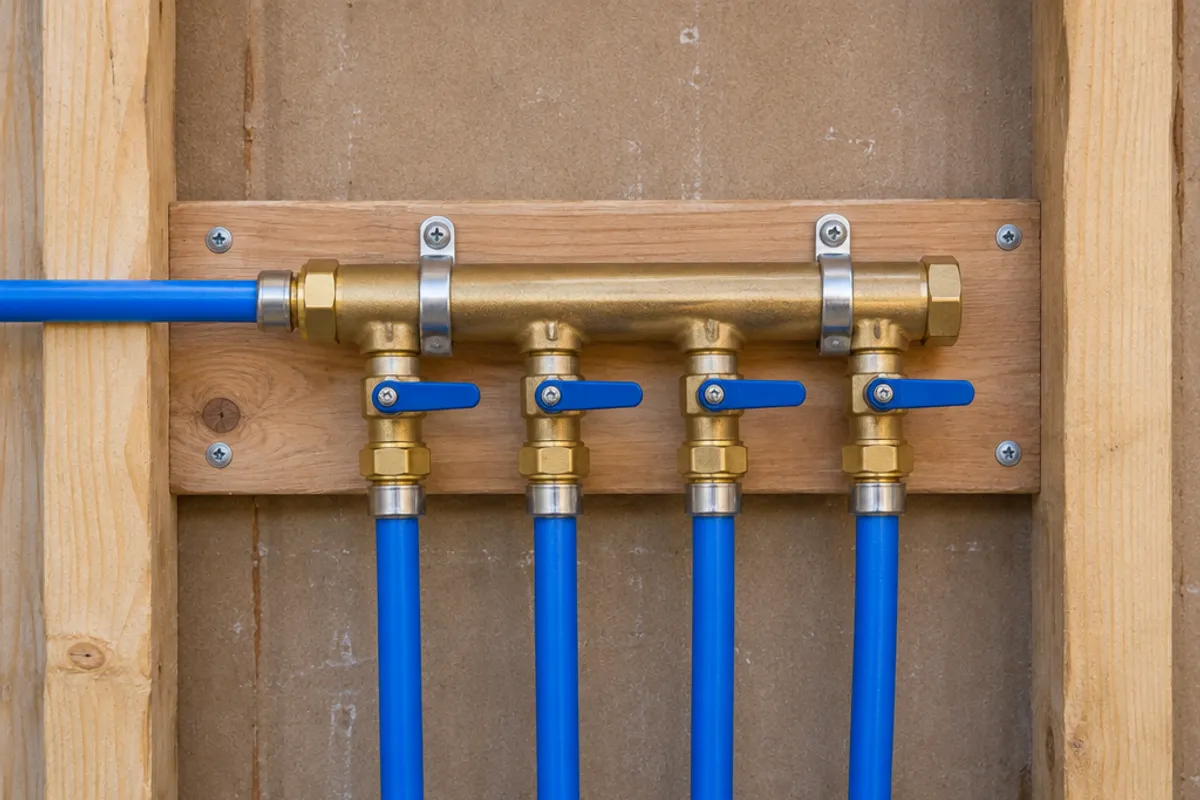
The maker's manual compares the manifold in its home-run plumbing systems to an electrical breaker box: you shut off one fixture's line and keep the rest of the home's plumbing running. So it must never sit behind drywall, plywood or paneling, and any cover panel must expose the manifold, its mounting screws, the port valves and every connection. Measure all of that, then compare:
- A small branch manifold: PAD1216 hinged door: maximum service opening 10.35 × 14.35 in (estimated), overall 12 × 16 in
- A hidden fitting you check often: PAD0808 hinged door: maximum service opening 6.35 × 6.35 in, overall 8 × 8 in
- A copper-to-PEX transition you rarely open: SAP0808 spring-loaded panel: fits 6 × 6 to 8 × 8 in openings, overall 10 × 10 in
A whole-house manifold may be bigger than any of these openings; leave it in an open utility room, which also lets you mount it as close to the heater as the manual's minimum distances allow, as it advises for water and energy savings. The manual allows a manifold in a fire-rated wall only behind an access door with the same rating:
Our plastic access panels and doors are not fire-rated, and we publish no water-resistance rating for them, so don't fit one in a fire separation, such as the wall between a house and an attached garage.
When does PEX plumbing need replacing?
PEX pipes can deteriorate over time outside their rating, or after UV damage you cannot see. Look for these plumbing issues: drips or crust at fittings and the manifold, pipe run close to a flue or heater, PEX pipes exposed to daylight, and a first digit of 0 on a drinking water line. For composite plumbing, see how to identify Kitec plumbing. To replace it, see Kitec plumbing replacement.
If it's time, ask experienced professionals for a written plan; our guide to how long a repipe takes walks through each stage. More options are on the plumbing access panels page.
Measure before you order: our guide on how to measure for an access panel shows how, and the access panel size chart compares every opening and cover. How to install an access panel in drywall covers fitting it.