
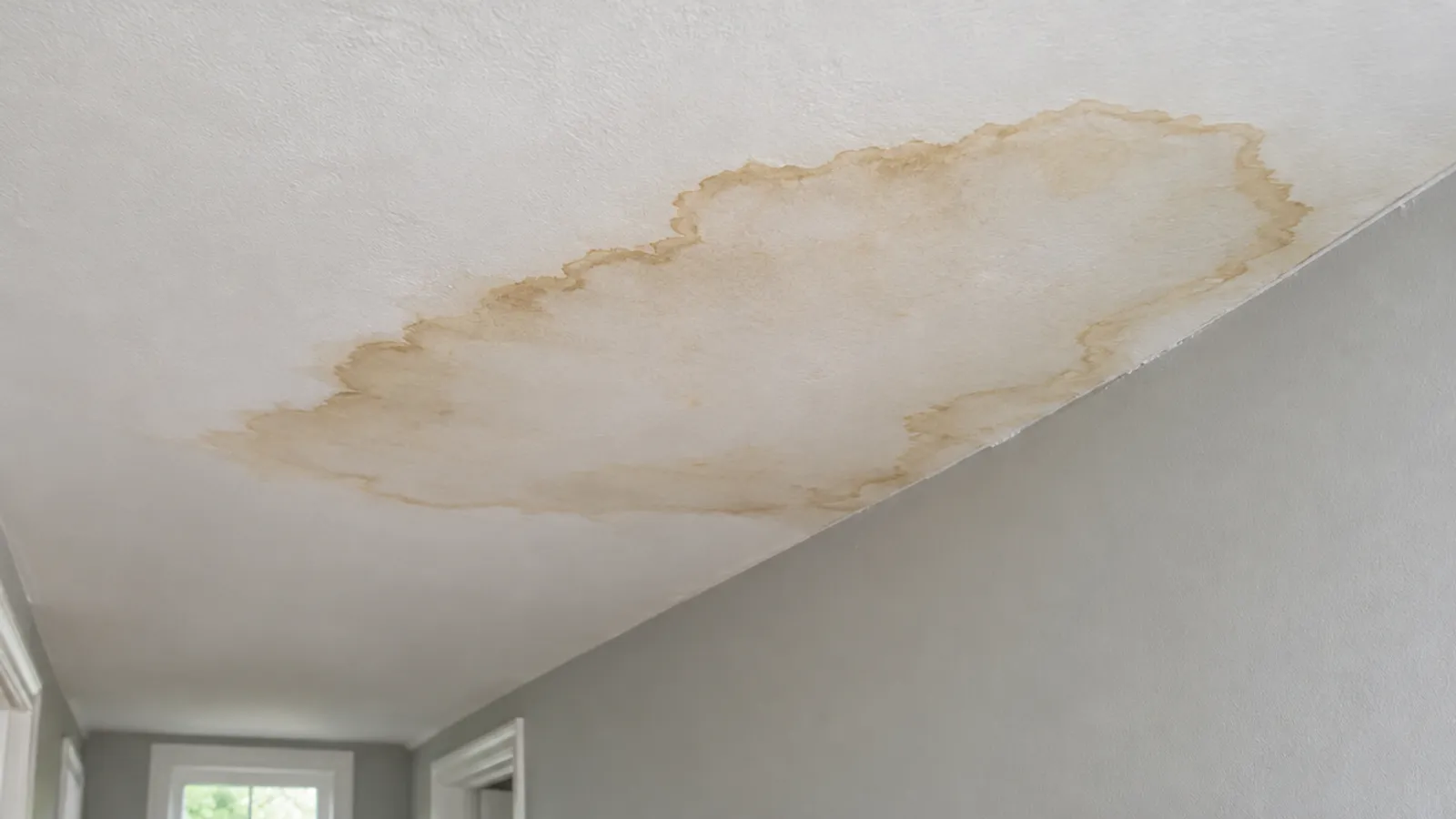
A water stain on ceiling drywall means water reached it at some point, but not always that it is still leaking. Check it first: compare a moisture meter reading on the stain with a dry spot, and trace its edge in pencil. If it stays dry and the same size, seal it with stain-blocking primer and repaint.
Is a water stain on ceiling drywall old, or is the leak still active?
A new water stain and an old water stain on the ceiling can look the same, so test it.
- Use a moisture meter. Pin moisture meters push two small pins into the drywall; pinless ones read through the paint. Take a reading on the stain and one on a clean part of the same ceiling. Readings vary by meter and material, so the comparison matters more than the number.
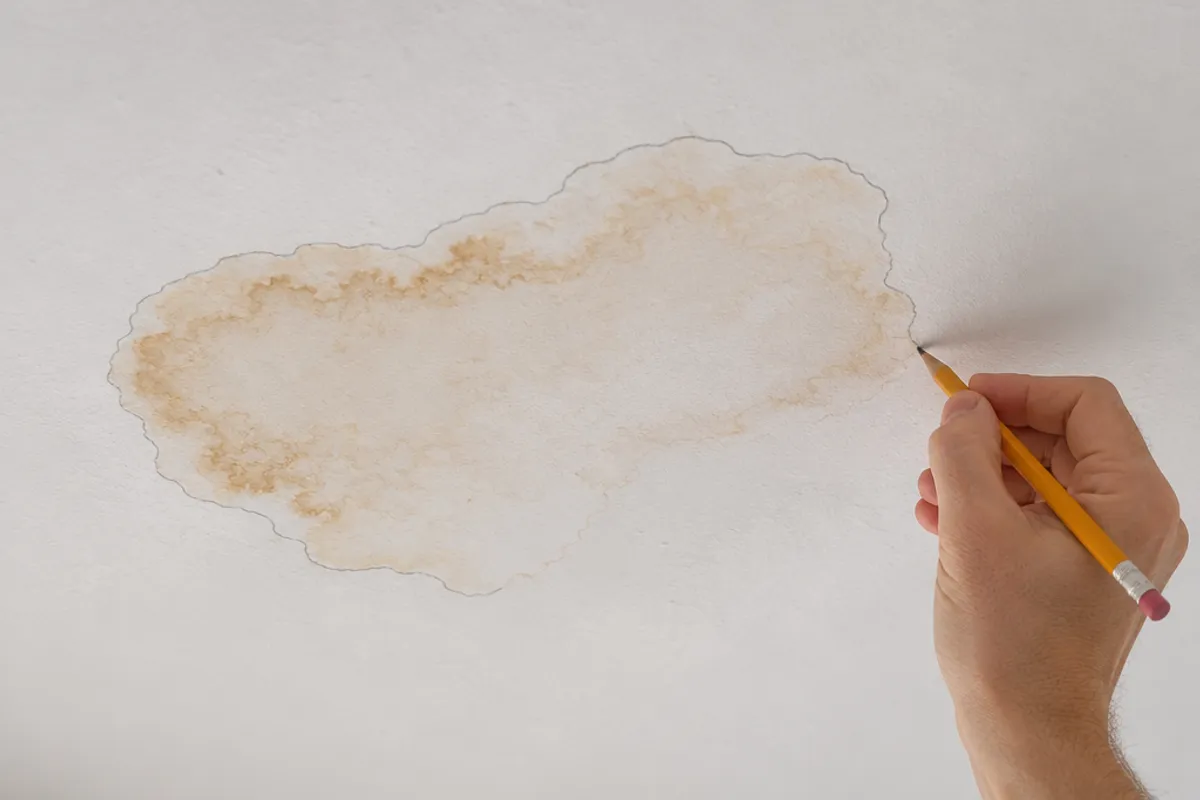
- Mark the edge. Trace the outline of the stained area with a pencil and write the date beside it. Check again after the next rain, after showers in the bathroom above, and after a cold snap or a thaw.
- Press it. Press gently around the ceiling stain. Soft, spongy or sagging drywall means water has been there for a while.
- Look above it. A visual inspection from above tells you more than the ceiling does: in the attic, look for damp insulation, dark or wet wood and rusty nail tips; under a bathroom, look at the toilet base, the tub and the bathroom sink cabinet.
| What you see | What it usually means |
|---|---|
| Same reading as the dry ceiling, no change past the pencil line | An old stain from a leak that has stopped |
| Higher reading, or a damp wet spot in the middle | An active water leak, or one that ran recently |
| Stain grows only after rain, showers or a thaw | An intermittent leak tied to that event |
| Soft, sagging or crumbling drywall, peeling paint | Water has been getting in for a while |
Ceiling water stains are often brown rings because water picks up dirt, mineral deposits and tannins as it soaks through wood, insulation and other ceiling materials, then leaves them at the edge as it dries.
What causes a ceiling water stain?
Where the water stain sits usually points to the root cause. Most ceiling water stains come from one of five places, and finding the underlying cause comes before any repair.
Roof leaks, clogged gutters and ice dams
Ceiling water stains from roof leaks usually show on a top-floor ceiling, often near an outside wall or below a chimney, skylight or roof vent. Damaged or missing shingles, storm damage, worn flashing and the seals around plumbing vents are the usual entry points. Water can travel along a rafter before it drips, so the water stain may not sit right under the hole in the roof.
To look for roof damage safely, start inside. On a rainy day, shine a flashlight on the underside of the roof deck above the stain. From the ground, look for missing shingles and lifted flashing. Leave roof repairs, and climbing on the roof, to a roofer, and book a roof inspection if you can't find the source.
Clogged gutters overflow at the eaves, and water can back up under the roof edge into the wall and ceiling below. In winter, an ice dam does the same: heat from the house melts snow on the roof, the water freezes again at the cold eave, and meltwater pools behind the ice and works under the shingles.
Plumbing leaks and other plumbing issues above the ceiling
A water stain under a bathroom, kitchen or laundry room usually means a plumbing leak. Supply pipes are under pressure all the time, so leaking pipes there drip whether or not anything runs. Drains leak only when they're used: a toilet's wax ring when it's flushed, a tub's overflow when the bath fills above it, a shower drain or failed grout when someone showers. Washer hoses and the drain behind a washing machine are the usual suspects in a laundry room.
So a stain that grows only after baths or showers points to a drain or the overflow, not a supply line. Our guides to a leak behind a shower wall and a leaking tub overflow gasket cover those tests, and water leaks behind walls shows the water meter test for a supply-side water leak.
Condensation and poor attic ventilation
Warm, moist air from the house leaks into the attic around light fixtures, the hatch and gaps around pipes and wires. In cold weather it turns to condensation or frost on the underside of the roof and on nail tips. On a warm day the frost melts and drips onto the insulation and the drywall below. Poor attic ventilation and gaps in the ceiling's air barrier make it worse, and the result is often several small water spots rather than one big ceiling water stain. Condensation can also drip from cold water pipes and uninsulated ducts in humid weather.
Bathroom exhaust fans
Exhaust fans move a lot of moisture, and a bathroom with poor ventilation leaves it on the ceiling. If the fan duct runs through a cold space without insulation, that moisture condenses inside the duct and runs back to the fan, leaving a stain around the grille. A fan that blows into the attic instead of outdoors wets the whole area above the ceiling. When you install exhaust fans, run the duct to the outdoors and insulate it where it crosses a cold space.
HVAC systems and clogged drain lines
An air handler or furnace above the ceiling has a condensate pan and a drain line. Clogged drain lines make the pan overflow, which leaves a ceiling water stain below it during the cooling season. A water heater or other heating appliance above a finished ceiling can leak too. Have a technician service HVAC systems as part of regular maintenance.
Why is there a water stain on the ceiling but no leak?
When you find a water stain on ceiling plaster or drywall but no leak, the water usually arrives only now and then, or it stopped before you saw the mark. Tracking it down can be time-consuming, but the pattern points to the underlying issues.
- An old leak was repaired but never painted. Many homeowners find a stain left by a previous owner. If it stays dry through rain, showers and a winter, it's likely old.
- Roof-related leaks show only in certain weather, such as wind-driven rain from one direction or snow melting on the roof.
- Ice dams form only during a thaw. They are a regular winter problem in Alberta, Quebec, the Maritimes and the northern US states. In Alberta, a chinook can bring a thaw in midwinter, so a stain can appear with no rain at all.
If an active water leak is coming through right now, our ceiling leak guide covers what to do first.
Is a ceiling stain serious, and what future damage can it cause?
A dry ceiling stain that doesn't change is cosmetic. Treat it as serious when you see any of these:
- drywall that is soft, sagging, bulging or crumbling;
- peeling paint, bubbling or cracks around the stain;
- a musty smell or dark spots, which point to mold growth;
- a stain that keeps growing after you mark it;
- water near a light fixture, ceiling fan or smoke alarm.
Left unchecked, a small leak keeps wetting the drywall, insulation, framing and other ceiling materials, and minor water damage turns into major damage and costly repairs. Excess moisture that stays in the ceiling also feeds mold growth, and damp framing is where future damage starts. Fixing the underlying issues early keeps the repair small.
If water is near a light fixture, fan or other electrical device, turn off the breaker for that circuit before you touch it or the ceiling around it. Water can cause electrical damage you can't see, so have a licensed electrician check the fixture where your jurisdiction requires one. If the ceiling bulges with water, keep people out from under it.
How do you fix water stains on the ceiling?
To fix water stains for good, fix the cause first. A fresh painting job over a ceiling that is still getting wet only hides the warning, and the water stain comes back.
- Find and fix the root cause. Repair the roof, the plumbing, the fan duct or the drain line, or have a pro do it.
- Let it dry completely. Run fans or a dehumidifier, and compare moisture readings with the dry part of the ceiling before you go on.
- Clean the affected area. Wipe off dust with a damp cloth, scrape away peeling paint, and let it dry.
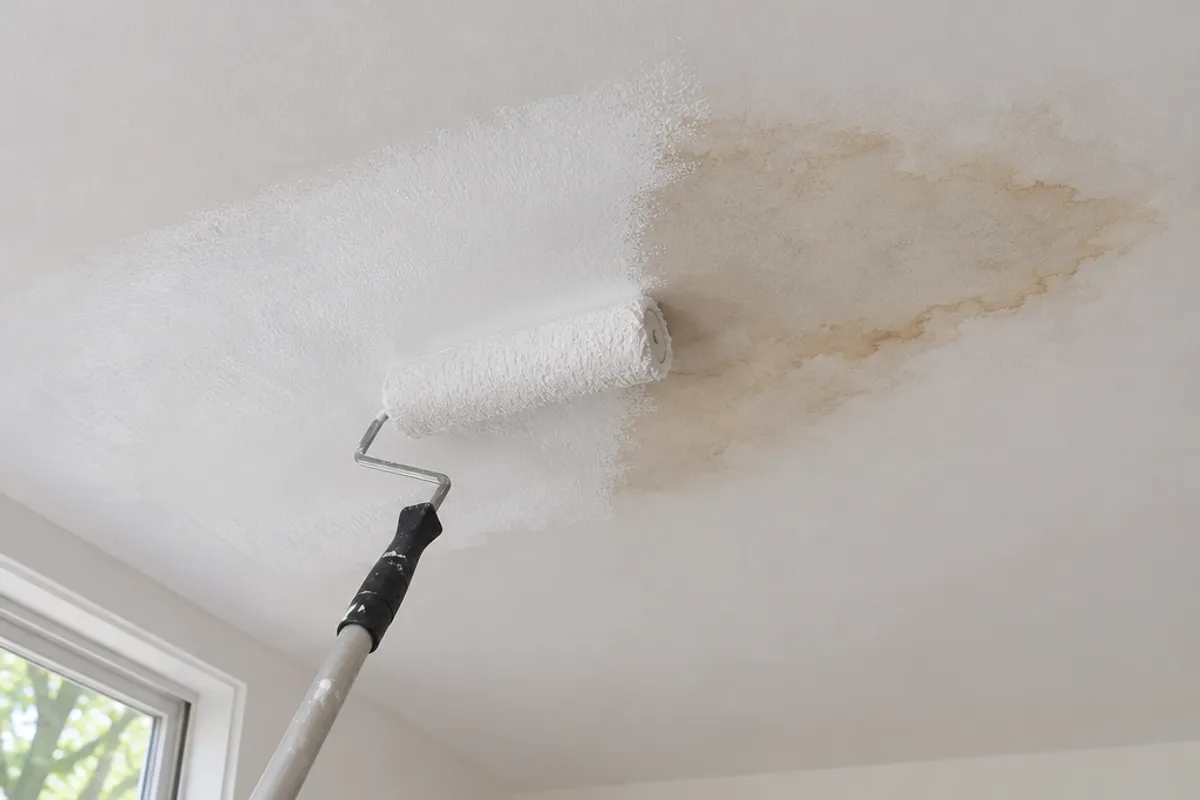
- Seal it with a stain-blocking primer. Many painters use an oil-based primer or a shellac-based one on ceiling water stains. Extend it a little past the ceiling stain's edge, and follow the label for ventilation, coats and drying time.
- Paint. Ceiling paint changes color as it ages, so a patch of fresh paint may show. Painting the entire ceiling, corner to corner, gives an even finish.
Why won't regular paint cover water stains?
Plain paint doesn't cover water stains for long. The brown tannins and minerals in the stain dissolve into water-based paint and bleed back through as it dries, sometimes days later. A stain-blocking primer seals them in. An old water stain on the ceiling needs the same primer, however long it has been dry.
Can bleach or hydrogen peroxide remove a stain without paint?
On a faint stain on a flat white ceiling, some people try a diluted bleach solution or hydrogen peroxide in a spray bottle first. Lightly spray the stained area, let it dry, and repeat if it fades.
- Wear eye protection, ventilate the room and cover the floor.
- Use one product at a time, never mixed together or with other cleaners.
- Test a hidden spot first.
It can lighten a faint mark, but it rarely removes a dark ring and does nothing about the cause. In an older house, a textured "popcorn" ceiling can contain asbestos, so have it tested before you spray, scrape or sand it. In a drop ceiling, a water stain on ceiling tiles means replacing the stained tiles instead (see drop ceiling vs drywall).
When should you open the ceiling?
Open it when the stain tells you something above it needs repair:
- the drywall is soft, sagging or crumbling;
- moisture readings stay high after the source should be fixed;
- you smell mold or see it;
- the stain keeps coming back under a bathroom's plumbing fixtures and you can't find the cause from above.
Cut a small inspection hole first, at the wettest spot or under the fixture above. It is the quickest way to confirm a plumbing leak or other plumbing issues. Turn off the power to any lights in that ceiling before you cut, because cables run between the joists. Cut back past any water damage to sound, dry ceiling drywall, and let the cavity dry before you close it.
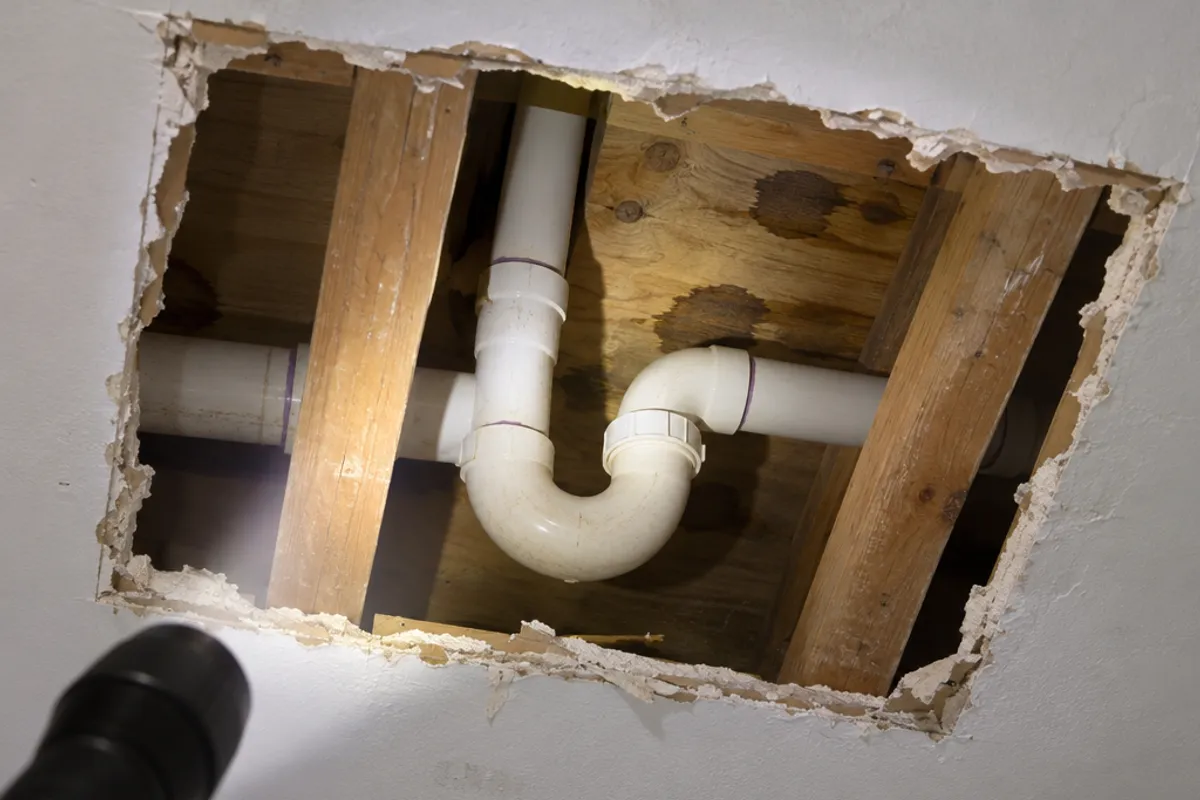
Our guide on how to fix a hole in the ceiling covers the drywall repair if you close it for good.
How do you keep the plumbing above the ceiling reachable?
If a plumbing leak caused the stain under a bathroom, don't patch the opening. Close it with an access panel, so next time you can check the plumbing fixtures above for future leaks without cutting the ceiling again or waiting for water damage to show.
From our catalog:
| Model | Type | Opening it fits | Size on the ceiling |
|---|---|---|---|
| SAP1414 | Spring-loaded panel | Openings from 10 × 10 to 14 × 14 in | 16 × 16 in cover |
| PAD1212 | Hinged door | Service opening and cut-out 10.35 × 10.35 in (estimated) | 12 × 12 in overall |
The SAP1414 lifts out, which suits a spot you check now and then; a hinged door stays on its frame, which is easier overhead if you'll open it often. The ceiling access panels page compares them, and how to install an access panel in a ceiling covers the cut. No water-resistance or fire rating is claimed for our panels or doors: a panel is for checking, not for keeping water out, and a fire-rated ceiling needs your building department's advice.
Your local building department can tell you whether the plumbing repair above the stain needs a permit, and whether to leave the ceiling open for an inspection.
How do you prevent water damage and future ceiling stains?
Regular maintenance catches most causes before water reaches the ceiling areas below them:
- Roof. Most roof leaks start at flashing and vent seals, so book a roof inspection after major storms to catch roof damage early.
- Gutters. Clean them in fall and spring so water can't back up at the eaves.
- Attic. Seal air leaks into the attic and keep proper ventilation, so moist air can't form condensation up there. Poor ventilation is a common cause of winter water spots.
- Bathrooms. If a bathroom has none, install exhaust fans that vent outdoors through an insulated duct, run them during and after showers to clear excess moisture, and keep the caulk and grout sound.
- Pipes, HVAC and laundry. Insulate cold water pipes and ducts that run through cold spaces, keep the condensate drain lines clear, and check washer hoses for bulges and drips. Repair a small leak as soon as you find it.
Measure before you order: our guide on how to measure for an access panel shows how, and the access panel size chart compares every opening and cover.