
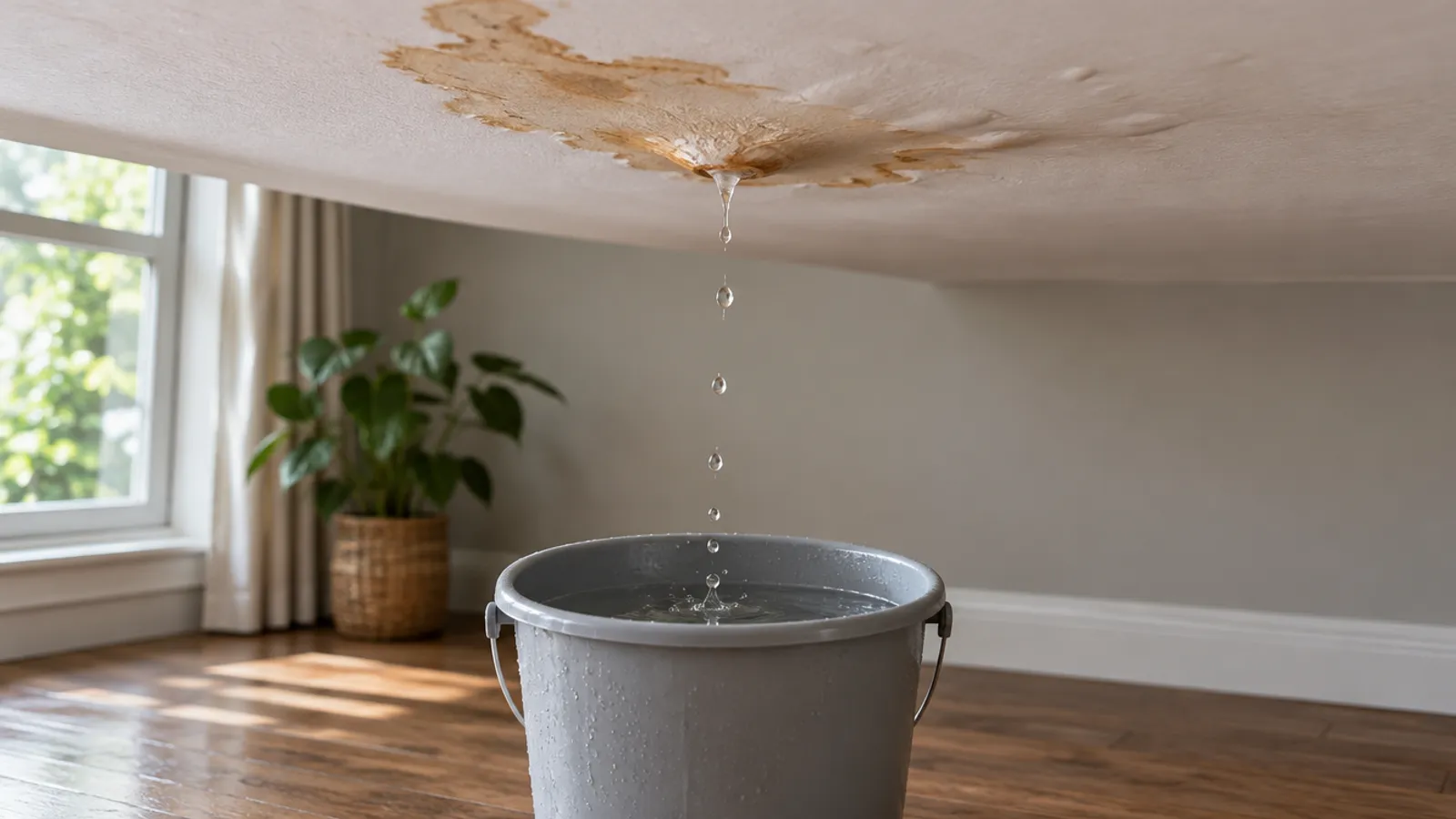
When you find a ceiling leak, act in this order: put a bucket under the drip, switch off power to any light or fan near the wet area, and close the shut-off valve for the fixture above, or the main valve. Then find the source, dry the ceiling, and repair it or fit a removable panel.
This guide covers an active water leak from a bathroom above, a supply line, the roof or a cooling system. For an old, dry mark, see water stain on ceiling.
What should you do first about a ceiling leak?
Stay calm and work in order. The first few minutes decide how much water damage you repair later.
- Catch the water. Place buckets under every drip. Move furniture, rugs and other items out of the room, and protect what is left by covering it with a plastic tarp.
- Cut the power nearby. If water is near a light or an outlet, switch that circuit off at the breaker. Electricity and water don't mix, so don't touch a wet fixture.
- Close the water supply. Turn off the valve on the fixture above, or the main valve. Here is where to find the water shut-off valve.
- Drain a bulge. A ceiling that sags with trapped water can collapse. With the power off, be careful to stand to one side, set the bucket under the lowest point and push a screwdriver through the center of the bulge. A few small holes let the water out in one place.
If water has reached a light fixture, an electrical box or the panel, leave the power off and have a qualified electrician check the wiring before you restore it. Use a licensed electrician where required, and never stand in water to reach a fixture.
When should you call your insurance company?
Photograph what happened, the ceiling, the furniture and anything else damaged, before you clean up or throw anything out. Whether the cost of the repair is covered is a question for your policy, so check your policy before repairs start.
Is a ceiling water leak an emergency?
It is if water is pouring through, the ceiling sags, water is near wiring, or you notice a sewage smell. Close the main valve, let the water already in the ceiling run out, and watch. If the leak stops, it is on the supply side, a fitting or valve under pressure: keep the main closed and call a plumber, or an emergency plumber if you need the water back on tonight. If it keeps going, the water comes from a drain someone upstairs is using, a leaking roof or condensation. In a condo or a rental, contact the building manager or your landlord too, because the source may be in another unit.
A slow drip does less water damage at first, but it will not dry on its own inside a closed ceiling, and mold can grow where you can't see it. Acting early is what prevents further damage.
Where is the water coming from?
The early signs of a ceiling leak are a brown stain, bubbling paint or a sag, often before any drip. Water runs along joists, pipes and the back of the drywall before it drips, so the stain can be some distance from the source of the leak. Identify what sits above the stain, then use the timing: when the ceiling leaks tells you more than where.
| Possible source | When it leaks | What to look for |
|---|---|---|
| Toilet wax ring or flange | When the toilet is flushed | The toilet rocks, a soft or stained floor at its base, a sewer smell |
| Toilet supply line, shut-off valve or tank bolts | Any time | Drips under the tank or at the valve |
| Tub or shower drain, tub overflow | While water runs out, or when a bath fills to the overflow | A leak only during or after a bath or shower |
| Grout, caulk or a shower door | When shower spray hits cracks in them | A stain under the edge of the tub or shower |
| A supply line or shower valve | Any time | The water meter moves with everything off |
| Roof, flashing or a chimney | During or after rain | Rooms under the attic, often near a skylight or a roof vent |
| Ice dam | In winter, during a thaw | Near the exterior walls, with ice along the eaves |
| AC or furnace condensate | While the system runs | Under an attic unit: a clogged condensate line or a cracked pan |
How do you find the source of a water leak in the ceiling?
Track down a water leak from the simplest test to the most invasive one.
Read the water meter
Turn off every faucet and appliance, check that nothing is running, and read the water meter. Read it again later without using any water. If it moved, a supply line, valve or fitting is leaking under pressure. If not, the leak comes from a drain, the roof or condensation. On a private well, listen for the pump starting instead.
Test the fixtures above, one at a time
Have someone watch the ceiling while you flush the toilet several times, empty the sink, run the shower with the spray aimed away from the tile, and fill the tub to its overflow, waiting between tests. A drip that starts with one test points to that fixture: see tub overflow gasket leaking or how to find a leak behind a shower wall.
Is the toilet leaking through the ceiling?
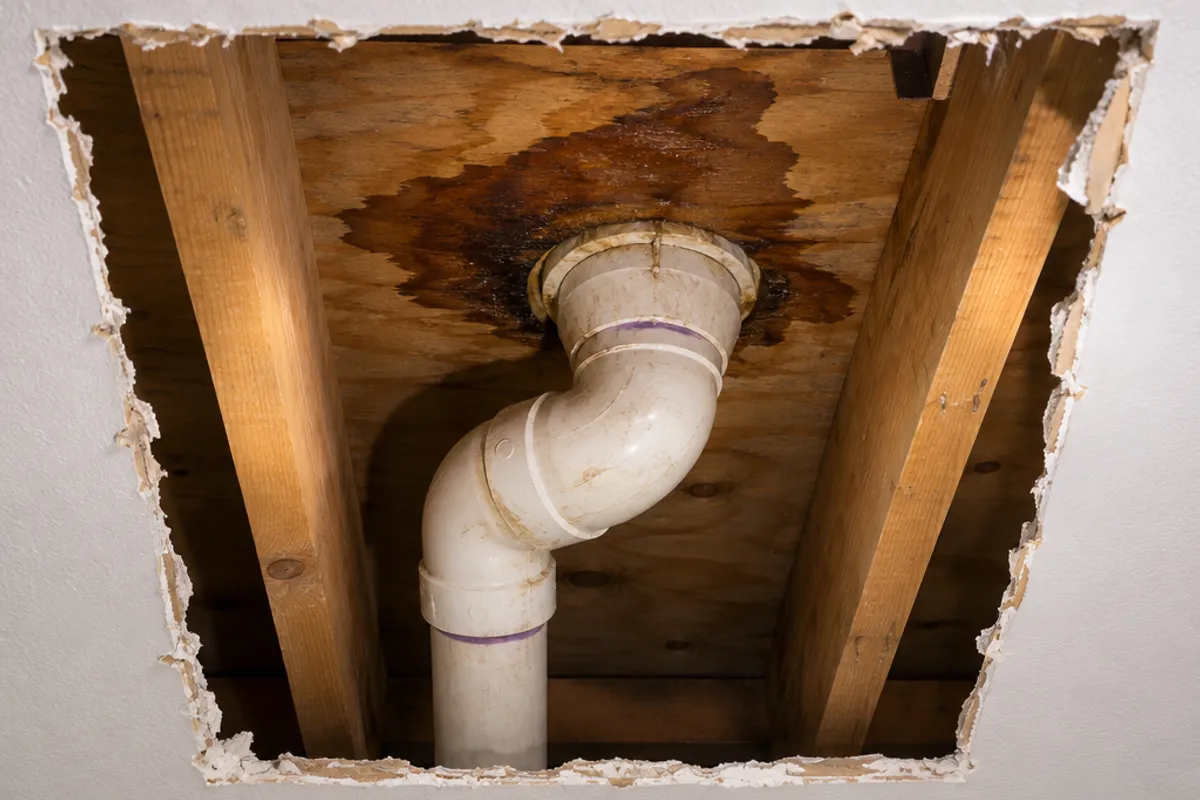
A stain that grows after each flush usually means a failed wax ring, or a cracked or loose flange under the bowl. In the bathroom above, the signs are a toilet that rocks, a soft floor around the base, or a sewer smell. Some plumbers add food coloring to the bowl and flush: colored water below points to the seal.
When dealing with this kind of leak, check the simple parts first. The supply line, its valve and the tank bolts are under pressure, so they drip whether or not anyone flushes. A new wax ring means lifting the bowl off the floor; call a plumber if the flange is broken or the subfloor is soft.
Is it a roof leak that shows up in heavy rain?
A leak that starts in heavy rain points to a leaking roof: the flashing, a roof vent's boot, a chimney or a skylight. Check the attic with a flashlight for wet wood and insulation. Look at the gutters too: clogged gutters overflow, and the water can back up under the roof edge. Don't climb onto a wet roof. A roofer can put a tarp over the damaged area until the roof is repaired, and a homeowner can at least clear the gutters from a ladder once the weather allows.
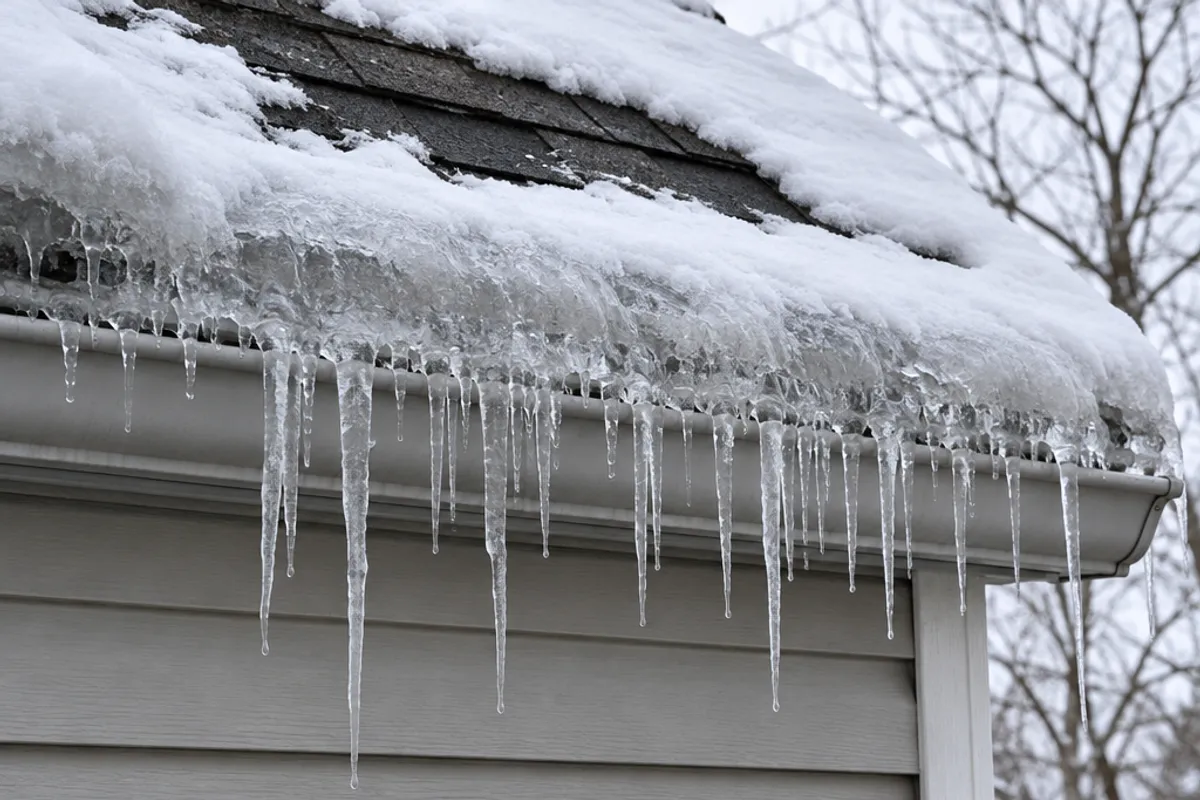
In cold regions such as Alberta, Quebec, the Maritimes and the northern US states, ice dams cause many winter ceiling leaks. Heat from the house melts snow on the roof, the water freezes again at the cold eaves, and the meltwater behind the ice backs up under the shingles. A supply line that froze and split in an attic or an outside wall also leaks once it thaws: see how to thaw frozen pipes in a wall.
Open the ceiling where it is wettest
If the tests don't settle it, cut an inspection hole between two joists at the wettest spot, with the nearby circuits off. Cut shallow with a jab saw so you don't hit a pipe or wire, and follow the water trail uphill with a flashlight. Cut it square and keep it small: a cut-out between 10 × 10 and 14 × 14 in can later take a removable panel.
How do you dry the ceiling and limit water damage?
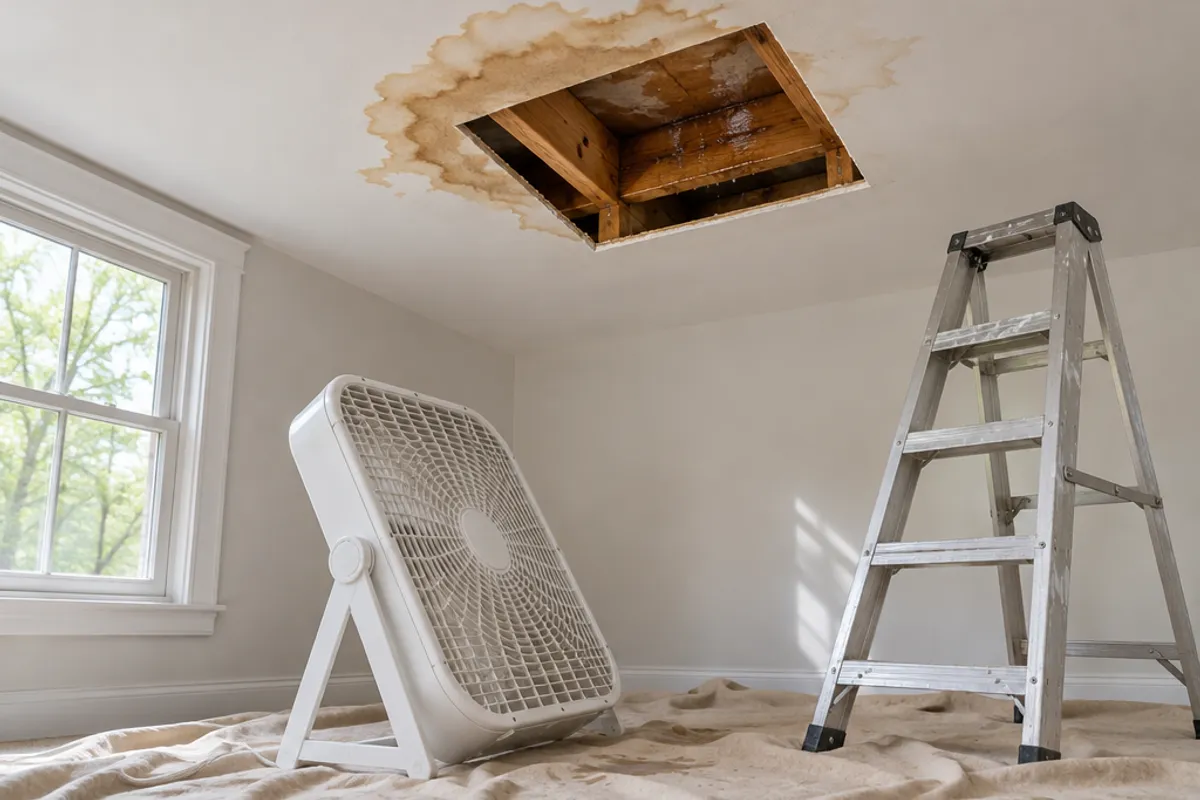
Dry everything before you close the ceiling, or the stain and the smell come back.
- Leave the hole open, keep the air moving into it with a fan, and run a dehumidifier in the room with the windows closed.
- Pull out wet insulation, which holds water against the wood.
- Assess the damage by pressing around the stain, and tear out board that is soft, sagging or crumbling. Often only part of it needs replacing, not the entire ceiling.
- Check the joists and the subfloor above for wet wood and mold.
- Close up only when moisture meter readings match a dry part of the same ceiling.
Treat water from a toilet or a waste line as contaminated: wear gloves, and throw out soaked insulation and board. If mold covers a large area, call a water damage restoration company.
How do you fix the leak and repair the ceiling?
Fix the source first. A worn wax ring, supply line or tank bolt gets replaced. For a shower drain, see how to replace a shower drain; for a line inside a wall, water leaks behind walls. A damaged supply line gets a repair coupling made for that material, fitted following the manufacturer's instructions.
Soldering copper, moving a waste line or working near a gas line can require a licensed plumber and a permit. Use a licensed plumber where required.
Once the leak is fixed and everything is dry, cut back to sound board, add backing, screw in a new piece of drywall, tape it, apply joint compound, seal the stain with a stain-blocking primer, and paint. How to fix a hole in the ceiling goes through each step.
Should you patch the ceiling or fit an access panel?
If the leak came from a toilet flange, a tub or shower trap, or a valve, someone will need to reach that spot again: wax rings wear out, traps clog and seals need replacing. A patch seals it all away, so the next leak means another cut. Close the ceiling with a removable panel instead.
| Model | Type | Opening | Overall size |
|---|---|---|---|
| SAP1414 | spring-loaded panel | Fits 10 × 10 to 14 × 14 in openings | 16 × 16 in |
| PAD1212 | hinged door | Maximum service opening 10.35 × 10.35 in (estimated) | 12 × 12 in |
The SAP1414 lifts out, leaving both hands free for a trap or a flange. The PAD1212's frame is screwed to the ceiling (the screws come with the door), and its product page has a 1:1 cut-out template. If your cut is bigger than a panel's range, patch part of it and square the rest to fit. Neither is a leak barrier: our panels and doors are not water-resistance rated. See installing an access panel in a ceiling and the ceiling access panels page.
Measure before you order: our guide on how to measure for an access panel shows how, and the access panel size chart compares every opening and cover.