
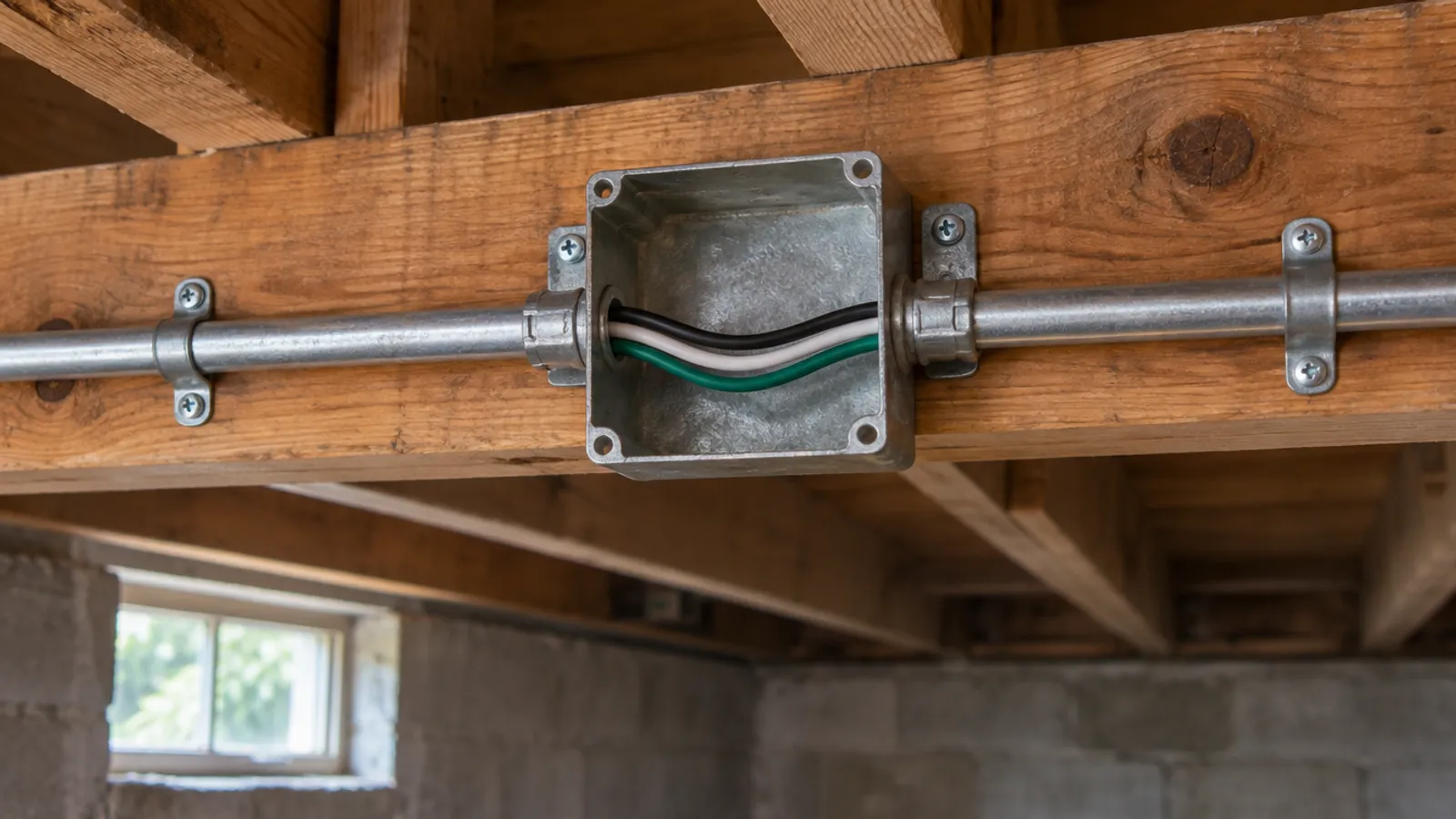
A pull box is an electrical box placed in a conduit run so wire can be pulled through it in stages. It breaks a long run, or one with several bends, into shorter pulls. Unlike a junction box, it usually holds no splices: the conductors pass straight through. It still has to stay accessible.
Pull boxes are most common in commercial buildings, where much of the wiring runs in conduit, but houses have them too, on conduit runs through basements, garages and outbuildings. Below: how a pull box works, pull box vs junction box in plain terms, and how to keep one reachable once a wall or ceiling is finished.
What is a pull box?
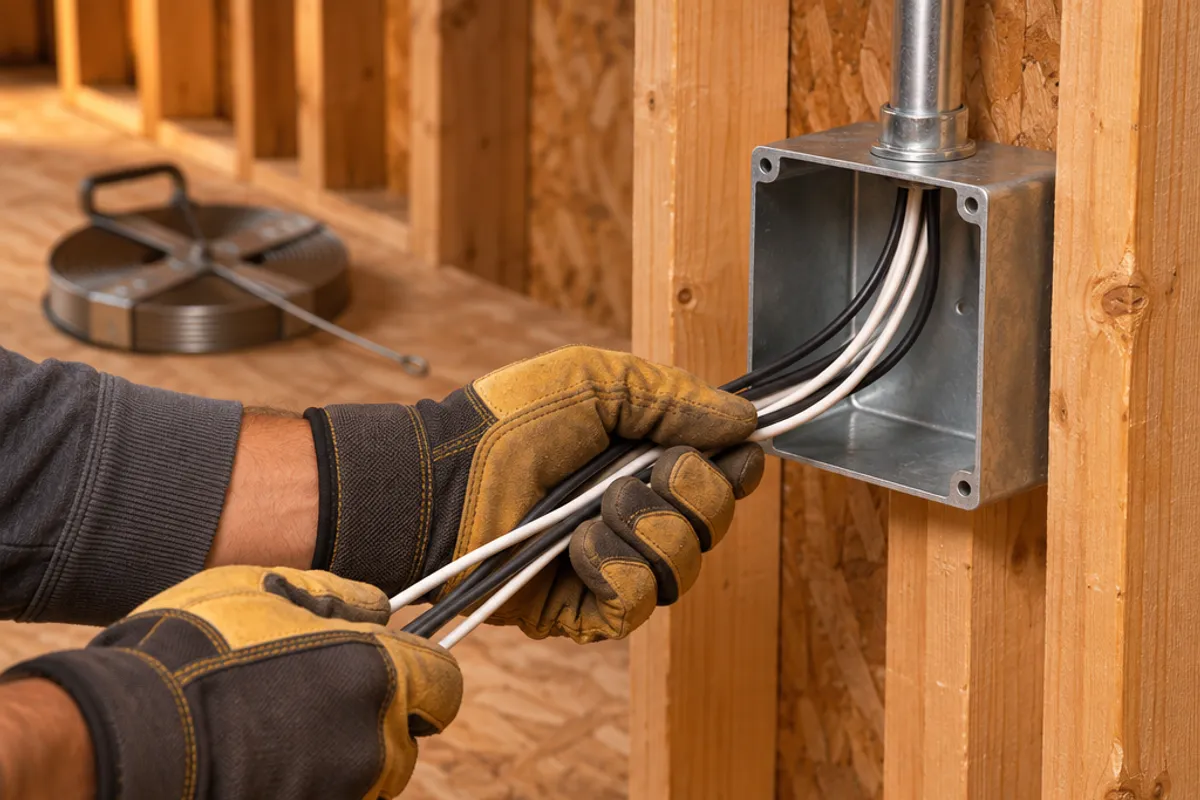
A pull box is a box, usually metal, that interrupts a run of conduit to give the installer a place to reach in and pull wires. Conduit is the metal or plastic tubing that carries electrical wires through a building's wiring system, and every wire in it has to be pulled in from a box or the end of the run. On a short, straight run, that is one pull. Over long distances, the wire pulling is split up between two boxes at a time: the electrician pulls the conductors into the first pull box, out through its open front, then on into the next section of conduit.
Inside, the box is a pass-through. The wires usually run through it unbroken, and the box gets a flat cover once the pull is done. That is the main function of a pull box: it makes the wiring path through a conduit system workable, while a junction box is there to join wires.
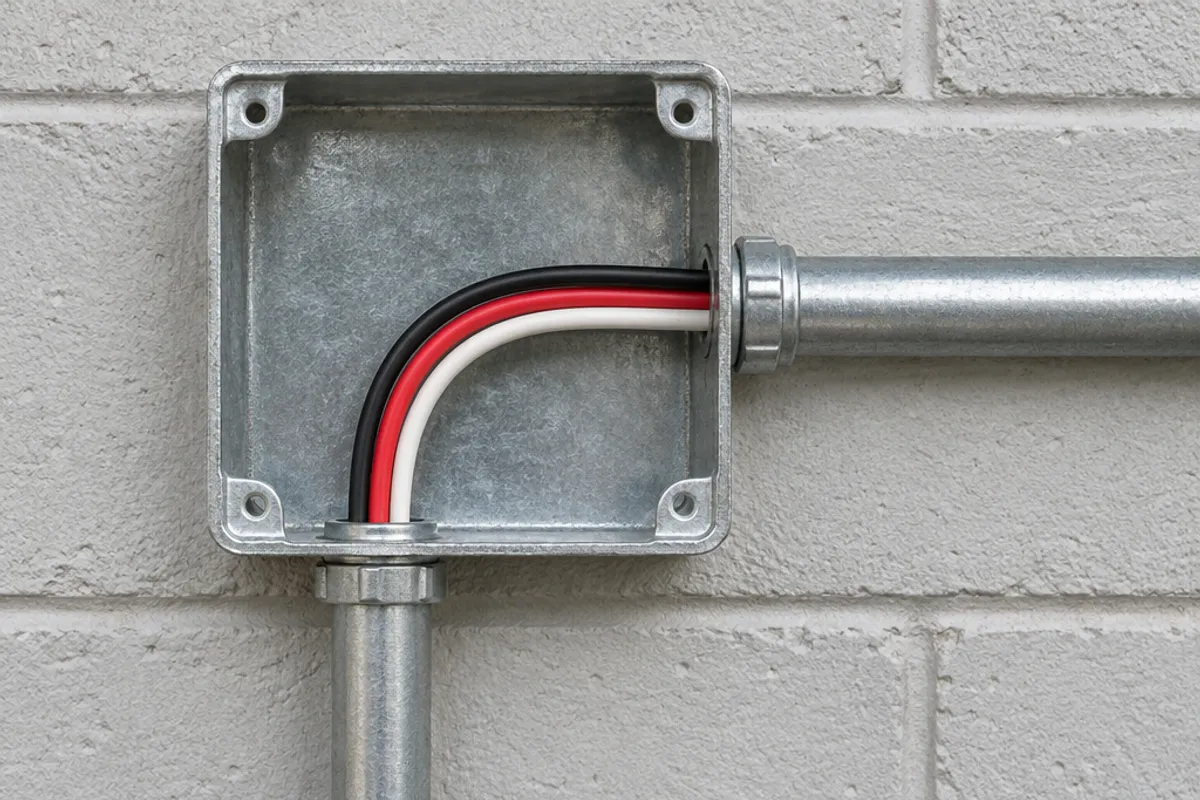
Electricians name pull boxes by the way the conduit enters and leaves them:
- Straight pull. The conduit enters one side and leaves from the opposite side, so the wire keeps going in a straight line. A straight pull box simply breaks up a long run.
- Angle pull. The conduit leaves through a side next to the one it entered, and the wire turns a corner inside the box. Angle pulls replace a bend where there isn't enough room for one in the conduit.
- U pull. The conduit enters and leaves through the same side, and the wire doubles back inside the box. U pulls are used where a run has to reverse direction.
On small runs, a conduit body does a similar job. It is a short fitting with a removable cover, named by its shape (an LB, for example), and it serves as the pull point at a bend.
Why use a pull box on long conduit runs?
Because wire pulling gets harder with every foot and every bend. Multiple wires are usually pulled together, and they rub along the inside of the conduit and press against the curve at each bend, so the force needed keeps building. Pull too hard and the electrical wires can stretch, or their insulation can scrape or tear, which can lead to short circuits long after the job is done.
A pull box resets that, and keeping each pull short is how it protects wires from that damage. Electricians use a pull box when:
- the run covers long distances, such as across a building or between floors;
- the conduit path has multiple bends, which add up quickly;
- the route makes multiple turns and has to change direction where a bend won't fit;
- several conduit runs meet, and the wires need to be sorted into different routes;
- more wires may be added later, so the next pull can start at the nearest box instead of the end of the run.
Large buildings have complex wiring systems, so on complex conduit runs the boxes are planned with the conduit, not added afterward. Running wires through a closed-in run later works only if every pull box along it can still be opened.
Pull box vs junction box: what are the key differences?
Pull box vs junction box comes down to one question: is the box there to move wire or to join it? The two can be identical steel or plastic electrical boxes, so the main difference is the job, not the look.
| Feature | Pull box | Junction box |
|---|---|---|
| Main function | A place to pull wires along a conduit run | A place to join wires and protect the splices |
| Wires inside | Usually pass straight through | Wire connections, made with connectors |
| Wiring method | Conduit | Conduit or cable |
| Where it goes | Long runs, and runs with several bends | Wherever a circuit branches or is extended |
| What sets its size | The conduit, the wire and the type of pull | How many wires and devices it holds |
| Access | Must stay reachable | Must stay reachable |
A junction box holds wire splices, the places where electrical wires are joined with wire connectors. It is there to protect wire splices and the electrical wire connections in them, so a failing joint can't cause short circuits or electrical fires in the framing. A pull box usually has no wire connections at all; it is there for wire pulling through the conduit system.
In practice, one box often does both jobs: some conductors run straight through while others are spliced. Electricians call that a pull and junction box, and it needs room for the splices as well as the pull. So junction box vs pull box is a question of what happens inside, not of which box was bought.
When should you use a junction box?
Use a junction box when the job is connecting wires: adding outlets or light fixtures to a circuit, feeding ceiling fans, or extending a cable that was too short. The box keeps those electrical connections enclosed. Houses commonly use plastic junction boxes fastened to the framing and wired with cable; metal junction boxes are more common with conduit and in commercial work. Our guide to what a junction box is covers the junction box in detail, and how to install a junction box shows the work in outline.
Junction box vs pull box: how do you choose the right box?
Look at what will happen inside it:
- Connecting wires: a junction box, sized for how many wires and connectors it holds.
- Wire passing through a long conduit run, or one with multiple bends: a pull box, sized for the conduit and the type of pull.
- Both: a pull and junction box, with room for each.
A pull box serves the conduit run, not the circuit's layout. The electrician picks the right box and its size, and if no wires are joined in it, it is a pull box, whatever it looks like.
Where are pull boxes used in homes and commercial buildings?
Wherever the wiring system runs in conduit over a long or winding route. Houses are mostly wired with cable, so a house has far more junction boxes, behind light fixtures and at branch points, than pull boxes. Pull boxes do turn up, though:
- conduit across an unfinished basement ceiling, for example to a subpanel or a workshop;
- exposed conduit on garage and basement walls;
- a feeder in conduit to a detached garage, shop or outbuilding.
Those are the boxes that cause trouble when a basement or garage is finished: the new ceiling or wall goes up, and a box that sat in the open is now behind it.
In commercial buildings and industrial settings, much of the electrical system runs in conduit, so pull boxes are everywhere: above corridor ceilings, in electrical rooms, on runs between floors, and in industrial plants on big runs to motors, where the boxes can be large steel enclosures. Outdoors, boxes on underground conduit sit in the ground and are built for wet locations.
Above a suspended ceiling, lifting a tile gives easy access to a pull box or junction box, so it needs nothing more; our comparison of drop ceilings and drywall covers that trade-off. This guide covers boxes for indoor use, in walls and ceilings, not outdoor or in-ground ones.
What are pull boxes made of, and how does box sizing work?
Pull boxes come in the same durable materials as junction boxes, chosen for the location. The common materials:
- Steel. Galvanized or painted, the usual choice indoors with metal conduit. A metal pull box is bonded to the grounding system, just like metal junction boxes.
- Stainless steel. For corrosive or washdown areas, such as food processing plants.
- PVC, fiberglass or polycarbonate. Nonmetallic boxes that resist moisture and corrosion, used with PVC conduit and in outdoor locations.
Boxes for damp or wet locations come with gaskets and covers made for them; an indoor box doesn't belong outside.
Pull box size depends on the conduit size, the wire size and the type of pull, because the wires bend differently in a straight, angle or U pull box. Larger conductors are stiffer and need enough space to bend without damage, and where several conduits enter, the spacing between them matters too. A box that is too small makes the pull hard and can kink or scrape the wire. The electrician works out the minimum pull box size from the electrical code, so treat box sizing as part of meeting electrical codes, not a guess. A junction box is sized differently, by the wires and devices it holds.
For an access panel, a different number matters: the box's outside size, covered below.
Does a pull box have to stay accessible?
Yes, just like a junction box. A pull box exists so someone can get back to the wire: to pull in new conductors, replace a damaged one or trace a fault. Sealed behind drywall, it is useless for all three, and the next pull starts with cutting into the building.
In the US, NEC 314.29 (NFPA 70, the National Electrical Code, 2023 edition as revised by Tentative Interim Amendment 23-10) requires boxes and conduit bodies to be installed so the wiring in them remains accessible, and when a box larger than 100 cubic inches (1,650 cm³) is recessed behind a finished surface, the opening in that surface can't be smaller than the box's outer walls.
Check the volume marked in the box or in the maker's specifications. If you can't confirm it, plan an opening that clears the whole box. Local codes can amend the NEC, so confirm with your electrical inspector; in Canada, ask your provincial electrical inspector what your code expects.
What size access panel fits in front of a pull box?
Size the opening to the box, not the other way round:
- Check how the box sits. If its front will be flush with the finished surface, its own cover is the access and no panel is needed. A panel is for a box that sits back inside the ceiling or wall cavity, behind the finish.
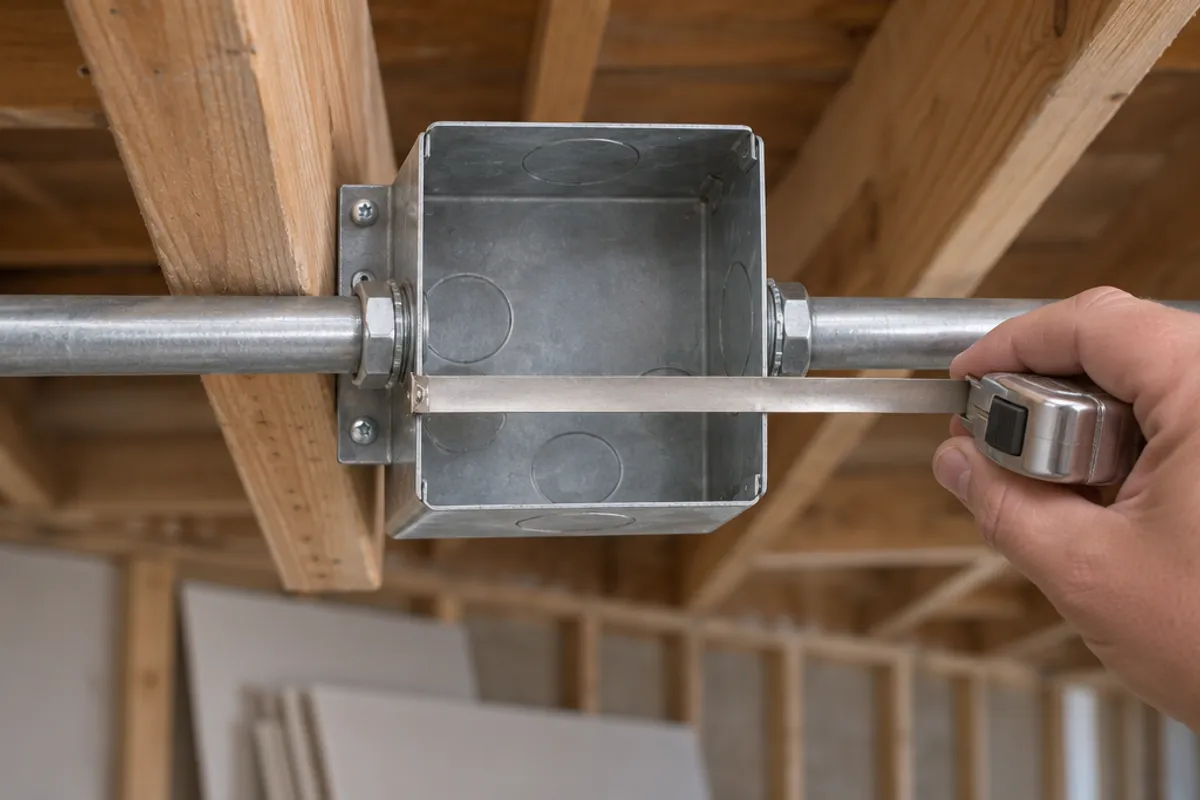
- Measure the outer walls. Measure the width and height across the outside of the box, and note how far it sits behind the surface.
- Pick an opening that clears it. Choose a panel whose opening is at least the box's outside size, with enough room to get the cover screws out and your hands in. Then confirm the plan with your electrician.
These openings suit the smaller pull box and junction box sizes found in houses and light commercial work:
| Model | Type | Opening | Overall size |
|---|---|---|---|
| PAD0808 | hinged door | Maximum service opening 6.35 × 6.35 in | 8 × 8 in |
| SAP0808 | spring-loaded panel | Fits 6 × 6 to 8 × 8 in openings | 10 × 10 in |
| SAP1414 | spring-loaded panel | Fits 10 × 10 to 14 × 14 in openings | 16 × 16 in |
| PAD1216 | hinged door | Maximum service opening 10.35 × 14.35 in (estimated) | 12 × 16 in |
- The PAD0808 hinged door suits a small box. Its frame sits on the surface over a cut-out the size of its opening, and the screws come with it.
- The SAP0808 and SAP1414 are spring-loaded panels. The whole cover comes off, which gives the most room at the box, but the spring sits behind the surface, so leave enough space for it between the finish and the box.
- For a rectangular box, the PAD1216 opening is longer in one direction.
Which electrical boxes are too big for our panels?
Our largest opening is 14 × 14 in, on the SAP1414. Bigger boxes, common on commercial and industrial runs, are out of scope for our panels: they need a larger access door or a different layout, worked out with the electrician. Never cut the opening smaller than the box to make one of ours fit.
Two rules hold whatever the size. Keep the box's own cover on behind the panel: an access panel is not an electrical enclosure and never replaces the cover on a pull box or junction box. And check the ceiling or wall itself.
Our plastic access panels and doors are not fire-rated, and we publish no water-resistance rating for them, so don't fit one in a fire separation, such as the wall between a house and an attached garage.
Commercial ceilings and corridor walls are often part of a fire-rated assembly, so ask before cutting into one.
Measure before you order: our guide on how to measure for an access panel shows how, and the access panel size chart compares every opening and cover. How to install an access panel in a ceiling covers fitting it.
Who should install and open a pull box?
A pull box can carry live conductors from several circuits, or a feeder to a subpanel. Installing or sizing a pull box or junction box, pulling wire or taking a cover off is work on the electrical system for a licensed electrician where your area requires one, and it may need a permit and an inspection to ensure safety. Never open a box with the power on.
What you can do yourself is plan. Before a basement or garage is finished, walk the conduit runs, note every pull box and junction box the new ceiling or wall will cover, and mark which ones need an opening. The electrician confirms each box and its size. For ceiling installations, you can then cut the openings following how to install an access panel in a ceiling.
If a pull box is already hidden, can you drywall over a junction box? explains how to find it. For wiring through closed walls without conduit, see how to fish wire through a wall. Compare every opening on the access panel size chart, or browse the electrical access panels.